File:Chaturanga_Chess_Set.jpg · Wikimedia Commons · See Wikimedia Commons
chaturanga
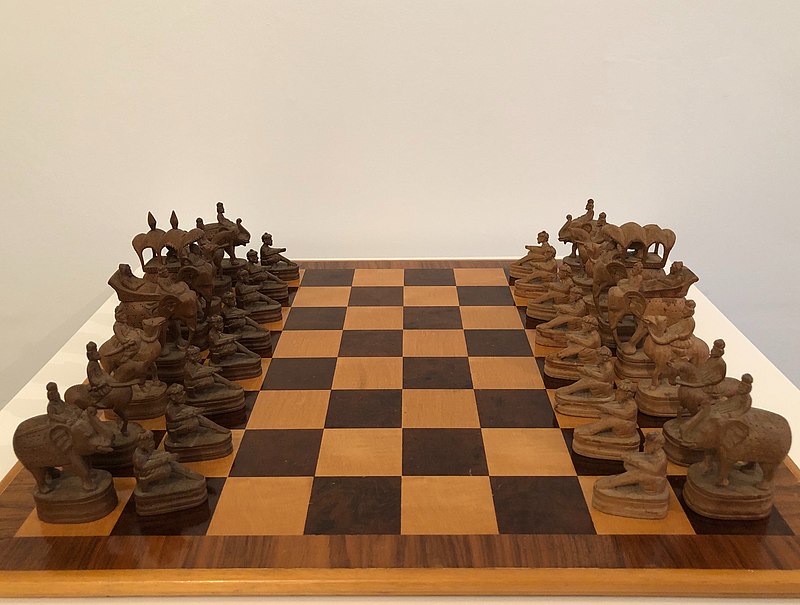
Sign in to savethumb|Chess set from Rajasthan, India Chaturanga (, , ) is an ancient Indian strategy board game. It is first known from India around the seventh century AD.
Chaturanga is an ancient Indian strategy board game that first appeared around the seventh century AD. It is significant because it is widely regarded as the earliest ancestor of modern chess.
AI-generated from the Wikipedia summary — may contain errors.
Wikidata facts
- Instance of
- chess variant
- Country
- India
- Country of origin
- India
- Image
- National Museum of Ethnology, Osaka - Catur-aṅga - Rajasthan in India.jpg
Show 5 more facts
- native label
- चतुरंग
- related category
- Category:Games related to chaturanga
- maximum number of players
- 2
- minimum number of players
- 2
- Commons category
- Chaturanga
Sources (1)
via Wikidata · CC0
~9 min read
Encyclopedic overview
13 sectionsContents
- Etymology
- History
- Origin
- Spread outside India
- The game
- Set-up
- Rules
- Pieces and their moves
- Additional rules
- See also
- References
- Further reading
- External links
thumb|Chess set from Rajasthan, India Chaturanga (, , ) is an ancient Indian strategy board game. It is first known from India around the seventh century AD.
While there is some uncertainty, the prevailing view among chess historians is that chaturanga is the common ancestor of the board games chess, xiangqi (Chinese), janggi (Korean), shogi (Japanese), sittuyin (Burmese), makruk (Thai), ouk chatrang (Cambodian) and modern Indian chess. It was adopted as chatrang (shatranj) in Sassanid Persia, which in turn was the form of chess brought to late-medieval Europe.
Excerpted from Wikipedia’s “chaturanga” article, available under the CC BY-SA 4.0 licence.