File:Betel_1.jpg · Wikimedia Commons · See Wikimedia Commons
Paan
Sign in to saveAlso known as betel quid chewing, areca nut chewing, Betel nut chewing
Hindi word for betel used for a stimulating and psychoactive preparation combined with areca nut and/or cured tobacco
Wikidata facts
- Image
- Old Bagan, Myanmar, Paan, the betel leaf and areca nut preparation.jpg
Show 1 more fact
- Commons category
- Paan
Sources (2)
via Wikidata · CC0
~35 min read
Encyclopedic overview
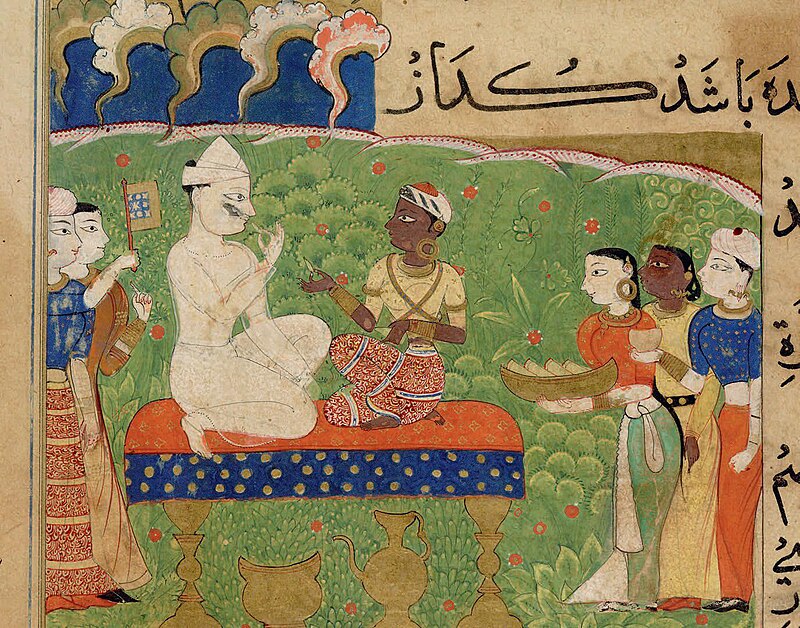
Ghiyas al-Din eats a betel chew, illustration from the Nimatnama-i-Nasiruddin-Shahi. Malwa, c. 1500. British Library The items used in a chewing session. The betel leaves are folded. Slices of the dry areca nut are on the upper left. Slices of the tender areca nut are on the upper right. The pouch on the right has tobacco, an optional element. On the lower right, there are dried cloves. Betel leaves at a market in Mandalay, Myanmar
Betel nut chewing, also called betel quid chewing or areca nut chewing, is a practice in which areca nuts (also called "betel nuts") are chewed together with slaked lime and betel leaves for their stimulant and narcotic effects, the primary psychoactive compound being arecoline. The practice is widespread in Southeast Asia, Micronesia, Island Melanesia, and South Asia. It is also found among both Han Chinese immigrants and indigenous peoples of Taiwan, Madagascar, and parts of southern China. It was introduced to the Caribbean in colonial times.
Excerpted from Wikipedia’s “Paan” article, available under the CC BY-SA 4.0 licence.