Category
page 1Indian painting
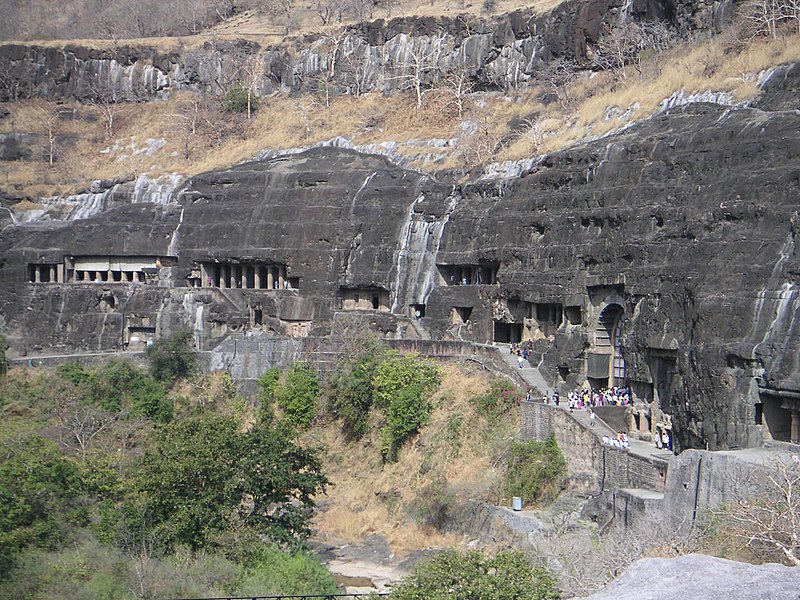
Ajanta Caves
2nd century BCE to 1st century CE Buddhist cave monuments located in Maharashtra, India
Basholi
human settlement in India
%20Metmuseum%20N-Y.jpg)
Hamzanama
thumb|"The Spy Zanbur Bringing Mahiyya to the City of Tawariq", from the Akbar Hamzanama
Indian painting
paintings from India
Warli painting
art created by tribal people from Maharashtra, India
Kangra painting
Indian pictorial art form related to Himachal Pradesh

Alpana
Alpana or alpona () is a Bengali folk art style consisting of colored motifs, patterns, and symbols that are painted on floors and walls with paints made from rice flour, on religious occasions. Alpona is common to Bangladesh and the Indian state of West Bengal. Amongst Hindu families, alpanas may contain religious motifs with symbolic designs that relate to religious austerity, festivals, and specific deities. Amongst Santal tribal communities, alpanas often contain geometric or symbolic patterns drawn from nature. Although traditionally the domain of rural women, Alpana motifs have been very

Pitalkhora
The Pitalkhora Caves, in the Satmala range of the Western Ghats of Maharashtra, India, are an ancient Buddhist site consisting of 14 rock-cut cave monuments which date back to the third century BCE, making them one of the earliest examples of rock-cut architecture in India. Located about 40 kilometers from Ellora, the site is reached by a steep climb down a flight of concrete stairs, past a waterfall next to the caves.
Raghurajpur
Raghurajpur is a heritage crafts village in Puri district, Odisha, India, known for its master Pattachitra painters, an art form which dates back to 5 BC in the region, and Gotipua dance troupes, the precursor to the Indian classical dance form of Odissi. It is also known as the birthplace of the Odissi exponents Padma Vibhushan Guru and Kelucharan Mohapatra and the Gotipua dancer Padma Shri Guru Maguni Charan Das. It is also the birthplace of Shilp Guru Dr. Jagannath Mahapatra, who is a prominent Pattachitra artist and has made a huge contribution to the development of Pattachitra art an
Ashta Nayika
collective name for eight types of nayikas or heroines as classified by Bharata in his Sanskrit treatise on performing arts - Natya Shastra.
muraqqa
thumb|Youth kneeling and holding out a wine-cup. Safavid period, early 17th century. Isfahan School. Ink and color wash on paper. Freer Sackler Gallery F1928.10.
thumb|Some verses in Persian nasta'liq script, probably always a single page meant for a muraqqa; 16–17th century.
Anis Al-Hujjaj
17th century literary work describing a Hajj pilgrimage
Ragamala painting
form of Indian miniature painting
Sohrai and Khovar painting
mural art practiced in the Hazaribagh district of Jharkhand, India
pichhwai
thumb|Pichhwai for the Festival of Cows, late 18th century, Aurangabad(?), painted and printed gold and silver leaf and opaque watercolor on indigo-dyed cotton, 97 5/8 x 103 1/8 inches (248 x 262 cm)
painting of Assam
painting in the Indian region of Assam
Tomb paintings of Sindh
wall paintings from the Kalhora period in Pakistan
Phad painting
style of folk painting in India
Sundari
19th-century artworks of Indian women
Vikramkhol
Cave and archaeological site in India
Chitrakathi
The Chitrakathi is the name of an occupational caste whose traditional livelihood was to narrate stories aided with pictures sojourning various places.
Mandana Paintings
painting in Rajasthan and Madhya Pradesh, India
rickshaw art
three-wheeled decorated passenger vehicle pulled by one person featured in Dhaka and Bangladesh