Category
page 1Integer sequences

prime number
positive integer with exactly two divisors, 1 and itself
composite number
positive integer that has at least one positive divisor other than 1 or itself

perfect number
positive integer which equals the sum of all its divisors

Mersenne prime
prime number of the form 2ⁿ−1
square number
product of some integer with itself

amicable numbers
pair of integers related by their divisors

triangular number
figurate number

binomial coefficient
family of positive integers that occur as coefficients in the binomial theorem

abundant number
number for which the sum of its proper divisors is greater than the number itself
Fibonacci sequence
entire infinite integer series where the next number is the sum of the two preceding it (0,1,1,2,3,5,8,13,21,...)

Collatz conjecture
conjecture in mathematics that concerns sequences

Fermat number
positive integer of the form (2^(2^n))+1

Catalan number
recursive integer sequence

On-Line Encyclopedia of Integer Sequences
online database of integer sequences
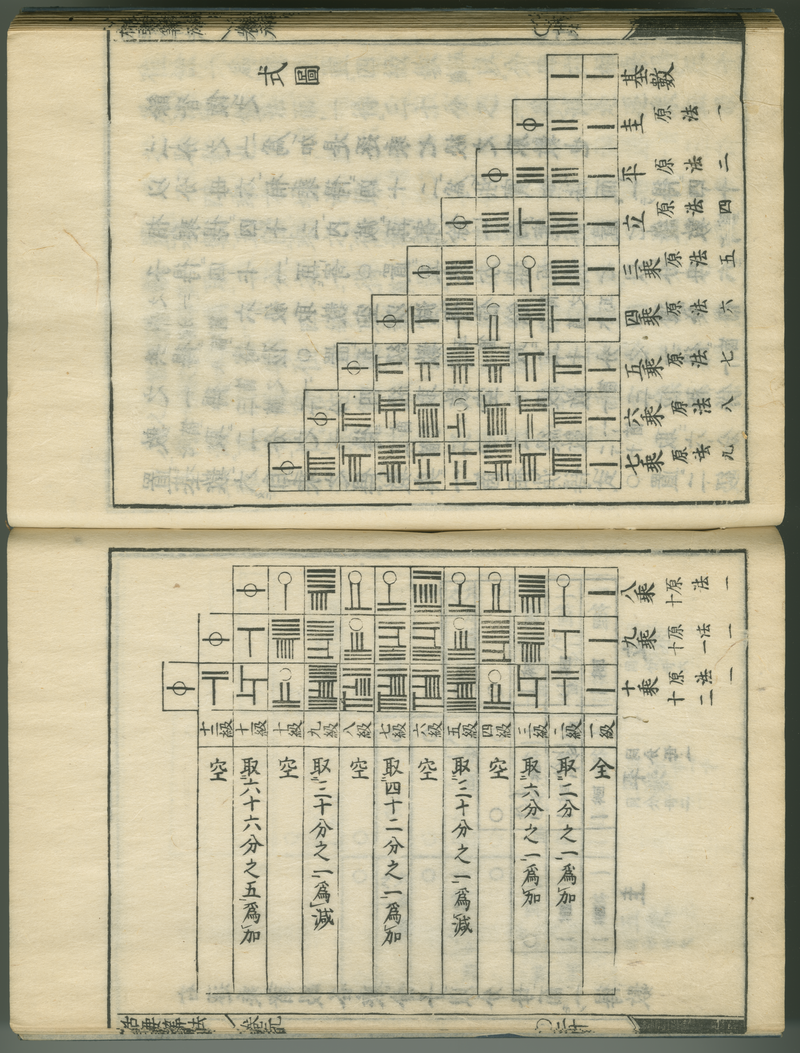
Bernoulli number
rational number sequence 𝐵ₖ such that (𝑚+1)∑𝑛ᵐ=(ᵐ⁺¹₀)𝐵₀𝑛ᵐ⁺¹−(ᵐ⁺¹₁)𝐵₁𝑛ᵐ+(ᵐ⁺¹₂)𝐵₂𝑛ᵐ¯¹−(ᵐ⁺¹₃)𝐵₃𝑛ᵐ¯²+⋯

deficient number
natural integer number for which the sum of its proper strict divisors (other than itself) is less than the number itself
magic number
number of protons or neutrons that make a nucleus particularly stable
cube
product of a number being raised to the third power

semiprime
In mathematics, a semiprime is a natural number that is the product of exactly two prime numbers. The two primes in the product may equal each other, so the semiprimes include the squares of prime numbers.
Because there are infinitely many prime numbers, there are also infinitely many semiprimes. Semiprimes are also called biprimes, since they include two primes, or second numbers, by analogy with how "prime" means "first". Alternatively semiprimes are called almost-prime numbers, specifically the "2-almost-prime" biprime and "3-almost-prime" triprime.
power of two
two raised to an integer power

primorial
In mathematics, and more particularly in number theory, primorial, denoted by "p_{n}\#", is a function from natural numbers to natural numbers similar to the factorial function, but rather than successively multiplying positive integers, the function only multiplies prime numbers.
square-free integer
integer that cannot be divided by a square number
Bell number
integer sequence counting the possible partitions of a set
figurate number
member of the set of triangular numbers, polygonal numbers, or polyhedral numbers
Carmichael number
composite number in number theory
Lucas number
number in the Lucas sequence where each number is the sum of the two preceding it (2, 1, 3, 4, 7, 11, ...)

derangement
thumb|305px|Number of possible permutations and derangements of elements. ( factorial) is the number of -permutations; ( subfactorial) is the number of derangements – -permutations where all of the elements change their initial places.
lucky number
integer filtered out using a sieve similar to that of Eratosthenes
highly composite number
positive integer with more divisors than any smaller positive integer has
sphenic number
positive integer that is the product of three distinct prime numbers
sociable number
numbers whose aliquot sums form a cyclic sequence
Cullen number
number of the form n*(2^n)+1
plastic ratio
unique real number solution to the equation x^3-x-1=0
integer sequence
ordered succession of integers, defined by a formula, recurrence, or property of its members
quasiperfect number
hypothetical number whose sum of divisors is twice the number plus 1
power of 10
ten raised to an integer power
pronic number
figurate number
perfect power
positive integer that is an integer power of another positive integer
weird number
abundant number that is not semiperfect
Euler number
integer sequence defined by the Taylor series expansion of the hyperbolic secant function and also appearing in that of the secant function
Leyland number
a natural number nontrivially representable in the form x^y + y^x
factorial prime
prime numbers of the form n!±1
Pell number
denominator of close rational approximation to the square root of 2
Stirling number
important functions in combinatorics
Motzkin number
number of patterns of non-intersecting chords with a given number of endpoints on a circle
pseudoperfect number
positive integer that equals the sum of some of its proper divisors
almost prime
natural number with a given number of prime factors
Achilles number
a number that is powerful but not a perfect power
centered hexagonal number
subclass of centered polygonal number
square triangular number
integer that is both a perfect square and a triangular number
untouchable number
positive integer unexpressable as the sum of all proper divisors of any other integer
powerful number
integer where each prime number dividing it can be squared to still divide it
double factorial
product of all the integers from 1 up to the integral input of the function that have the same parity as this input
prime power
positive integer power of a prime number
fourth power
result of multiplying four instances of a natural number together
Woodall number
natural number of the form n2^n − 1
almost perfect number
natural number whose proper divisors sum to one less than itself
Thabit number
integer of the form 3 · 2ⁿ - 1 for non-negative n
Perrin number
Number sequence 3,0,2,3,2,5,5,7,10,... defined by recurrence relation P(n) = P(n-2) + P(n-3).
Sylvester's sequence
integer sequence in which each member of the sequence is the product of the previous members, plus one