Category
page 1Intellectual history
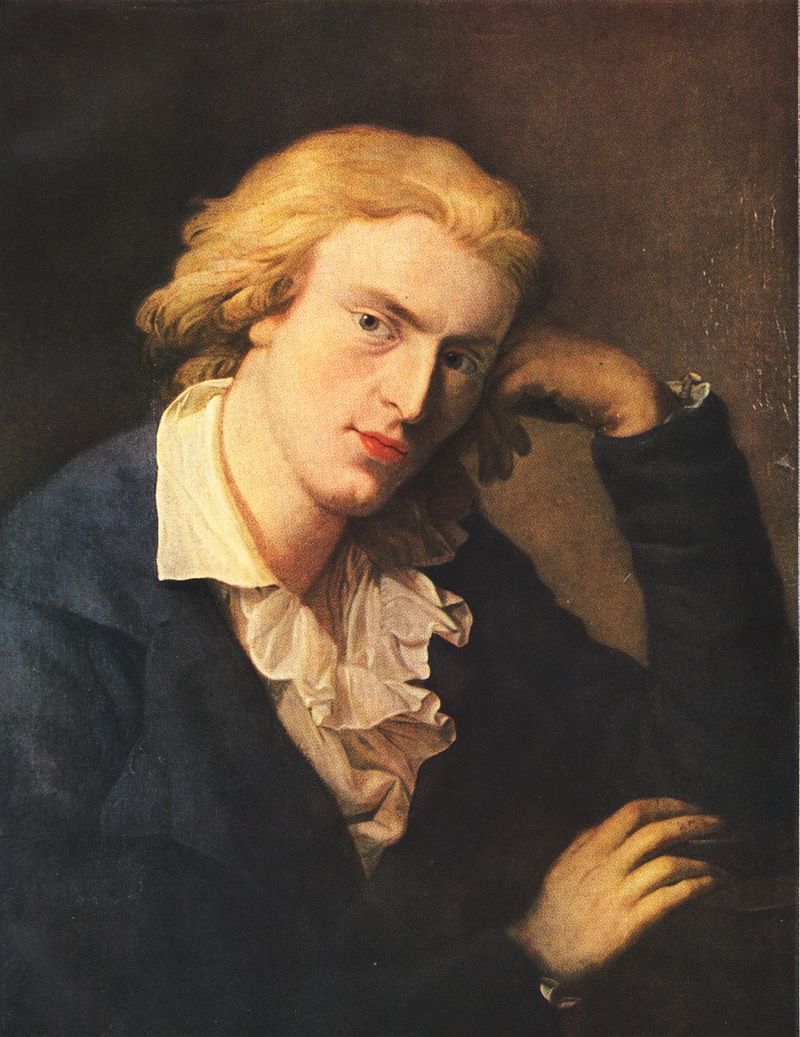
Friedrich Schiller
German playwright, poet, philosopher and historian (1759–1805)
.jpg)
rhetoric
thumb|right|upright=1.25|Painting depicting a lecture in a knight academy, painted by [[Pieter Isaacsz or Reinhold Timm for Rosenborg Castle as part of a series of seven paintings depicting the seven independent arts. This painting illustrates rhetoric.]]
thumb|upright|Jesus was a preacher in 1st-century Judea.

Claude Lévi-Strauss
French anthropologist and ethnologist (1908–2009)

Emmanuel Swedenborg
Swedish 18th century scientist and theologian (1688-1772)

Al-Kindi
Abū Yūsuf Yaʻqūb ibn ʼIsḥāq aṣ-Ṣabbāḥ al-Kindī (; ; ; ) was an Arab polymath who was active as a philosopher, mathematician, physician, and music theorist. Al-Kindi was the first of the Islamic peripatetic philosophers, and is hailed as the "father of Arab philosophy".

analytic philosophy
20th-century tradition of Western philosophy

intellectual
thumb|Prominent contemporary public intellectuals include (left to right): Yuval Noah Harari|Harari, Chomsky, Žižek
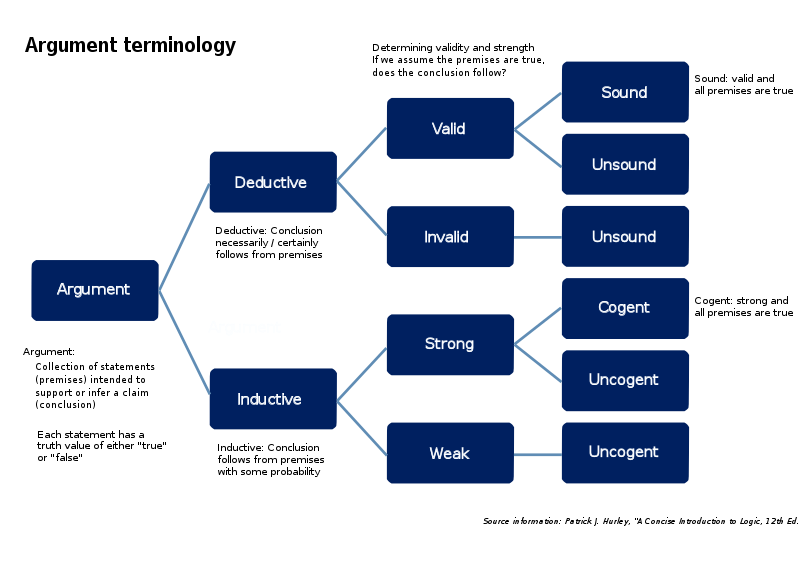
inductive reasoning
method of reasoning in which a body of observations is synthesized to hypothesize a general principle
inference
Inferences are steps in logical reasoning, moving from premises to logical consequences; etymologically, the word infer means to "carry forward". Inference is theoretically traditionally divided into deduction and induction, a distinction that dates at least to Aristotle (300s BC). Deduction is inference deriving logical conclusions from premises known or assumed to be true, with the laws of valid inference being studied in logic. Induction is inference from particular evidence to a universal conclusion. A third type of inference is sometimes distinguished, notably by Charles Sanders Peirce, c

history of philosophy
study of philosophical ideas and concepts through time
continental philosophy
set of 19th- and 20th-century philosophical traditions from mainland Europe

citation
thumb|xkcd webcomic titled "[[Wikipedian Protester". The sign says: "".]]
A citation is a reference to a source. More precisely, a citation is an abbreviated alphanumeric expression embedded in the body of an intellectual work that denotes an entry in the bibliographic references section of the work, for the purpose of acknowledging the relevance of the works of others to the topic of discussion at the spot where the citation appears.
world history
field of historical study. Not to be confused with universal history (genre)

Thiruvalluvar
Thiruvalluvar, commonly known as Valluvar, was an Indian poet and philosopher. He is best known as the author of the Tirukkuṟaḷ, a collection of couplets on ethics, political and economic matters, and love. The text is considered an exceptional and widely cherished work of Tamil literature.

intellectualism
Intellectualism is the mental perspective that emphasizes the use, development, and exercise of the intellect, and is identified with the life of the mind of the intellectual. In the field of philosophy, the term intellectualism indicates one of two ways of critically thinking about the character of the world: (i) rationalism, which is knowledge derived solely from reason; and (ii) empiricism, which is knowledge derived solely from sense experience. Each intellectual approach attempts to eliminate fallacies that ignore, mistake, or distort evidence about "what ought to be" instead of "what is"
Kwame Anthony Appiah
British-American philosopher and writer

Progress and Poverty
non-fiction work by Henry George
intellectual history
historiography of major ideas and thinkers

psychohistory
Psychohistory is a transdisciplinary field of knowledge that represents an amalgam of psychology, history, psychoanalysis, political psychology, anthropology, ethnology, and related social sciences, art, and humanities. Psychohistorians examine the "why's" of history, utilizing the bottom-up approach rather than starting with psychological theories. They combine the insights of psychodynamic psychology, especially psychoanalysis, with the research methodology of the social sciences and humanities, to understand the emotional origin of the behavior of individuals, groups and nations, past and p
characteristica universalis
universal and formal language imagined by the German polymathic genius, mathematician, scientist and philosopher Gottfried Leibniz able to express mathematical, scientific, and metaphysical concepts
Speculum literature
medieval literary genre

The 100 Most Influential Books Ever Written
1998 essay by Martin Seymour-Smith
cultural radicalism
movement in Nordic culture
history of creationism
history of thought based on the premise that the natural universe had a beginning, and came into being supernaturally
Four continents
16th century division of the world into four continents; Africa, America, Asia and Europe

history of encyclopedias
aspect of history