Category
page 1Internet culture

selfie
thumb|Selfie by a radio host
A selfie () is a self-portrait photograph or a short video, typically taken with an electronic camera or smartphone.
The camera would be usually held at arm's length or supported by a selfie stick instead of being controlled with a self-timer or remote. The concept of shooting oneself while viewing their own image in the camera's LCD monitor is also known as self-recording.
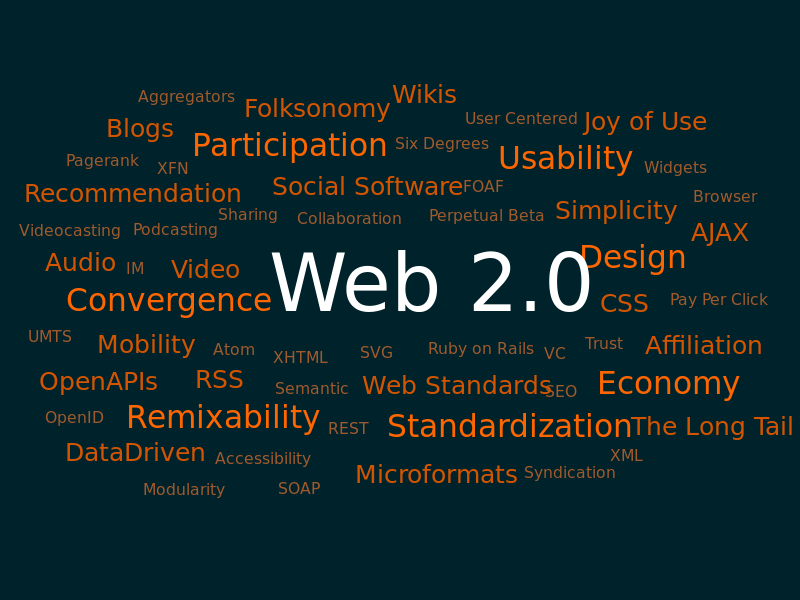
Web 2.0
World Wide Web sites that use technology beyond the static pages of earlier Web sites

online chat
real-time texting over the Internet

Streisand effect
phenomenon whereby an attempt to hide, remove, or censor a piece of information has the unintended consequence of publicizing the information more widely, usually facilitated by the Internet

nerd
thumb|Example of a stereotypical 'nerd' appearance - note the round glasses, braces, trousers pulled too high, and off-putting enthusiasm
A nerd is a person seen as over-intellectual, obsessive, introverted, lacking social skills and socio-cultural intuition. Such a person may spend inordinate amounts of time on unpopular, little-known, or non-mainstream activities, which are generally either highly technical, abstract, or relating to niche topics such as science fiction or fantasy, to the exclusion of more mainstream activities. Additionally, many so-called nerds are described as being shy, q

webcomic
Webcomics (also known as online comics or Internet comics) are comics published on the internet, such as on a website or a mobile app. While many webcomics are published exclusively online, others are also published in magazines, newspapers, or comic books.
Webcomics can be compared to self-published print comics in that anyone with an Internet connection can publish their own webcomic. Readership levels vary widely; many are read only by the creator's immediate friends and family, while some of the most widely read have audiences of well over one million readers. Webcomics range from traditio

Internet etiquette
code of behaviour for use of the Internet

autonomous sensory meridian response
thumb|An illustration of the route of ASMR's tingling sensation
%2028.JPG)
geek
thumb|A geek girl at the [[Geek Picnic (Moscow) wearing a Geek shirt and a VR headset]]
cybersex
Cybersex, also called Internet sex, computer sex, netsex, e-sex, cybering, is a virtual sex encounter in which two or more people have long distance sex via electronic text or video communication (webcams, VR headsets, etc.) and other electronics (such as teledildonics) connected to a computer network.

digital nomad
those who use telecommunications technologies to earn a living and, more generally, conduct their life in a nomadic manner
internet culture
culture that has emerged, or is emerging, from the use of computer networks
internet use disorder
excessive internet use that causes psychological disorders

ROT13
right|frameless
mukbang
A mukbang ( , ; ; ; ) is an online broadcast in which a host consumes food (from popular fast-food restaurants or home-prepared dishes) while interacting with the audience or providing commentary. The genre became popular in South Korea in the early 2010s, and has become a global trend since the mid-2010s. Varieties of foods ranging from pizza to noodles are consumed in front of a camera. The purpose of mukbang is also sometimes educational, introducing viewers to regional specialties or gourmet spots.
manosphere
The manosphere is a varied collection of websites, blogs, and online forums promoting masculinity, misogyny, and opposition to feminism. Communities within the manosphere include men's rights activists (MRAs), incels (involuntary celibates), Men Going Their Own Way (MGTOW), pick-up artists (PUA), and fathers' rights groups. While the specifics of each group's beliefs sometimes conflict, they are generally united in the belief that society is biased against men due to the influence of feminism, and that feminists promote misandry (hatred of men). Acceptance of these ideas is described as "takin
computer-mediated communication
human communication that occurs through the use of two or more electronic devices; communicative transaction that occurs through the use of two or more networked computers
languages used on the Internet
Wikimedia list article

imageboard
An imageboard (IB) is a type of Internet forum that focuses on the posting of images, often alongside text and discussion. The first imageboards were created in Japan as an extension of the textboard concept. These sites later inspired the creation of a number of English-language imageboards.
1% rule
hypothesis that more people will lurk in a virtual community than will participate
revenge porn
capture, publishing or distribution of nude or sexually explicit images or videos without consent
cyberfeminism
Cyberfeminism is a feminist approach which foregrounds the relationship between cyberspace, the Internet, and technology. It can be used to refer to a philosophy, art practices, methodologies or community. The term was coined in the early 1990s to describe the work of feminists interested in theorizing, critiquing, exploring and re-making the Internet, cyberspace and new-media technologies in general.

r/place
r/place was a recurring collaborative project and social experiment hosted on the content aggregator site Reddit. Originally launched on April Fools' Day 2017, it has since been repeated again on April Fools' Day 2022 and on July 20, 2023.
webcam model
video performer who is streamed upon the Internet with a live webcam broadcast
System Administrator Appreciation Day
abbreviated as SAAD, an unofficial celebration day for system administrators
internet art
art that uses the Internet as a medium or subject
GNU Manifesto
manifesto written by Richard Stallman
A Declaration of the Independence of Cyberspace
John Perry Barlow's essay on internet freedom
sociology of the Internet
analysis of Internet communities through sociology
Clay Shirky
American technology writer
cyberchondria
Cyberchondria, otherwise known as compucondria, is the unfounded escalation of concerns about common symptomology based on review of search results and literature online. Articles in popular media position cyberchondria anywhere from temporary neurotic excess to adjunct hypochondria. Cyberchondria is a growing concern among many healthcare practitioners as patients can now research any and all symptoms of a rare disease, illness or condition, and manifest a state of medical anxiety.
lurker
In Internet culture, a lurker is typically a member of an online community who observes, but does not participate by posting or commenting. The exact definition depends on context. Lurkers make up a large proportion of all users in online communities. Lurking allows users to learn the conventions of an online community before they participate, improving their socialization when they eventually "de-lurk". However, a lack of social contact while lurking sometimes causes loneliness or apathy among lurkers.
social network analysis
analysis of social structures using network and graph theory
shipping
desire by fans for fictional characters (or more rarely, real people) to be in a romantic or sexual relationship
dick pic
picture of man genitalia, usually sent by message service
The Daily Dot
digital media company covering Internet culture, based in Austin, Texas

otherkin
thumb|An acute heptagram is a common symbol for the otherkin communityOtherkin is a subculture of individuals who identify as partially or entirely nonhuman. An umbrella term for this would be alterhuman. Some otherkin believe their identity derives from non-physical spiritual phenomena, such as having a nonhuman soul or reincarnation. Some otherkin give non-spiritual explanations for themselves, such as unusual psychology or neurodivergence, or as part of dissociative identity disorder or being plural. Many otherkins say they are physically human, but not all.
EncroChat
EncroChat was a Europe-based communications network and service provider that offered modified smartphones allowing encrypted communication among subscribers. It was used primarily by organised crime members to plan criminal activities.
fan film
film inspired by a well known source, created by fans rather than by the original creators
content farm
website hosting a high volume of cheaply-produced content

sextortion
thumb|A mockup example of a sextortion text message. After obtaining naked photographs or videos of the victim, the scammer then threatens the publication of these pictures or to send them to close friends and family members. A demand of money is then made, though usually the scam is either a bluff (e.g. the scammer never intended to publish them) or the pictures/videos are published regardless even if the money is sent.
Sextortion (a portmanteau of sex and extortion) employs non-physical forms of coercion to extort sexual favors from the victim. Sextortion refers to the broad category of sexu
Flash animation
animation technique which utilizes Adobe Flash software
virtual school
school that teaches students through Internet

fansite
thumb|upright=1.3|A family tree of fictional characters, from a Catan fansite
internet safety
being aware of personal safety, privacy and security risks associated with using the Internet, and the self-protection from computer crime

Anti-café
thumb|Ziferblat, an anti-café in Moscow
Internet relationship
relationship between two or more people who have met online
Editor war
rivalry between users of Emacs and Vim
online counseling
form of counseling
Trojan Room coffee pot
predecessor of the webcam
Netocracy
Netocracy was a term invented by the editorial board of the American technology magazine Wired in the early 1990s. A portmanteau of Internet and aristocracy, netocracy refers to a perceived global upper-class that bases its power on a technological advantage and networking skills, in comparison to what is portrayed as a bourgeoisie of a gradually diminishing importance.
participatory culture
cultural production made through social interactions of different communities and groups
content moderation
the process of detecting contributions that are irrelevant, obscene, illegal, harmful, or insulting with regards to useful or informative contributions
Internet linguistics
domain of linguistics

PostSecret
thumb|250px|Screenshot of PostSecret with an example postcard.
PostSecret is an ongoing community mail art project, created by Frank Warren in 2004, in which people mail their secrets anonymously on a homemade postcard. Selected secrets are then posted on the PostSecret website, or used for PostSecret's books or museum exhibits.

pronunciation of GIF
linguistic dispute
.jpg)
post-internet
thumb|"Chernobyl", from the "Computer Viruses" series, by Stepan Ryabchenko (2011).
Post-Internet is a loosely defined 21st-century art movement that generally referred to contemporary art concerning the concept of the Internet no longer being perceived as a novelty in society. In 2006, artist Marisa Olson coined the term "postinternet art" to describe her work. The term was then adopted by writer Gene McHugh who authored a blog titled "Post-Internet" in 2009, which further discussed and popularized the concept into a movement growing out of previous Internet Art.
World Internet Day
Day to promote the importance of information and communications technology
reaction video
videos in which people react to events or other videos
Mozilla Open Badges
past microcredentials/badges project