Category
page 1Internet Standards
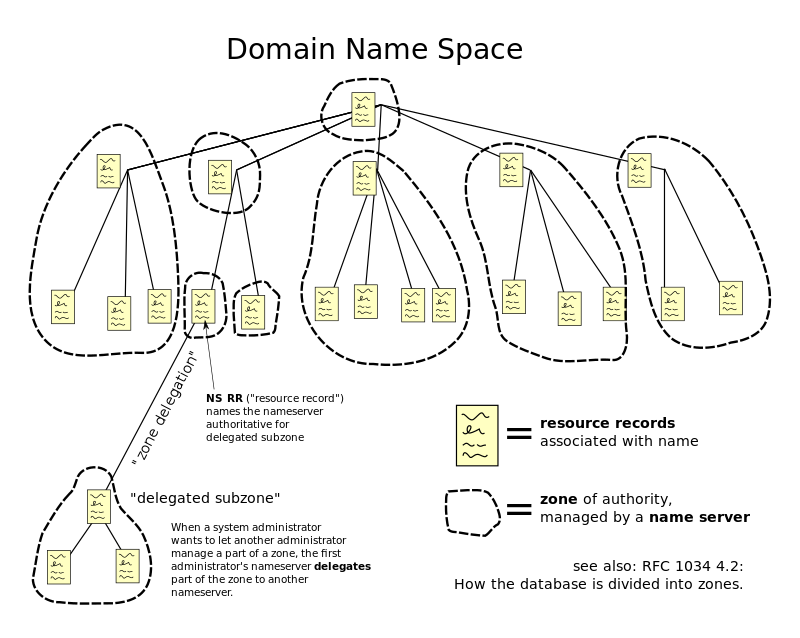
Domain Name Server
system to identify resources on a network

File Transfer Protocol
standard protocol for transferring files over TCP/IP networks

Tor
daemon and utilities for an anonymizing network

Telnet
Telnet (sometimes stylized TELNET) is a client-server application protocol that provides access to virtual terminals of remote systems on local area networks or the Internet. It is a protocol for bidirectional 8-bit communications. Its main goal was to connect terminal devices and terminal-oriented processes.
User Datagram Protocol
principal protocol used for transmission of datagrams across an IP network

Dynamic Host Configuration Protocol
computer network protocol

IPv4
Internet Protocol version 4 (IPv4) is the first version of the Internet Protocol (IP) as a standalone specification. It is one of the core protocols of standards-based internetworking methods in the Internet and other packet-switched networks. IPv4 was the first version deployed for production on SATNET in 1982 and on the ARPANET in January 1983. It is still used to route most Internet traffic today, even with the ongoing deployment of Internet Protocol version 6 (IPv6), its successor.
IPv4 uses a 32-bit address space which provides 4,294,967,296 (232) unique addresses, but large blocks are re

Address Resolution Protocol
telecommunications protocol used for resolution of network layer addresses

Usenet
thumb|upright=1.3|A 2004 discussion in the Usenet group comp.text.tex
thumb|A diagram of Usenet servers and clients. The coloured dots on the servers represent the newsgroups they carry. Coloured arrows between servers indicate newsgroup content exchanges (news feeds). Arrows between clients and servers indicate that a user is subscribed to a certain newsgroup and reads or submits articles there.Notably, clients never connect with each other, but still have access to each other's posts even when they also never connect to the same server.

Uniform Resource Identifier
string of characters used to identify a name of a resource on a network such as the internet

Internet Control Message Protocol
core protocol of the Internet Protocol suite, mainly used on IPv4 networks to indicate error messages in network operations

Simple Network Management Protocol
series of computer network protocols for managing systems connected to a network
Open Shortest Path First
Internet protocol

Lightweight Directory Access Protocol
computer network protocol
Routing Information Protocol
computer network protocol

Network Time Protocol
standard protocol for synchronizing time across devices

Border Gateway Protocol
protocol for communicating routing information on the Internet
Network News Transfer Protocol
computer network protocol
Point-to-point protocol
a simple data link layer protocol used between two devices

Internet Society
Internet development organization

Base64
Base64 is a binary-to-text encoding that uses 64 printable characters to represent each 6-bit segment of a sequence of byte values. As for all binary-to-text encodings, Base64 encoding enables transmitting binary data on a communication channel that only supports text.
Multiprotocol Label Switching
network routing scheme based on labels identifying paths
Gopher
TCP/IP application layer protocol
regional Internet registry
regional organization responsible for managing network numbering for its region

RADIUS
Remote Authentication Dial-In User Service (RADIUS) is a networking protocol that provides centralized authentication, authorization, and accounting (AAA) management for users who connect and use a network service. RADIUS was developed by Livingston Enterprises in 1991 as an access server authentication and accounting protocol. It was later brought into IEEE 802 and IETF standards.
Internet Group Management Protocol
Primary protocol for establishing multicast group memberships on IPv4 networks. ICMPv6 is used for IPv6 networks.

WHOIS
WHOIS (pronounced as the phrase "who is") is a query and response protocol that is used for querying databases that store an Internet resource's registered users or assignees. These resources include domain names, IP address blocks and autonomous systems, but it is also used for a wider range of other information. The protocol stores and delivers database content in a human-readable format. The current iteration of the WHOIS protocol was drafted by the Internet Society, and is documented in .
Classless Inter-Domain Routing
method for IP address allocation and routing
Domain Name System Security Extensions
suite of IETF specifications for securing certain kinds of information provided by DNS
vCard
vCard, also known as VCF ("Virtual Contact File"), is a file format standard for electronic business cards. vCards can be attached to e-mail messages, sent via Multimedia Messaging Service (MMS), on the World Wide Web, instant messaging, NFC or through QR code. They can contain name and address information, phone numbers, e-mail addresses, URLs, logos, photographs, and audio clips.
Reverse Address Resolution Protocol
obsolete computer networking protocol
Stream Control Transmission Protocol
computer network protocol
mobile web
browser-based Internet services accessed from handheld mobile devices through a mobile or other wireless network
Intermediate System to Intermediate System
Intermediate System to Intermediate System (IS-IS, also written ISIS) is a link-state interior gateway protocol (IGP) used to exchange routing information within a network. Routers share network topology information so they can find the most efficient paths for data. IS-IS is typically deployed within a single autonomous system and is used in large enterprise and service provider networks.
Bootstrap protocol
protocol
Neighbor Discovery Protocol
protocol in the Internet Protocol Suite used with IPv6
Berkeley r-commands
suite of remote-access utilities
Layer 2 Tunneling Protocol
computer network protocol
FTPS
FTPS (also known as FTP-SSL and FTP Secure) is an extension to the commonly used File Transfer Protocol (FTP) that adds support for the Transport Layer Security (TLS) and, formerly, the Secure Sockets Layer (SSL, which is now prohibited by RFC7568) cryptographic protocols.
percent-encoding
Percent-encoding, also known as URL encoding, is a method to encode arbitrary data in a uniform resource identifier (URI) using only the US-ASCII characters legal within a URI. Percent-encoding is used to ensure special characters do not interfere with the URI's structure and interpretation. Special characters are replaced with a percent sign (%) followed by two hexadecimal digits representing the character's byte value. For example, a space is commonly encoded as %20:
Finger
simple network protocols for the exchange of human-oriented status and user information

Miracast
Miracast is a wireless communications standard created by the Wi-Fi Alliance which is designed to transmit video and sound from devices (such as laptops or smartphones) to display receivers (such as TVs, monitors, or projectors). It uses Wi-Fi Direct to create an ad hoc encrypted Wi-Fi connection and can roughly be described as "HDMI over Wi-Fi", replacing cables in favor of radio waves. Miracast is utilised in many devices and is used or branded under various names by different manufacturers, including Smart View (by Samsung), SmartShare (by LG), screen mirroring (by Sony), Cast (in Windows&n
Session Description Protocol
computer network protocol
Simple Authentication and Security Layer
framework for authentication and data security in Internet protocols
wide area information server
service on Internet

H.248
The Gateway Control Protocol (Megaco, H.248) is an implementation of the media gateway control protocol architecture for providing telecommunication services across a converged internetwork consisting of the traditional public switched telephone network (PSTN) and modern packet networks, such as the Internet. H.248 is the designation of the recommendations developed by the ITU Telecommunication Standardization Sector (ITU-T) and Megaco is a contraction of media gateway control protocol used by the earliest specifications by the Internet Engineering Task Force (IETF). The standard published in
internet standard
standard published by the Internet Engineering Task Force

Salsa20 and ChaCha20
Salsa20 (formerly known as Snuffle 2005) and the closely related ChaCha are stream ciphers developed by Daniel J. Bernstein. Salsa20, the original cipher, was designed in 2005, then later submitted to the eSTREAM European Union cryptographic validation process by Bernstein. ChaCha is a modification of Salsa20 published in 2008. It uses a new round function that increases diffusion and increases performance on some architectures.
Online Certificate Status Protocol
communications protocol
syslog
In computing, syslog () is a standard for message logging. It allows separation of the software that generates messages, the system that stores them, and the software that reports and analyzes them. Each message is labeled with a facility code, indicating the type of system generating the message, and is assigned a severity level.
differentiated services
computer networking architecture for classifying traffic and applying different routing policies to each classification of traffic
Diameter
computer network protocol
Exterior Gateway Protocol
Internet protocol
Archie
FTP search engine

iCalendar
The Internet Calendaring and Scheduling Core Object Specification (iCalendar) is a media type which allows users to store and exchange calendaring and scheduling information such as events, to-dos, journal entries, and free/busy information, and together with its associated standards has been a cornerstone of the standardization and interoperability of digital calendars across different vendors. Files formatted according to the specification usually have an extension of . With supporting software, such as an email reader or calendar application, recipients of an iCalendar data file can respond

TR-069
thumb|A DSL modem, which is type of [[customer-premises equipment. The WAN interface of this device, in this case the DSL port, could expose CWMP to the internet service provider auto-configuration server (ACS).]]
Technical Report 069 (TR-069) is a document by the Broadband Forum that specifies the CPE WAN Management Protocol (CWMP). CWMP is a SOAP-based protocol for communication between an internet service provider auto configuration server (ACS) and customer-premises equipment (CPE). Features include auto-configuration, firmware image management, status and performance monitoring, and diagn
link layer
lowest abstraction layer in the Internet Protocol Suite
External Data Representation
standard data serialization format
Open Network Computing Remote Procedure Call
computer network protocol
Link Control Protocol
computer network protocol