Category
page 1Islamic culture
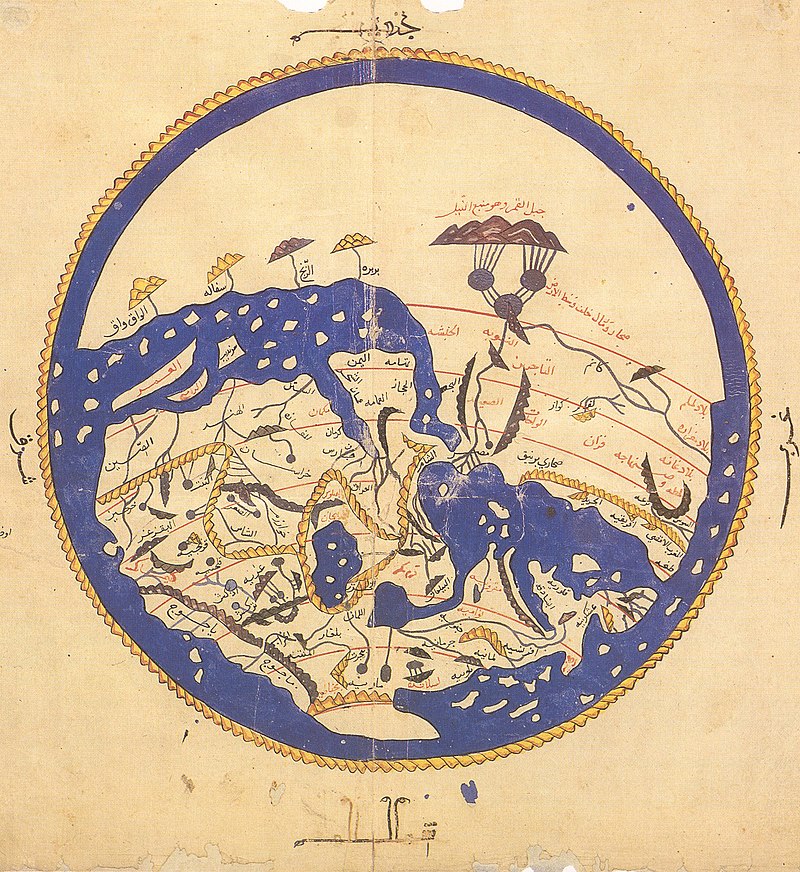
Islamic Golden Age
period of cultural flourishing in the 8th to 13th centuries

harem
thumb|upright=1.2|Ladies of Caubul|Kabul (1848 lithograph, by James Rattray) showing unveiling in [[zenana areas.]]

Arabic literature
written literature in Arabic language
.jpeg)
bazaar
thumb|upright=1.3|The Grand Bazaar, Istanbul|Grand Bazaar in [[Istanbul, Turkey]]
A bazaar or souk is a marketplace consisting of multiple small stalls or shops, especially in the Middle East, the Balkans, Central Asia, North Africa and South Asia. They are traditionally located in vaulted or covered streets that have doors on each end and served as a city's central marketplace.
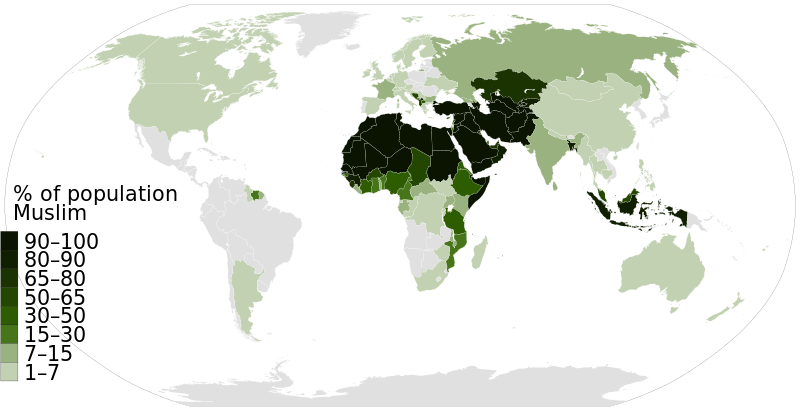
Muslim world
Muslim-majority countries, states, districts, or towns

arabesque
thumb|340px|Stone relief with arabesques of tendrils, palmettes and half-palmettes in the [[Umayyad Mosque, Damascus, Syria]]
thumb|Part of a 15th-century ceramic panel from Samarkand ([[Uzbekistan) with white calligraphy on a blue arabesque background]]The arabesque is a form of artistic decoration consisting of "surface decorations based on rhythmic linear patterns of scrolling and interlacing foliage, tendrils" or plain lines, often combined with other elements. Another definition is "Foliate ornament, used in the Islamic world, typically using leaves, derived from stylised half-palmettes,

hammam
thumb|upright=1.2|Ali Gholi Agha hammam, [[Isfahan, Iran]]
A hammam (), also often called a Turkish bath by Westerners, is a type of steam bath or a place of public bathing associated with the Islamic world. It is a prominent feature in the culture of the Muslim world and was inherited from the model of the Roman thermae. Muslim bathhouses or hammams were historically found across the Middle East, North Africa, al-Andalus (Islamic Iberia, i.e. Spain and Portugal), Central Asia, the Indian subcontinent, and in Southeastern Europe (notably Balkans and Hungary) under Ottoman rule.

Muqaddimah
The Muqaddimah ( "Introduction"), also known as the Muqaddimah of Ibn Khaldun () or '''''Ibn Khaldun's Prolegomena''' (), is a book written by the historian Ibn Khaldun in 1377 which presents a view of universal history. Some modern thinkers view it as the first work dealing with the social sciences of sociology, demography, and cultural history. The Muqaddimah'' also deals with Islamic theology, historiography, the philosophy of history, economics, political theory, and ecology.

Islamic culture
Islamic lifestyle
Persian carpet
handmade carpet from Iran

miswak
The miswak is a teeth-cleaning twig made from the Salvadora persica tree. The miswak's properties have been described as follows: "Apart from their antibacterial activity which may help control the formation and activity of dental plaque, they can be used effectively as a natural toothbrush for teeth cleaning. Such sticks are effective, inexpensive, common, available, and contain many medical properties".

Misbaha
thumbnail|right|A black misbaha
A misbaha (), subḥa (), mesbah (Arabic: مِسْبَاَحْ) (Arabic and Urdu), tusbaḥ (Somali), tasbīḥ () (Iran, India, Afghanistan, Tajikistan, Bangladesh, Pakistan, Malaysia and Indonesia), or tespih (Turkish, Bosnian and Albanian) is a set of prayer beads often used by Muslims for the , the recitation of prayers (the ), as well as to glorify Allah. It resembles the japamala used in Hinduism, Jainism, Sikhism, and Buddhism, or the rosary used in Catholicism. The Arab/Iranian/Turkish and their neighbors put a lot of care as to what materials are used, generally being g

Salawat
thumb|Calligraphic Arabic text of the "Salawat": , meaning "Blessings and peace be upon Muhammad and his family", in the handwriting of Shamsuddin Asaf Jahi
thumb|Arabic text of another shape of "Salawat": , meaning "May God send his mercy and blessings upon him"
Salawat (; ) or Durud (, ) is an Islamic complimentary Arabic phrase which contains veneration for Muhammad. This phrase is usually expressed by Muslims as part of their five daily prayers (usually during the ) and also when Muhammad's name is mentioned. is a plural form of () and from the triliteral root of ṣ-l-w (the letters , ) whi
Beit Al Quran
library
.png)
Nahda
thumb|Renaissance by Moustafa Farroukh (1945), a painting symbolizing the Nahda
The Nahda (, meaning 'the Awakening'), also referred to as the Arab Awakening, Arab Enlightenment or Arab Renaissance, was a cultural movement that flourished in Arab-populated regions of the Ottoman Empire, notably in Syria, Lebanon, Egypt, and Tunisia, during the second half of the 19th century and the early 20th century.
Islamic clothing
overview of the relationship between clothing and the world religion of Islam, including a set of traditional Muslim outfits, requirements for Islamic clothing, issues of nudity and body covering, history of Muslim attitudes to clothing
Bay'ah
Bayʿah (, "Pledge of allegiance"), in Islamic terminology, is an oath of allegiance to a leader. It is known to have been practiced by the Islamic prophet Muhammad. In Bedouin culture it was a procedure for choosing the leader of the tribe, and is sometimes taken under a written pact given on behalf of the subjects by leading members of the tribe with the understanding that as long as the leader abides by certain requirements towards his people, they are to maintain their allegiance to him. Bayʿah is still practiced in countries such as Saudi Arabia and Sudan. In Morocco, bayʿah is one of the
Urdu literature
literature in the Urdu language
Na'at
Naat ( and ) is poetry in praise of the Islamic prophet, Muhammad. The practice is popular in South Asia (Bangladesh, Pakistan and India), commonly in Bengali, Punjabi, or Urdu. People who recite Naat are known as Naat Khawan or sanaa-khuaan. Exclusive "Praise to Allah" and Allah alone is called Hamd, not to be confused with 'Na'at'.
Museum of Islamic Art
art museum in Cairo, Egypt
culture of Morocco
pattern of human activity and symbolism associated with Morocco and its people
oriental rug
type of textile
Aga Khan Museum
museum dedicated to Islamic history, artifacts and art pieces in Toronto, Canada
Islamic toilet etiquette
rules in Islam when going to the toilet

Hamd
Hamd () is a word that exclusively praises God - whether written or spoken.
Thus, The word "Hamd" is always followed by the name of God (Allah) - a phrase known as the Tahmid - "al-ḥamdu li-llāh" (Arabic: ) (English: "praise be to God"). The word "Hamd" comes from the Qur'an, and is the epithet or locution which, after the Bismillah, establishes the first verse of the first chapter of the Qur'an - al Fatiha Mubarak (the opening).
Cultural Muslims
non-practicing Muslims who still identify with Islam
modern gold dinar
proposed currency that aims to revive the gold dinar of the medieval Umayyad Caliphate
Chinese Islamic cuisine
culinary traditions of Chinese Muslims
mukhannathun
Mukhannath (; plural mukhannathun (); "effeminate ones", "ones who resemble women") was a term used in Classical Arabic and Islamic literature to describe effeminate men or people with ambiguous sexual characteristics, who appeared feminine and functioned sexually or socially in roles typically carried out by women. Mukhannathun, especially those in the city of Medina, are mentioned throughout the ḥadīth literature and in the works of many early Arabic and Muslim writers. The historical role and gender identity of mukhannathun have been interpreted by predominantly Western academics of gender
Hikaye
Palestinian women's oral literature
Fidyah
In Islam, donations for missed Ramadan fast
Qamar al-Din
apricot-based drink
Maghrebi script
form of Arabic script
The 99
comic book ongoing series
Istinja
Istinja is the Islamic term for the action of using water to clean oneself after urinating and/or defecating.
Islamic flag
flag of Islamic state or other entity
Haḍra
collective supererogatory ritual performed by Sufi orders
Islamic honorifics
laudatory religious phrases in Islam
Risalat al-Huquq
early Shia text about social and religious responsibilities attributed to Ali al-Sajjad Ali ibn al-Husayn
.jpg)
Sebiba
thumb|Sebiba Touareg Exhibition of Djanet in Algeria.
Sebiba (, Tifinagh: ⵙⴱⵉⴱⴰ) is the term used in Algeria to designate a festival and the Tuareg people's dance performed on this occasion and accompanied by female drummers in the Sahara oasis of Djanet in the Tassili n'Ajjer region in southern Algeria. . The dance was recognized by UNESCO in 2014 for its significance to humanity's intangible cultural heritage.
rahle
foldable book rest used in the Islamic world

Kazan International Festival of Muslim Cinema
Muslim festival in Russia

Al-Marzubānī
'''Abū 'Abd Allāh Muḥammad ibn 'Imrān ibn Mūsā ibn Sa'īd ibn 'Abd Allāh al-Marzubānī al-Khurāsānī''' () (c. 909 – 10 November 994), was a prolific author of adab, akhbar (news), history and ḥadīth (traditions). He lived all his life in his native city, Baghdad, although his family came originally from Khurāsān.
balgha
thumb|200px|right|A pair of black balghas.Balgha (), also spelled balga, belgha, or belga, are heelless slippers made from leather. They are part of traditional dresses of the Maghreb and Egypt.
Arabi Malayalam script
Arabic script adapted for Malayalam
Hyderabadi Muslims
Indian Muslim communities
Beary
Dravidian language spoken by the Beary
milk kinship
type of fostering allegiance formed during nursing by a non-biological mother
iftar party
gathering during Ramadan
Ulu'l-amr
In Islamic culture, the term '''''ulu'l-amr'' () or uli'l-amr''' () refers to "those charged with authority or responsibility or decision, or the settlement of affairs". It is referenced in the 59th verse of the fourth chapter of the Qur'an, and outlines the necessity of Islamic followers to obey the control of Allah, Muhammad and those in authority as long as they too obey Allah and Muhammad. They are seen as the leaders and scholars of Islamic culture.
hookah lounge
establishment where patrons share hookah / shisha
Arabi Malayalam
language spoken in Kerala, Lakshadweep, Karnataka and Tamil Nadu of India
Aga Khan Trust for Culture
It is an Agency founded in 1988 and registered in Geneva as a private non-denominational philanthropic foundation.

Adab
greeting gesture traditionally used by Muslims of South Asia
Tahnik
Taḥnīk (تَحْنِيكِ) is an Islamic ceremony of rubbing the palate of a newborn baby with honey, sweet juice or pressed dates. Originally the date was softened by mastication by the pious person and rubbed on the infant's palate. The Arabic word ḥanak (حنك), pl. aḥnāk (احناك), means 'palate', from which the word taḥnīk (تَحْنِيكِ) is derived.
Ibn Fahad al-Hilli
Iraqi writer
ʿAnāq
evil character in some Islamic theologies
Rizvi
Rizvi or Razavi (Arabic/Urdu: رضوي) is the Urdu variant of the Arabic surname Ridawi and the Persian surname Razavi. It is a Muslim surname commonly associated with the branch of Husaynids, who claim descent from the Imam Ali al-Rida, a descendant of the Islamic prophet Muhammad through his grandsons, Husayn ibn Ali (patrilinealy, through his great great-grandfather Ali Zayn al-Abidin, who was the son of Husayn) and Hasan ibn Ali (through his great great-grandmother, Fatima bint Hasan, who was the daughter of Hasan). Since the Rizvi clan traces their lineage to Fatimah (the prophet's daughter)
qibla compass
compass used by Muslims, indicating the direction to Mecca
gender roles in Islam
role of men and women in Islamic culture