Category
page 1Japanese poetry

haiku
thumb|right|250px|Haiku by Matsuo Bashō reading "Quietly, quietly, / yellow mountain roses fall – / sound of the rapids"
is a type of short form poetry that originated in Japan. Traditional Japanese haiku consist of three phrases composed of 17 morae (called on in Japanese) in a 5, 7, 5 pattern; that include a kireji, or "cutting word"; and a kigo, or seasonal reference. However, haiku by classical Japanese poets, such as Matsuo Bashō, also deviate from the 17-on pattern and sometimes do not contain a kireji. Similar poems that do not adhere to these rules are generally classified as senryū.
waka
type of poetry in classical Japanese literature
senryū
is a Japanese form of short poetry similar to haiku in construction: three lines with 17 (or , often translated as syllables, but see the article on for distinctions). tend to be about human foibles while haiku tend to be about nature, and are often cynical or darkly humorous while haiku are more serious.
death poem
genre of poetry

kigo
thumb|Cherry blossoms (sakura), often simply called blossoms () are a common spring kigo.
Japanese poetry
literary tradition of Japan

kyōka
thumb|upright=2|Two pages from the anthology Kokon kyōka-bukuro (1787), by Santō Kyōden|Kitao Masanobu and published by [[Tsutaya Jūzaburō ]]
Kyōka (, "wild" or "mad poetry") is a popular, parodic subgenre of the tanka form of Japanese poetry with a metre of 5-7-5-7-7. The form flourished during the Edo period (17th–18th centuries) and reached its zenith during the Tenmei era (1781–89).
Myōjō
'''' was a monthly literary magazine published in Japan between April 1900 and November 1908. The name Myōjō'' can be translated as either Bright Star or Morning Star.

Rokkasen
thumb|488x488px|Rokkasen, by Hokusai
The are six Japanese poets of the mid-ninth century who were named by Ki no Tsurayuki in the kana and mana prefaces to the poetry anthology Kokin wakashū (c. 905–14) as notable poets of the generation before its compilers.
hokku
is the opening stanza of a Japanese orthodox collaborative linked poem, renga, or of its later derivative, renku (haikai no renga). From the time of Matsuo Bashō (1644–1694), the hokku began to appear as an independent poem, and was also incorporated in haibun (in combination with prose). In the late 19th century, Masaoka Shiki (1867–1902) renamed the standalone hokku as "haiku", and the latter term is now generally applied retrospectively to all hokku appearing independently of renku or renga, irrespective of when they were written. The term hokku continues to be used in its original sense, a
haikai
Haikai (Japanese 俳諧 comic, unorthodox) may refer in both Japanese and English to haikai no renga (renku), a popular genre of Japanese linked verse, which developed in the sixteenth century out of the earlier aristocratic renga. It meant "vulgar" or "earthy", and often derived its effect from satire and puns, though "under the influence of [Matsuo] Bashō (1644–1694) the tone of haikai no renga became more serious". "Haikai" may also refer to other poetic forms that embrace the haikai aesthetic, including haiku and senryū (varieties of one-verse haikai), haiga (haikai art, often accompanied by h
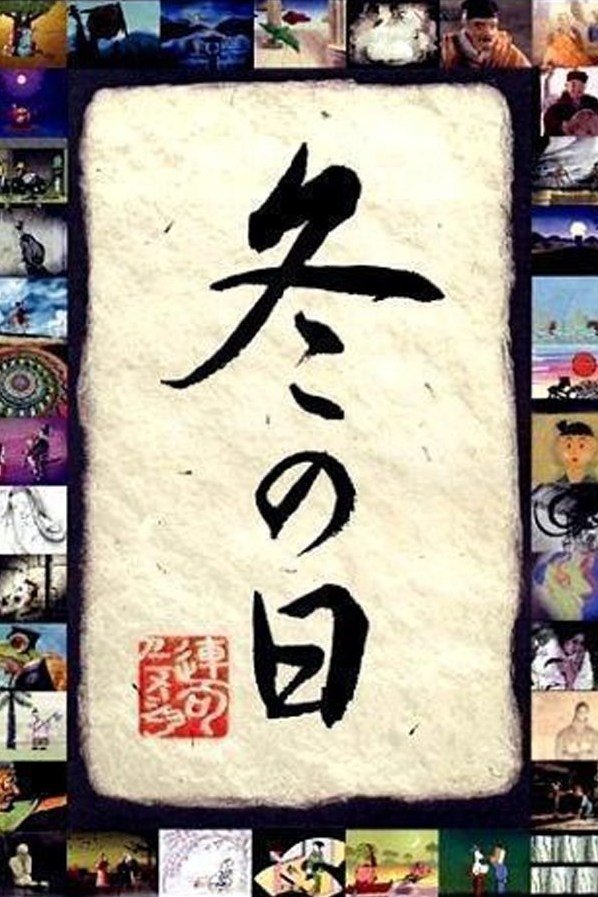
Winter Days
2003 film by Kihachirō Kawamoto
dodoitsu
Dodoitsu (都々逸) is a form of Japanese poetry developed towards the end of the Edo period. Often concerning love or work, and usually comical, Dodoitsu poems consist of four lines with the moraic structure 7-7-7-5 and no rhyme for a total of 26 morae, making it one of the longer Japanese forms. The form, tone and structure of Dodoitsu derive from Japanese folk song traditions.
ryūka
is a genre of songs and poetry originating from the Okinawa Islands, Okinawa Prefecture of southwestern Japan. Most ryūka featured the 8-8-8-6 syllable structure.
kireji
are a special category of words used in certain types of Japanese traditional poetry. It is regarded as a requirement in traditional haiku, as well as in the hokku, or opening verse, of both classical renga and its derivative renku (haikai no renga). There is no exact equivalent of kireji in English, and its function can be difficult to define. It is said to supply structural support to the verse. When placed at the end of a verse, it provides a dignified ending, concluding the verse with a heightened sense of closure. Used in the middle of a verse, it briefly cuts the stream of thought, indic
uta monogatari
literary subgenre of the monogatari
gogyōka
Gogyohka () is a five-line, untitled, Japanese poetic form. Unlike tanka (57577 syllables), Gogyohka has no restrictions on line length.
kakekotoba
A or pivot word is a rhetorical device used in the Japanese poetic form waka. This trope uses the phonetic reading of a grouping of kanji (Chinese characters) to suggest several interpretations: first on the literal level (e.g. 松, matsu, meaning "pine tree"), then on subsidiary homophonic levels (e.g. 待つ, matsu, meaning "to wait"). Thus it is that many waka have pine trees waiting around for something. The presentation of multiple meanings inherent in a single word allows the poet a fuller range of artistic expression with an economical syllable-count. Such brevity is highly valued in Japanese
renku
, or , is a Japanese form of popular collaborative linked verse poetry. It is a development of the older Japanese poetic tradition of ushin renga, or orthodox collaborative linked verse. At renku gatherings participating poets take turns providing alternating verses of 17 and 14 morae. Initially haikai no renga distinguished itself through vulgarity and coarseness of wit, before growing into a legitimate artistic tradition, and eventually giving birth to the haiku form of Japanese poetry. The term renku gained currency after 1904, when Kyoshi Takahama started to use it.
utamakura
is a rhetorical concept in Japanese poetry.
Danrin school
makurakotoba
are figures of speech used in Japanese poetry in association with certain words. The set phrase can be thought of as a "pillow" for the noun or verb it describes, although the actual etymology is not fully known. It can also describe associations and allusions to older poems (see ).
uta-awase
thumb|right|300px|Eleventh-century scroll of the Poetry Contest held by the Empress in the Kanpyō (era)|Kampyō era (c. 890); one of several manuscripts of poetry contests that have been designated [[National Treasures; Tokyo National Museum]]
zappai
is a form of Japanese poetry rooted in haikai. It is related to, but separate from, haiku and senryū. Lee Gurga defines zappai as a form of poetry that "includes all types of seventeen syllable poems that do not have the proper formal or technical characteristics of haiku." The Haiku Society of America mentioned zappai while defining similar forms though their comments were later rebutted by Richard Gilbert and Shinjuku Rollingstone.