Category
page 1Jiangnan

Shanghai
Shanghai is a direct-administered municipality and the most populous urban area in China. It has a population of 29,558,908 in the urban area as of 2025. The city is located on the Chinese shoreline on the southern estuary of the Yangtze River, with the Huangpu River bisecting the city. Shanghai is a global center for finance, business and economics, research, science and technology, manufacturing, transportation, tourism, and culture. The Port of Shanghai is the world's busiest container port. As of 2022, the Greater Shanghai metropolitan area was estimated to produce a gross metropolitan pro

Nanjing
Nanjing is the capital of Jiangsu, East China. The city, which is located in the southwestern corner of the province, has 11 districts, an administrative area of , and a population of 9,423,400.
Situated in the Yangtze River Delta, Nanjing has a prominent place in Chinese history and culture, having served as the capital of various Chinese dynasties, kingdoms and republican governments dating from the 3rd century to 1949, and has thus long been a major center of culture, education, research, politics, economy, transport networks and tourism, being the home to one of the world's largest inland
Hangzhou
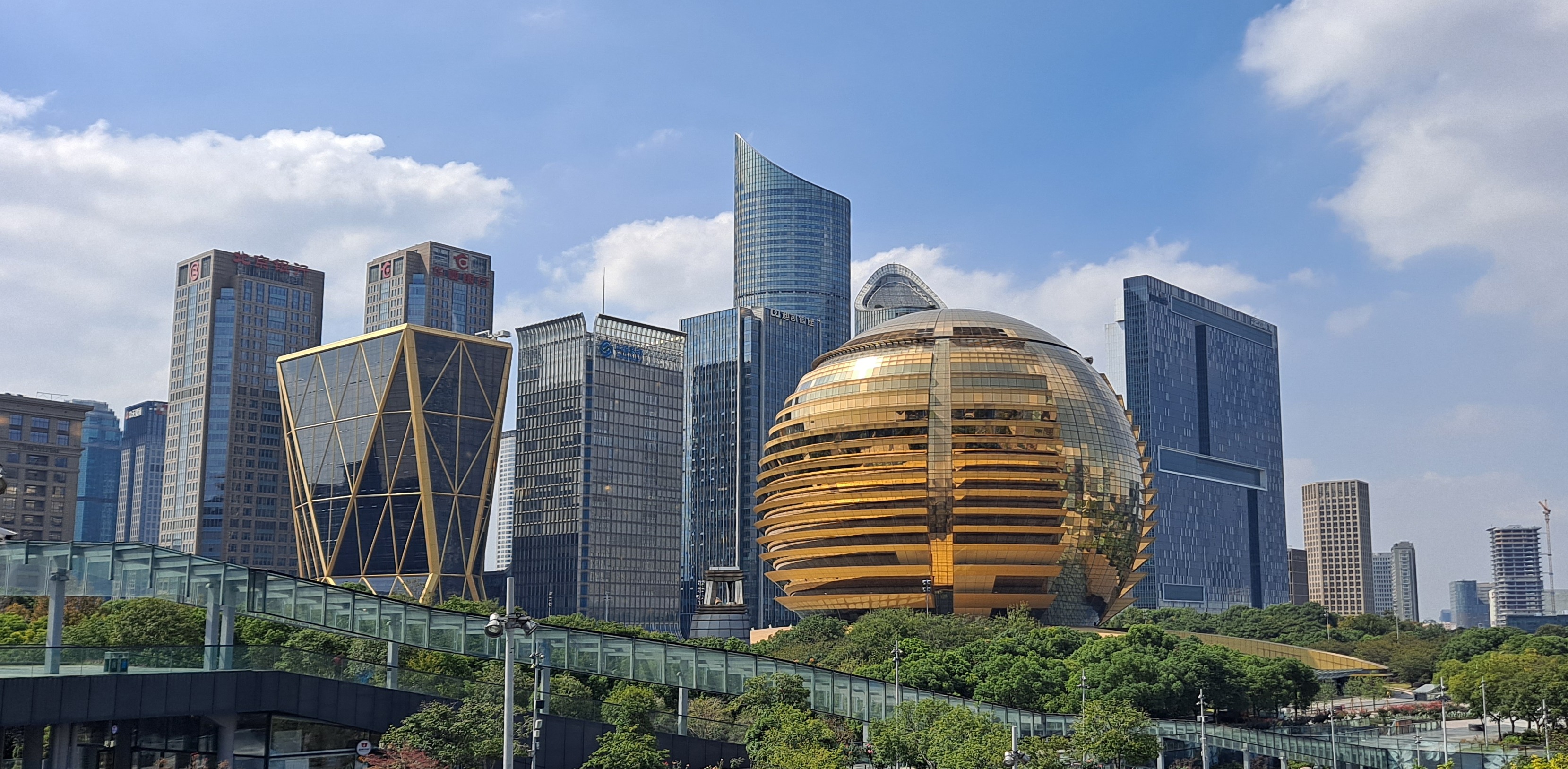
Hangzhou is the capital city and most populous city of Zhejiang province, China, situated at the intersection of the southern terminus of the Grand Canal and the head of Hangzhou Bay. Renowned as one of the Eight Ancient Capitals of China, Hangzhou is celebrated for its cultural heritage and its West Lake, a UNESCO World Heritage site.
.jpg)
Zhejiang
Zhejiang is a coastal province in East China. Its capital and largest city is Hangzhou, with other notable cities including Ningbo and Wenzhou. Zhejiang is bordered by Jiangsu and Shanghai to the north, Anhui to the northwest, Jiangxi to the west and Fujian to the south. To the east is the East China Sea, beyond which lies the Ryukyu Islands. The population of Zhejiang stands at 64.6 million, the 8th largest in China. It has been called "the backbone of China" because it is a major driving force in the Chinese economy and being the birthplace of several notable people, including the Chine
Suzhou
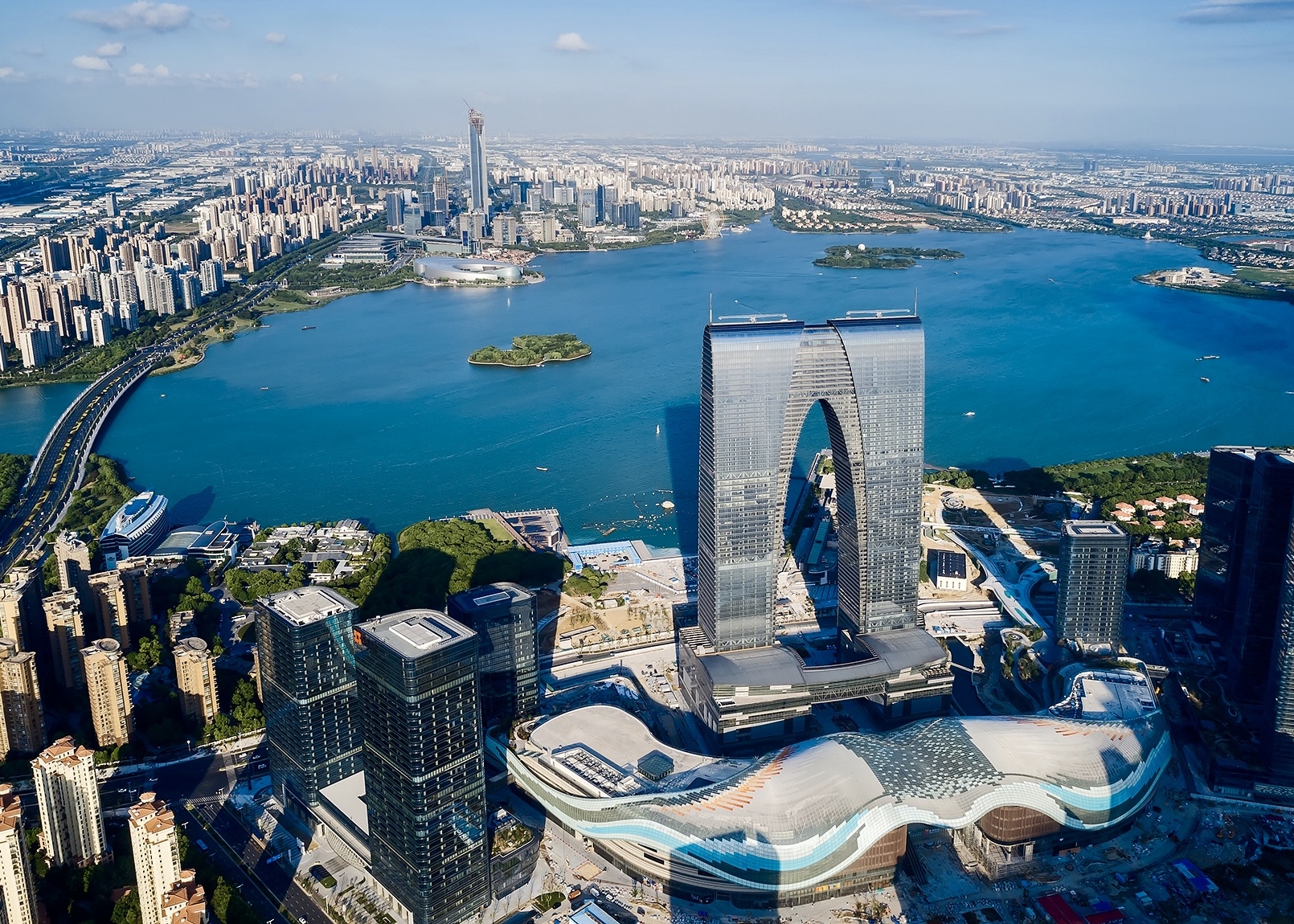
Suzhou is the most populous prefecture-level city in Jiangsu province, China, and was the historic economic, cultural, and scholarly center of China from the Song to Qing dynasty. Suzhou is a major tourist destination and industrial hub of Eastern China, specializing in high-end manufacturing. Renowned as the cradle of Wu culture, Suzhou flourished as a hub of trade, arts, and intellectual life along the Grand Canal, helping shape China's economic and cultural development for centuries. The city is internationally famous for its classical gardens, which harmonize architecture, water, rocks, an

Ningbo
Ningbo is a sub-provincial city in northeastern Zhejiang province, People's Republic of China. It comprises six urban districts, two satellite county-level cities, and two rural counties, including several islands in Hangzhou Bay and the East China Sea. Ningbo is the southern economic center of the Yangtze Delta megalopolis, which includes Shanghai among other cities. The port of Ningbo–Zhoushan, spread across several locations, is the world's busiest port by cargo tonnage and the world's third-busiest container port since 2010.

Wuxi
Wuxi (, ) is a city in southern Jiangsu, China. As of 2024, it had a population of 7,495,000. The city lies in the southern Yangtze delta and borders Lake Tai. Notable landmarks include Lihu Park, the Mt. Lingshan Grand Buddha Scenic Area and its -tall Grand Buddha at Ling Shan statue, Xihui Park, Wuxi Zoo, and the Wuxi Museum. Transportation options include Wuxi Shuofang Airport, Wuxi Metro, Shanghai–Nanjing intercity high-speed railway, and Beijing–Shanghai high-speed railway. Wuxi is home to Jiangnan University.

Wenzhou
Wenzhou, formerly known as Yongjia, is a prefecture-level city in Zhejiang, China. Situated on the southeastern coast of China, the city sits at the lower reaches and estuary of the Ou River, bordered by the Zhejiang–Fujian Hills to the west and the East China Sea to the east. It governs four districts, three county-level cities and five counties, with the municipal office in Lucheng. Recognised both as one of the 27 core cities of the Yangtze River Delta Economic Zone and one of the five central cities of the Western Taiwan Straits Economic Zone, the city serves as the only junction between t

Nantong
Nantong is a prefecture-level city in southeastern Jiangsu province, China. Located on the northern bank of the Yangtze River, near the river mouth. Nantong is a vital river port bordering Yancheng to the north; Taizhou to the west; Suzhou, Wuxi and Shanghai to the south across the river; and the East China Sea to the east. Its population was 7,726,635 as of the 2020 census, 3,766,534 of whom lived in the built-up area made up of three urban districts.
Eastern Wu
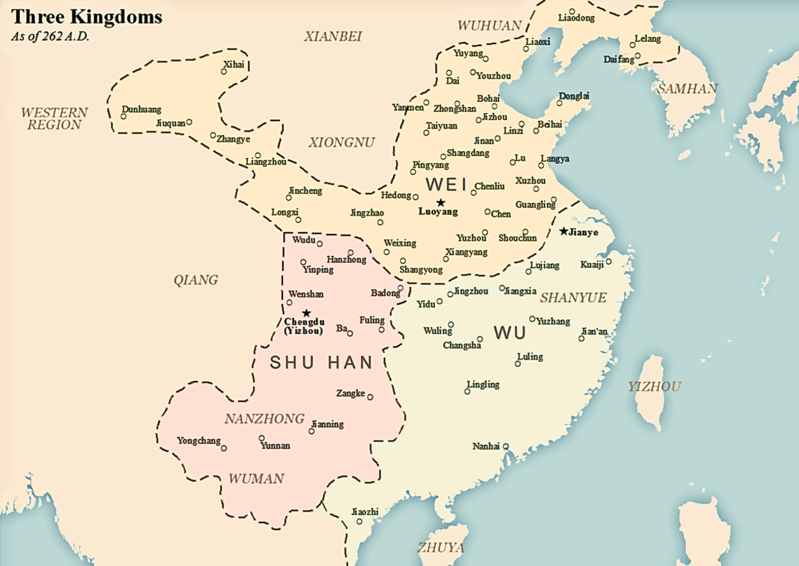
one of the Three Kingdoms of China (222-280)

Jiangnan
thumb|right|250px|Xishi Bridge in Suzhou, [[Jiangsu]]
Yang Wu
one of the Ten Kingdoms in 10th-century eastern and central China

Wuyue
Wuyue (; ) was a dynastic state of China and one of the Ten Kingdoms during the Five Dynasties and Ten Kingdoms period of Chinese history. It was ruled by the Qian clan of Haiyan (海鹽錢氏), whose family name remains widespread in the kingdom's former territory.
Shanyue
The Shanyue (山越) were an ancient conglomeration of upland Yue hill tribes living in what is today the mountainous regions of Southern China and Northern Vietnam during the Han dynasty. Since the Southern part of modern China prior to the Qin conquest was not yet controlled by the Han dynasty. As the Han imperial court only claimed ownership of the territories of the southern portions, the empire lacked the military means to realistically control and subdue them prior the southward expansion. To ensure a sustainable source of livelihood to support their survival, the Shanyue would regularly con
Speakers of Wu Chinese
Han Chinese subdivision