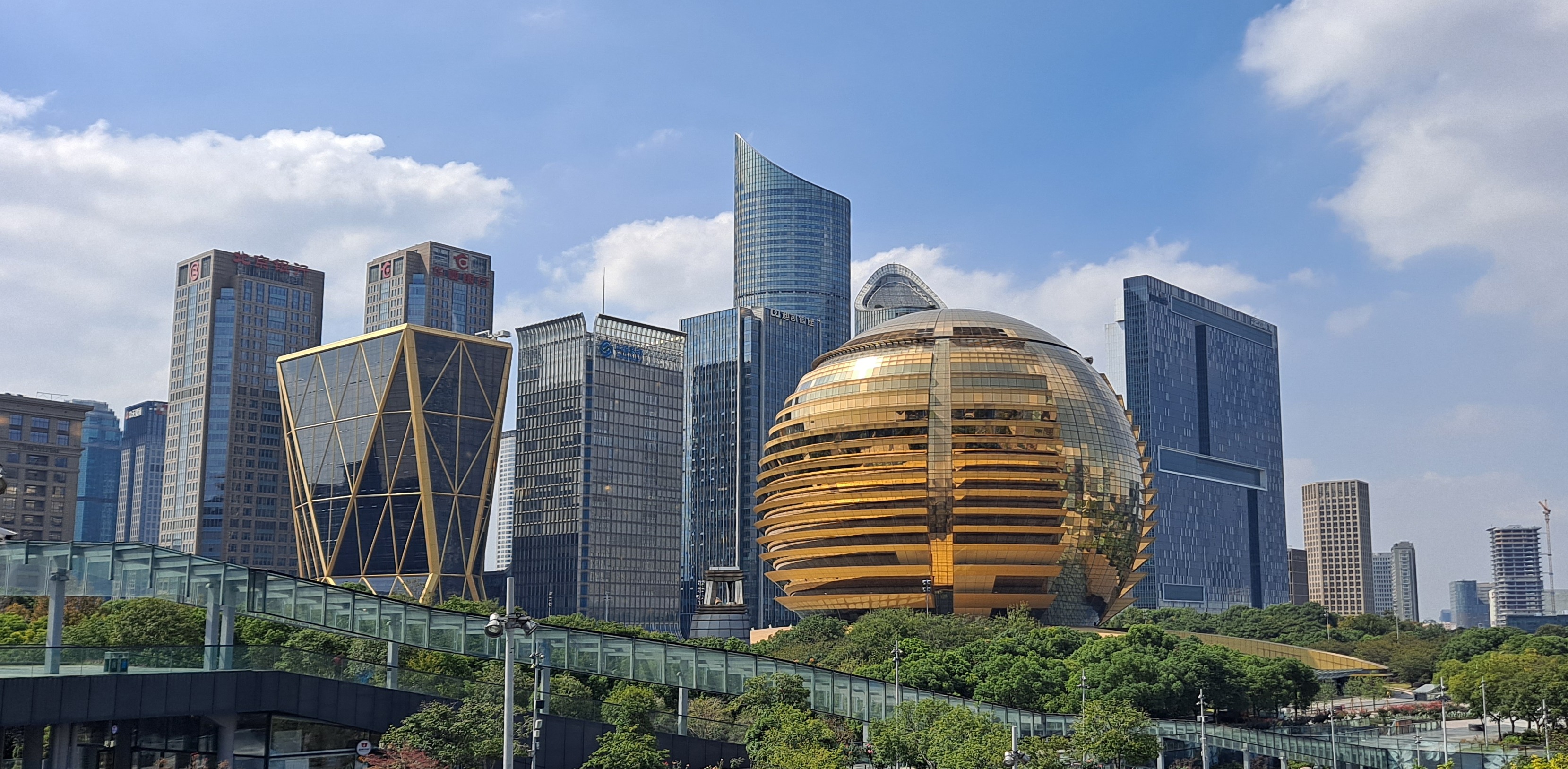
Hangzhou
Sign in to saveAlso known as Hangzhou Municipality, Hanceu, Hang-chou, Kinsay, Hangchow, Hangchou, Quinsay, Kinsai
Hangzhou is the capital city and most populous city of Zhejiang province, China, situated at the intersection of the southern terminus of the Grand Canal and the head of Hangzhou Bay. Renowned as one of the Eight Ancient Capitals of China, Hangzhou is celebrated for its cultural heritage and its West Lake, a UNESCO World Heritage site.
OverviewAI-generated
Hangzhou is a prefecture-level city and sub-province-level division located in Zhejiang, China. It serves as the capital of the province and is situated at coordinates 30.25, 120.1675. The city has a population of 9236032 and covers an area of 16853.57. Its elevation above sea level is recorded as 19, 13, or 12 depending on the source. Hangzhou contains administrative entities including Shangcheng District, Gongshu District, Xihu District, and Binjiang District.
The city is twinned with Unterschleißheim, Boston, Cape Town, and Dresden. It operates in the UTC+08:00 time zone, also referred to as Asia/Shanghai. Official identifiers include the postal code 310000, local dialing code 0571, and licence plate code 浙A. The official name is 杭州市. Hangzhou is referenced by 6,212 other encyclopedia articles.
Synthesized by Vinony from 53 facts across 7 sources: Wikidata, Open Meteo, Openweathermap, OpenStreetMap, GeoNames, Vinony graph, Geo. Generated from structured data (not the Wikipedia text) and checked against those facts — may still contain errors.
Weather now
7-day forecast
via Open-Meteo
Place details
- Locality
- 拱墅区
- Region
- 浙江省
- Country
- 中国
- Population
- 9,236,032
- Timezone
- Asia/Shanghai
via OpenStreetMap · GeoNames
Wikipedia views (30d)
46,770 totalvia Wikimedia Pageviews API
Key facts
- Settlement.name
- Hangzhou
- Settlement.native_name
- 杭州市
- Settlement.native_name_lang
- zh
- Settlement.other_name
- Hangchow, Kincsay
- Settlement.settlement_type
- Prefecture-level and sub-provincial city
- Settlement.image_blank_emblem
- Hangzhou City Seal.png
- Settlement.blank_emblem_type
- Logo
- Settlement.mapframe
- yes
- Settlement.mapframe zoom
- 7
- Settlement.mapframe point
- none
- Settlement.image_map1
- Location map of Hangzhou, Zhejiang.png
- Settlement.map_caption1
- Location of Hangzhou City jurisdiction in Zhejiang
- Settlement.pushpin_map
- Zhejiang#China
- Settlement.pushpin_map_caption
- Location of the city center in Zhejiang##Location of the city center in China
- Settlement.coor_pinpoint
- Zhejiang Municipal People's Government
- Settlement.subdivision_type
- Country
- Settlement.subdivision_type1
- Province
- Settlement.subdivision_name1
- Zhejiang
via Wikipedia infobox
Wikidata facts
- Instance of
- prefecture-level city
- Part of
- Zhejiang
- Official name
- 杭州市
- Demonym
- Hangzhou People
- Country
- China
- Located in
- Chekiang
- Contains
- Lin'an District
- Capital
- Shangcheng District
- Population
- 11936010
- Area
- 16853.57
- Elevation
- 19
- Time zone
- UTC+08:00
- Body of water
- Qiantang River
- Capital of
- Zhejiang
- Official website
- www.hangzhou.gov.cn
- Image
- Huanglong & Broken Bridge - Hangzhou City & West Lake near Broken Bridge.jpg
- Dialing code
- 0571
- Licence plate code
- 浙A
Show 15 more facts
- twinned administrative body
- Maribor
- Commons category
- Hangzhou
- topic's main category
- Category:Hangzhou
- category for people born here
- Category:Births in Hangzhou
- category for people who died here
- Category:Deaths in Hangzhou
- category of associated people
- Category:People from Hangzhou
- Commons gallery
- 杭州
- postal code
- 310000
- owner of
- Line 8
- IPA transcription
- [xǎŋ.ʈʂóu]
- different from
- Changzhou
- urban population
- 3961700
- hashtag
- Hangzhou
- P8168
- Tommy Ingebrigtsen
Sources (10)
via Wikidata · CC0
Travel guide
Understand
thumb|View over West Lake Hangzhou, known for its natural scenery, including West Lake (西湖; Xīhú), has been celebrated by poets and artists throughout history. The city served as the capital of the Southern Song Dynasty from 1127 until the Mongol conquest in 1276. During this period, its population is estimated to have reached around one million, making it one of the largest cities in the world at the time. Marco Polo visited the city, describing it as one of the finest in the world. In 2011, the West Lake Cultural Landscape was designated a .
Over time, as the city's harbor silted up, much of its trade and industry shifted north to nearby Shanghai. However, Hangzhou remains a bustling city with a population of approximately 8.7 million and continues to be one of China's most popular tourist destinations.
Do
thumb|upright 1.25|Maitreya and disciples carving in Feilai Feng Caves Walk around the lake. It will take you about 5 hours of slow walking. The lake is not very big and there are two shortcuts (causeways) through it. You can also hire small non-motor powered boats (¥120/hour for personal boat with driver, or use the ferry services) to take you around the lake and to the two islands, which feature some interesting sites. Go hiking in the mountains. Hangzhou has the most accessible and interesting hiking environments within walking distance of any city. Purchase a topographic map, not difficult to find. Some suggested hikes: Start with the climb up to the Baochu Pagoda from Beishan Road. The trail passes the pagoda and continues on with a rock scramble and great views to a series of stone paths that follow the ridge. Keep going and relax, you can't get lost because this mountain is surrounded by main roads. There are temples, shrines and caves along the way with a sprinkling of tea houses. Stay with the high ground where you can and you should come out near the corner of Shuguang Rd and Beishan Rd in an easy 2 hours, with plenty of opportunities for side explorations. You can walk back or return by bus (be brave, as long as the bus is going inbound it will take you somewhere central. The fare will be ¥1-3 and services are frequent) or cab. Start at Wushan Square, at the southern end of Yan'an Rd, and walk south through the developed park land. Stay high, and pass the war memor…
Buy
Hangzhou China Silk Town on Tiyuchang Road. You can also get silk at other places in the city, but most of it will just be the fabric. It is open from 08:00-17:00 and is near the Zhejiang International Hotel. Bargain hard! Night Market (夜市) off Yan'an Road near Pinghai Road (right near Wushan) every night. Here you can find Mao memorabilia, jewellery, paper fans, pipes, luggage, handicrafts and other items that most Chinese cities have. Pirated DVDs and counterfeit handbags are for sale as well. You can also find a lot of those silk-screen printed paintings/embroidery things that the silk market also has. Bargain very hard - Many stalls sell the same stuff, so be prepared to walk away. Be careful buying "antiques" because they are probably new, and pearls. Often the pearl culturing process has been very short, and in fact the "pearl" is a plastic marble with only the thinnest of cultured skin. Electronics Markets (电子产品市场 - Running west-east in north-west Hangzhou on Wensan Road are several indoor, multistory electronics shopping centers offering all manner of electronics including desktop computers, laptops, computer software (licensed and un-licensed), cellphones, mp3 players, and hundreds of peripherals and storage media. Pirated DVDs and computer games are offered as well, and if you are obviously a foreigner, vendors will shout "DVD! DVD!" at you to urge you to browse their selection. Bird and Flower Markets - Several in town, Gucui Rd and Wener West Rd in the west, anoth…
Eat
thumb|The Song Dynasty Liuhe Pagoda, built in 1165 Hangzhou is one of the premier places to eat in China, and its local cuisine features dishes that consist more of pork and seafood rather than beef and lamb, as those are typically found in the north and west of China.
Typical Hangzhou specialties include dongpo rou (东坡肉 dōngpō ròu), an extremely fatty chunk of pork in a syrupy sauce, and cùyú (醋鱼 cùyú), which is fish with a vinegar sauce. There are some characteristic local snacks: for example, small steamed buns (小笼包 xiǎolóngbāo), Xiaoshan dried turnip (萧山萝卜干 xiāoshān luóbo gān), and noodles with preserved vegetables (片儿川 piàn'ér chuān). In Wushan Square, you can find lots of food; the prices are cheap and the quality fine.
If you do not like Hangzhou cuisine, you can find plenty of excellent Sichuan, Shanxi, and Xinjiang restaurants throughout the city. There are also some Western restaurants, but those tend to be expensive.
Drink
The drink of choice in Hangzhou is tea, as the local Longjing (龙井, also Lung Ching, literally "Dragon Well") is the most famous green tea in China. Longjing is divided into seven grades, the two top being Superior (旗枪 qiqiang) and Special (雀舌 queshe), and the rest numbered from 1 down to 5. Prices for the very best stuff are extremely high— in 2005, a mere 100g plucked from Qing Dynasty emperor Qian Long's personal trees sold for over US$17,000 — but a few cups in a local teahouse shouldn't cost you more than a few dozen yuan. There is a wholesale market in Zhuangtang, however, most of the tea comes from trees outside of the "special" fields in Hangzhou. Prices are ¥15-1,000/500g depending on a multitude of variables.
Traditionally, tea from Longjing is best served with spring water from Hupao (虎跑, "Tiger Run"), which is located next to the West Lake. You might have to purchase the tea from the tea shop in Hupao, instead of bringing your own. It's about ¥20 per cup, but you get a thermal full of hot water with the purchase. Do consider mixing the leaves with bottled water, as construction project run off introduces chemicals other than water into the streams.
For bars, Nanshan Road all night every night should keep any visitor occupied. An up-and-coming part of town is on Shuguang Road has several old and new bars that are a little less hectic than those of Nanshan Road. Shuguang Road runs north from the north-west corner of the Lake. The Huanglong soccer stadiu…
Stay healthy
The West Lake is home to many biting insects that may cause allergic reactions in visitors from outside the area.
Go next
Shanghai — About an hour away by train. Suzhou — Around two hours away by bus (or train). Buses leave several times per hour from the bus station at northeast of city (¥68). Tianmushan — For a weekend timeout. Lake Tai is reasonably close, a common weekend getaway for Hangzhou residents. Huangshan or Yellow Mountain, in neighbouring Anhui Province, is a national park on the UNESCO World Heritage List Visit the Moganshan mountains to the north for a relaxing break.
Travel guide from Wikivoyage (CC BY-SA 4.0)
~44 min read
Encyclopedic overview
39 sectionsContents
- History
- Early history
- Tang dynasty
- Song dynasty
- Yuan dynasty
- Foreign descriptions
- Modern history
- Geography
- Climate
- Demographics
- Religion
- Politics
- Structure
- Administrative divisions
- Economy
- Industries
- Tourism
- Development zones
- Cityscape
- Parks and resorts
- Culture
- Cuisine
- Proverbs
- Ancient book restoration
- Transportation
- Public
- Cycle hire
- Railways
- Air and sea
- Education and research
- International relations
- Notable people
- See also
- Notes
- References
- Citations
- Sources
- Further reading
- External links
Hangzhou is the capital city and most populous city of Zhejiang province, China, situated at the intersection of the southern terminus of the Grand Canal and the head of Hangzhou Bay. Renowned as one of the Eight Ancient Capitals of China, Hangzhou is celebrated for its cultural heritage and its West Lake, a UNESCO World Heritage site.
Established as a county seat in 221 BC, Hangzhou later served as the capital of the Wuyue Kingdom (923–997) and the Southern Song dynasty (1138–1276). The city has three UNESCO World Heritage Sites, which are the West Lake Cultural Landscape, the Grand Canal, and the Archaeological Ruins of Liangzhu City.
Excerpted from Wikipedia’s “Hangzhou” article, available under the CC BY-SA 4.0 licence.
Gallery (54)
On the map
3 mapped locations
Available in 110 languages
- Español
- Français
- Deutsch
- 中文
- 日本語
- Русский
- Português
- Italiano
- العربية
- हिन्दी
- Achinese
- Afrikaans
- Albanian
- Aragonese
- Armenian
- Asturian
- Bahasa Indonesia
- Balinese
Show 91 more
- Bangla
- Basque
- Belarusian
- Bikol
- Breton
- Bulgarian
- Burmese
- Catalan
- cdo
- Cebuano
- Cheyenne
- Croatian
- Czech
- Danish
- Esperanto
- Estonian
- Filipino
- Finnish
- Galician
- Gan Chinese
- Georgian
- Greek
- Hakka Chinese
- Hausa
- Hebrew
- Hungarian
- Icelandic
- Interlingua
- Interlingue
- Irish
- Kannada
- Kara-Kalpak
- Khmer
- Kikuyu
- Kongo
- Kurdish
- Kyrgyz
- Latin
- Latvian
- Lithuanian
- Malagasy
- Malay
- Malayalam
- Maltese
- Māori
- Marathi
- Mazanderani
- Mingrelian
- Mongolian
- Nederlands
- Nepali
- Northern Frisian
- Norwegian
- Norwegian Nynorsk
- Nyanja
- Occitan
- Ossetic
- Polski
- Punjabi
- Quechua
- Romanian
- Santali
- Scots
- Serbian
- Serbian (Latin)
- Silesian
- simple
- Sindhi
- Slovak
- Slovenian
- Svenska
- Tamil
- Tibetan
- Tiếng Việt
- Türkçe
- Ukrainian
- Urdu
- Uyghur
- Uzbek
- Veps
- Waray
- Western Panjabi
- Wu Chinese
- Yakut
- zh_classical
- zh_min_nan
- zh_yue
- Zhuang
- فارسی
- ไทย
- 한국어
via Wikidata sitelinks · CC0