Category
page 1Kinematics

velocity
Velocity is a measurement of speed in a certain direction of motion. It is a fundamental concept in kinematics, the branch of classical mechanics that describes the motion of physical objects. Velocity is a vector quantity, meaning that both magnitude and direction are needed to define it (velocity vector). The scalar absolute value (magnitude) of velocity is called , a quantity that is measured in metres per second (m/s or m⋅s−1) in the SI (International System of Units) system. For example, "5 metres per second" is a scalar, whereas "5 metres per second east" is a vector. If there is a chang
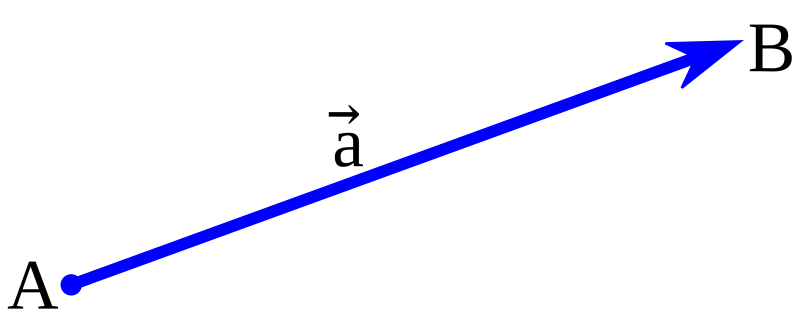
Euclidean vector
geometric object that has magnitude (or length) and direction

kinematics
Kinematics is a subfield of physics and
a branch of geometry. In physics, kinematics studies the geometrical aspects of motion of physical objects independent of forces that set them in motion. Constrained motion such as linked machine parts are also described as kinematics. In geometry, kinematics studies the time dependence of geometrical quantities such as position, distance and angular measure with respect to a frame of reference. Most frequently, the quantities that kinematics deals with are the time derivatives of these quantities and the relations between them. Objects whose motion is

rotation
right|thumb|A sphere rotating (spinning) about an axis

centripetal force
force that makes a moving body follow a curved path
shaft
rotating machine element used to transmit power from one part to another
projectile motion
form of motion of an object that has velocities in both the dimensions
block and tackle
device consisting of two pulleys (or in a borderline case only one movable pulley); device multiplying force; machine used to lift heavy loads
kinematic pair
physical system of two bodies connected to limit their relative movement
velocity-addition formula
equation used in relativistic physics
pitch axis
rotation of a vehicle or stiff body about the side-to-side axis
center-of-momentum frame
frame of reference
instant center of rotation
In Fig. P is the point of rotation
bouncing ball dynamics
mathematical description of the behavior of bouncing balls
mechanical joint
section of a machine which is used to connect one mechanical part to another
Torricelli's equation
equation created by Evangelista Torricelli
screw theory
rigid transformation
bijection of an Euclidean space that preserves distances
Chasles' theorem
about translation of rigid bodies
revolute joint
one-degree-of-freedom kinematic pair used in mechanisms
Dual quaternion
eight-dimensional algebra over the real numbers
prismatic joint
joint that provides a linear sliding movement between two bodies