Category
page 1Knowledge representation
%20Tweet%20-%20Why%20edit%20Wikipedia%3F.jpg)
hashtag
thumb|A post (tweet) on the social network X (social network)|X (Twitter) with several hashtags colored in blue text.
A hashtag is a metadata tag operator that is prefaced by the hash symbol, #. On social media, hashtags are used on microblogging and photo-sharing services–especially Twitter and Tumblr–as a form of user-generated tagging that enables cross-referencing of content by topic or theme. For example, a search within Instagram for the hashtag #flowers returns all posts that have been tagged with that term. After the initial hash symbol, a hashtag may include letters, numerals or other

metadata
thumb|In the 21st century, metadata typically refers to digital forms, but traditional card catalogs contain metadata, with cards holding information about books in a library (author, title, subject, etc.).

Unified Modeling Language
software system design modeling tool

mathematical model
description of a system using mathematical concepts and language
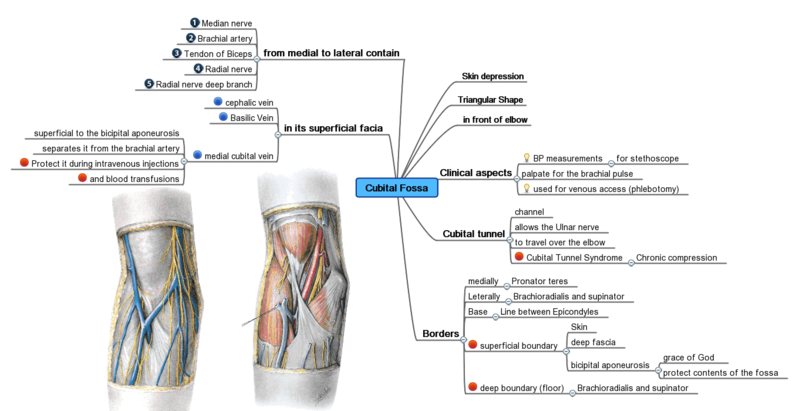
mind map
diagram to visually organize information

tree
abstract data type
Ishikawa diagram
causal diagrams created by Kaoru Ishikawa
tag
metadata used for classifications or adding of informations
Resource Description Framework
data model for describing resources on the Web
ontology
specification of a conceptualization
knowledge representation and reasoning
field of artificial intelligence on representing information in a form that a computer system can use to solve complex tasks
library classification scheme
systems of coding and organizing documents or library materials
folksonomy
Folksonomy is a classification system in which end users apply public tags to online items, typically to make those items easier for themselves or others to find later. Over time, this can give rise to a classification system based on those tags and how often they are applied or searched for, in contrast to a taxonomic classification designed by the owners of the content and specified when it is published. This practice is also known as collaborative tagging, social classification, social indexing, and social tagging. Folksonomy was originally "the result of personal free tagging of informatio

model
thumb|Model of a molecule, with coloured balls representing different atoms
A model is an informative representation of an object, person, or system. The term originally denoted the plans of a building in late 16th-century English, and derived via French and Italian ultimately from Latin , .
Dublin Core Metadata Element Set
standardized set of metadata elements
concept map
diagram showing relationships among concepts
microformats
Microformats (μF) are predefined HTML markup (like HTML classes) created to serve as descriptive and consistent metadata about elements, designating them as representing a certain type of data (such as contact information, geographic coordinates, events, products, recipes, etc.). They allow software to process the information reliably by having set classes refer to a specific type of data rather than being arbitrary.
categorization
cognitive process in which ideas and objects are recognized, differentiated, and understood

WordNet
WordNet is a lexical database of semantic relations between words that links words into semantic relations including synonyms, hyponyms, and meronyms. The synonyms are grouped into synsets with short definitions and usage examples. It can thus be seen as a combination and extension of a dictionary and thesaurus. Its primary use is in automatic text analysis and artificial intelligence applications. It was first created in the English language and the English WordNet database and software tools have been released under a BSD style license and are freely available for download. The latest offici
philosophy of information
branch of philosophy
framing
set of concepts and theoretical perspectives in social sciences on how individuals, groups, and societies, organize, perceive, and communicate about reality
semantic network
directed graph structure with labeled edges serving to encode and represent knowledge, whether knowledge of definitions or assertions
user profile
data about an individual user
document classification
problem in library science, information science and computer science
cognitive map
type of mental representation
Colon Classification
a system of library classification developed by S. R. Ranganathan
data dictionary
set of metadata that contains definitions and representations of data elements
AGROVOC
AGROVOC is a multilingual controlled vocabulary covering areas of interest of the Food and Agriculture Organization of the United Nations (FAO), aiming to promote the visibility of research produced among FAO members.
By March 2024, AGROVOC consisted of over 42 000 concepts and up to 1 000 000 terms in more than 42 different languages. It is a collaborative effort, the outcome of consensus among a community of experts coordinated by FAO.
faceted classification
classification scheme used in organizing knowledge into a systematic order
C4 model
lean graphical notation technique for modelling architecture of software systems
e-service
Electronic services or e-services are services that make use of information and communication technologies (ICTs). The three main components of e-services are:
service provider;
service receiver; and
the channels of service delivery (i.e., technology)
controlled vocabulary
standardized and organized sets of words and phrases for retrieval and disambiguation of information, distinguishing preferred terms from non-preferred terms
knowledge organization
field of study dealing with the conceptual structure of public knowledge
type–token distinction
distinction that separates a concept from the objects which are particular instances of the concept

Pinakes
thumb|Imaginary depiction of the Library of Alexandria
The Pinakes ( 'tables', plural of pinax) is a lost bibliographic work composed by Callimachus (310/305–240 BCE) that is popularly considered to be the first library catalog in the West; its contents were based upon the holdings of the Library of Alexandria during Callimachus's tenure there during the third century BCE.
SKOS
W3C recommendation designed for representation of thesauri, classification schemes, taxonomies, subject-heading systems, or other structured controlled vocabularies

BabelNet
BabelNet is a multilingual lexical-semantic knowledge graph, ontology and encyclopedic dictionary developed at the NLP group of the Sapienza University of Rome under the supervision of Roberto Navigli. BabelNet was automatically created by linking Wikipedia to the most popular computational lexicon of the English language, WordNet. The integration is done using an automatic mapping and by filling in lexical gaps in resource-poor languages by using statistical machine translation. The result is an encyclopedic dictionary that provides concepts and named entities lexicalized in many languages an

pretext
A pretext (: pretextual) is an excuse to do something or say something that is not accurate. Pretexts may be based on a half-truth or developed in the context of a misleading fabrication. Pretexts have been used to conceal the true purpose or rationale behind actions and words. They are often heard in political speeches.
pattern language
method of describing good design practices
frame
artificial intelligence data structure used to divide knowledge into substructures by representing stereotyped situations
Learning object metadata
data model
mental mapping
in behavioral geography, person's point-of-view perception of their area of interaction; studies mainly by modern-day geographers, but also by social scientists
findability
Findability is the ease with which information contained on a website can be found, both from outside the website (using search engines and the like) and by users already on the website. Although findability has relevance outside the World Wide Web, the term is usually used in that context. Most relevant websites do not come up in the top results because designers and engineers do not cater to the way ranking algorithms work currently. Its importance can be determined from the first law of e-commerce, which states "If the user can't find the product, the user can't buy the product." As of Dece
frame problem
the problem of finding adequate collections of axioms for a viable description of a robot environment using first-order logic
closed-world assumption
formal-logic assumption that any statement that is not known to be true is false

SERVQUAL
SERVQUAL is a research tool used to measure customer perception of service quality by comparing what customers expect from a service to how the service actually performed. The tool was developed in the United States in the mid-1980s by researchers A. Parasuraman, Valarie Zeithaml, and Leonard L. Berry and can be implemented in after-service processes.Parasuraman, A, Ziethaml, V. and Berry, L.L., "SERVQUAL: A Multiple- Item Scale for Measuring Consumer Perceptions of Service Quality", Journal of Retailing, Vol. 62, no. 1, 1985, pp 12-40.
Protégé
Ontology editor
upper ontology
ontology applicable across domains of knowledge
CDS/ISIS
proprietary database management system
default logic
type of non-monotonic logic
NGSI-LD
NGSI-LD is an information model and API for publishing, querying and subscribing to context information. It is meant to facilitate the open exchange and sharing of structured information between different stakeholders. It is used across application domains such as smart cities, smart industry, smart agriculture, and more generally for the Internet of things, cyber-physical systems, systems of systems and digital twins.
enactivism
Enactivism is a position in cognitive science that argues that cognition arises through interaction between an acting organism and its environment. It claims that the environment of an organism is brought about, or enacted, by the active exercise of that organism's sensorimotor processes. "The key point, then, is that the species brings forth and specifies its own domain of problems ...this domain does not exist "out there" in an environment that acts as a landing pad for organisms that somehow drop or parachute into the world. Instead, living beings and their environments stand in relation to
digital curation
selection, preservation, maintenance, collection and archiving of digital assets

General Architecture for Text Engineering
human language processing system
Is-a
In knowledge representation, ontology components and ontology engineering, including for object-oriented programming and design, is-a (also written as is_a or is a) is a subsumptive relationship between abstractions (e.g., types, classes), wherein one class A is a subclass of another class B (and so B is a superclass of A).
In other words, type A is a subtype of type B when A's specification implies B's specification. That is, any object (or class) that satisfies A's specification also satisfies B's specification, because B's specification is weaker.
conceptual graph
formalism for knowledge representation
Spatial–temporal reasoning
area of artificial intelligence
lumpers and splitters
opposing factions in any discipline that has to place individual examples into rigorously defined categories
National Library of Medicine classification
medical library classification scheme developed by the United States National Library of Medicine
Agricultural Information Management Standards
web site managed by the FAO for accessing and discussing agricultural information management standards, tools and methodologies