Category
page 1Lamarckism

Ivan Pavlov
Russian physiologist (1849-1936)
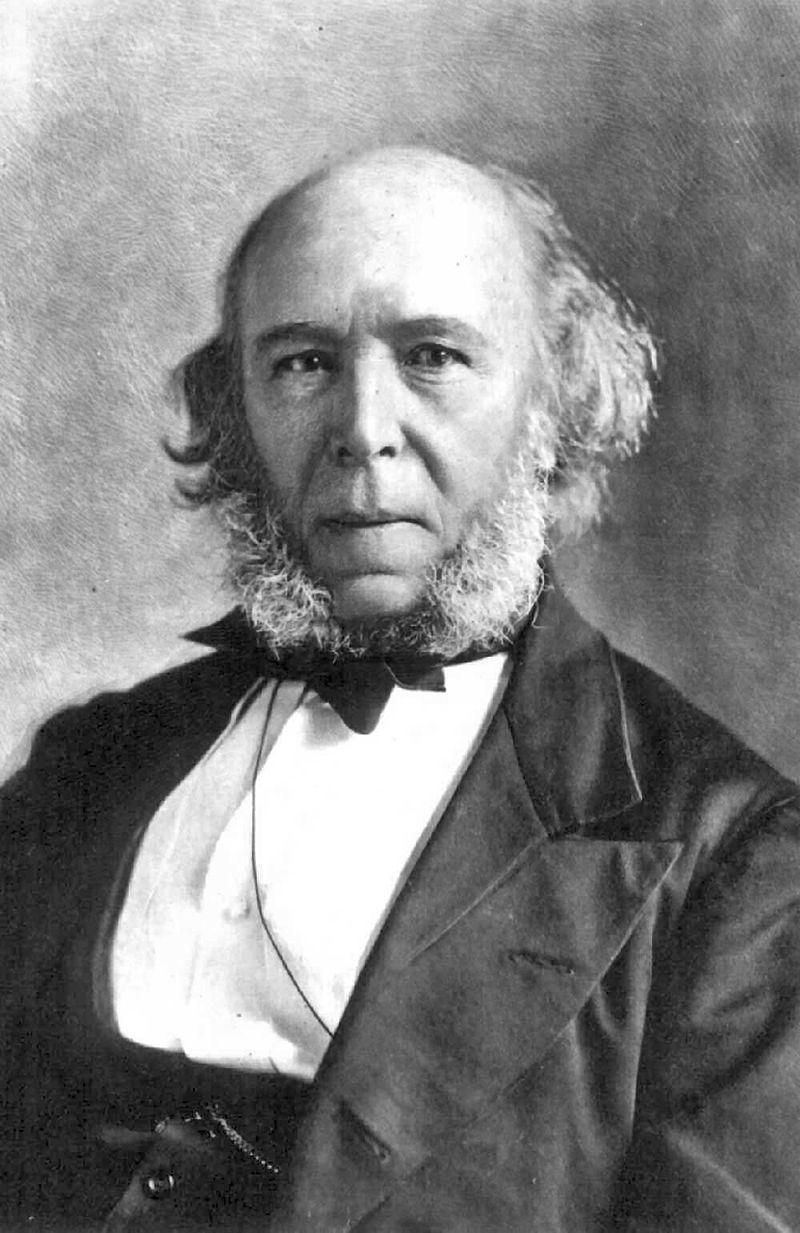
Herbert Spencer
English philosopher and political theorist (1820–1903)

Jean-Baptiste de Lamarck
French naturalist (1744-1829)

Arthur Koestler
Hungarian-British author and journalist (1905–1983)

Samuel Butler
English novelist and critic (1835–1902)

epigenetics
thumb|Epigenetic mechanisms

Edward Drinker Cope
American paleontologist, geologist, and biologist (1840–1897)

Lamarckism
thumb|upright=1.8|Jean-Baptiste Lamarck|Lamarck argued, as part of his theory of [[heredity, that a blacksmith's sons inherit the strong muscles the blacksmith acquires from his work.]]
Lamarckism, also known as Lamarckian inheritance or neo-Lamarckism, is the notion that an organism can pass on to its offspring physical characteristics that the parent organism acquired through use or disuse during its lifetime. It is also called the inheritance of acquired characteristics or more recently soft inheritance. The idea is named after the French zoologist Jean-Baptiste Lamarck (1744–1829), who inc

Johan Fabricius
Danish zoologist (1745–1808)

William McDougall
British psychologist (1871–1938)

Lysenkoism
thumb|upright=1.35 |Trofim Lysenko speaking at the Kremlin in 1935; behind him are (left to right) [[Stanislav Kosior, Anastas Mikoyan, Andrei Andreev and Joseph Stalin]]
Lysenkoism was a pseudoscientific political campaign led by the Soviet biologist Trofim Lysenko against genetics and science-based agriculture in the mid-20th century, rejecting natural selection in favour of a form of Lamarckism, as well as expanding upon the techniques of vernalization and grafting.

pangenesis
thumb|upright=2|Charles Darwin's pangenesis theory postulated that every part of the body emits tiny particles called gemmules which migrate to the [[gonads and are transferred to offspring. Gemmules were thought to develop into their associated body parts as offspring matures. The theory implied that changes to the body during an organism's life would be inherited, as proposed in Lamarckism.]]
Frederic Clements
American ecologist (1874–1945)
Robert Edmond Grant
anatomist/zoologist (1793-1874)
Jean-Baptiste Bory de Saint-Vincent
French naturalist, geographer and officer (1778-1846)
William Henry Hudson
British-Argentinian ornithologist (1841-1922)
Charles-Édouard Brown-Séquard
Mauritian physiologist and neurologist (1817–1894)
Gaston Eugene Marie Bonnier
French botanist (1853-1922)
Lester Frank Ward
American sociologist and paleontologist (1841-1913)
Paul Kammerer
Austrian scientist (1880-1926)
Edmond Perrier
French zoologist (1844-1921)
Jean Marie Antoine de Lanessan
Governor-general of French Indochina (1843-1919)
Pierre-Paul Grassé
French zoologist (1895-1985)
Yves Delage
French zoologist (1854-1920)
degeneration theory
19th-century theory that civilization was declining due to biological change
Alpheus Hyatt
American zoologist, paleontologist (1838-1902)
Ludwig Ruetimeyer
Swiss zoologist (1825-1895)
Weismann barrier
distinction between germ cell lineages producing gametes and somatic cells
Friedrich Tiedemann
German zoologist
Alfred Mathieu Giard
French zoologist
Félix Le Dantec
French biologist (1869-1917)
Herluf Winge
zoologist (1857–1923)
Maurice Caullery
French botanist and zoologist (1868-1958)
Alpheus Spring Packard
American entomologist, palaeontologist (1839-1905)

Julien Noël Costantin
French botanist (1857–1936)
Louis Blaringhem
French botanist (1878-1958)
Nathaniel Shaler
American paleontologist and geologist (1841–1906)

Arthur Dendy
Australian-British zoologist and botanist (1865-1925)
Raul Proença
Portuguese writer (1884–1941)
George Henslow
English botanist (1835-1925)
Marie Goldsmith
Russian biologist and anarchist emigrated to France

Charles Emerson Beecher
American paleontologist (1856–1904)
Samuel Stehman Haldeman
American naturalist and philologist (1812–1880)
Georg Baur
German paleontologist and herpetologist (1859–1898)
Marcus Hartog
British scientist (1851-1924)

Gustav Tornier
German zoologist (1859–1938)
Wilhelm Haacke
German zoologist (1855-1912)
Frederic Wood Jones
British anthropologist (1879-1954)
John William Heslop-Harrison
British botanist (1881-1967)
Edward Stuart Russell
Scottish biologist and philosopher of biology (1887-1954)
Hologenome theory of evolution
evolutionary view of an individual multicellular organism as a community of the host plus all of its symbiotic microbes
Ludwig Plate
German zoologist (1862–1937)
Henric Sanielevici
Romanian journalist and literary critic, also remembered for his work in anthropology, ethnography, sociology and zoology (1875-1951)
Paul Wintrebert
French embryologist (1867–1966)

Joseph Thomas Cunningham
British marine biologist and zoologist (1859–1935)
Charles E. Raven
British theologian

Nils Heribert-Nilsson
Swedish botanist and geneticist (1883-1955)
Coleman Griffith
American psychologist (1893-1966)
Bertram Coghill Alan Windle
British anatomist, administrator, archaeologist, scientist, educationalist and writer (1858-1929)