Category
page 2Lamiaceae genera

Minthostachys
Minthostachys is a genus of the mint family Lamiaceae, comprising aromatic scandent shrubs. It occurs along the Andes from Northern Venezuela through Colombia, Ecuador, Peru and Bolivia to Central Argentina.

Solenostemon
thumb|Cultivar of Coleus scutellarioides, formerly Solenostemon scutellarioides

Volkameria
Volkameria is a genus of flowering plants in the family Lamiaceae. It is pantropical in distribution. Many of the species are found in coastal habitats.

Leucas
Leucas is a genus of plants in the family Lamiaceae, first described by Robert Brown in 1810. It contains over 200 species, widespread over much of Africa, and southern and eastern Asia (Iran, India, China, Japan, Indonesia, etc.) with a few species in Queensland and on various islands in the Indian Ocean.
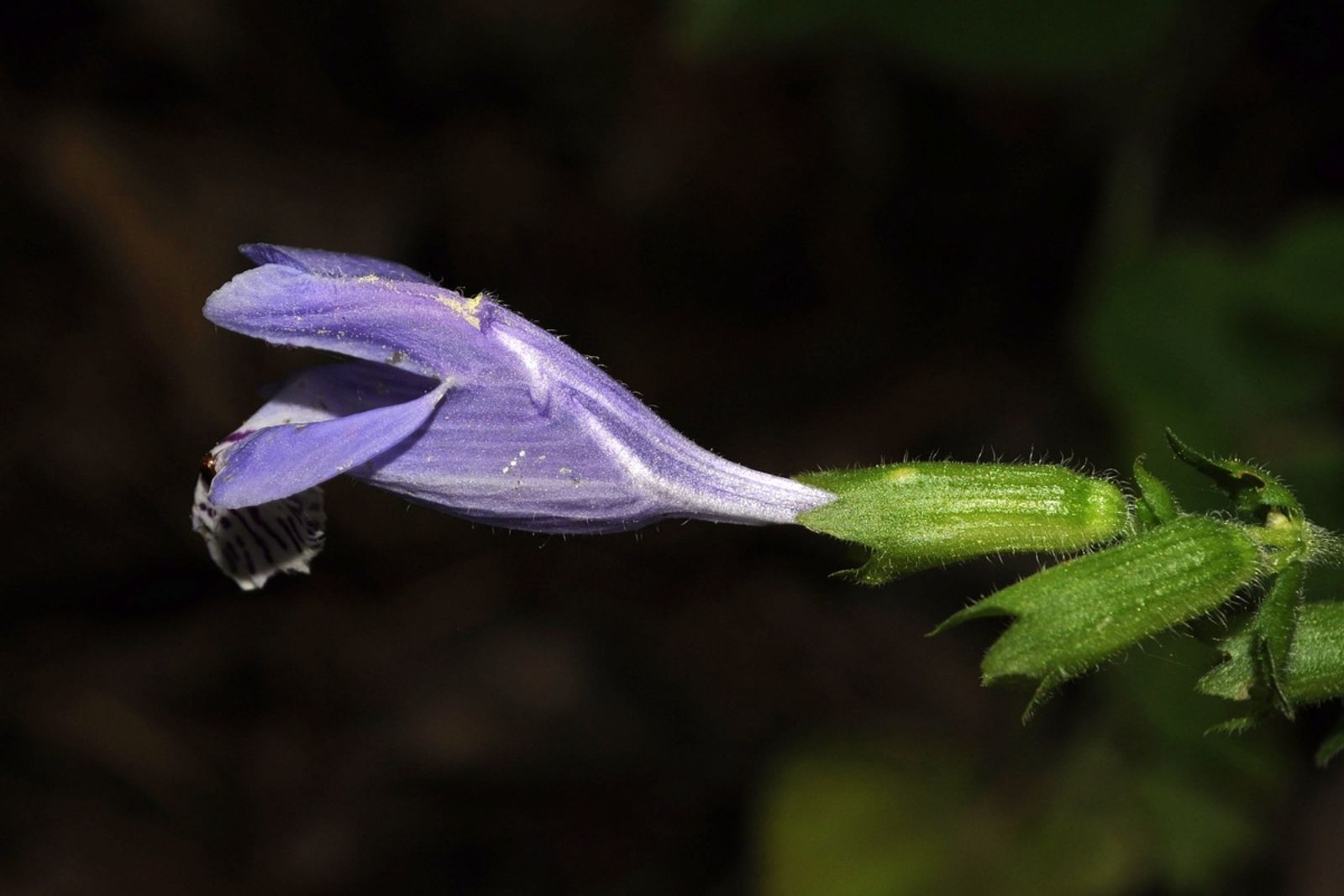
Meehania
Meehania is a genus of flowering plants in the family Lamiaceae, first described in 1894. It is native to China, Japan, and the eastern United States.
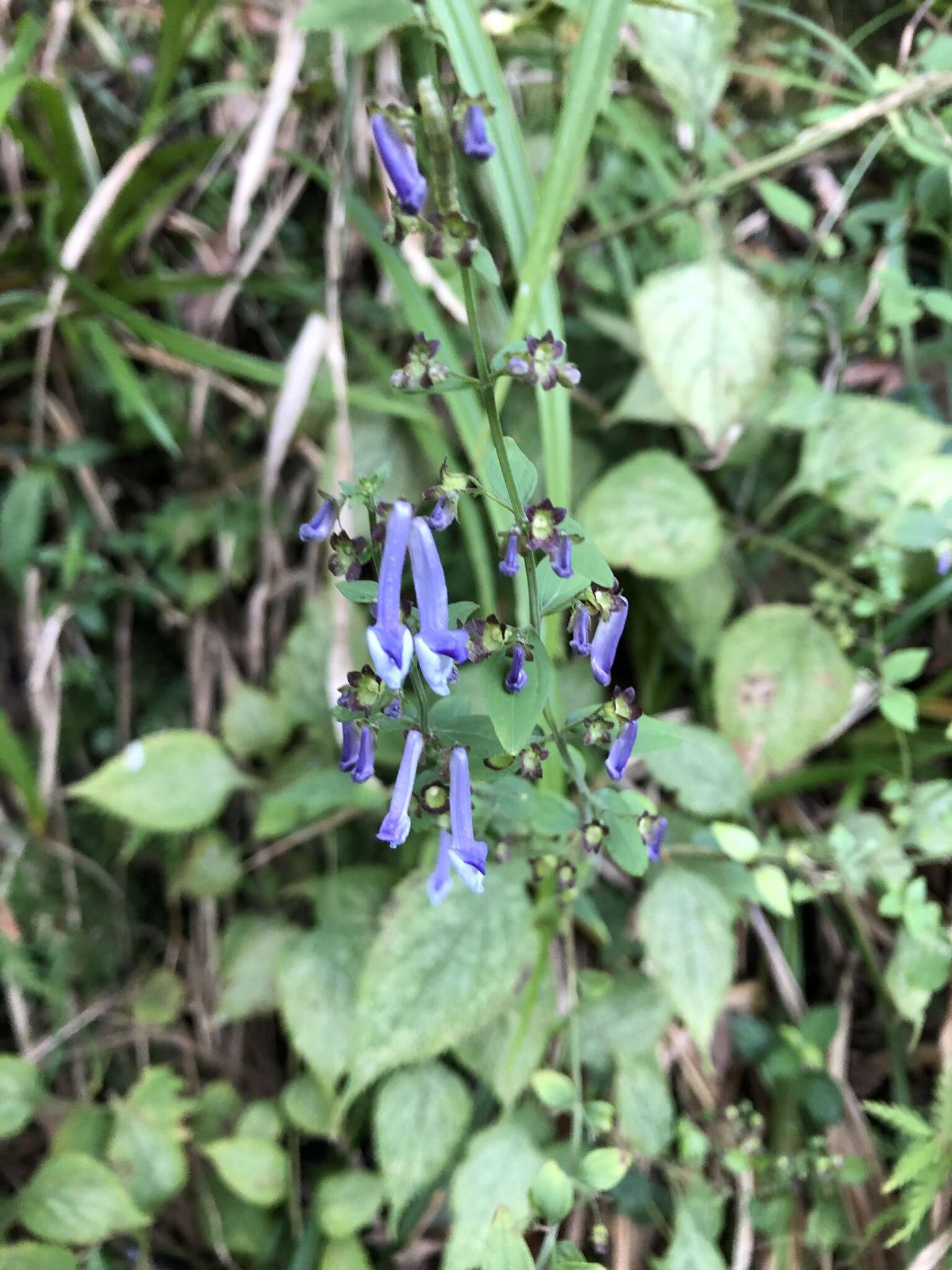
Isodon
Isodon (teacost) is a genus of flowering plants in the family Lamiaceae described in 1840. It is native to tropical and subtropical parts of the Old World, primarily Asia but two species are from Africa. Many of the species are endemic to China, where it is called xiangchacai or "fragrant tea". In China, a rapid radiation of Isodon occurred during the Pliocene that coincided with a shift from herbs inhabiting humid areas to shrubs inhabiting dry valleys.
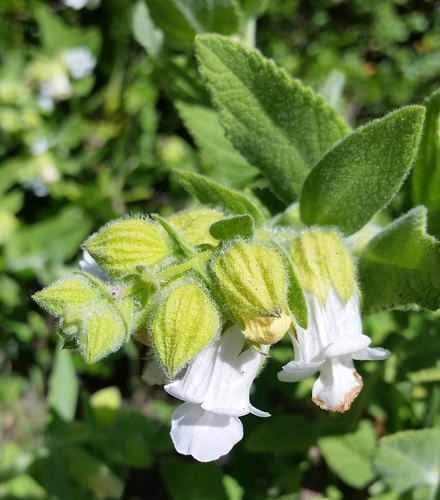
Lepechinia
Lepechinia is a genus of plants in the mint family, Lamiaceae. It includes several species of plants known commonly as pitchersages (also pitcher sages). Plants of this genus can be found in Central and South America, Mexico, California, Hispaniola, and Hawaii, although the species in Hawaii is probably a human introduction. Many of them bear attractive pitcher-shaped flowers, often in shades of purple. The genus was named for the Russian botanist Ivan Ivanovich Lepechin. In 2011, the two monotypic genera Chaunostoma and Neoeplingia were shown to be part of Lepechinia.
Mosla
Mosla is a genus of plants in the family Lamiaceae, first described as a genus in 1875. It is native to eastern Asia, the Himalayas, and southeastern Asia.
Westringia
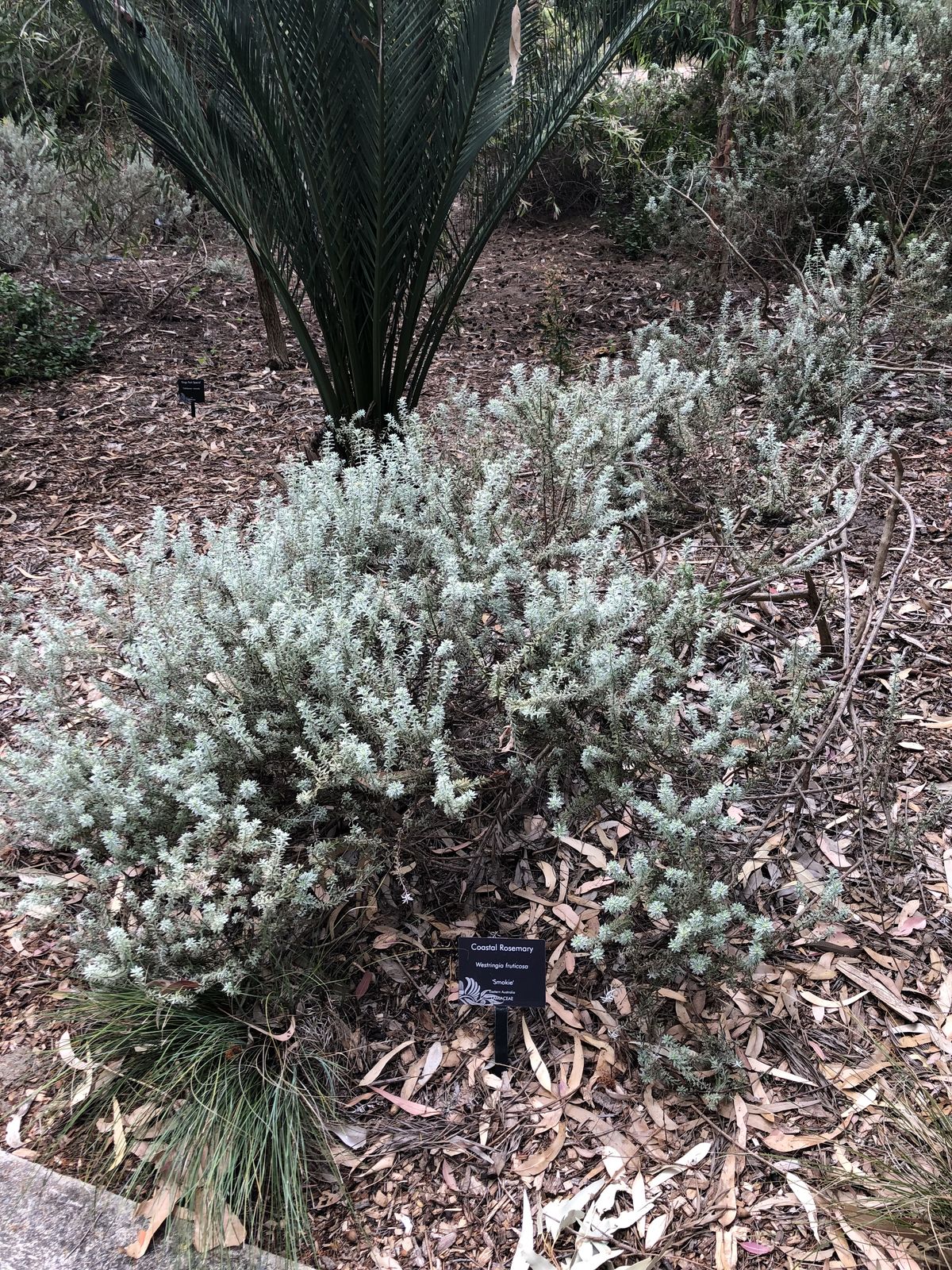
Westringia is a genus of Australian shrubs. As with other members of the mint family their upper petal (or lip) is divided into two lobes. There are four stamens - the upper two are fertile while the lower two are reduced to staminodes. The leaves are in whorls of 3 or 4.
Stenogyne
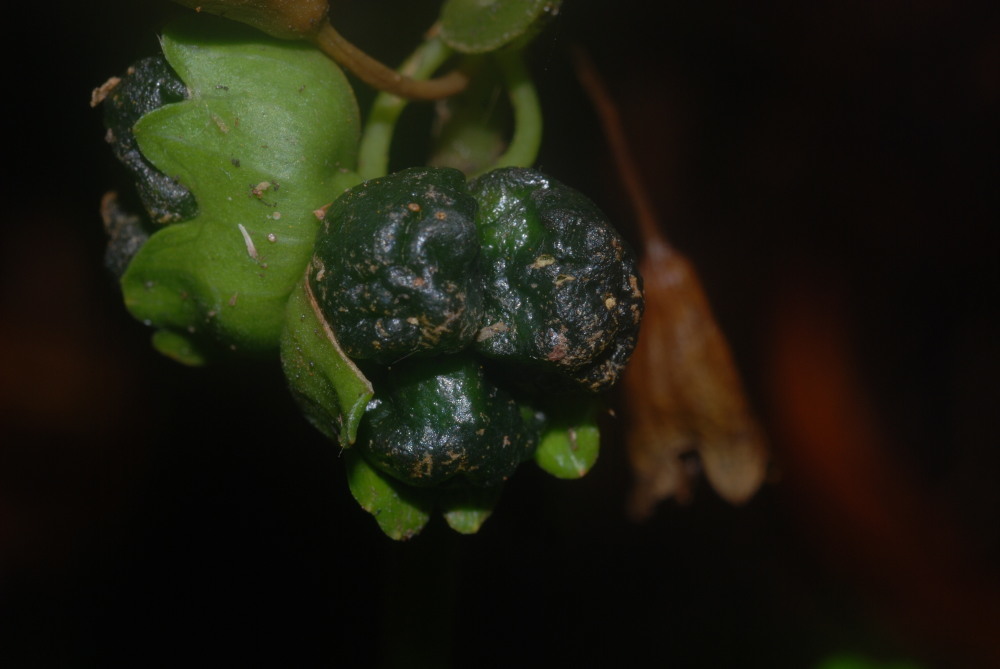
Stenogyne is a genus of flowering plants in the mint family first described in 1830. The entire genus is endemic to Hawaii.

Monardella
Monardella is a genus of approximately 40 species of annual and perennial plants native to western North America from British Columbia to northwestern Mexico. They are grown for their highly aromatic foliage, which in some species is used for herbal teas. The two-lipped, tubular flowers are formed in terminal clusters and are most usually red, pink, or purple.

Chelonopsis
Chelonopsis is a genus of plants in the family Lamiaceae, first described in 1865. It is native to China, Japan, and the Western Himalayas.
Cornutia
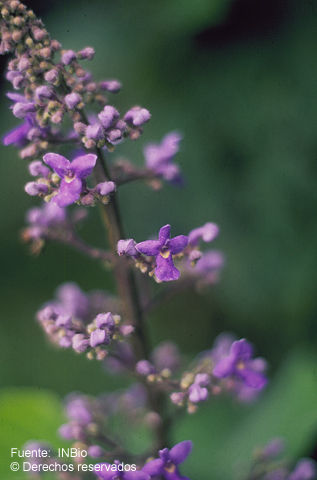
Cornutia is a genus of plants in the family Lamiaceae, first described in 1753. Species in this genus are native to tropical parts of the Western Hemisphere, including southern Mexico, Central America, the West Indies, and northern South America.

Conradina
Conradina is a genus of flowering plants in the mint family, Lamiaceae. Its common name is false rosemary, or rarely, short leaf rosemary. There are 7 species of Conradina, all native to the southeastern United States. Conradina verticillata grows on the Cumberland Plateau in Kentucky and Tennessee. The other five grow mainly in Florida. All of the species are closely related and there is some doubt about whether they are all separate. Most species occupy xeric habitats with well-drained soils composed of white sand. The genus Conradina was established by Asa Gray in 1870. It was named for the

Pogogyne
Pogogyne is a small genus of flowering plants in the mint family known generally as mesamints or mesa mints. They are native to Oregon, Idaho, California, and Baja California.

Trichostema
Trichostema is a genus of flowering plants in the family Lamiaceae, which are aromatic herbs, subshrubs, or shrubs. These plants are native to North America. Most species in this genus are referred to by the common name bluecurls because of their blue to purple flowers and relatively long, curled stamens.
Karomia
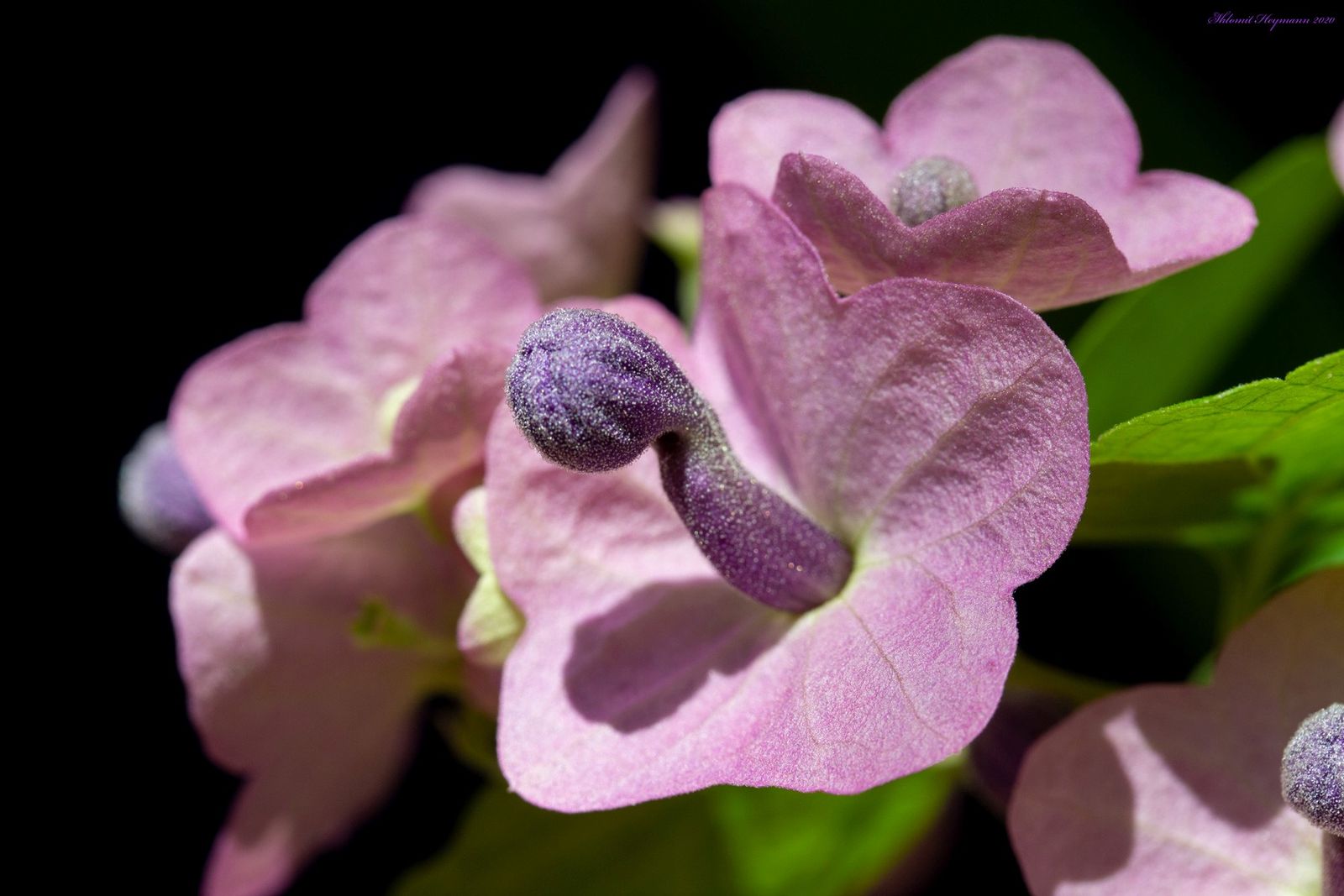
Karomia is a genus of plants in the family Lamiaceae. The genus was introduced in 1932 by the botanist Paul Louis Amans Dop (1876–1954) in "" (Paris) ser. 2. 4: 1052, for the single species Karomia fragrans. It is native to eastern and southern Africa, Madagascar, and Vietnam.
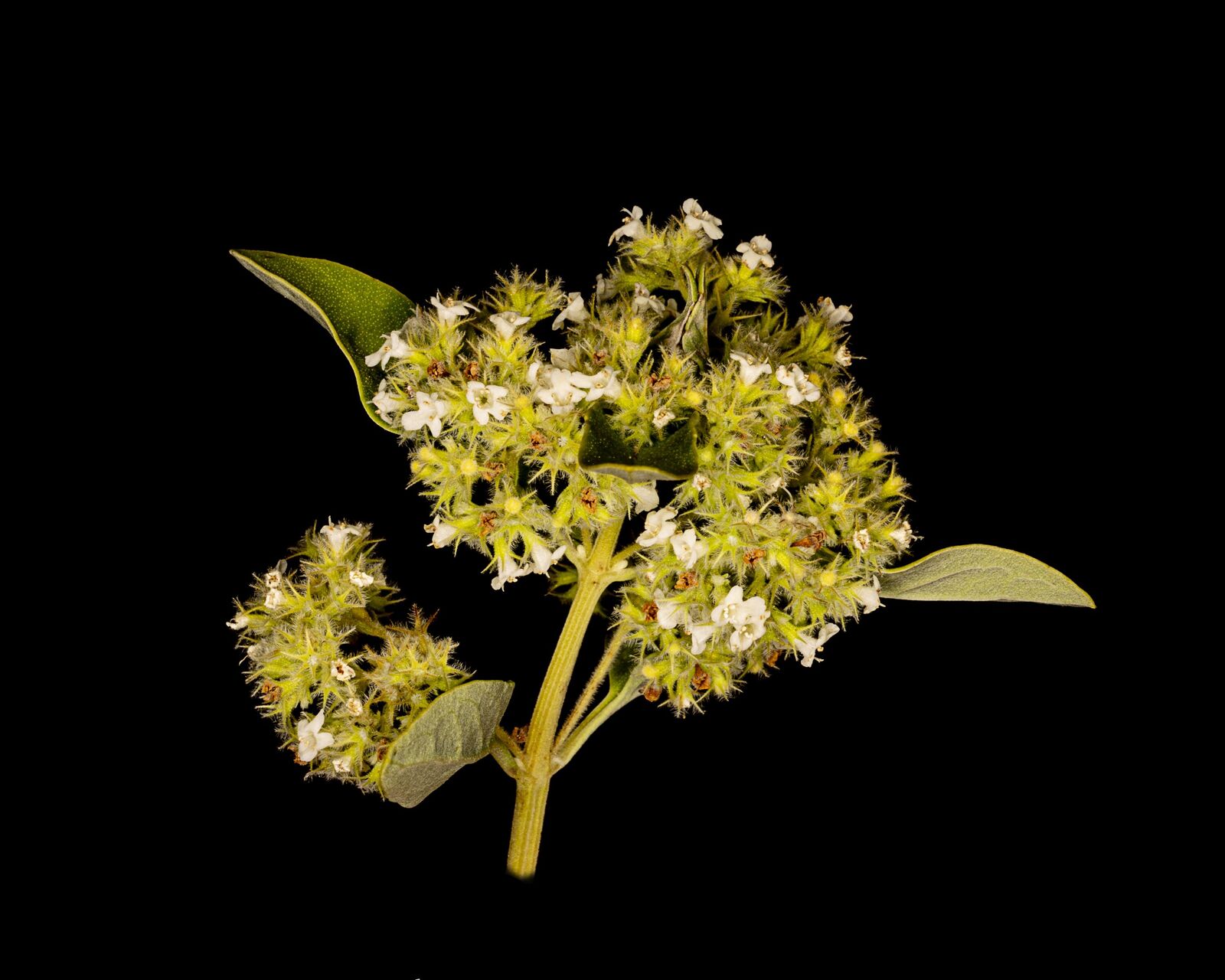
Bystropogon
Bystropogon is a genus of evergreen shrubs in the family Lamiaceae. It is native to the Canary Islands and Madeira in the eastern Atlantic Ocean. Allied to Ziziphora and Clinopodium acinos, the genus is characterized by tiny flowers in much-branched clusters, with plume-like sepals that elongate at the fruiting stage, giving the whole tip of each branch a fuzzy appearance. Stems are square in cross-section and leaves, arranged in opposite pairs, are aromatic when crushed.
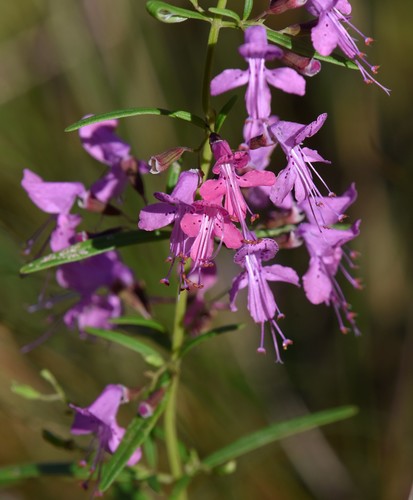
Dicerandra
Dicerandra is a genus of flowering plants in the mint family. Dicerandra comprises 11 species: six perennial and five annual species. The perennials have narrow ranges in Central Florida with small population sizes and only occur on ancient dune ridges along the Lake Wales Ridge or the Atlantic Coastal Ridge; the annual species occur more broadly on sandhill habitats to the north. The perennials’ habitat has been severely fragmented due to human development over the past century. As a result, all perennial species except one are listed as federally endangered. Annual species of the clade have
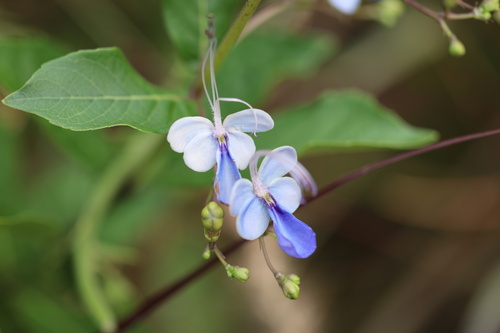
Rotheca
Rotheca is a genus of flowering plants in the family Lamiaceae. Estimates of the number of species in the genus vary from about 35 to as many as 60. Three of the species are native to tropical Asia, with the rest occurring in Sub-Saharan Africa. The type species for the genus is Rotheca serrata. It had originally been named Rotheca ternifolia, but this name is now considered illegitimate.
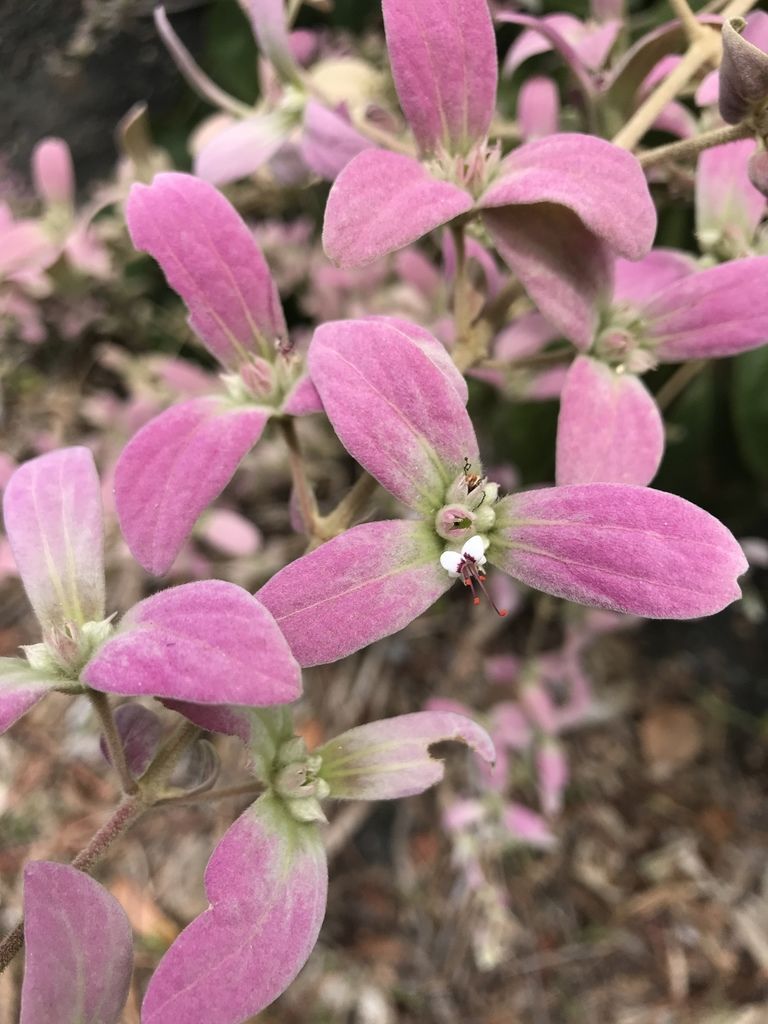
Congea
Congea is a small genus of flowering plants in the mint family, Lamiaceae, first described by William Roxburgh in 1820.

Cyclotrichium
Cyclotrichium is a genus of plants in the Lamiaceae, first described as a genus in 1953. The entire genus is endemic to southwestern Asia (Iran, Iraq, Turkey, Syria, Lebanon).
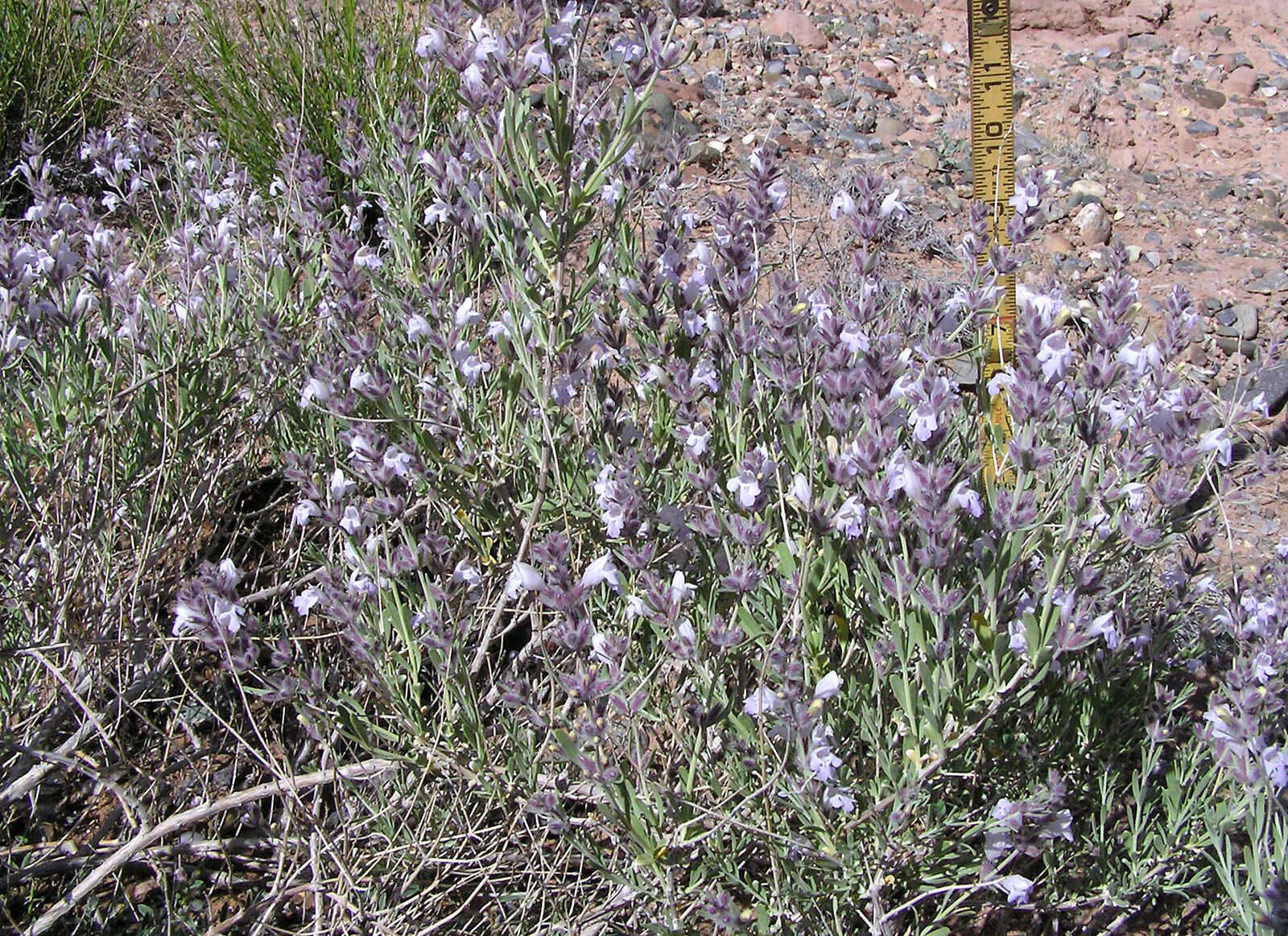
Poliomintha
Poliomintha is a genus of flowering plants in the mint family, Lamiaceae. It is native to the southwestern United States, Haiti, and northern Mexico.

Cunila
Cunila is a genus of plants in the Lamiaceae, first described in 1759. It is native to North and South America.

Anisomeles
Anisomeles is a genus of herbs of the family Lamiaceae and is native to China, the Indian Subcontinent, Southeast Asia, New Guinea, Australia, Madagascar, and some Pacific and Indian Ocean islands. Plants in the genus Anisomeles have small, flat, narrow elliptic to narrow e.g.-shaped leaves arranged in opposite pairs, the edges of the leaves sometimes wavy or serrated. The flowers are arranged in groups, with five sepals and five petals in two "lips", the lower lip with three lobes, the middle lobe much longer than the side lobes. There are four stamens that extend beyond the petals and a sing

Macbridea
Macbridea is a small genus of plants in the family Lamiaceae, first described in 1818. It is native to the southeastern United States.
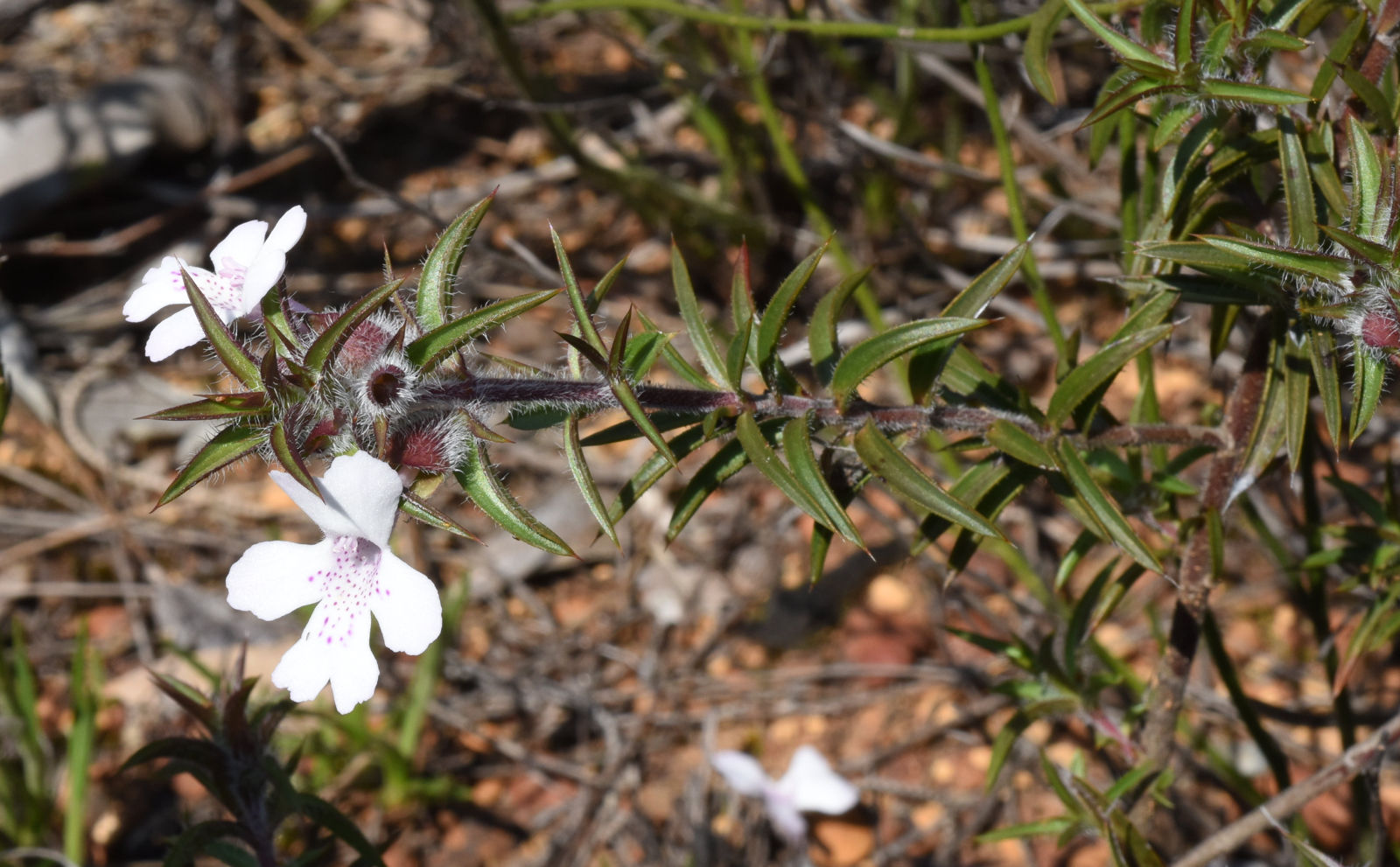
Hemiandra
Hemiandra is a genus of nine species of flowering plants of the family Lamiaceae and is endemic to Western Australia. Plants in the genus Hemiandra are shrubs with sessile leaves arranged in opposite pairs, petals with five lobes arranged in two "lips" and the fruit a capsule usually containing four nuts.
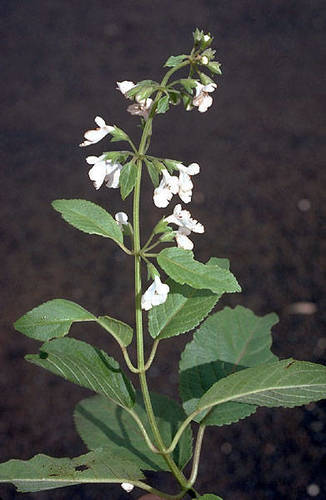
Haplostachys
Haplostachys (honohono) is a genus of flowering plants in the mint family, Lamiaceae, first described as a genus in 1888. The entire genus is endemic to the Hawaiian Islands, although 4 of the 5 known species that have been placed in the genus are now believed to be extinct, the fifth listed as "Critically Imperiled."
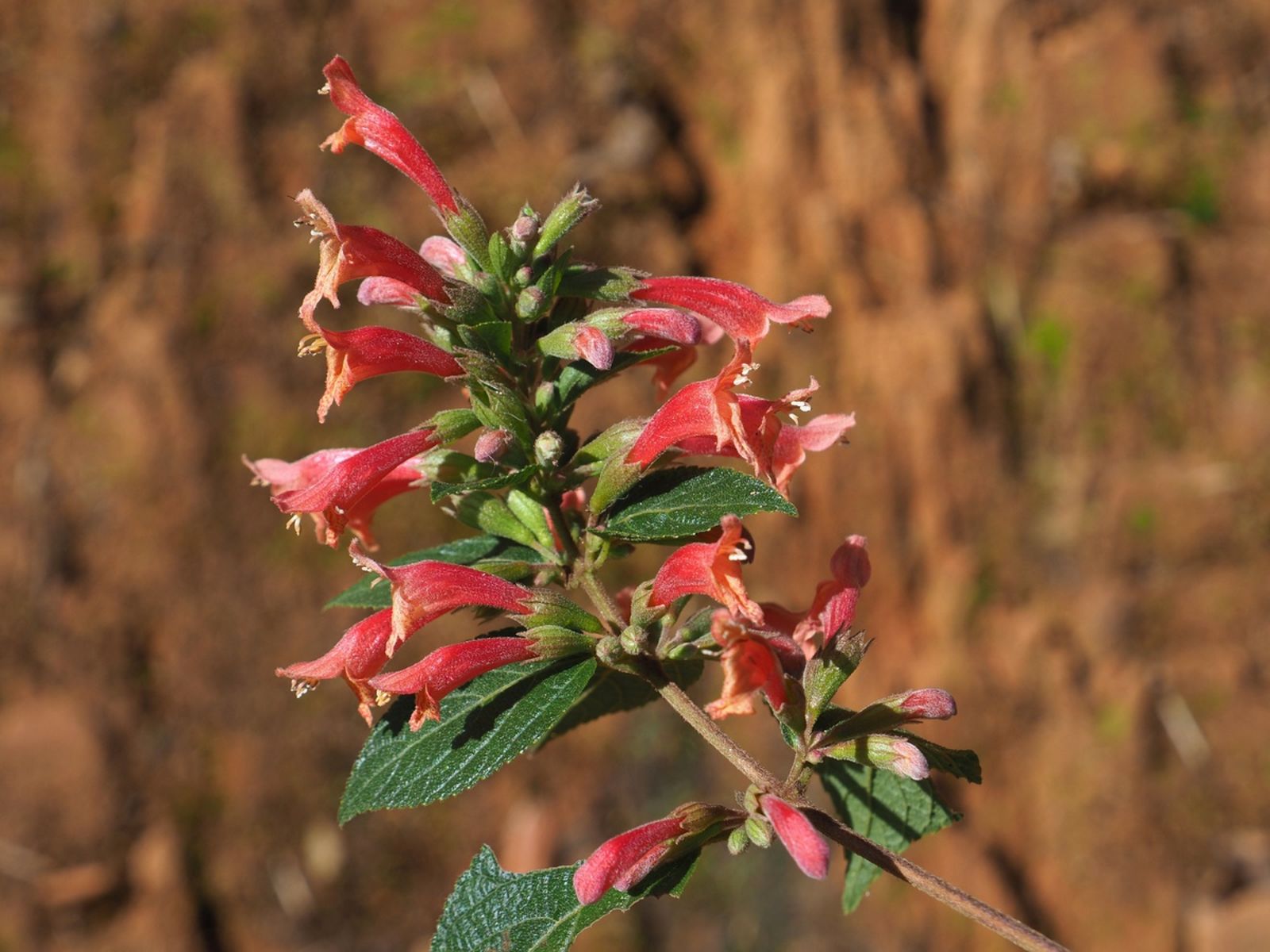
Colquhounia
Colquhounia is a genus of about six species of evergreen or semi-evergreen shrubs or subshrubs in the family Lamiaceae, first described in 1822. They are native to the Himalaya and southwestern China south to Peninsular Malaysia.
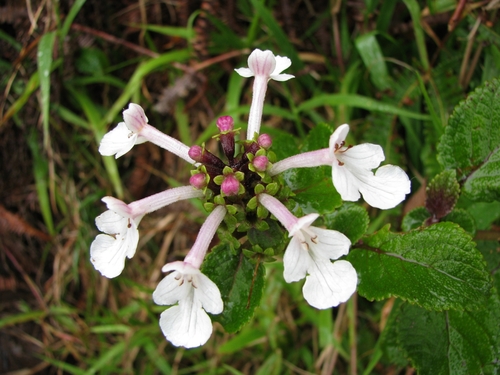
Phyllostegia
Phyllostegia is a genus of flowering plant in the mint family, Lamiaceae, first described in 1840. It is native to certain islands in the Pacific (Hawaii, Tonga and the Society Islands, although it appears to be extinct in the Society Islands). Phyllostegia glabra var. lanaiensis, became extinct before 2021, and was delisted from the Endangered Species Act based on extinction.
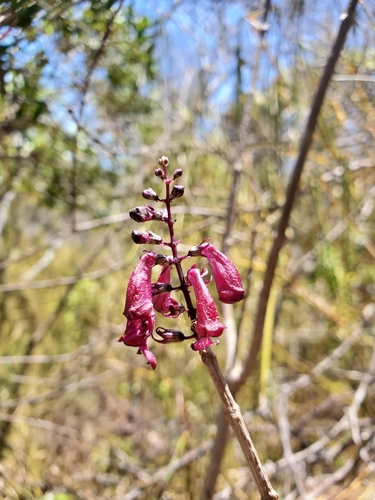
Capitanopsis
Capitanopsis is a genus of plants in the family Lamiaceae, first described in 1916. It contains six known species, all endemic to Madagascar.
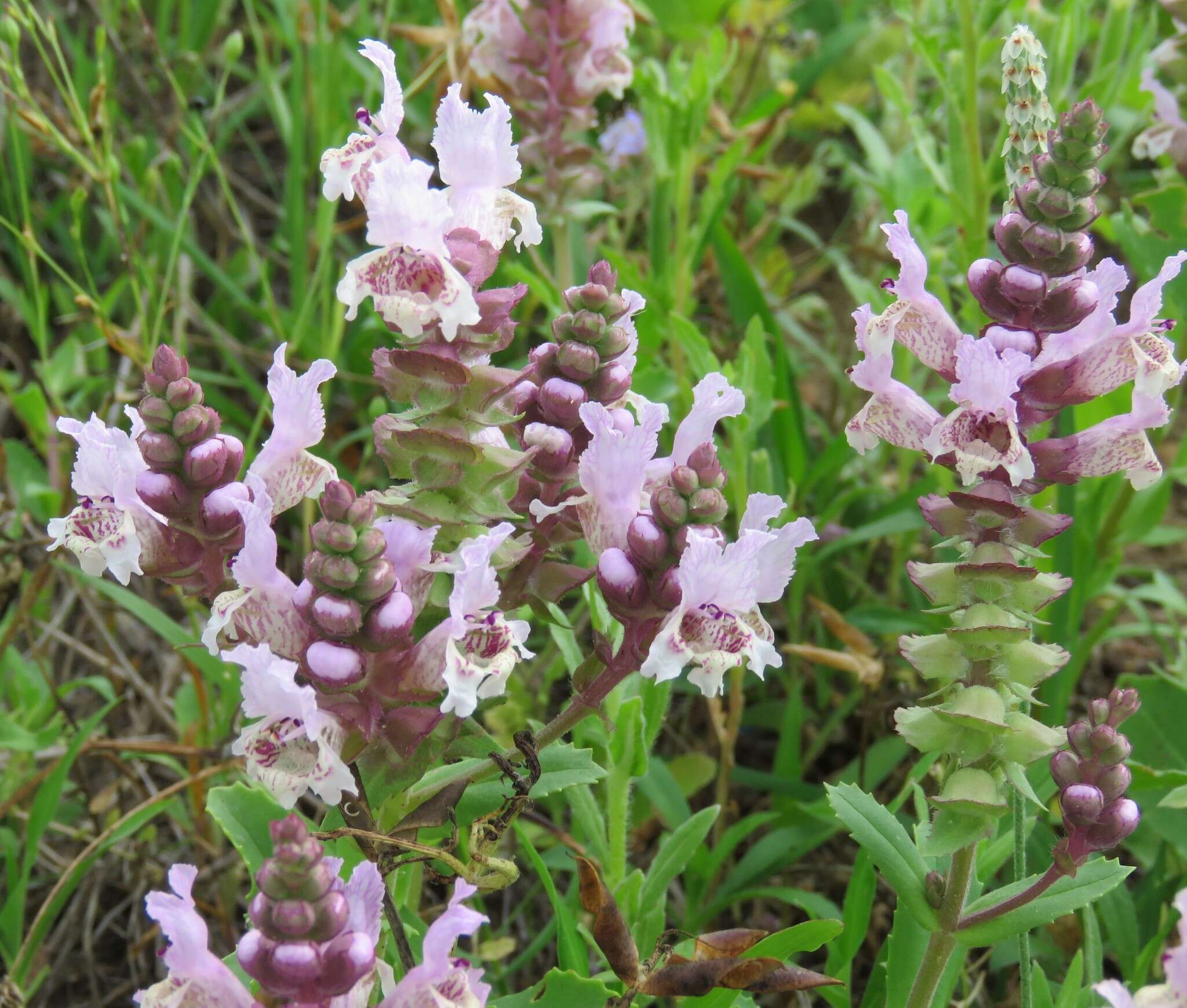
Brazoria
genus of plants

Tetradenia
Tetradenia (also known as gingerbush) is a genus of plants in the family Lamiaceae, first described in 1830. It is native to Africa, including Madagascar.

Otostegia
Otostegia is a genus of flowering plants in the family Lamiaceae, first described in 1834. It is native to eastern Africa and the Middle East.
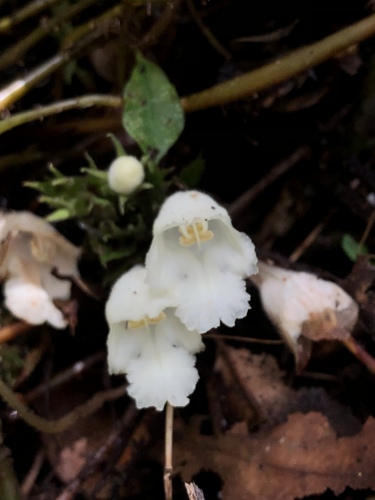
Gomphostemma
Gomphostemma is a genus of flowering plants in the mint family, Lamiaceae, first described in 1830. It is native to Southeast Asia, China, and the Indian subcontinent.

Lagopsis
genus of plants

Oxera
Oxera is a genus of flowering plants in the family Lamiaceae native to islands in the southwestern Pacific and Australia.
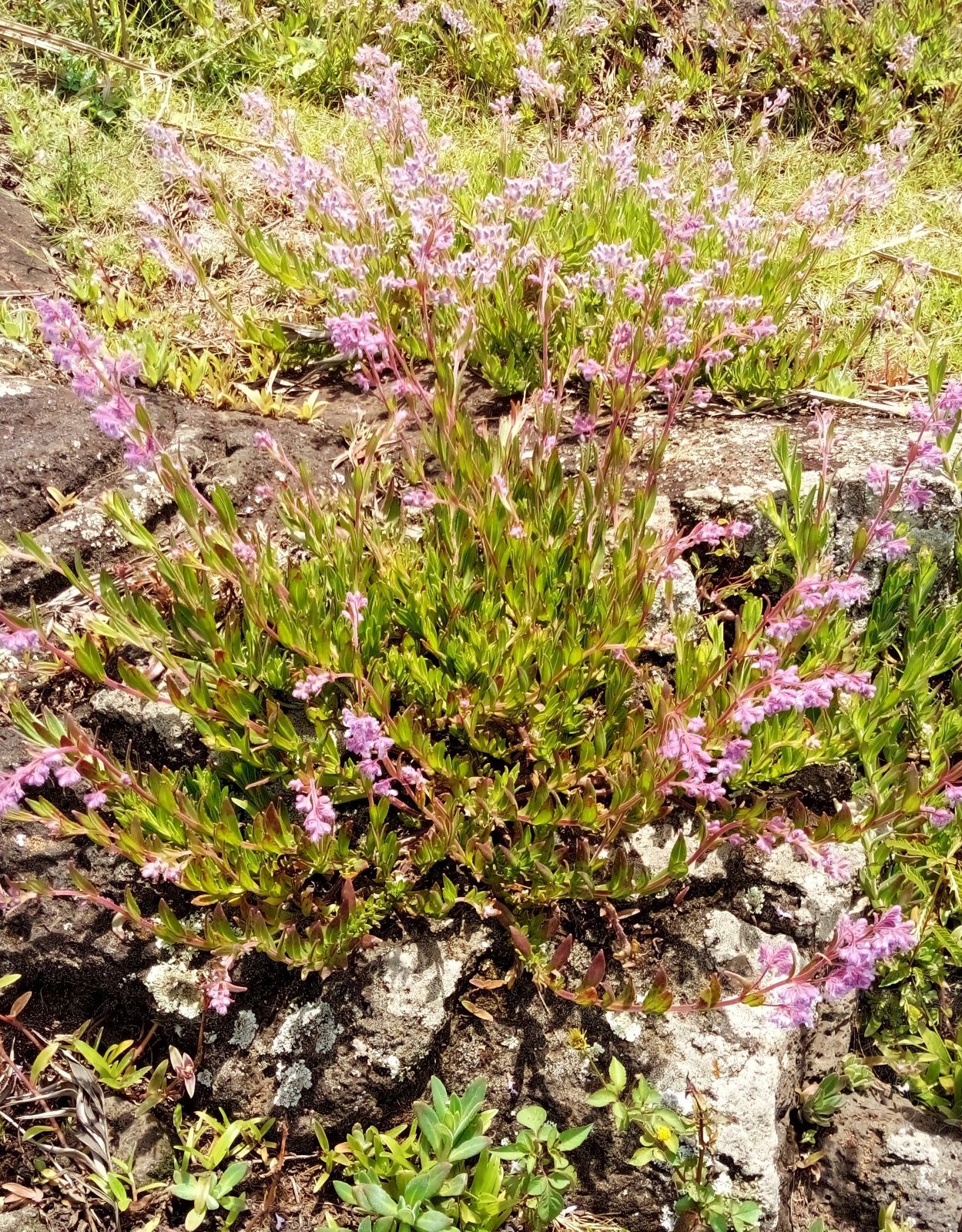
Aeollanthus
Aeollanthus (rocksage) is a genus in the mint family, Lamiaceae. All the species are native to Africa.
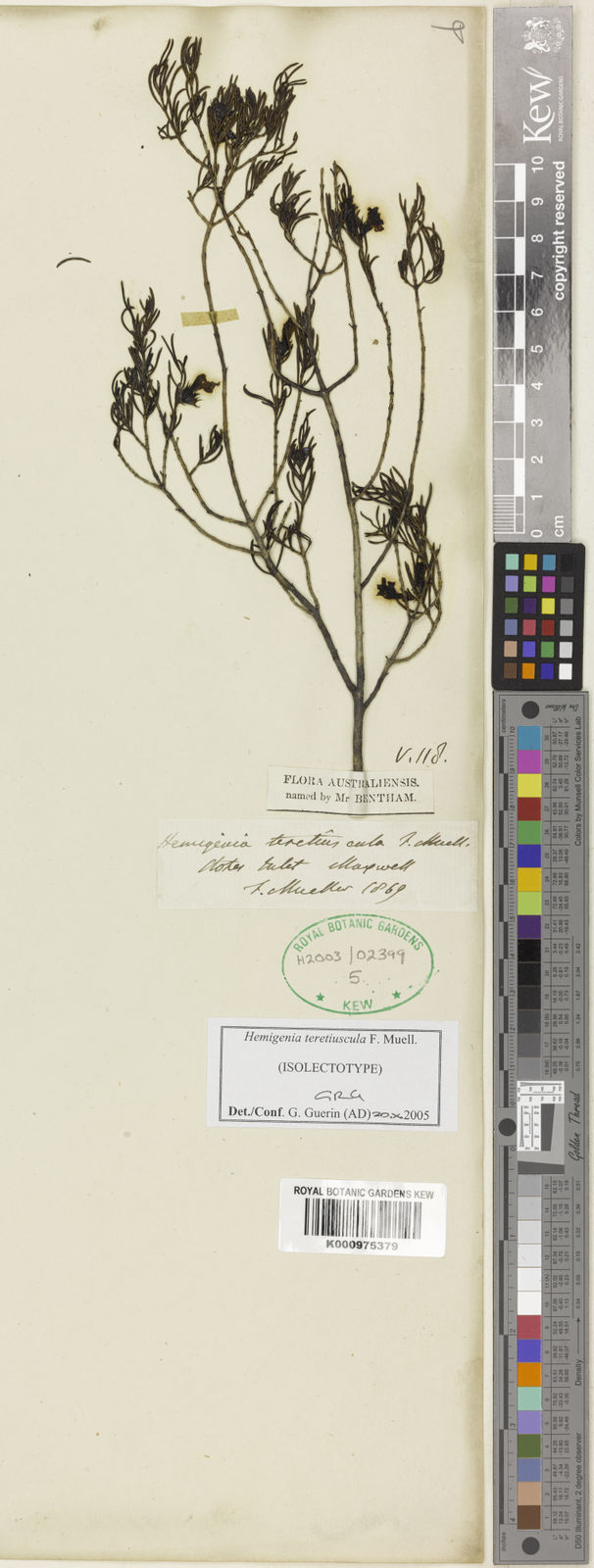
Hemigenia
Hemigenia is a genus of flowering plants in the mint family, Lamiaceae and is endemic to Australia where most species occur in Western Australia, although some are also found in New South Wales and Queensland. Plants in this genus are shrubs or bushes with simple leaves and tube-shaped flowers with the petals forming two "lips" - the upper one with two lobes and the lower one with three.

Heterolamium
Heterolamium is a genus of plants in the family Lamiaceae, first described in 1965. The 2 known species are both endemic to China.
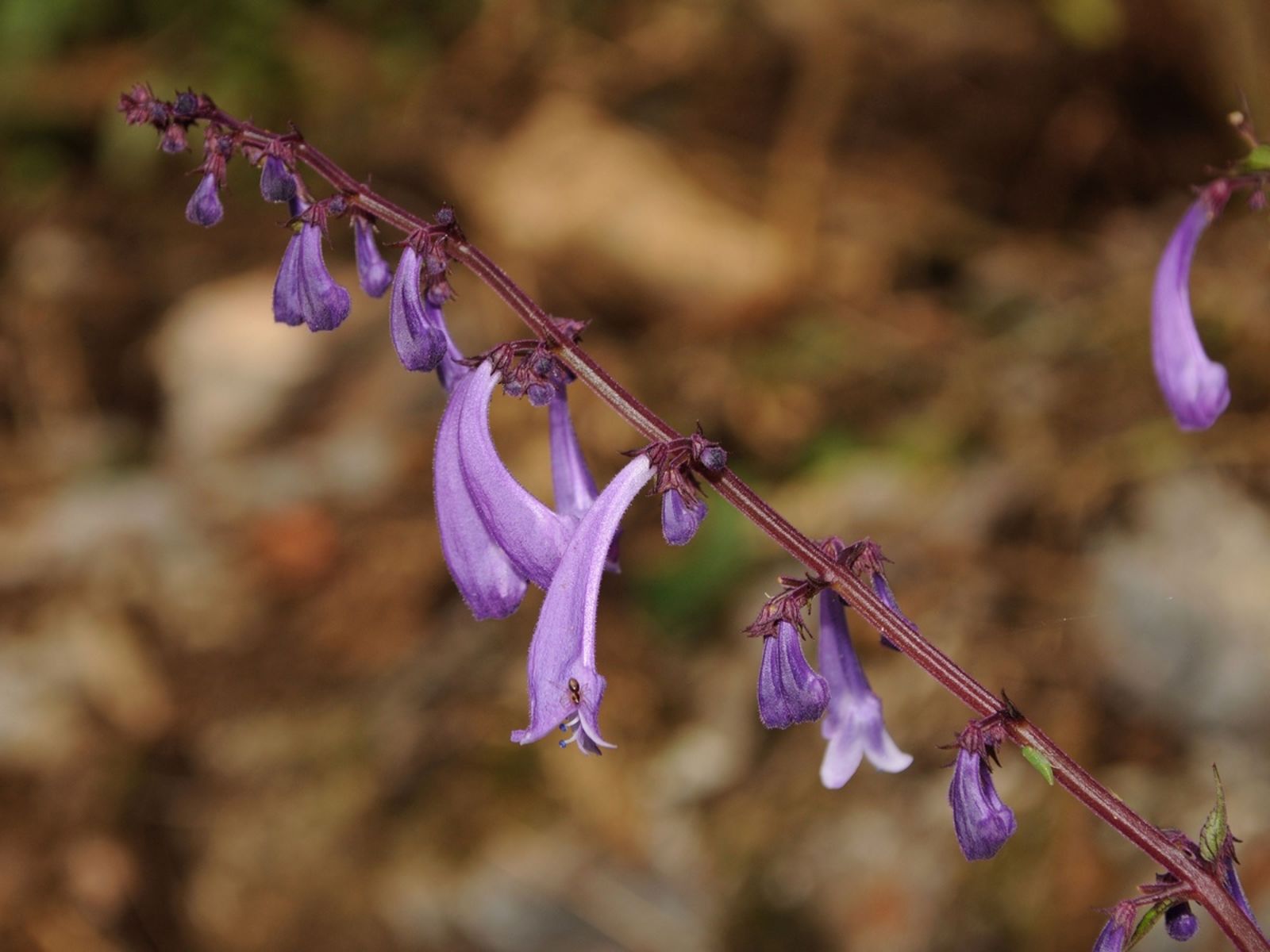
Hanceola
Hanceola is a genus of flowering plants in the mint family, Lamiaceae, first described with this name in 1929. The entire genus is endemic to China.

Suzukia
Suzukia is a genus of plants in the family Lamiaceae, first described in 1930. It contains two known species, native to Taiwan and the Ryukyu Islands (part of Japan).
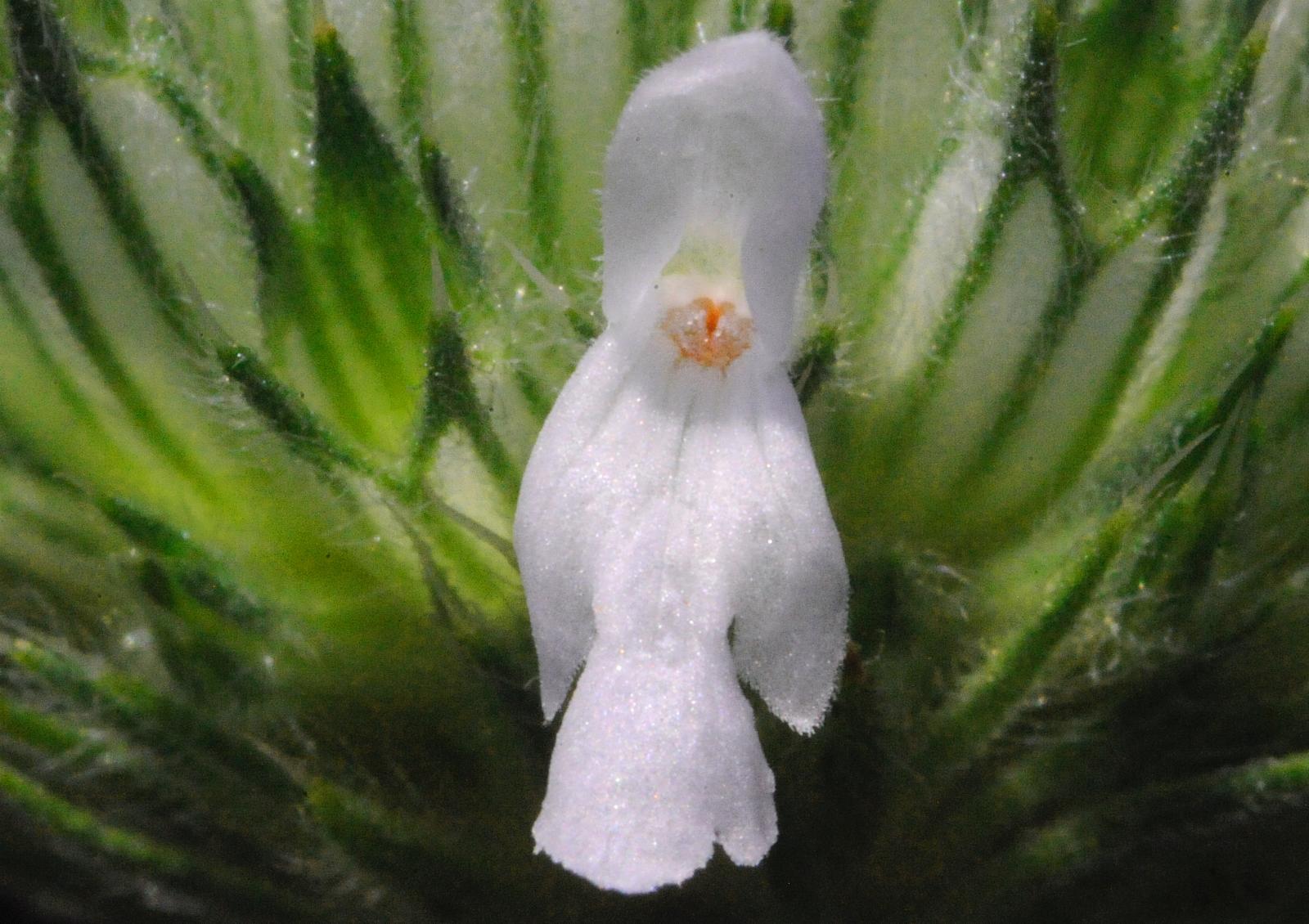
Acrotome
Acrotome (horsefrights) is a genus of plants in the family Lamiaceae, first described in 1838. The genus is native to the southern part of Africa.
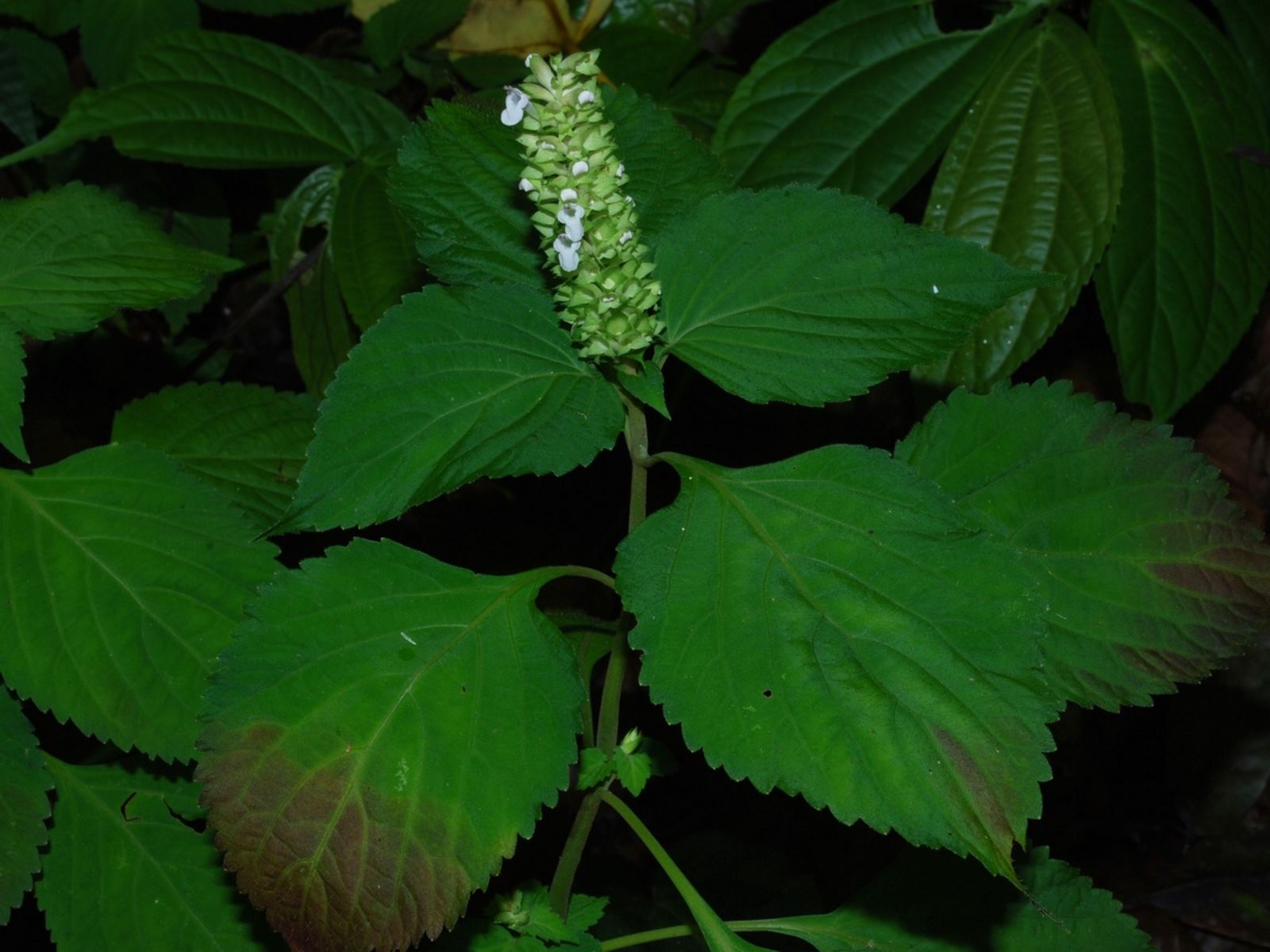
Achyrospermum
Achyrospermum is a genus in the family Lamiaceae. It contains 23 species and can be found across Sub-Saharan Africa and Southeast Asia.

Amasonia
Amasonia is a genus of plants in the family Lamiaceae, native to South America and to the island of Trinidad.
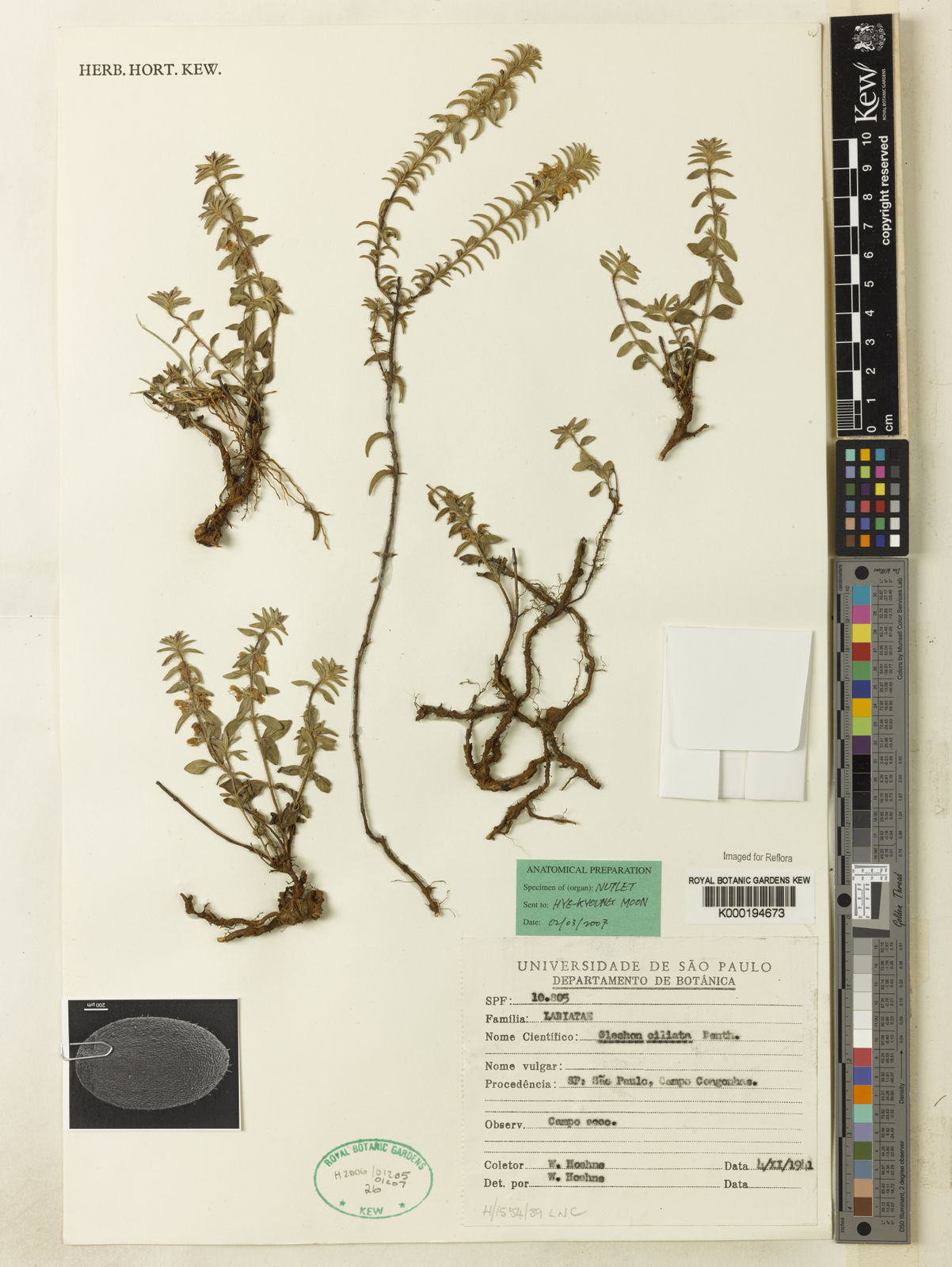
Glechon
Glechon is a genus of flowering plants in the mint family, Lamiaceae, first described in 1827. It is native to South America.
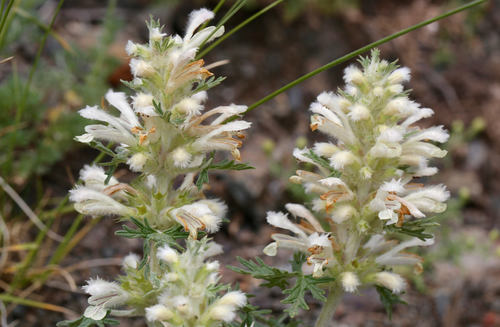
Panzerina
Panzerina is a genus of plants in the Lamiaceae first described in 1982. It contains 2 known species, native to Siberia, China, and Mongolia.

Hyptidendron
Hyptidendron is a genus of plants in the family Lamiaceae, first described in 1849. The entire genus is endemic to South America.

Microtoena
Microtoena is a genus of flowering plants in the mint family, Lamiaceae, first described in 1889. It is native to eastern and southeastern Asia, primarily China.
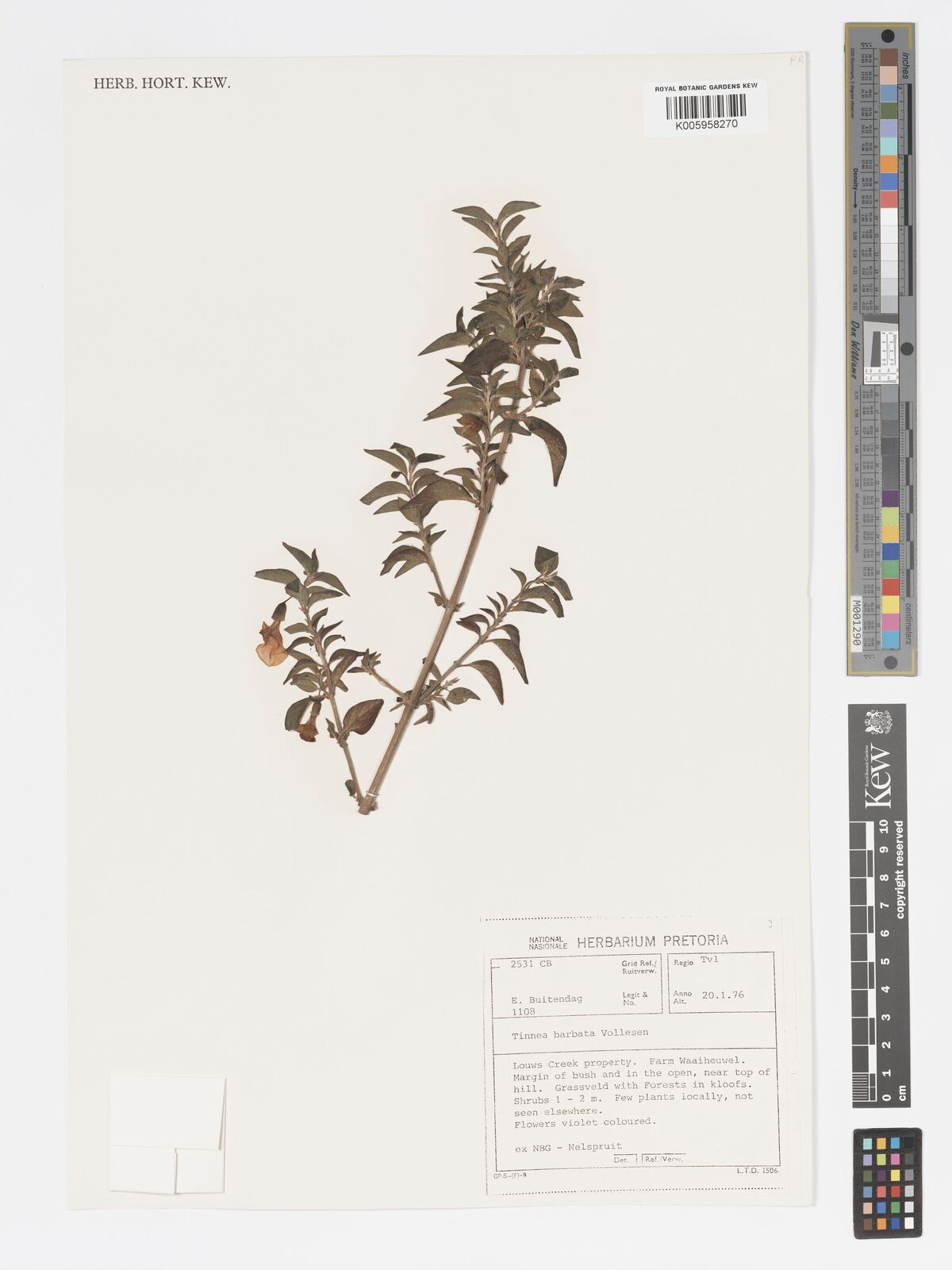
Tinnea
Tinnea (sunbells) is a genus of plants in the family Lamiaceae first described in 1867. It is native to sub-Saharan Africa. It was named in honour of the Dutch explorer Alexine Tinne.
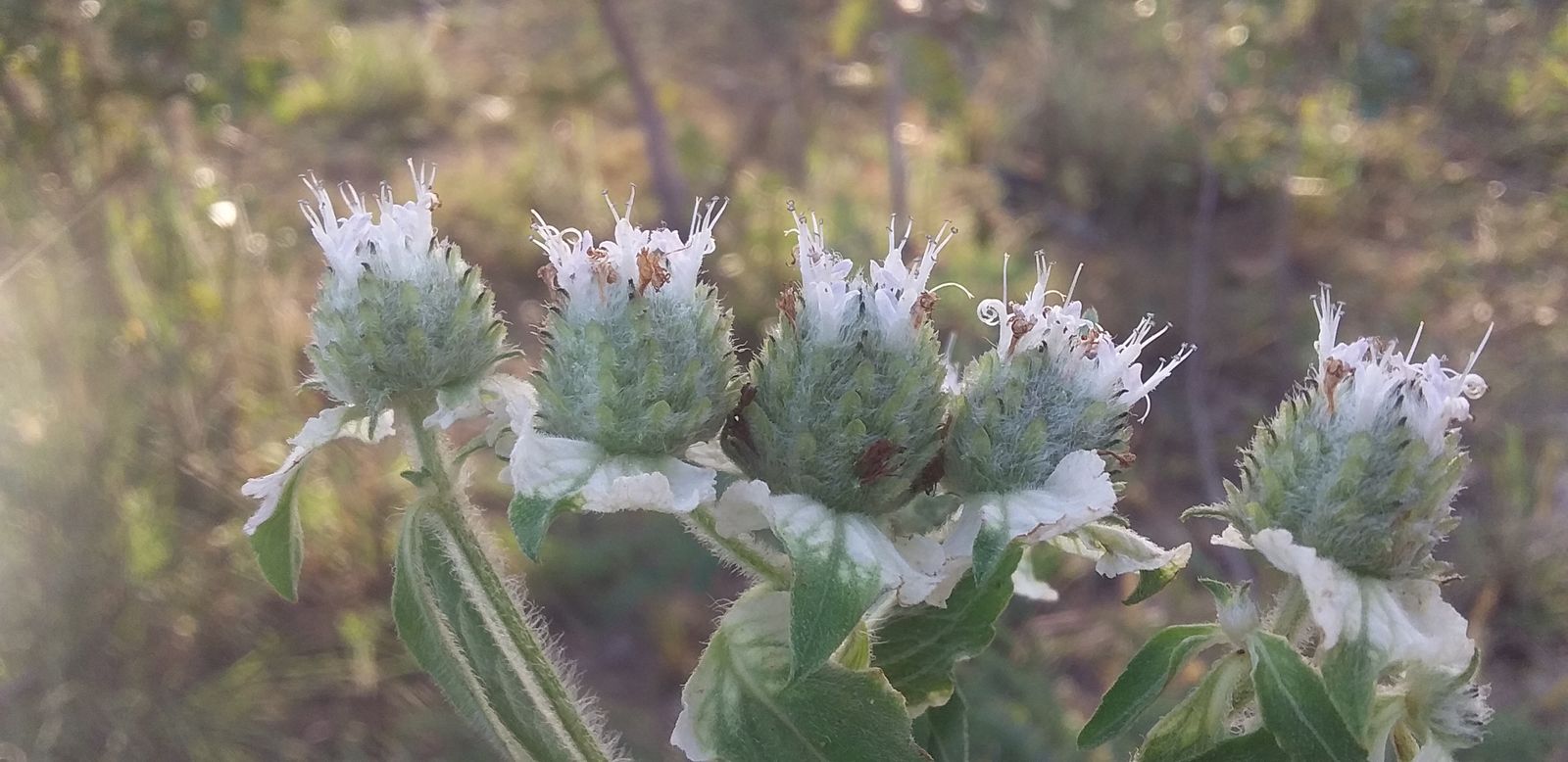
Haumaniastrum
Haumaniastrum is a genus of flowering plants in the mint family, Lamiaceae, first described in 1959. The species are native to Africa (including Madagascar).
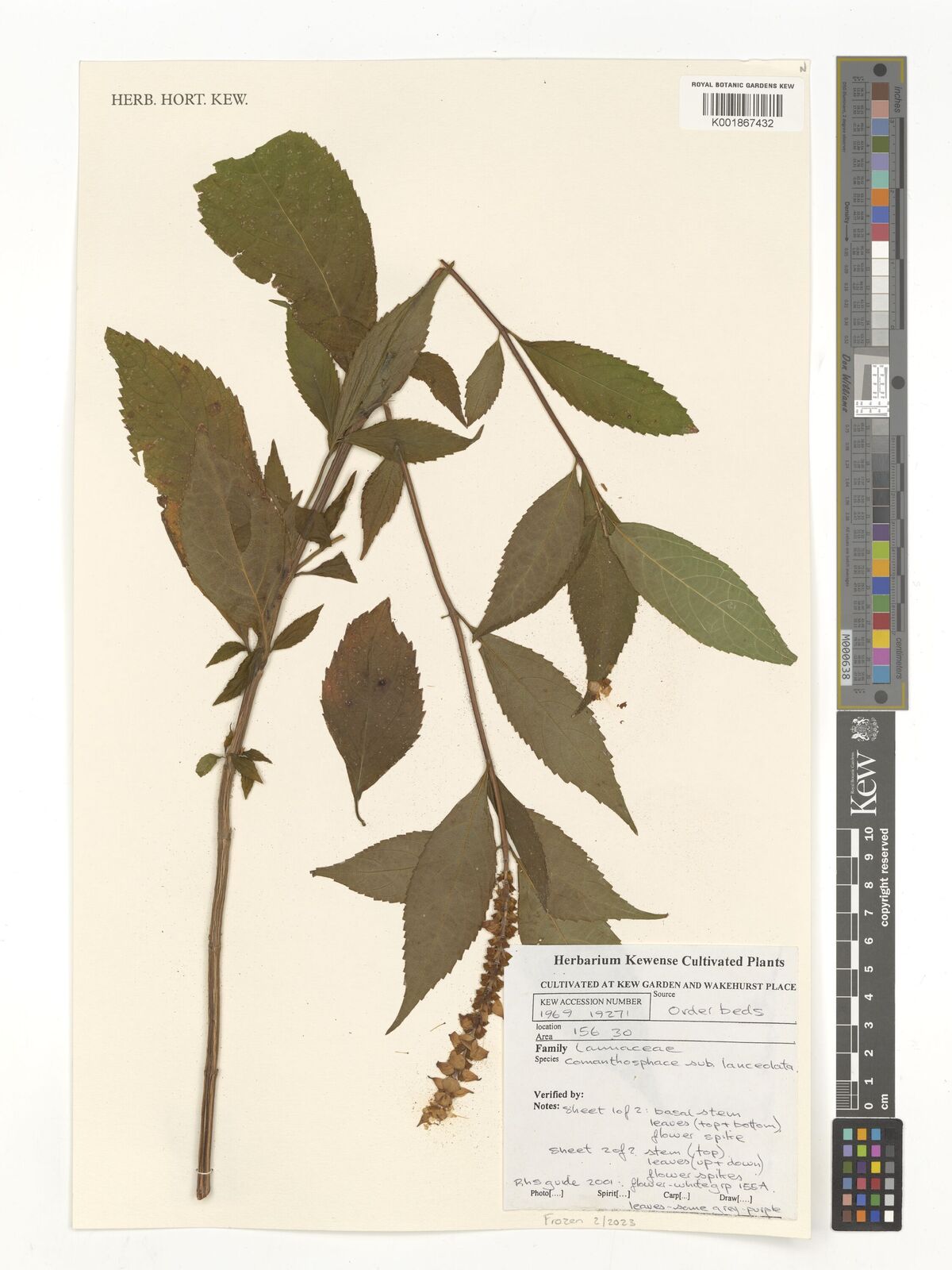
Comanthosphace
Comanthosphace is a genus of plants in the family Lamiaceae, first described in 1877. It is native to East Asia (China, Taiwan, Japan).
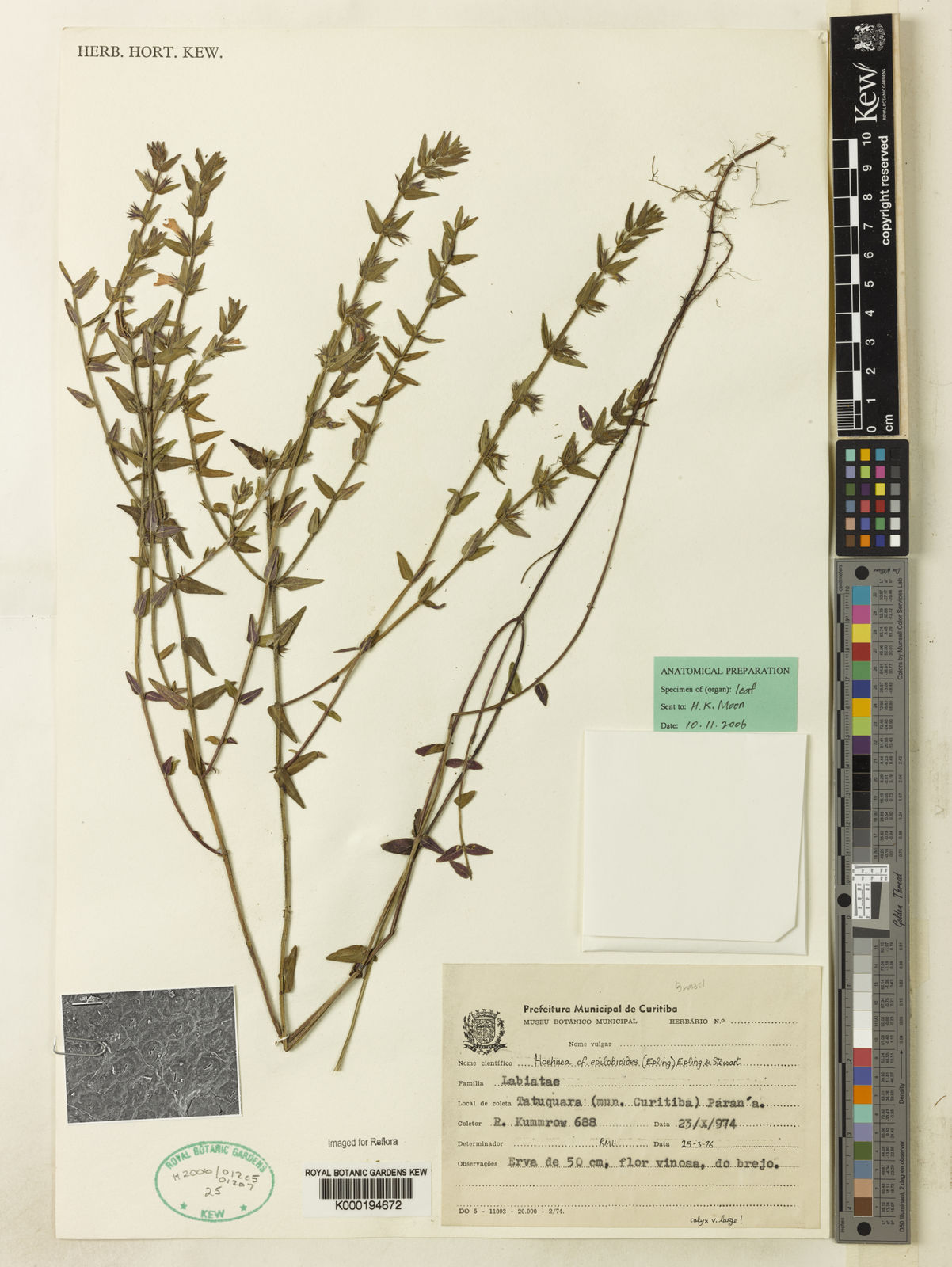
Hoehnea
Hoehnea is a genus of plants in the family Lamiaceae, first described with this name in 1939. It is native to South America, primarily southern Brazil and Paraguay.
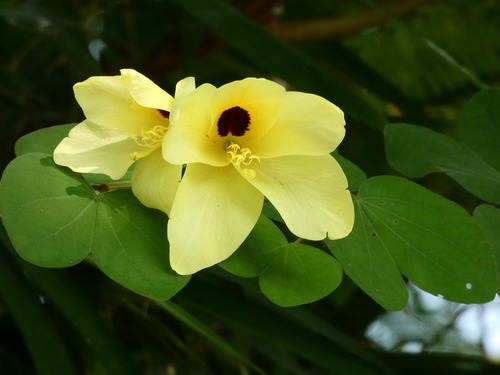
Alvesia
Alvesia is a genus of plants in the family Lamiaceae, first described in 1869. It is native to central Africa.

Paraphlomis
Paraphlomis is a genus of flowering plants in the mint family, Lamiaceae, first described in 1901. It is native to China, Japan, Korea, the eastern Himalayas, Indochina, and Malesia.
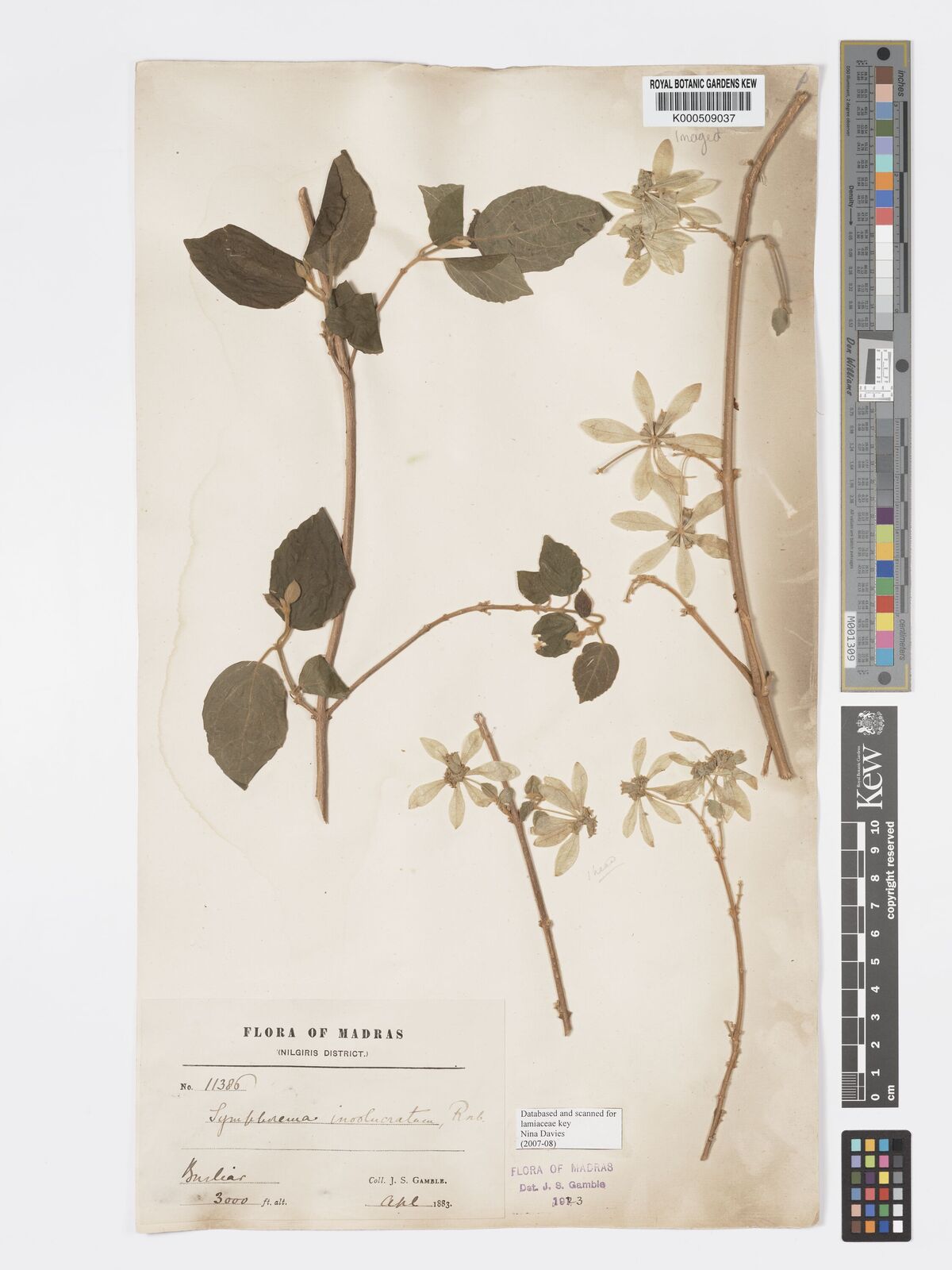
Symphorema
Symphorema is a genus of plants in the family Lamiaceae, first described in 1805. It is native to Asia.
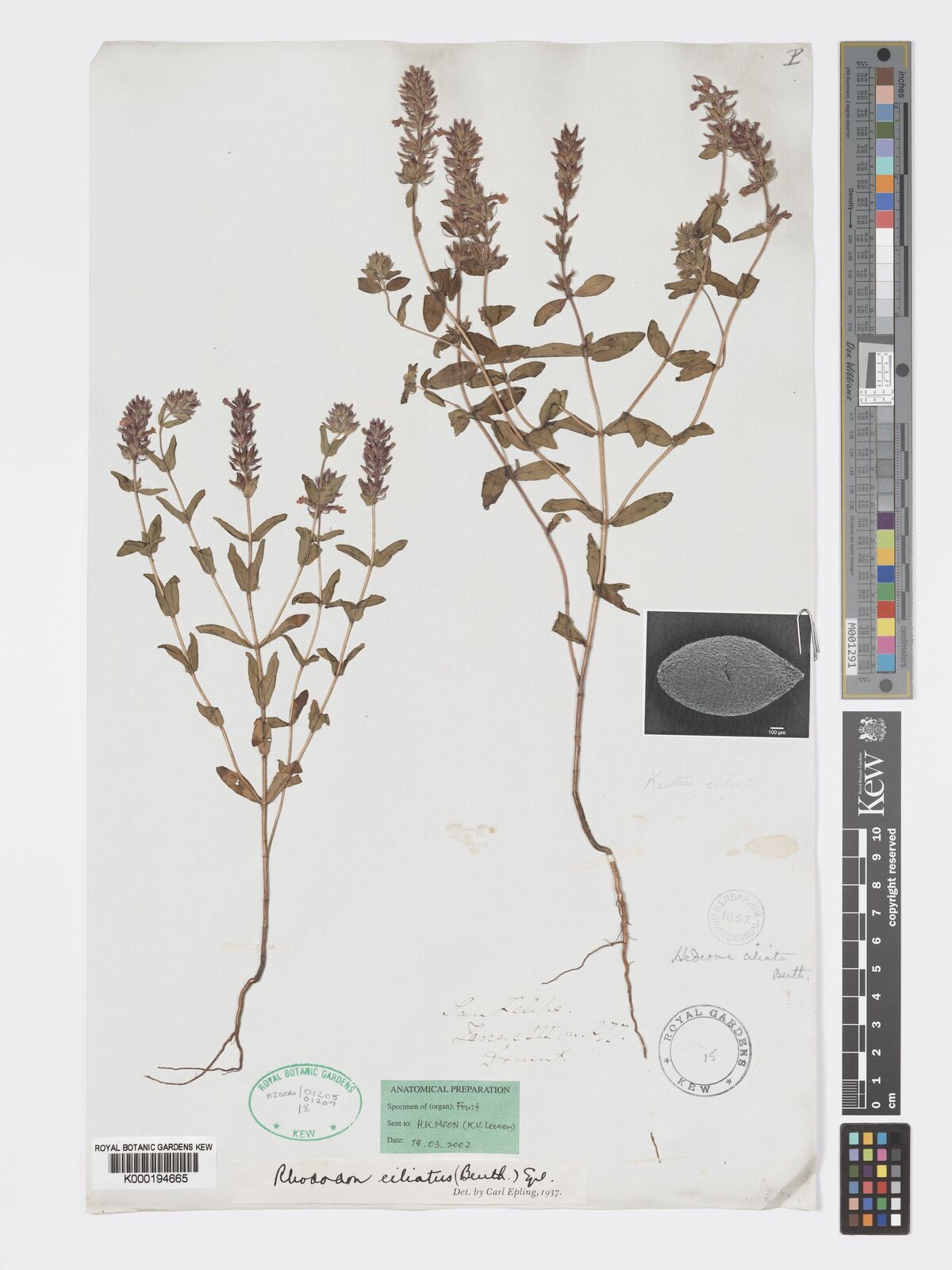
Rhododon
Rhododon, commonly referred to as sandmint, is a genus of flowering plant in the mint family (Lamiaceae) first described in 1939. It contains two known species, Rhododon ciliatus (Texas sandmint) and Rhododon angulatus (angled sandmint) Both species are endemic to the state of Texas in the United States.
Hypogomphia
Hypogomphia is a genus of flowering plants in the mint family, Lamiaceae, first described in 1873. It is native to Iran, Afghanistan, and Central Asia.

Anisochilus
Anisochilus is a genus in the family Lamiaceae, commonly called as Kapuri first described in 1830. It is native to China, the Indian subcontinent, and Indochina. Has healing properties that deal with treatment for ailments known as gastric ulcer and helps with dermis issues. Anisochilus also has active properties such as camphor, leutiolin, and apigenin. A new hygrine-like compound has been found within the DNA of this plant.
Cymaria
Cymaria is a genus of plants in the family Lamiaceae, first described in 1830. It is native to China, New Guinea, and Southeast Asia.