Category
page 1Language and mysticism

Hebrew alphabet
Semitic alphabet used for writing Hebrew, Samaritan, Yiddish, Judaeo-Spanish, and other Jewish languages

Kabbalah
thumb|upright=1.2|Latin translation of Joseph Gikatilla|Gikatilla's Shaarei Ora

runic script
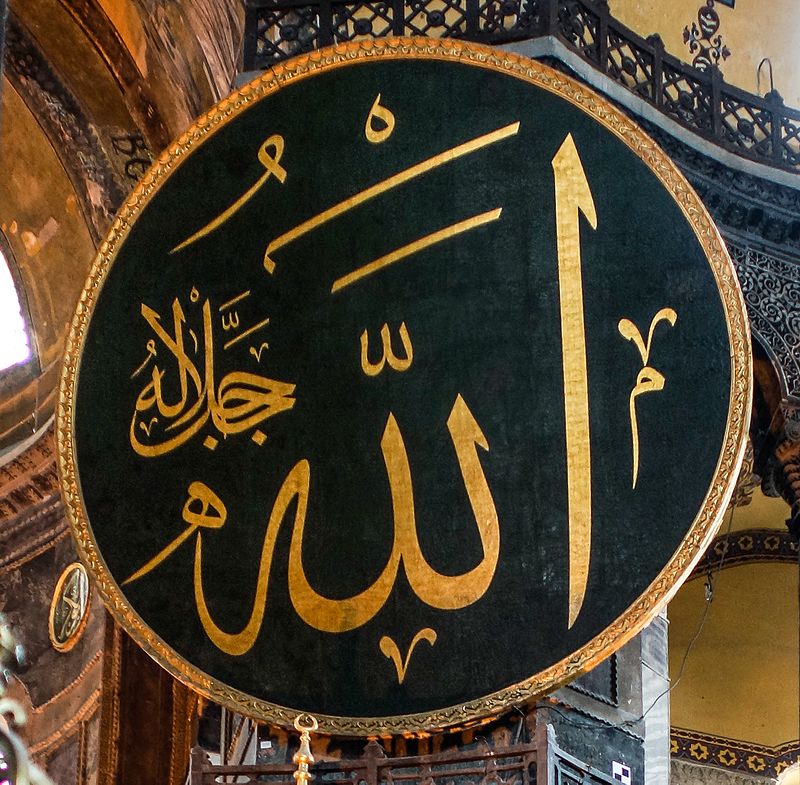
99 names of Allah
names of God described in Islam

numerology
thumb|Numerorum mysteria (1591), a treatise on numerology by Pietro Bongo and his most influential work in Europe

Sapir-Whorf hypothesis
claim that the structure of a language affects its speakers' world view or cognition

logos
thumb|Greek alphabet|Greek spelling of logos|class=skin-invert-image

ichthys
thumb|237px|Ichthys was adopted as a Christian symbolism|Christian symbol.
The ichthys or ichthus (; from ancient Greek , "fish") is, in its modern rendition, a symbol consisting of two intersecting arcs, the right ends extending beyond the meeting point so as to resemble the profile of a fish. It has been speculated that the symbol was used by early Christians as a secret symbol: a shibboleth to determine if another was indeed Christian. It is now known colloquially as the "Jesus fish". This symbol is widely used by Christians as a sign of their faith, often being found on vehicles, necklaces
%20%E2%80%93%20Eug%C3%A8ne%20Baugnies%20(1841%E2%80%931891).jpg)
dhikr
thumb|right|The Dhikr, Eugène Baugnies (1841–1891)
'''' (; ; ) is a form of Islamic worship in which phrases or prayers are repeatedly recited for the purpose of remembering God. It plays a central role in Sufism, and each Sufi order typically adopts a specific dhikr, accompanied by specific posture, breathing, and movement. In Sufism, dhikr refers to both the act of this remembrance as well as the prayers used in these acts of remembrance. Dhikr'' usually includes the names of God or supplication from the Quran or hadith. It may be counted with either one's fingers or prayer beads, and may be

Alpha and Omega
Christian symbol, first and last letters of the Greek alphabet
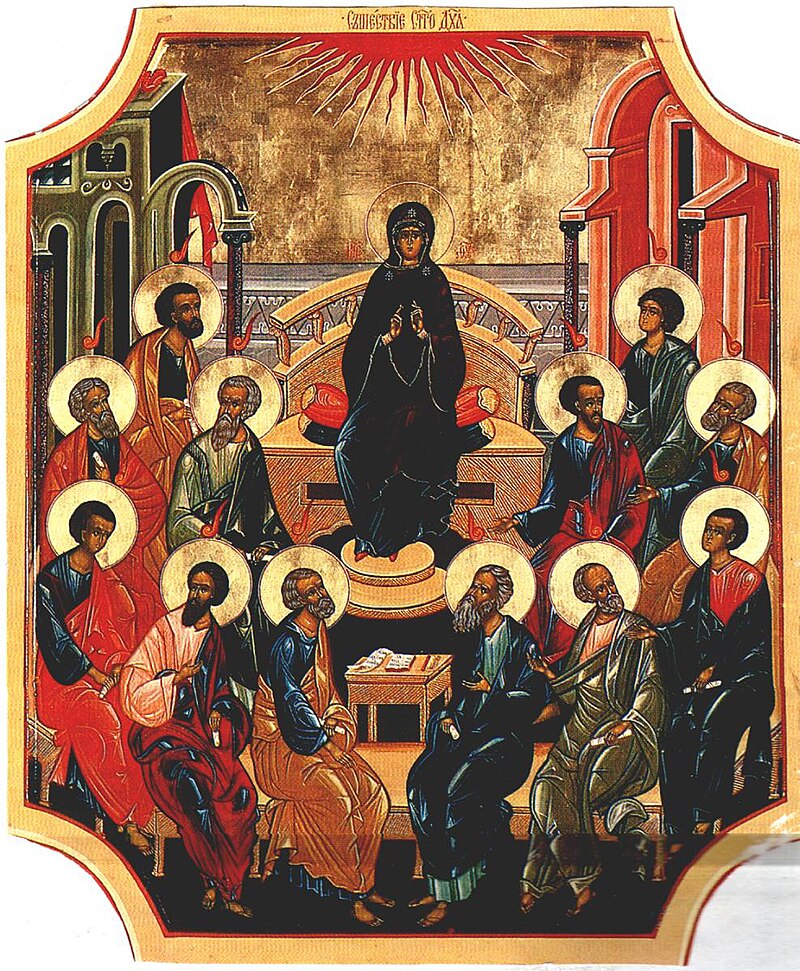
glossolalia
phenomenon in which people speak in languages unknown to them

rebus
thumb|A rebus-style "escort card" from around 1865, to be read as "May I see you home my dear?"
thumb|A German rebus, circa 1620
Jesus Prayer
short prayer, popular in Eastern Christianity: "Lord Jesus Christ, Son of God, have mercy on me, a sinner."
Sator Square
word square containing a five-word Latin palindrome
Ancient Egyptian conception of the soul
ancient Egyptian religious concept
magical thinking
illogical conclusions based on correlated events, or belief that unrelated events are causally connected despite the absence of any plausible causal link between them
ꙮ
archaic Cyrillic letter

Sefer Yetzirah
Kabbalistic book about the creation of the universe
Paleo-Hebrew alphabet
abjad found in Canaanite inscriptions from the region of biblical Israel and Judah used to write Hebrew, later replaced by the modern Hebrew square script
names of God in Judaism
names given to God in Judaism

Muqatta'at
The mysterious letters (muqaṭṭaʿāt, ḥurūf muqaṭṭaʿāt, "disjoined letters" or "disconnected letters") are combinations of between one and five Arabic letters that appear at the beginning of 29 out of the 114 chapters (surahs) of the Quran just after the Bismillāh Islamic phrase. The letters are also known as fawātiḥ () or "openers" as they form the opening verse of their respective surahs.
Lingua Ignota
mystical language created by St. Hildegard of Bingen
Samaritan Hebrew
language used liturgically by the Samaritans
automatic writing
in modern spiritualism: writing produced involuntarily
.jpg)
Japa
thumb|A Bhutanese Buddhist woman doing Japa, with [[Japamala]]
Japa () is the meditative repetition of a mantra or a divine name. It is a practice found in Hinduism, Jainism, Sikhism, and Buddhism, with parallels found in other religions.
%E5%8D%97%E7%84%A1%E9%98%BF%E5%BD%8C%E9%99%80%E4%BD%9B%E5%8F%A4%E7%A2%91.jpg)
nianfo
thumb|250px|Chinese Nianfo carving
Bible code
purported set of secret messages encoded within the Hebrew text of the Torah
Hu
Egyptian deity
.jpg)
maranatha
thumb|A mention of "maranatha" in the Southwick Codex, a medieval text
Maranatha (Aramaic: '''') is an Aramaic phrase which occurs once in the New Testament (). It also appears in Didache 10:14. It is transliterated into Greek letters rather than translated and, given the nature of early manuscripts, the lexical difficulty rests in determining just which two Aramaic words constitute the single Greek expression.
Hurufism
Hurufism ( ḥurūfiyyah, Persian: حُروفیان horūfiyān) is a form of Islamic numerology based on the mysticism of letters (ḥurūf), essentially being the Islamic equivalent of gematria. It originated in the Sufi circles of Astrabad and spread to areas of western Iran (Persia), Anatolia, and the Balkans in the late 14th and early 15th centuries.

egregore
An Egregore (also spelled egregor; , ) is a concept in Western esotericism of a non-physical entity or thoughtform that arises from the collective thoughts and emotions of a distinct group of individuals.
title of Jesus
designations for Jesus used in the New Testament
Sun Language Theory
Turkish nationalist pseudoscientific theory
Greek Magical Papyri
body of papyri from Graeco-Roman Egypt, containing magical spells, formulae, hymns, and rituals, dating from the 2nd century BCE to the 5th century CE

Enochian
Enochian ( ) is an occult constructed language—said by its originators to have been received from angels—recorded in the private journals of John Dee and his colleague Edward Kelley in late 16th-century England. Kelley was a scryer who worked with Dee in his magical investigations. The language is integral to the practice of Enochian magic.

bibliomancy
thumb|upright=1.3|Panurge and Pantagruel use a book of Virgil's poems for bibliomancy, in [[The Third Book of Pantagruel]]
Bibliomancy is the use of books in divination. The use of sacred books (especially specific words and verses) for "magical medicine", for removing negative entities, or for divination is widespread in many religions of the world.
Adamic language
language spoken by Adam in the Garden of Eden
names of God
forms of address or reference to the deity of a religion
Notarikon
Notarikon () is a Talmudic method of interpreting Biblical words as acronyms. The same term may also be used for a Kabbalistic method of using the acronym of a Biblical verse as a name for God. Another variation uses the first and last letters, or the two middle letters of a word, to form another word. The word "notarikon" is borrowed from the Greek language (νοταρικόν), and was derived from the Latin word "notarius" meaning "shorthand writer."
exquisite corpse
surrealist automatic writing & art technique

Shiksha
thumb|upright=1.25|A page from the Yajnavalkya Shiksha manuscript (Sanskrit, Devanagari). This text is also called Vajasaneyi Shiksha and Traisvarya Lakshana.
norito
are liturgical texts or ritual incantations in Shinto, usually addressed to a given kami.
Kotodama
refers to the Japanese belief that mystical powers dwell in words and names. English translations include "soul of language", "spirit of language", "power of language", "power word", "magic word", and "sacred sound". The notion of kotodama presupposes that sounds can affect objects, and that ritual word usages can influence the environment, body, mind, and soul. Some interpret the belief as the discovery of commands words that can affect physiology and the mind.
theonym
A theonym (from Greek (), 'god', attached to (), ) is a proper name of a deity.
Vāc
Vac (, '') is a Vedic goddess who is a personified form of divine speech. She enters into the inspired poets and visionaries, gives expression and energy to those she loves; she is called the "mother of the Vedas" and consort of Prajapati, the Vedic embodiment of mind. She is also associated with Indra in Aitareya Aranyaka. Elsewhere, such as in the Padma Purana, she is stated to be the wife of Vision (Kashyapa), the mother of Emotions, and the friend of Musicians (Gandharva'').
language of Jesus
language(s) spoken by Jesus
curse tablet
type of votive tablet
Zaum
'''''' () are the linguistic experiments in sound symbolism and language creation of Russian Cubo-Futurist poets such as Velimir Khlebnikov and Aleksei Kruchenykh. Zaum is a non-referential phonetic entity with its own ontology. The language consists of neologisms that mean nothing. Zaum is a language organized through phonetic analogy and rhythm. Zaum literature cannot contain any onomatopoeia or psychopathological states.
Runic magic
ancient or modern magic performed with runes or runestones

isopsephy
In numerology, isopsephy (stressed on the I and the E; , ) or isopsephism is the practice of adding up the number values of the letters in a word to form a single number. The total number is then used as a metaphorical bridge to other words evaluating the equal number, which satisfies or "equal" in the term. Ancient Greeks used counting boards for numerical calculation and accounting, with a counter generically called ('pebble'), analogous to the Latin word , from which the English calculate is derived.
Execration texts
ancient Egyptian ritual writing
Balaibalan
Balaibalan () is the oldest known constructed language.
language of the birds
mystical, perfect divine language, Adamic language, Enochian, angelic language or a mythical or magical language used by birds to communicate with the initiated
asemic writing
wordless open semantic form of writing
Theban alphabet
writing system, first published in Johannes Trithemius's Polygraphia (1518); today sometimes used in modern Wicca
philosophical language
constructed language that is constructed from first principles
Pardes
approach to interpretation in Torah study

jindai moji
“characters [moji] of the Age [dai] of the Gods [jin]”, scripts claimed to be from Japanese antiquity, but considered by epigraphic scholars to be mythological forgeries and beliefs
I am
Christian term used in the Bible
shabda
Shabda (, ) is the Sanskrit word for "speech sound". In Sanskrit grammar, the term refers to an utterance in the sense of linguistic performance.