Category
page 1Languages without Glottolog code

Glosa
Glosa is a constructed international auxiliary language based on Interglossa (a previous draft of an auxiliary published in 1943). The first Glosa dictionary was published 1978. The name of the language comes from the Greek root glossa meaning tongue or language.

Chewa
language of the Bantu language family
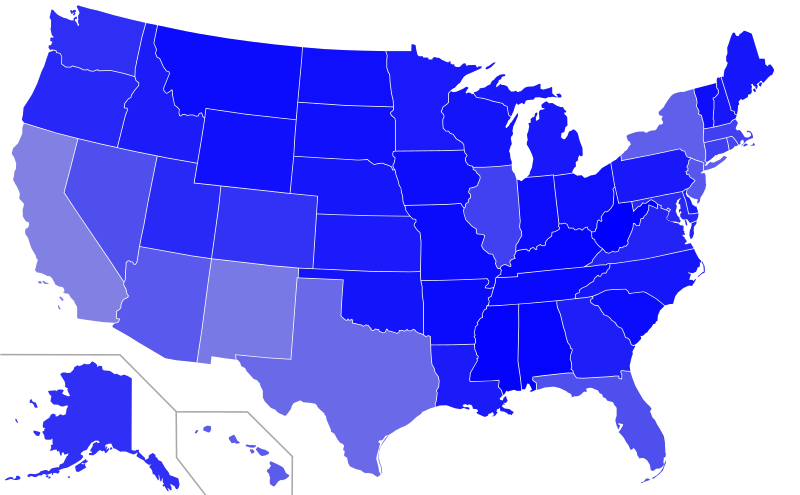
American English
set of dialects of the English language spoken in the United States

Chilean Spanish
Spanish dialect written and spoken in Chile

Pannonian Avars
alliance of various Eurasian nomads – 6th to 9th centuries

Standard Chinese
standard form of the Chinese language

Zhuang
any of various Tai languages used by the Zhuang people

Cimmerians
The Cimmerians were an ancient Eastern Iranic equestrian nomadic people originating in the Pontic–Caspian steppe, part of whom subsequently migrated into West Asia. Although the Cimmerians were culturally Scythian, they were ethnically distinct from the Scythians proper, to whom the Cimmerians were related and who displaced and replaced the Cimmerians.

Marwari
language spoken in Rajasthan, India
Lydnevi
Lydnevi is a fictional North Slavic language created in 2002 by the Czech linguist Libor Sztemon.

Na'vi
constructed science-fiction language

Capraia Isola
Italian comune

Early Middle Japanese
stage of the Japanese language during the Heian period (794–1185)

Solresol
Solresol (Solfège: Sol-Re-Sol), originally called (lit. 'Universal language') and then ('Universal musical language'), is a musical constructed language devised by French music teacher and composer Jean-François Sudre (1787–1862), beginning in 1817. His book defining it, , was published posthumously in 1866, though he had already been publicizing it for some years. Solresol enjoyed a brief spell of popularity in the latter half of the century and was sponsored by such figures as Victor Hugo, Alphonse de Lamartine, Alexander von Humboldt and Napoleon III, culminating with Boleslas Gajewski's pu

Ruthenian
historical Slavic language, ancestor of Belarusian, Rusyn, and Ukrainian; official, literary and spoken language of the Grand Duchy of Lithuania, Moldavian principality and East Slavic voivodeships of the Polish-Lithuanian Commonwealth

Cumbric
Cumbric is an extinct Celtic Brythonic language or dialect that was spoken during the Early Middle Ages in the Hen Ogledd or "Old North", in what is now Northern England and the southern Scottish Lowlands. Place-name evidence suggests Cumbric may also have been spoken as far south as Pendle and the Yorkshire Dales. The prevailing view is that it became extinct in the 12th century, around the incorporation of the Kingdom of Strathclyde into the Kingdom of Scotland.

Luba-Kasai
Bantu language spoken in DR Congo

Xianbei
The Xianbei (Mongolian:Сүнбэ; ; ) were an ancient nomadic people in northern East Asia who developed a distinct cultural and political identity by the 1st century BC. They inhabited regions spanning parts of present-day northeastern China, Inner Mongolia, and the eastern Eurasian steppe. Several Xianbei groups formed ruling regimes, with early political center around present-day Datong in Shanxi. The Xianbei were likely not of a single ethnicity, but rather a multilingual, multi-ethnic confederation consisting of mainly Proto-Mongols (who spoke either pre-Proto-Mongolic, or Para-Mongolic langu
.jpg)
Dilmun
Dilmun, or Telmun, (Sumerian: 15px, later , = ; ) was an ancient East Semitic–speaking civilization in Eastern Arabia mentioned from the 3rd millennium BC onwards, covering the transition from Prehistoric Arabia into the historic period. Based on contextual evidence, it was located in the Persian Gulf, on a trade route between Mesopotamia and the Indus Valley Civilisation, close to the sea and to artesian springs. Dilmun encompassed Bahrain, Kuwait, and eastern Saudi Arabia.
.jpg)
Judeo-Arabic
Khazar language
language spoken by the Khazars, a nomadic steppe people of Turkic descent
silbo Gomero
whistled language from la Gomera island, Spanish Canarias.

Dothraki
fictional language in "Game of Thrones"

Classical Arabic
form of the Arabic language used in Umayyad and Abbasid literary texts

Ithkuil
Ithkuil is an experimental constructed language created by John Quijada. It is designed to express more profound levels of human cognition briefly yet overtly and clearly, particularly about human categorization. It is a cross between an a priori philosophical and a logical language. It tries to minimize the vagueness and semantic ambiguity in natural human languages. Ithkuil is notable for its grammatical complexity and extensive phoneme inventory, the latter being simplified in an upcoming redesign. The name "Ithkuil" is an anglicized form of Iţkuîl, which in the original form roughly meant
Dutch Low Saxon
group of Low Saxon dialects spoken in the northeastern Netherlands
Loglan
Loglan is a logical constructed language originally designed for linguistic research, particularly for investigating the Sapir–Whorf hypothesis. The language was developed beginning in 1955 by Dr. James Cooke Brown with the goal of making a language so different from natural languages that people learning it would think in a different way if the hypothesis were true. In 1960, Scientific American published an article introducing the language. Loglan is the first among, and the main inspiration for, the languages known as logical languages, which also includes Lojban.
Classical Latin
high-prestige form of the Latin language in the Roman Republic and Empire
Austrian German
variety of Standard German written and spoken in Austria and North Italy

Cockney
Cockney is a dialect of the English language mainly spoken in London, particularly by Londoners from working-class and lower-middle-class families. The term Cockney is also used as a demonym for a person from the East End, or, traditionally, born within earshot of Bow Bells.
Latino sine flexione
Latin-based international auxiliary language

Karapapakhs
The Karapapakhs (; ), or Terekeme (; ), are a Turkic people, who originally spoke the Karapapakh language, a western Oghuz language closely related to Azerbaijani and Turkish. Nowadays, the Karapapakh language has been largely supplanted by Azerbaijani and Turkish.
Tarantino
Italian dialect
Black Speech
fictional language in the fantasy works of J. R. R. Tolkien
Median
Old Iranian language
Hunnic
language spoken by Huns
Ecclesiastical Latin
variety of Latin that is used for liturgical purposes
Merya
extinct language
Valyrian
fictional language family
Lombardic
extinct Germanic language
Venedic
naturalistic constructed language

Dardani
The Dardani (; ; ) or Dardanians were a Paleo-Balkan people, who lived in a region that was named Dardania after their settlement there. They were among the oldest Balkan peoples, and their society was very complex. The Dardani were the most stable and conservative ethnic element among the peoples of the central Balkans, retaining an enduring presence in the region for several centuries.

Galician–Portuguese
Galician–Portuguese ( or ; or ), also known as Old Galician–Portuguese, Galaic-Portuguese, or (in contexts focused on one of the modern languages) Old Galician, Old Portuguese, Medieval Galician or Medieval Portuguese, was a West Iberian Romance language spoken in the Middle Ages, in the northwest area of the Iberian Peninsula. It is both the ancestor language and historical period of development of modern Galician, Fala, Portuguese and Eonavian languages which maintain a high degree of mutual intelligibility.
Aquitanian
Vasconic language or group of languages
Canadian French
dialect of French mainly spoken in Canada

Lullubi
Lullubi, Lulubi (), more commonly known as Lullu, were a group of Bronze Age tribes who existed and disappeared during the 3rd millennium BC. They were from a region known as Lulubum, now the Sharazor plain of the Zagros Mountains of modern-day Sulaymaniyah Governorate in Kurdistan Region, Iraq. Lullubi was a neighbour and sometimes ally with the Hurrian Simurrum kingdom and came into conflict with the Semitic Akkadian Empire and Assyria. Frayne (1990) identified their city Lulubuna or Luluban with the region's modern town of Halabja.
Rioplatense Spanish
variant of Spanish spoken in Argentina and Uruguay

Okjeo
Okjeo () was an ancient Korean tribal state which arose in the northern Korean peninsula from perhaps the 2nd century BCE to the 5th century CE.
Magma
French progressive rock band
Idiom Neutral
international auxiliary language, published by the International Academy of the Universal Language in 1902 under the leadership of W. Rosenberger; a heavy revision of Volapük
Adûnaic
Adûnaic (or Númenórean) ("language of the West") is one of the fictional languages devised by J. R. R. Tolkien for his fantasy works.
Lingua Ignota
mystical language created by St. Hildegard of Bingen
Early Modern English
stage of development of English, starting c. 16th century
Selonian
Eastern Baltic language
Old Novgorodian
extinct language
Magadhi Prakrit
written language of Ancient India
Swiss High German
German as used in Switzerland, mainly as written language
Tuscan
Italo-Dalmatian variety mainly spoken in the central Italy
Europanto
Europanto is a macaronic language concept with a fluid vocabulary from European languages of the user's choice or need. It was conceived in 1996 by Diego Marani (a journalist, author and translator for the European Council of Ministers in Brussels) based on the common practice of word-borrowing usage of many European languages. Marani used it in response to the perceived dominance of the English language; it is an emulation of the effect that non-native speakers struggling to learn a language typically add words and phrases from their native language to express their meanings clearly.
Common Brittonic
ancient Celtic language of Britain, ancestor to Welsh, Cornish, Breton and Cumbric