Category
page 3Lecanorales genera
Asahinea
Asahinea is a genus of lichen-forming fungi in the family Parmeliaceae. The genus has a widespread circumpolar distribution, and contains four species. The species form medium to large, leaf-like, yellowish to brownish crusts on rocks and plant debris in open arctic and alpine habitats, and can be conspicuous in the field; A. chrysantha in particular produces bright yellow rosettes that stand out against the tundra. The genus is named in honour of the Japanese lichenologist Yasuhiko Asahina, who made foundational contributions to the understanding of lichen chemistry in the twentieth cent
Gymnoderma
Gymnoderma is a genus of lichen-forming fungi in the family Cladoniaceae. Originally established in 1860 by the Finnish lichenologist William Nylander, this small genus is characterised by forming mats of small, yellow-green scales dotted with spherical brown fruiting bodies. The genus is distinguished from related lichens by a unique microscopic feature: its spore-containing structures (asci) turn deep blue when stained with iodine, which is uncommon among members of the Cladoniaceae.
Phyllopsora
Phyllopsora is a genus of lichen-forming fungi in the family Ramalinaceae.
Myochroidea
Myochroidea is a genus of lichen-forming fungi of uncertain familial placement in the order Lecanorales. It has four species of grey or brown-grey crustose lichens.
Protomicarea
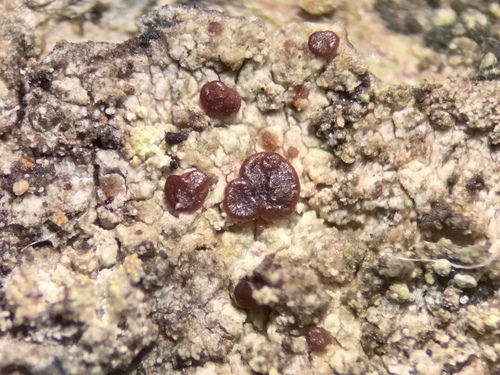
thumb | right | alt=Lichens of Calvert Island. D. Protomicarea limosa, McMullin 19698 (CANL). | Lichens of Calvert Island. D. Protomicarea limosa, McMullin 19698 (CANL).
Protomicarea is a genus of lichen-forming fungi in the family Psoraceae. The genus contains two species: Protomicarea limosa (the type) and Protomicarea alpestris. Protomicarea was circumscribed by lichenologist Josef Hafellner in 2001.
Japewiella
Japewiella is a genus of lichen in the family Lecanoraceae. It was circumscribed in 2000 by German botanist and lichenologist Christian Printzen as a segregate of the genus Japewia. The genus name of Japewia was in honour of Peter Wilfrid James (1930 - 2014), who was an English botanist (Mycology and Lichenology). The genus was circumscribed by Christian Printzen in Bryologist vol.102 on page 715 in 1999.
Neophyllis
Neophyllis a small genus of lichen-forming fungi in the family Sphaerophoraceae. The genus is endemic to Australasia, occurring in southeastern Australia, Tasmania and New Zealand. It comprises two recognised species characterised by small, leaf-like structures () and black, spherical spore-producing structures (apothecia). The more common and widespread species, N. melacarpa, typically grows on rotting wood and soil in various forest and heathland habitats, while the rarer N. pachyphylla is found mainly on granite and sandstone substrates. First proposed in 1889 as Phyllis and renam
Badimia
Badimia is a genus of foliicolous (leaf-inhabiting) lichens in the family Ramalinaceae.
Clauzadeana
Clauzadeana is a genus of lichen-forming fungi in the family Lecanoraceae. The genus was circumscribed in 1984 by Claude Roux, with the crustose species C. instratula assigned as the type.
Puttea
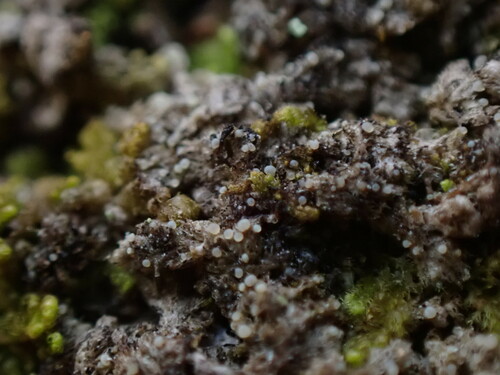
Puttea is a genus of lichen-forming fungi with uncertain familial placement in the order Lecanorales. The genus comprises four species. Finnish lichenologists Soili Stenroos and Seppo Huhtinen established the genus Puttea in 2009 for the lichen species formerly known as Lecidea margaritella, which has undergone various reclassifications. Molecular phylogenetics analyses have shown that Puttea margaritella does not align closely with genera like Fellhanera or Micarea, but its precise familial placement remains uncertain. Puttea is characterized by an indistinct, lichenized thallus composed of d
Sporopodiopsis
Sporopodiopsis is a genus of two species of lichenized fungi in the family Ectolechiaceae. The genus was circumscribed by the Belgian lichenologist Emmanuël Sérusiaux in 1997.
Gowardia
Gowardia is a genus of medium-sized, greyish hair lichens in the family Parmeliaceae. It is a circumpolar genus, mainly restricted to arctic-alpine habitats in northern Canada, Europe, and Russia.
Bulbothrix
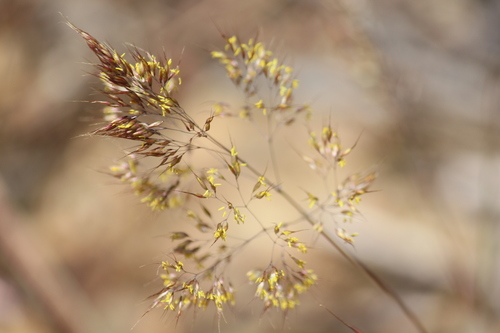
Bulbothrix is a genus of lichen-forming fungi in the family Parmeliaceae. Established in 1974 by the American lichenologist Mason Hale as a segregate from the genus Parmelia, Bulbothrix comprises about 40 accepted species as of 2025. These foliose lichens are distinguished by their characteristic black, bulb-tipped hairs () along the lobe edges and are found roughly equally divided between the Old World and New World, growing predominantly on trees in lowland rainforests and shrublands.
Lichenosticta
Lichenosticta is a genus of fungi of uncertain familial placement in the order Lecanorales. It has five species. All species are lichenicolous, meaning they are parasitic on lichens.
Niebla
genus of fungi
Tuckermanella
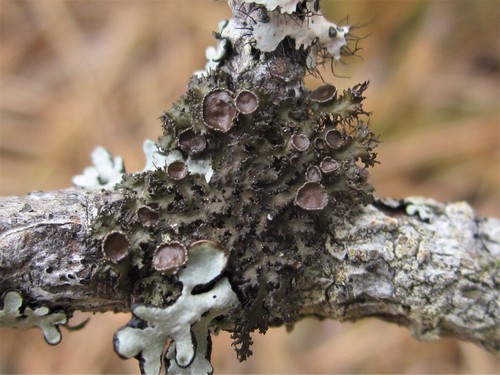
Tuckermanella is a genus of lichen-forming fungi in the family Parmeliaceae.
Jarmania
Jarmania is a small genus of lichen-forming fungi in the family Ramalinaceae. The genus was established in 1996 and contains two species that are both found only in Tasmania. These lichens grow as cottony mats on the bark of trees in cool rainforests, where they favour the sheltered undersides of trunks and branches.
Carbonicola
genus of fungi
Pseudoparmelia
Pseudoparmelia is a genus of lichen-forming fungi in the family Parmeliaceae. The genus has a pantropical distribution.
Psorinia
Psorinia is a genus of fungi in the family Lecanoraceae.
Calopadiopsis
Calopadiopsis is a genus of lichen-forming fungi in the family Ectolechiaceae. It was circumscribed in 2002 by the lichenologists Robert Lücking and Rolf Santesson. It has two species:
Thamnolecania
Thamnolecania is a genus of lichenized fungi in the family Ramalinaceae.
Pseudocalopadia
Pseudocalopadia is a genus of lichen-forming fungi in the family Ectolechiaceae. The genus was circumscribed in 1999 by the lichenologist Robert Lücking, with Pseudocalopadia mira as the type, and at the time, only species. P. chibaensis was added to the genus in 2017.
Bapalmuia
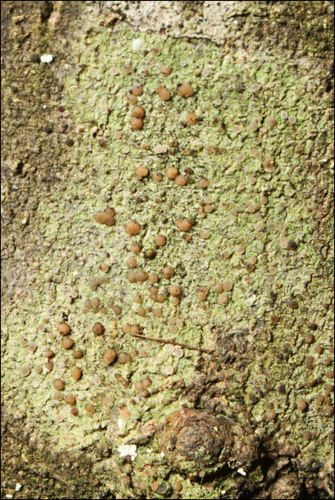
Bapalmuia is a genus of lichen-forming fungi in the family Ectolechiaceae.
Heppsora
Heppsora is a genus of lichenized fungi in the family Ramalinaceae.
Tapellaria
Tapellaria is a genus of mostly leaf-dwelling lichens in the family Ectolechiaceae. These lichens form thin, paint-like crusts on their host surfaces and are found mainly in tropical regions of the Americas, with about twenty known species. The genus was first proposed in 1890 by the lichenologist Johannes Müller Argoviensis. Tapellaria lichens reproduce both sexually through small black disc-shaped structures and asexually through distinctive hood-shaped outgrowths that release thread-like spores.
Nodobryoria
Nodobryoria is a genus of medium to large, reddish-brown lichens that are hair-like to shrubby (fruticose) in shape and grow on conifer trees. The genus contains three species, distributed in North America and Greenland, which were previously included in the genus Bryoria. Nodobryoria is similar in appearance to Bryoria, but is differentiated because it does not contain the polysaccharide lichenin (which is present in high quantities in Bryoria), and it has a unique cortex composed of interlocking cells that look like pieces of a jigsaw puzzle when viewed under a light microscope.
==Taxonomy==
Byssolecania
Byssolecania is a genus of lichen-forming fungi in the family Ectolechiaceae.
Notocladonia
Notocladonia is a genus of two Australasian species of lichen-forming fungi in the family Cladoniaceae. The genus was established in 2003 by Samuel Hammer to accommodate Australasian species previously misplaced in the neotropical genus Ramalea. Notocladonia species are distinguished by their spore-bearing discs (apothecia) that form at the tips of scale-like lobes or short stalks, rather than beneath the thallus as in Ramalea. Both species occur in temperate regions of southeastern Australia and New Zealand, typically growing on thin soils in open habitats.
Solenopsora
Solenopsora is a genus of lichen-forming fungi in the family Catillariaceae. It has 15 species, with a mostly Northern Hemisphere distribution.
Septotrapelia
Septotrapelia is a genus of lichen-forming fungi in the family Ectolechiaceae. It comprises four species. Species in this genus form tiny, scale-like crusts on rocks and are distinguished by their chocolate-brown fruiting discs with pale margins and unusually large ascospores divided into three segments. These small, bluish-grey lichens grow primarily on volcanic boulders and weathered stone in tropical and subtropical regions, from Costa Rica and the Galápagos to Thailand and South Korea. The genus was established in 2007 after DNA studies showed that certain species with this distinctive spo
Badimiella
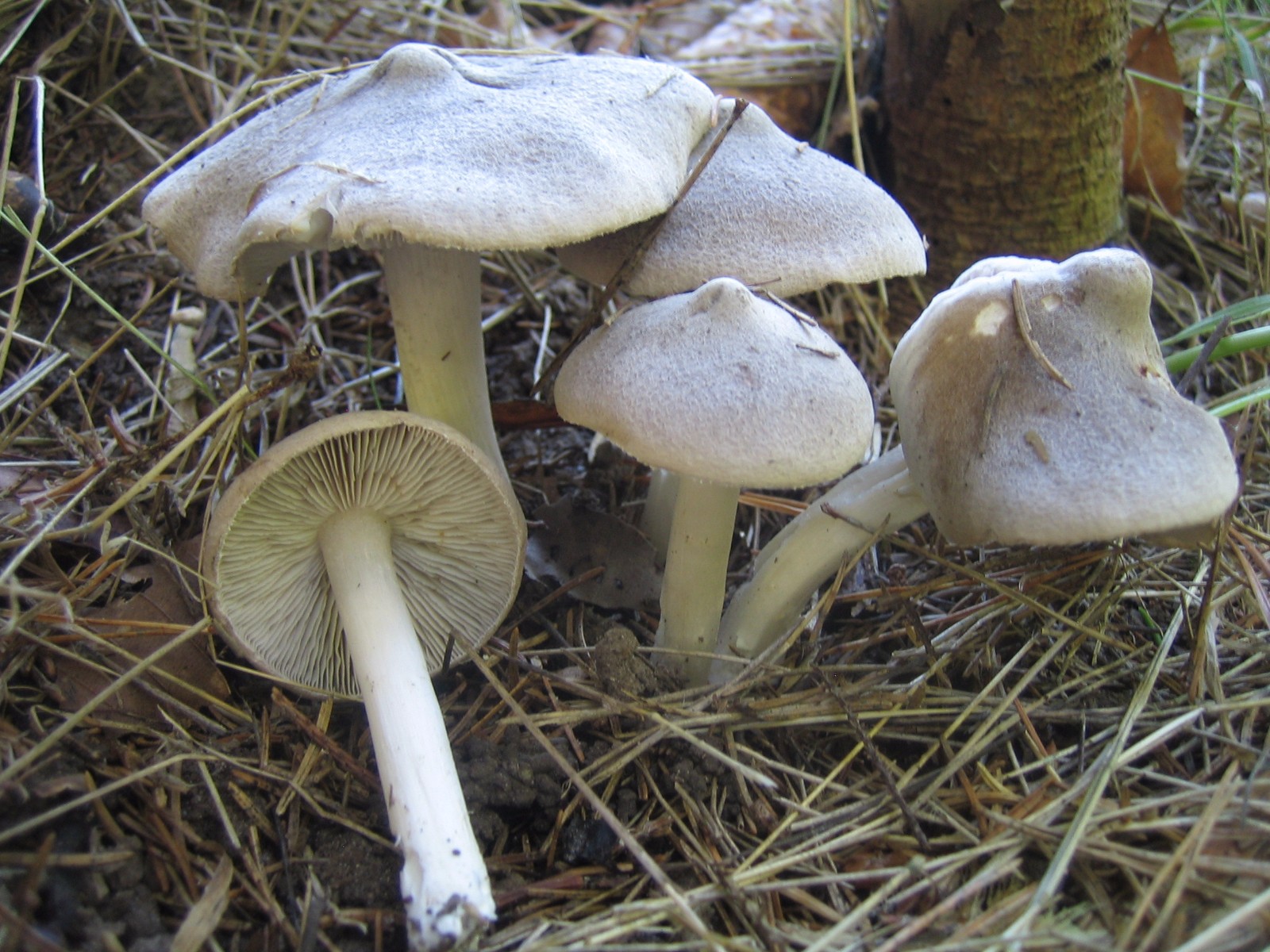
Badimiella is a genus of lichen-forming fungi in the family Ectolechiaceae. It has two species of foliicolous (leaf-dwelling) lichens.
Cetrariopsis
Cetrariopsis is a genus of foliose lichens in the large family Parmeliaceae. The genus contains three species, including the type, Cetrariopsis wallichiana.
Cladidium
Cladidium is a genus of two species of lichen in the family Lecanoraceae. Cladidium was circumscribed by Josef Hafellner in 1984 with C. thamnitis assigned as the type species. C. bolanderi was added to the genus in 1989.
Aciculopsora
Aciculopsora is a small genus of lichen-forming fungi in the family Ramalinaceae. The genus was established in 2006 and as of 2025 contains three recognised species, all found growing on tree bark in tropical regions. These lichens are distributed across Central and South America, East Africa, and Sri Lanka, though they appear to be rare or simply under-collected.
Roccellinastrum
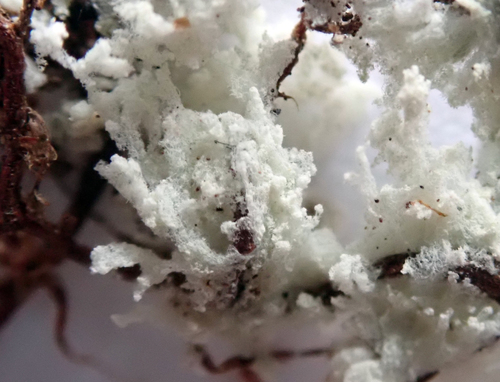
Roccellinastrum is a genus of lichen-forming fungi in the family Ectolechiaceae. It has seven species.
Lasioloma
Lasioloma is a genus of lichenized fungi in the family Ectolechiaceae. The genus was circumscribed by the Swedish lichenologist Rolf Santesson in 1952, with Lasioloma arachnoideum assigned as the type species. Found predominantly in tropical rainforests, genus Lasioloma contains both foliicolous (leaf-dwelling) and corticolous (bark-dwelling) species. The foliicolous species are distinguished by their woolly prothallus (initial growth stage), a thallus that ranges from dispersed to continuous, and a hairy margin (the edge of the spore-producing structure). In contrast, corticolous species typi
Physcidia
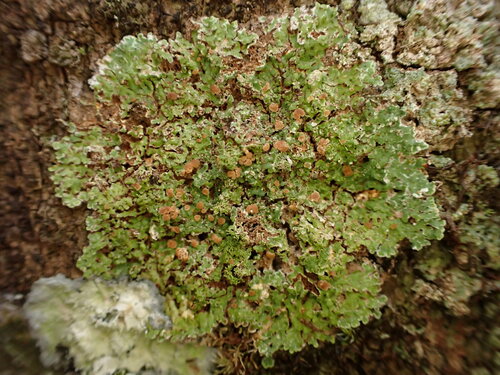
Physcidia is a genus of lichen-forming fungi in the family Ramalinaceae. The genus was circumscribed in 1862 by American lichenologist Edward Tuckerman.
Palicella
Palicella is a genus of crustose lichens in the family Lecanoraceae. It contains six species.
Everniopsis
Everniopsis is a fungal genus in the family Parmeliaceae. It consists of a single species, the bark-dwelling lichen Everniopsis trulla, which occurs in Africa and South America.
Myrionora
Myrionora is a genus of fungi in the family Lecanoraceae.
Parmotremopsis
Parmotremopsis is a genus of lichen-forming fungi in the family Parmeliaceae. The genus was circumscribed in 1987 by lichenologists John Elix and Mason Hale.
Brianaria
Brianaria is a lichen genus in the family Psoraceae. It was circumscribed in 2014 by Stefan Ekman and Måns Svensson to contain four closely related species formerly in the Micarea sylvicola group.
Arctopeltis
Myriolecis is a genus of lichen-forming fungi in the family Lecanoraceae. These lichens typically form thin, crust-like patches on rocks, bark, or soil, and reproduce through small disc-shaped structures that contain spores. The genus was reinstated in recent years when DNA studies showed that these species form a distinct group separate from the closely related genus Lecanora. Phylogenetic studies place Myriolecis in the MPRPS clade of Lecanoraceae, close to Protoparmeliopsis.
Violella
Violella is a genus of two species of crustose lichens in the family Tephromelataceae. The genus is characterized by its brownish inner ascospore walls, brilliant violet hymenial pigment (called Fucatus-violet), and thallus chemistry. The type species, Violella fucata, was originally placed in genus Mycoblastus, but molecular phylogenetic analysis showed that this species as well as the Asian species V. wangii formed a phylogenetically distinct clade and warranted placement in a new genus. The generic name Violella, a diminutive form of the Latin viola, refers to the characteristic hymeni
Loflammia
Loflammia is a small genus of lichen-forming fungi in the family Ectolechiaceae. The genus was established by the Czech lichenologist Antonín Vězda in 1986 to accommodate a group of foliicolous (leaf-dwelling) lichens with distinctive reddish fruiting bodies. These lichens form small greyish-white crusts on the surfaces of living leaves in tropical forests, and are recognised by their bright carmine-red disc-shaped reproductive structures. Species are known from Central and South America, Africa, and Papua New Guinea.
Metus
genus of fungi
Crustospathula
Crustospathula is a genus of five species of crustose lichens in the family Malmideaceae. They are characterized by their stalked and sometimes branched cartilaginous soredia and Bacidia-like apothecia.