Category
page 2Lecanorales genera
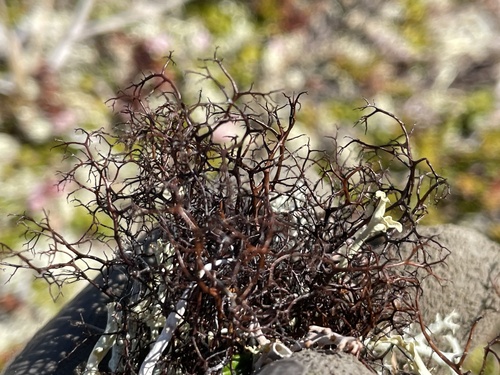
Bryocaulon
Bryocaulon is a small genus of lichen-forming fungi in the family Parmeliaceae. The genus has a widespread distribution in north temperate regions, and contains four species. These lichens form shrub-like tufts with cylindrical branches that are covered in tiny white pores for gas exchange. They are found mainly in cold regions of the Northern Hemisphere, particularly in arctic and mountainous areas where they grow on acidic bark and rocks.
Sulcaria
Sulcaria is a genus of three species of fruticose lichens in the family Parmeliaceae. Sulcaria was circumscribed by lichenologist Jan Bystrek in 1971. These lichens form hair-like or rope-like structures that hang from or grow upright on tree bark, with branches that develop distinctive lengthwise grooves as they age. They reproduce through disc-shaped fruiting bodies that contain large, dark brown spores with two unequal cells.
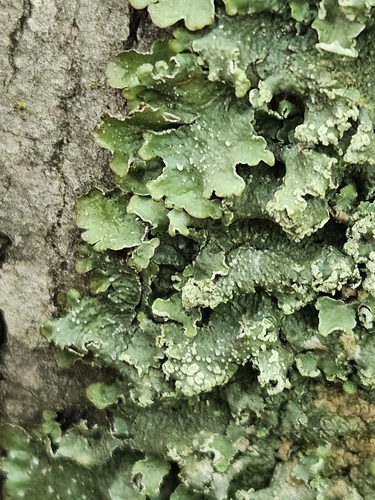
Flavopunctelia
Flavopunctelia is a genus of foliose lichens in the family Parmeliaceae. The genus contains species that are widespread in temperate and tropical areas. The genus is characterised by broad, yellow-green lobes, point-like (punctiform) pseudocyphellae on the thallus surface, and bifusiform conidia (i.e., threadlike with a swelling at both ends). All species contain usnic acid as a major secondary chemical in the cortex. Flavopunctelia was originally conceived as a subgenus of Punctelia by Hildur Krog in 1982; Mason Hale promoted it to generic status in 1984.
Psilolechia
Psilolechia is a genus of four species of crustose lichens. It is the only member of Psilolechiaceae, a family that was created in 2014 to contain this genus.
Pleurosticta
Pleurosticta is a small genus of foliose lichens belonging to the family Parmeliaceae. It has two species.
Japewia
Japewia is a genus of lichen-forming fungi in the family Lecanoraceae. The genus was circumscribed in 1990 by the Norwegian lichenologist Tor Tønsberg, who assigned J. tornoënsis as the type species. The new genus is named in honour of Peter Wilfred James, a notable lichenologist, with Japewia being derived from the first letters of his initials (Ja) and his surname (Pe) followed by a typical Latin suffix (-wia).
Frutidella
Frutidella is a genus of lichen-forming fungi in the family Lecanoraceae. It contains three species. The genus was established in 1994 by Klaus Kalb to accommodate a species previously classified in the genus Lecidea. These lichens form thin crusts that often develop distinctive wart-like swellings packed with tiny granules, and they produce small, dome-shaped fruiting bodies with a characteristic blue-green sheen. Species of Frutidella typically grow on acidic substrates, including nutrient-poor soils in upland areas and the bark of trees.
Tuckermanopsis
Tuckermannopsis is a genus of lichen-forming fungi in the family Parmeliaceae. The genus contains about twelve species of foliose (leafy) to somewhat fruticose (bushy) lichens with brownish or greenish thalli. Species in Tuckermannopsis are found primarily in temperate and boreal regions of the Northern Hemisphere, with centres of diversity in western North America and East Asia. Members of the genus are distinguished by their growth form, with reproductive structures largely restricted to the margins of the , and the absence of usnic acid in their upper .
Nephromopsis
Nephromopsis is a genus of lichenized fungi within the Parmeliaceae family.
Pilophorus
genus of fungi
Micarea
Micarea is a genus of lichen-forming fungi in the family Ectolechiaceae. The widely distributed genus contains 156 species and new species are described actively. Species in the genus are crustose lichens and their photobiont (the non-fungal organism) is a single-celled green alga. The genus was established by the Swedish mycologist Elias Fries in 1825. Micarea lichens are typically small and often overlooked, producing minute fruiting bodies that are usually whitish, grey, or bluish in colour. Many species reproduce both sexually through spores and asexually through specialised structures, an
Brodoa
Brodoa is a genus of three species of foliose lichens in the family Parmeliaceae. The genus, circumscribed in 1986 by Trevor Goward, is named in honour of the lichenologist Irwin Brodo.
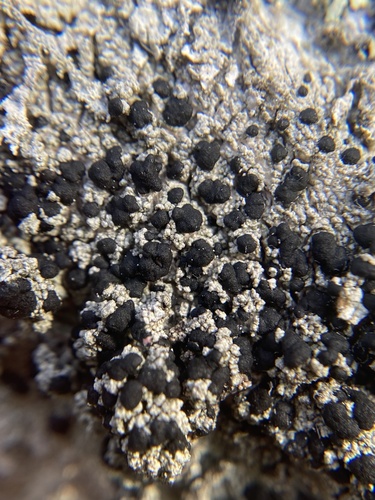
Mycoblastus
Mycoblastus is a genus of crustose lichens in the family Tephromelataceae. Members of the genus are commonly called blood lichens.
Tephromela
Tephromela is a genus of lichens in the family Tephromelataceae. There are about 50 species in this widespread genus. The genus was established in 1929 by the French lichenologist Maurice Choisy, who separated these species from the broader genus Lecanora based on their distinctive straight asexual spores and dark violet spore-bearing layers. These rock and bark-dwelling lichens are characterized by their white to pale grey crusty growth and black -shaped reproductive structures with purple-tinted interiors.
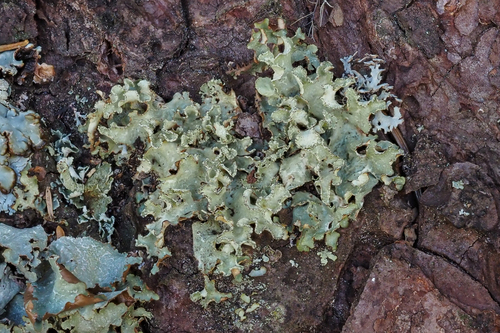
Tuckneraria
Tuckneraria is a genus of lichen-forming fungi in the family Parmeliaceae.
Cladia
Cladia is a genus of lichen-forming fungi in the family Cladoniaceae. Cladia species have a crustose or (scaly) primary thallus and a fruticose, secondary thallus, often referred to as pseudopodetium. The type species of the genus, Cladia aggregata, is widely distributed, occurring in South America, South Africa, Australasia and South-East Asia to southern Japan and India. Most of the other species are found in the Southern Hemisphere.
Lethariella
Lethariella is a genus of fruticose lichens in the family Parmeliaceae. The genus was originally proposed as a subgenus of Usnea by Polish lichenologist Józef Motyka in his 1936 monograph of that genus. Norwegian botanist Hildur Krog elevated the taxon to generic status in 1976.
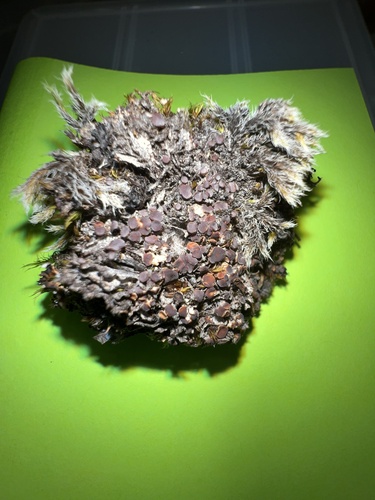
Bryonora
Bryonora is a genus of lichen-forming fungi in the family Lecanoraceae. These lichens typically grow on soil, mosses, plant debris, or rocks in arctic or alpine environments. The genus was circumscribed in 1983 by lichenologist Josef Poelt, with Bryonora castanea assigned as the type species.
Calycidium
Calycidium is a genus of lichen-forming fungi in the family Sphaerophoraceae. It has two species. It is one of the few lichen genera containing foliose (leafy) species that produce a mazaedium – a powdery mass of spores. Both species occur in Australasia and South America, where they grow on tree bark or on mosses.
Sclerococcum
Sclerococcum is a genus of lichenicolous fungi in the family Dactylosporaceae.
Schadonia
Schadonia is a genus of lichen-forming fungi. Established by German lichenologist Gustav Wilhelm Körber in 1859, this genus of crustose lichens is characterised by its black, sessile apothecia (fruiting bodies), ascospores, and growth on mosses, plant debris, and rocks in montane habitats. While traditionally placed in the family Ramalinaceae, recent studies have suggested its classification may be uncertain within the order Lecanorales, with some researchers proposing its placement in the Ectolechiaceae or the resurrection of the family Schadoniaceae. The genus currently comprises three recog
Dactylina
Dactylina is a genus of lichen-forming fungi in the family Parmeliaceae. The genus was circumscribed by Finnish botanist William Nylander in 1860, with Dactylina arctica assigned as the type species.
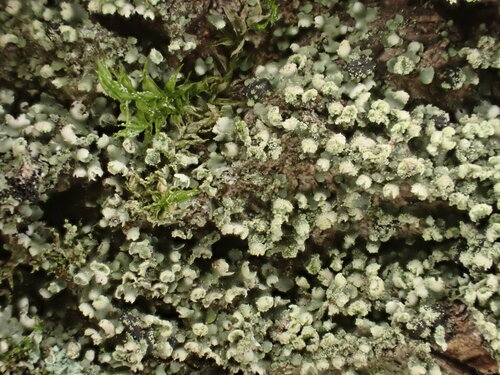
Waynea
Waynea is a genus of lichen-forming fungi in the family Ramalinaceae. The genus was established in 1990 by the Swedish lichenologist Roland Moberg and named after the Wayne family who helped organize his collecting trip to California, where he collected the type species. The tiny lichens in Waynea form patches made up of scale-like lobes less than half a millimetre across, with powdery cushions that help them spread without sexual reproduction. The genus contains six species. Most records are from southern and western Europe, particularly around the Mediterranean region, but it has also been r
Ramboldia
Ramboldia is a genus of lichen-forming fungi in the family Ramboldiaceae. The genus was established in 1994 to accommodate several Australasian lichens that form crusts on wood, bark, and rock surfaces, and it was named in honour of the German mycologist Gerhard Rambold. These lichens are characterised by their small, disc-shaped fruiting bodies and their chemical composition, which includes β-orcinol derivatives and sometimes anthraquinones, though they lack the distinctive crimson reaction found in the related genus Pyrrhospora. The genus contains about 40 species found worldwide, ranging in
Gypsoplacaceae
Gypsoplacaceae is a family of lichenized fungi in the order Lecanorales. This is a monotypic family, containing the single genus Gypsoplaca, which has a widespread distribution. The family and genus were described as new in 1990 by Norwegian lichenologist Einar Timdal. Gypsoplaca originally contained only the type species, Gypsoplaca macrophylla, but four species were added to the genus in 2018.
Canoparmelia
Canoparmelia is a genus of lichen-forming fungi in the family Parmeliaceae. The widespread genus contains about 35 species. Canoparmelia, a segregate of the parmelioid lichen genus Pseudoparmelia, was circumscribed by John Elix and Mason Hale in 1986.
Phacopsis
Phacopsis is a genus of lichenicolous (lichen-dwelling) fungi. They are parasites of members of the large lichen family Parmeliaceae, of which they are also a member. Originally proposed by Edmond Tulasne in 1852 to contain 3 species, Phacopsis now contains 10 species, although historically, 33 taxa have been described in the genus. Many of the species are poorly known, some of them having been documented only from the type specimen.
Scoliciosporum
Scoliciosporum is a genus of lichens in the family Scoliciosporaceae.
Scutula
Scutula is a genus of lichenicolous fungi in the family Ramalinaceae.
Tylothallia
Tylothallia is a genus of lichen in the family Lecanoraceae. It was circumscribed by German lichenologist Harald Kilias in 1981.
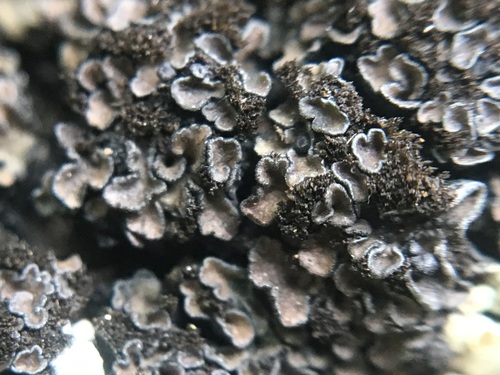
Psorula
Psorula is a fungal genus in the family Psoraceae. It is a monotypic genus, containing the single lichen species Psorula rufonigra. The genus was circumscribed by German lichenologist Gotthard Schneider in 1980.
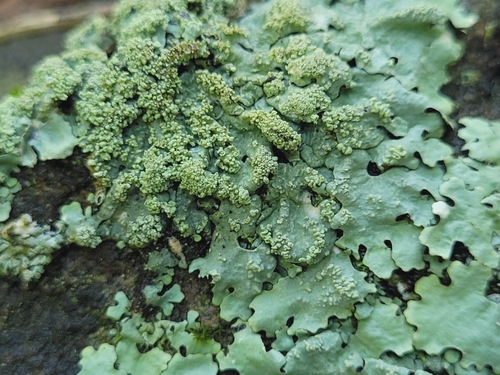
Myelochroa
Myelochroa is a genus of foliose lichens in the family Parmeliaceae. They are commonly known as axil-bristle lichens. It was created in 1987 to contain species formerly placed in genus Parmelina that had a yellow-orange medulla due to the presence of secalonic acids. Characteristics of the genus include tightly attached thalli with narrow lobes, cilia on the axils, and a rhizinate black lower surface. Chemical characteristics are the production of zeorin and related triterpenoids in the medulla. Myelochroa contains about 30 species, most of which grow on bark. The genus has centres of distribu
Catinaria
Catinaria is a genus of lichen-forming fungi in the family Ramalinaceae. These lichens form very thin, often barely visible crusts on bark, rock, or moss, and are recognizable by their small, round, reddish-brown to black fruiting bodies that sit flush with the surface. The genus includes eight known species, some of which grow specifically on liverworts and can behave almost like decomposer fungi.
Pyrrhospora
Pyrrhospora is a genus of lichen-forming fungi in the family Lecanoraceae. The genus was established in 1855 by the German lichenologist Gustav Wilhelm Körber, who named it after the distinctive reddish-brown colour of the spores, combining Greek words meaning 'reddish-brown' and 'spore'. These lichens form thin crusty films on rocks and tree bark, producing button-shaped fruiting bodies that start reddish-brown and turn almost black with age. The genus contains eight species and is distinguished by its unique spore colouration and chemical compounds including anthraquinone pigments that give
Byssoloma
Byssoloma is a genus of leaf-dwelling lichens in the family Ectolechiaceae.
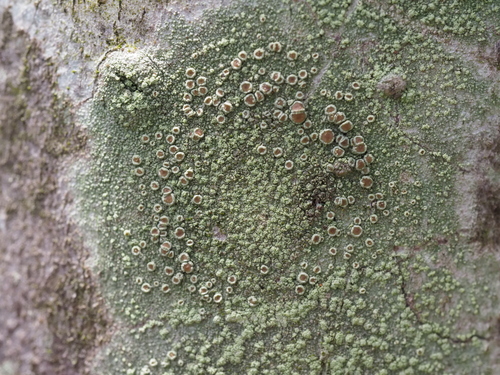
Vainionora
Vainionora is a genus of lichen in the family Lecanoraceae. The genus, which was circumscribed in 1991 by German lichenologist Klaus Kalb, honours the Finnish lichenologist Edvard Vainio, who described the type species as Lecanora pallidostraminea in 1890.
Megalaria
Megalaria is a genus of lichen-forming fungi in the family Ramalinaceae. It contains 46 species of crustose lichens, the majority of which grow on bark. The genus was established in 1984 and has since grown to include species from diverse regions ranging from subantarctic islands to tropical forests. Most Megalaria species are recognised by their large, black fruiting bodies that sit directly on the lichen's surface, along with their thick-walled ascospores that are divided by a single internal partition. The genus primarily colonises tree bark in moist, shaded habitats, though some species al
Hertelidea
Hertelidea is a genus of crustose lichens in the family Stereocaulaceae. Characteristics of the genus include carbon-black ring or outer margin (exciple) around the fruit body disc (apothecium), eight-spored, Micarea-type asci and mostly simple, hyaline ascospores that lack a transparent outer layer. Hertelidea species mostly grow on wood, although less frequently they are found on bark or soil. While the type species, Hertelidea botryosa, has a widespread distribution, most of the other species are found only in Australia.
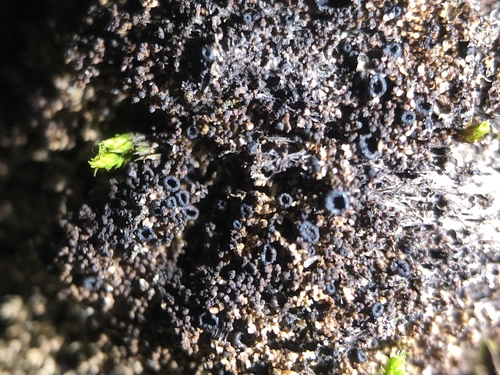
Sporopodium
Sporopodium is a genus of lichen-forming fungi in the family Ectolechiaceae. Most Sporopodium species grow on living leaves (they are foliicolous) in tropical forests worldwide, though some also occur on twigs or bark. The genus is known for producing , small hood-like outgrowths that produce conidia (asexual spores) and help the lichen disperse to new surfaces. Species in the genus produce a wide variety of chemical compounds, including yellow and orange pigments that can help identify individual species. The genus was established in 1851 with the description of a first species from tropical
Protoparmeliopsis
Protoparmeliopsis is a genus of saxicolous (rock-dwelling, crustose lichens in the family Lecanoraceae. It has about 20 species. The genus was circumscribed by French botanist Maurice Choisy in 1929.
Herteliana
Herteliana is a genus of lichen-forming fungi. It contains four species of crustose lichens.
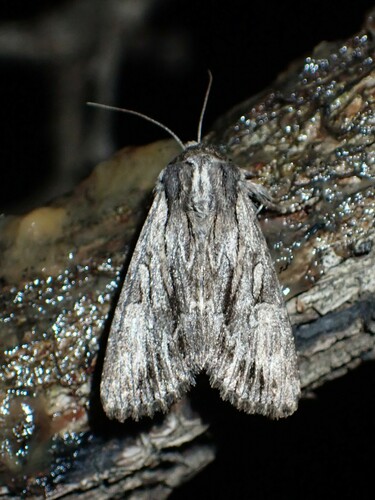
Relicina
Relicina is a genus of foliose lichens belonging to the large family Parmeliaceae. Established as a genus in 1974 after initially being treated as a series within Parmelia, Relicina now encompasses about 40 species worldwide. These lichens typically grow as yellow-green, leaf-like patches with flat fringed by short black hairs, attaching to their substrate by a swollen base. The genus is characterized chemically by the presence of usnic acid and various other lichen products, and is distinguished from related groups by details of ascospore structure and surface features.
Malmidea
Malmidea is a genus of crustose lichens and the type genus of the family Malmideaceae. It was established in 2011 to contain a phylogenetically distinct group of species formerly placed in the genus Malcolmiella. The crust-like thallus of Malmidea lichens has a surface that varies from smooth to rough, featuring textures such as (wart-like), (grainy), or (pimpled). These textures are often formed by , which are spherical clusters of green algal cells from the family Chlorococcaceae, encased in fungal hyphae. Malmidea comprises nearly 70 mostly tropical species that grow on bark, although a few
Pycnothelia
Pycnothelia is a small genus of lichen-forming fungi in the family Cladoniaceae. The genus contains three species that form distinctive upright, hollow stalks (podetia) rising from a grainy crust, topped with dark, round fruiting bodies. These lichens typically grow on soil or mossy ground in cool, humid habitats. The genus has a scattered global distribution, with one species found across Europe and parts of the Americas, while the other two are restricted to islands in the Southern Hemisphere.
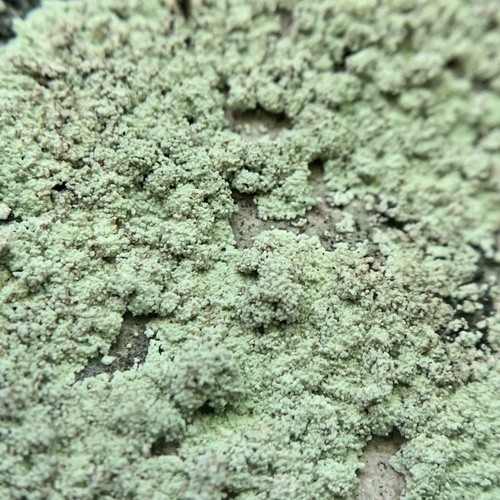
Crocynia
Crocynia is a genus of lichen-forming fungi in the family Ramalinaceae. It has five species. The genus is currently in taxonomic limbo because molecular studies have shown that Crocynia, which has nomenclatural priority over Phyllopsora, is phylogenetically nested within Phyllopsora. This has led to a proposal to conserve the name Phyllopsora over Crocynia to ensure nomenclatural stability and avoid taxonomic disarray.
Toniniopsis
Toniniopsis is a genus of crustose and squamulose lichens in the family Ramalinaceae. The genus was circumscribed by Swiss lichenologist Eduard Frey in 1926, with Toniniopsis obscura designated the type and only species. The genus name of Toniniopsis is in honour of Carlo Tonini (1803–1877), who was an Italian chemist and botanist (Lichenology), who worked in Verona and was a member and President of the Academy of Agriculture.
As a result of molecular phylogenetic studies, several species, formerly classified in genus Bacidia, have been transferred to Toniniopsis.
Parmelinella
Parmelinella is a genus of lichen belonging to the family Parmeliaceae. The genus was circumscribed in 1987 by John Elix and Mason Hale as a segregate of Parmelina, from which it differs in having larger ascospores and containing salazinic acid. Although the genus had been assumed to be well-defined morphologically, a 2021 molecular phylogenetic study suggests that the generic delimitations need to be revised.
Coelopogon
Coelopogon is a genus of lichen-forming fungi in the family Parmeliaceae. The genus contains two species found in southern South America and South Africa.
Eschatogonia
Eschatogonia is a genus of lichen-forming fungi in the family Ramalinaceae. It has seven species. The genus was circumscribed by the Italian lichenologist Vittore Benedetto Antonio Trevisan de Saint-Léon in 1853.
Calopadia
Calopadia is a genus of foliicolous (leaf-dwelling) lichens in the family Ectolechiaceae. The genus was established by the Czech lichenologist Antonín Vězda in 1986 and contains around 24 species found primarily in tropical regions. These lichens form thin, pale brownish to greyish crusts on leaf surfaces and produce small brown disc-shaped fruiting bodies. They are distinguished from similar genera by their non-black fruiting structures and characteristic curved or coiled asexual spores. The genus has its greatest diversity in the Neotropics, though species have also been recorded from tropic
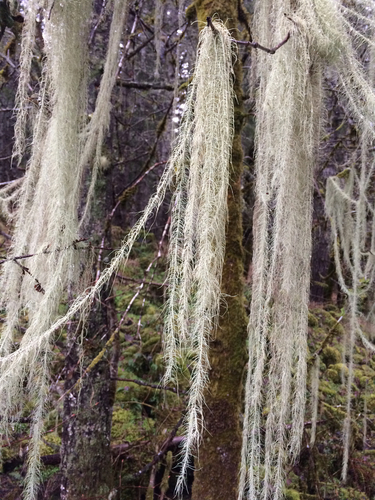
Dolichousnea
Dolichousnea is a genus of fruticose lichens in the family Parmeliaceae. It has three species. The widely distributed type species, Dolichousnea longissima, is found in boreal regions of Asia, Europe, and North America.
Bryodina
Bryodina is a genus of two species of crustose lichens in the family Lecanoraceae. It was first proposed as a distinct genus by Austrian lichenologist Josef Hafellner in the early 1990s, but the name was validly published only in 2001 when Hafellner supplied a formal Latin and typification. It is distinguished from the morphologically similar genus Bryonora by the clearly separated and , and by the thin-walled ascospores.
Steinia
Steinia is a genus of lichen-forming fungi in the family Aphanopsidaceae. The genus was established in 1873 by Gustav Wilhelm Körber and contains three recognised species. These lichens grow on disturbed soil and form very thin, powdery crusts that are often barely visible to the naked eye. They produce small, dark brown to black fruiting bodies that contain unusually large numbers of ascospores—up to 16 in each spore-bearing structure.
Bilimbia
Bilimbia is a genus of lichen-forming fungi in the family Ramalinaceae. The genus forms crustose (crust-like) lichens that appear as whitish-grey to grey patches on calcium-rich soils or mosses growing over alkaline surfaces. The genus is distinguished by its sessile apothecia (fruiting bodies) that range from light ochre to black, eight-spored asci, and colourless spores with multiple cross-walls. Molecular phylogenetics studies have confirmed that Bilimbia forms a well-supported monophyletic group within the Ramalinaceae, and as of 2025, it contains 24 accepted species.
Mycobilimbia
Mycobilimbia is a genus of lichen-forming fungi in the family Ramalinaceae. These lichens are characterized by their crust-like growth form that appears as a thin layer on various surfaces, ranging in colour from creamy white to greenish-grey. The genus was proposed by the German lichenologist Heinrich Rehm in 1890. Mycobilimbia species can be identified by their distinctive reproductive structures (apothecia) that start as flat discs and later become convex bumps, typically in beige to reddish-brown colours.
Ameliella
Ameliella is a genus of lichenized fungi in the family Lecanoraceae. Described in 2008, the genus contains two species, A. andreaeicola and A. grisea, that were collected from high elevations in the Scottish Highlands. The two species have also been found in single instances in British Columbia and Northern Norway. The generic name is derived from the Greek , meaning "neglected" or "overlooked"; it was originally intended to be Amelia, which is also the first name of the daughter of one of the authors, but this name had previously been used for another genus and was therefore ineligi
Pannoparmelia
Pannoparmelia is a genus of lichenised ascomycetes in the large family Parmeliaceae. It is a genus of five currently accepted species. Pannoparmelia species have a foliose growth habit. All members of the family have a symbiotic association with green alga and the majority of Parmeliaceae species have foloiose. The morphological diversity is enormous within this group and the specimen are difficult to identify in its species level. There are a range of habitats and climatic regions within this family and it includes tropical rainforest trees to subshrubs in Arctic tundra.[3]
Cheiromycina
Cheiromycina is a genus of lichen-forming fungi belonging to the family Malmideaceae.
Montanelia
Montanelia is a genus of lichen-forming fungi belonging to the large family Parmeliaceae. The genus comprises foliose lichens recognised by its short, narrow with flat to slightly convex edges; a smooth, unperforated outer skin (); shallow, irregular pseudocyphellae—tiny pores—on the upper surface; slender, cylindrical to spindle-shaped asexual spores (conidia); and a white medulla that contains orcinol depsides.
Myelorrhiza
Myelorrhiza is a genus of two Australian species of lichen-forming fungi in the family Ramalinaceae. These lichens form leaf-like growths with narrow, overlapping lobes that attach to their substrate using root-like strands called rhizines. They are found in tropical rainforests of northern Queensland, where they grow on tree bark and rocks. The genus was initially thought to belong to the family Cladoniaceae, but molecular studies placed it outside Cladoniaceae and aligned it with ramalinoid lineages; it is now treated in Ramalinaceae.