Category
page 1Lice

Phthiraptera
Louse (: lice) is the common name for any member of the infraorder Phthiraptera, which contains nearly 5,000 species of wingless parasitic insects. Phthiraptera was previously recognized as an order, until a 2021 genetic study determined that they are a highly modified lineage of the order Psocodea, whose members are commonly known as booklice, barklice or barkflies.

head louse
subspecies of insect

Pthirus pubis
species of insect

Sucking louse
parvorder of insects

Pediculus humanus humanus
subspecies of insect

Pediculus humanus
species of insect

Mallophaga
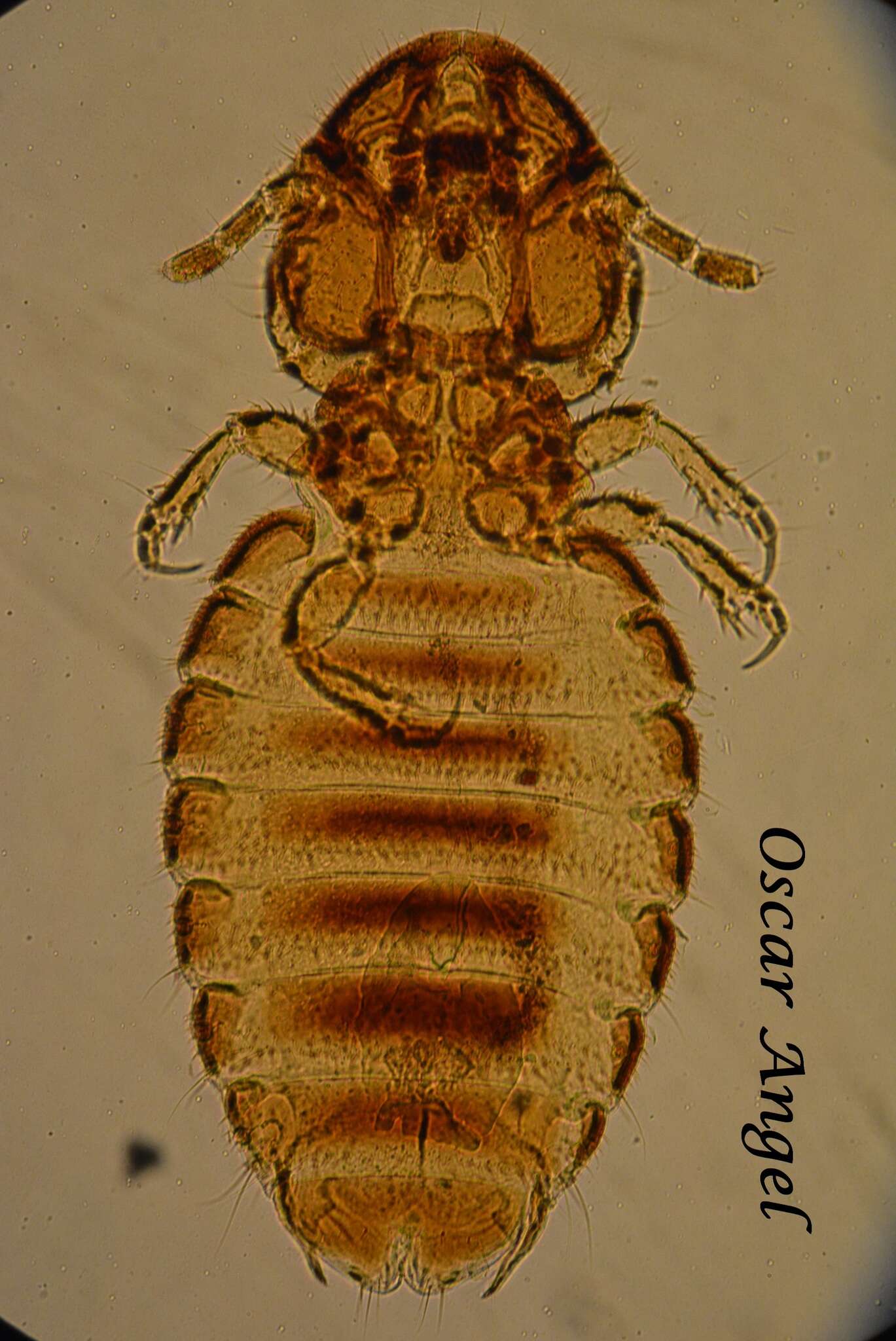
The Mallophaga are a possibly paraphyletic section of lice, known as chewing lice, biting lice, or bird lice, containing more than 3000 species. These lice are external parasites that feed mainly on birds, although some species also feed on mammals. They infest both domestic and wild mammals and birds, and cause considerable irritation to their hosts. They have paurometabolis or incomplete metamorphosis.
Trichodectidae
Trichodectidae is a family of louse in the parvorder Trichodectera. Its species are parasites of mammals.

Pediculus
Pediculus is a genus of sucking lice, the sole genus in the family Pediculidae. Pediculus species are ectoparasites of primates.
Pthirus pubis infestation
disease caused by the pubic louse, Pthirus pubis, a parasitic insect notorious for infesting human pubic hair

Linognathidae
Linognathidae is a family of lice in the order Psocodea. There are at least 3 genera and 70 described species in Linognathidae.

Menoponidae
Menoponidae is a monophyletic family of lice in the superfamily of chewing lice, Amblycera, often referred to as the chicken body louse family. They are ectoparasites of a wide range of birds including chickens, which makes them important to understand for veterinary science and for human health. However, Menoponidae are not exclusive to poultry and are common parasites for migratory birds, with more and more species being discovered every year.
Haematopinus oliveri
species of insect

Ischnocera
Ischnocera is a large parvorder of lice from the infraorder Phthiraptera. The parvorder consists of chewing lice, which feed on the feathers and skin debris of birds. Many species of Ischnocera have evolved an elongated body shape, which allows them to conceal themselves within plumage to avoid being dislodged during preening or flight. Species in Ischnocera spend their entire lives living on a host and attach themselves to hippoboscid flies to help move across individual birds. Ischnocera contain the large family Philopteridae, along with a few other minor families. Ischnocera are distributed

Amblycera
Amblycera is a parvorder of chewing lice from the infraorder Phthiraptera. The lice are ectoparasites and spend their entire lives parasitizing their hosts. Amblycera tend to mostly feed on birds, and have specialized anatomy to assist in feeding. The lice undergo a three part process of metamorphosis and survive around thirty days after moulting into an adult. They rely on a combination of skin debris and blood for nutrients to sustain themselves. Amblycera are distributed globally, and are very host–specific.
Pthirus
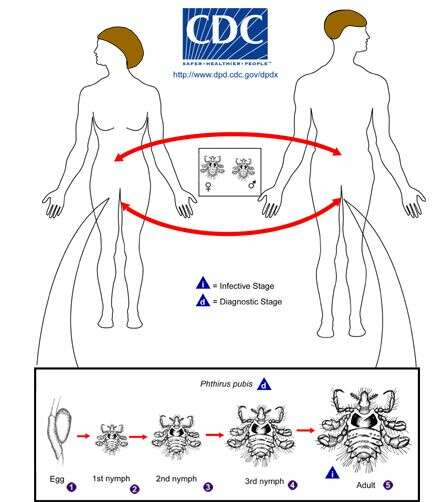
Pthirus is a genus of lice. There are only two extant species, and they are the sole known members of the family Pthiridae. Pthirus gorillae infests gorillas, and Pthirus pubis afflicts humans, and is commonly known as the crab louse or pubic louse. The two species diverged some 3.3 million years ago.

Haematopinus suis
species of insect
Philopteridae
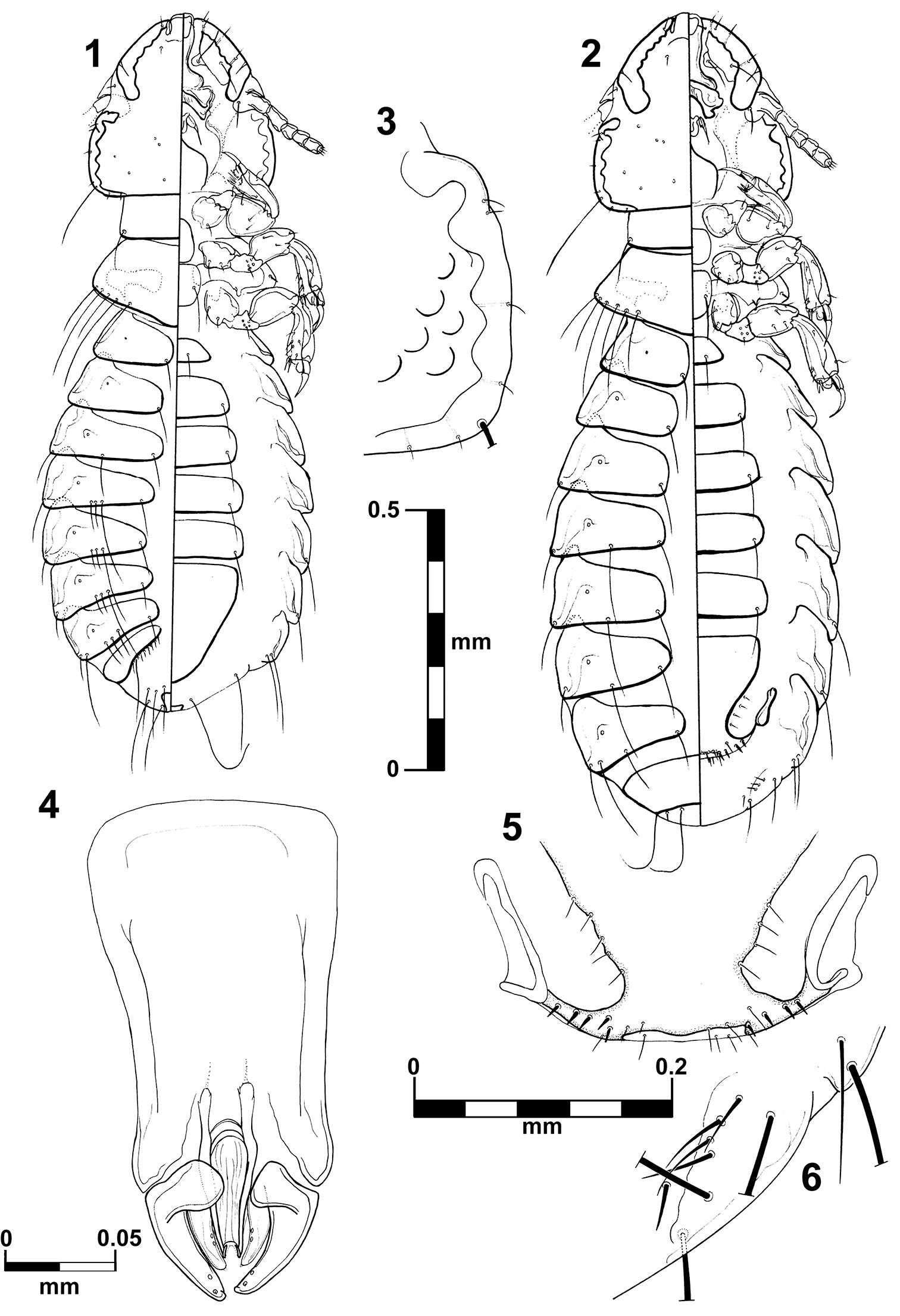
Philopteridae is a family of feather lice. They are parasitic on birds, primarily consuming downy feathers.
Haematopinus
Haematopinus is a genus of insects in the superfamily Anoplura, the sucking lice. It is the only genus in the family Haematopinidae, known commonly as the ungulate lice. All known species are of importance in veterinary medicine. These lice are some of the most economically important ectoparasites of domestic animals. Species infest many domesticated and wild large mammals, including cattle, horses, donkeys, swine, water buffalo, African buffalo, antelope, zebra, deer, and camels. The species Haematopinus tuberculatus has great importance in the water buffalo breading, since this louse is spec
Polyplacidae
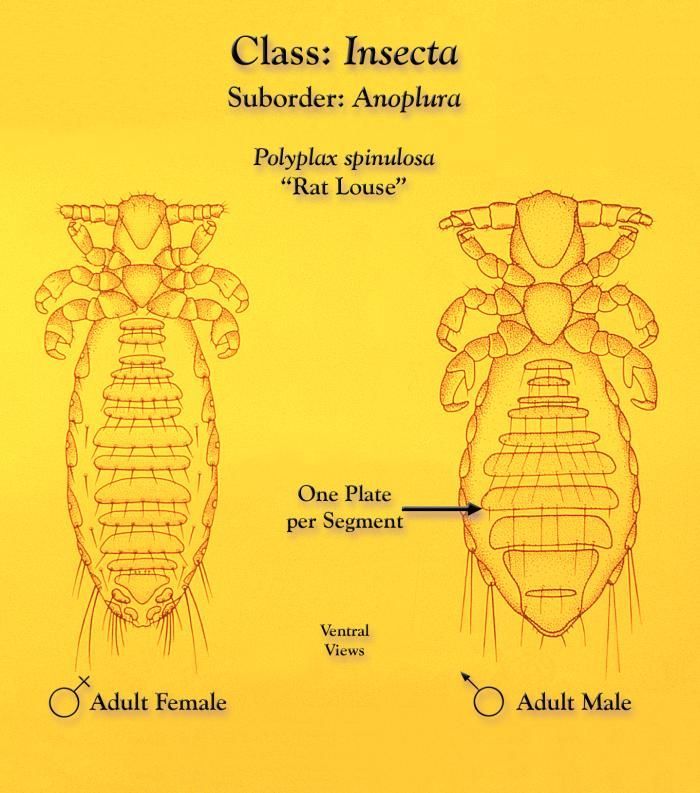
Polyplacidae is a family of lice in the suborder Anoplura, the sucking lice. Lice in this family are known commonly as the spiny rat lice. The family has a cosmopolitan distribution. As of 2010 there were 193 species.

Echinophthiriidae
Echinophthiriidae is a family of lice in the suborder Anoplura, the sucking lice. This family of lice are parasites of seals and the river otter, and are the only insects that infest aquatic hosts.
thumb|upright=1.1|Antarctophthirus trichechi
These lice have adaptations influenced by the anatomy of their hosts. Because some marine mammals, such as fur seals, have a layer of air trapped under their waterproof coats that insulates them against cold water, their lice actually live in a mostly dry, warm habitat. Other mammals have blubber for insulation, so their skin is in contact with the water;
Enderleinellidae
Enderleinellidae is a family of parasitic lice in the order Psocodea. There are 5 genera and more than 50 described species in Enderleinellidae.
Boopiidae
Boopiidae is a family of lice in the order Psocodea. There are about 8 genera and more than 50 described species in Boopiidae.
Haematomyzus
Haematomyzus is a monotypic genus of lice with 3 species. The genus is placed in its own family Haematomyzidae, itself monotypic within the parvorder Rhynchophthirina (previously ranked as a superfamily). These unusual lice are ectoparasites of elephants and warthogs. Their mouthparts are elongated to form a drill-like structure that allows them to penetrate the thick skin of their host.

Pthirus gorillae
species of insect

Gyropidae
Gyropidae is a family of lice in the order Psocodea. There are about 9 genera and more than 90 described species in Gyropidae.

Solenopotes
Solenopotes is a genus of lice belonging to the family Linognathidae.

Ricinidae
The Ricinidae are a family of a larger group Amblycera of the chewing lice. All species are relatively large bodied (relative to host size) avian ectoparasites. They typically exhibit low prevalence (proportion of infested hosts) and low intensity (number of parasites per infested hosts). They feed on host blood which is atypical in chewing lice. Two or three genera are recognized. They exhibit strongly female-biased sex-ratios, especially in low-intensity infestations.

Laemobothriidae
The Laemobothriidae are a family of a larger group Amblycera of the chewing lice. Most commonly they are ectoparasites of birds. The genera are sometimes all united in Laemobothrion.

Brueelia
Brueelia (formerly spelled Brüelia) is a genus of bird lice in the family Philopteridae that infest Passerine (perching) birds. Lice in Brueelia are usually host specific, with more than 85% of described species each found on a single host bird species. Over 300 species of Brueelia have been described, and many more specimens that are presumed to belong to Brueelia are awaiting description and naming.

Solenopotes capillatus
species of insect

Columbicola columbae
species of insect
Lice Capades
3rd episode of the 11th season of South Park
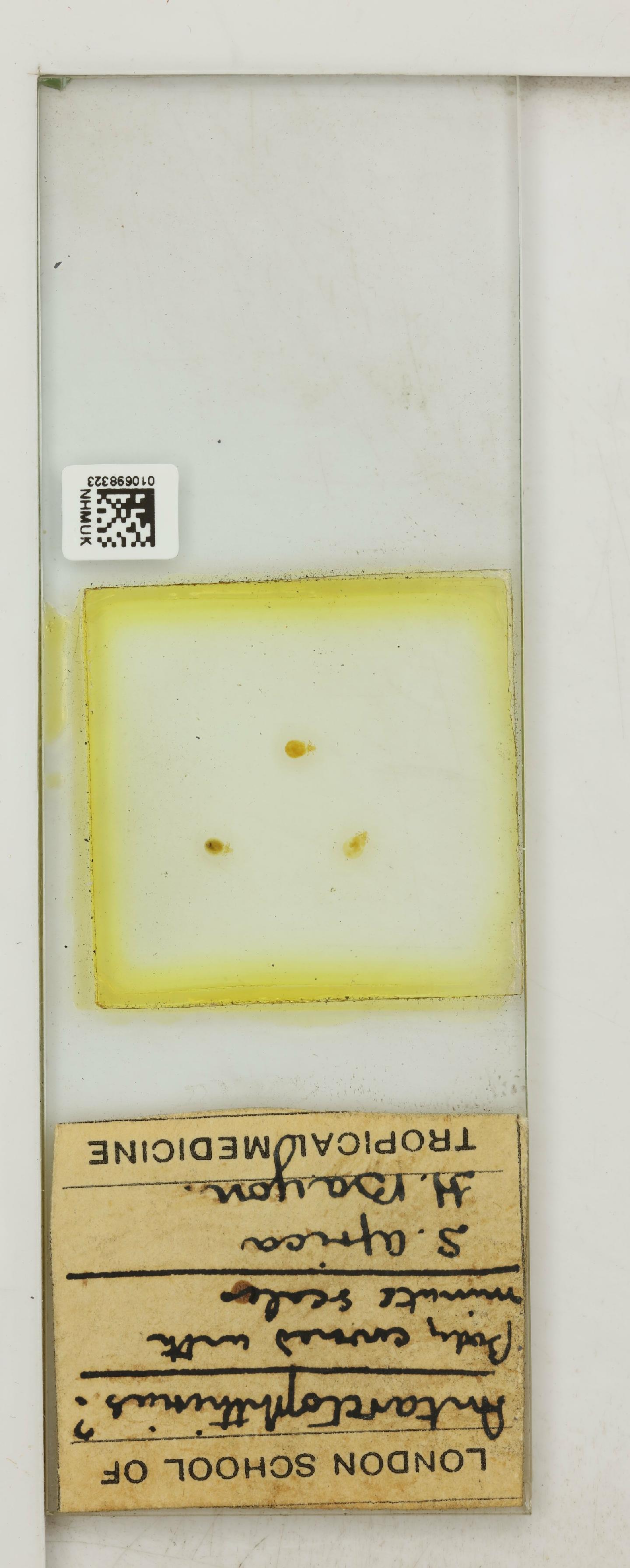
Antarctophthirus
Antarctophthirus is a genus of lices belonging to the family Echinophthiriidae.
Hybophthiridae
REDIRECT Hybophthirus
Trimenoponidae
Trimenoponidae is a family of lice in the order Psocodea. There are about 6 genera and 18 described species in Trimenoponidae.
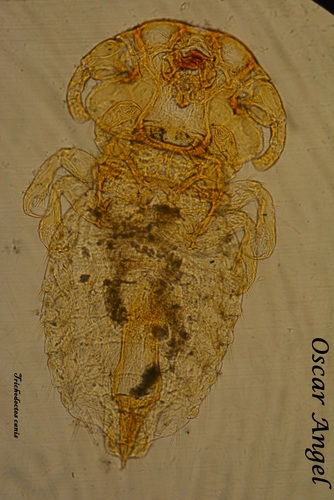
Trichodectes canis
species of insect

Haematomyzus elephantis
species of insect

Strigiphilus
Strigiphilus is a genus of chewing lice in the suborder Ischnocera. It was circumscribed in 1910 by Eric Mjöberg.

Saemundssonia
Saemundssonia is a genus of chewing lice belonging to the family Philopteridae. These lice are parasitic on aquatic birds, especially on members of the order Charadriiformes, but also on Anseriformes, Gruiformes, Pelecaniformes and Procellariiformes. Members of this genus have a broad triangular head bearing a frontal plate with a dark backwards-pointing projection.
Felicola isidoroi
species of insect
Hybophthirus
Hybophthirus notophallus is a member of the superfamily Anoplura, meaning it is an ectoparasite that feeds on the blood of its mammalian host. It is a highly specialized louse that parasitizes Orycteropus afer, commonly known as the aardvark. This louse is the only species within the genus Hybophthirus and the family Hybophthiridae.
Pediculus humanus corporis infestation
lice infestation that is a cutaneous condition caused by parasitic infestation of body lice Pediculus humanus corporis, which feed on the human blood. Body lice can spread epidemic typhus, trench fever, and louse-borne relapsing fever
Rallicola extinctus
species of insect

Halipeurus
Halipeurus is a genus of parasitic bird lice in the family Philopteridae.

Anaticola
Anaticola is a genus of lice belonging to the family Philopteridae, which was first described in 1935 by Theresa Clay.

Menacanthus
Menacanthus is a genus of chewing lice which parasitise birds. The taxonomy of this genus is highly uncertain. Most taxonomies have given this genus as having over a hundred species, but recent studies have synonymised dozens of species and found other names to be invalid. Some Menacanthus species remain to be discovered, or are synonymised in error. Menacanthus lice feed on the blood of a wide variety of birds, including chickens, by piercing the quills of feathers and gnawing the epidermis. In doing so, they can spread disease and lower egg production. In Menacanthus stramineus, eggs are inc

Hoplopleura hirsuta
species of insect
Ratemiidae
Ratemiidae is a family of lice within Anoplura (sucking lice) that is a parasite of Perissodactyla (horses and other odd toed ungulates). Ratemiidae is capable of transferring diseases such as typhus to their hosts. These lice are found primarily in China.
bird louse
parasitic chewing louse of the order Phthiraptera

Campanulotes elegans
species of louse
abametapir
Abametapir, sold under the brand name Xeglyze, is a medication used for the treatment of head lice infestation in people six months of age and older.

Apterygon
Apterygon is a genus of louse. It is endemic to New Zealand and is an ectoparasite of kiwi birds (Apteryx). Theresa Clay circumscribed the genus in 1961. In 1947, she had referred to this genus as "New Genus D", but it was not formally named as she needed to confirm the host of her specimen as well as additional material.
Colpocephalum californici
species of louse
Pecaroecidae
REDIRECT Pecaroecus

Quadraceps
Quadraceps is a genus of louse. They are ectoparasites of birds in the order Charadriiformes, and the genus was circumscribed in 1939 by Theresa Clay and Richard Meinertzhagen.
Infestation is believed to increase the rate of nest desertion, lowers the success rate of baby birds hatching, reduces the number of birds in the clutch, and cause birds to attract fewer mates. All in all, the survival of the nestlings is lowered drastically.

Harrisoniella
Harrisoniella is a genus of insects belonging to the family Philopteridae.

Colpocephalum
Colpocephalum is a genus of chewing louse. Christian Ludwig Nitzsch named the genus in 1818. The Plenary Powers of the International Commission on Zoological Nomenclature selected Colpocephalum zebra as its type species in the 1950s. There are approximately 135 species in this genus, and they are ectoparasites of birds in at least a dozen different orders.

Naubates
Naubates is a genus of lice belonging to the family Philopteridae.

Antarctophthirus microchir
species of insect