Category
page 1Lingua francas

English language
English is a West Germanic language of the Indo-European language family. It emerged in early medieval England and has since become a global lingua franca. The namesake of the language is the Angles, one of the Germanic peoples who migrated to Britain after the end of Roman rule. English is the most spoken language in the world, primarily due to the global influences of the former British Empire and the United States. It is the most widely learned second language in the world, with more second-language speakers than native speakers. However, English is only the third-most spoken native language, after Mandarin Chinese and Spanish.

Spanish
Romance language originating in the Iberian Peninsula

French
Romance language

Russian
East Slavic language

Arabic
Arabic is a Central Semitic language of the Afroasiatic language family spoken primarily in the Arab world. The International Organization for Standardization (ISO) assigns language codes to 32 varieties of Arabic, including its standard form of Literary Arabic, known as Modern Standard Arabic, which is derived from Classical Arabic. This distinction exists primarily among Western linguists; Arabic speakers themselves generally do not distinguish between Modern Standard Arabic and Classical Arabic, but rather refer to both as ( "the eloquent Arabic") or simply '''' ().

Portuguese
Western Romance language

Chinese
language group of the Sinitic languages

Hindi
Modern Standard Hindi (), commonly referred to as Hindi, is an Indo-Aryan language written in the Devanagari script. It is an official language of the government of India, and is the lingua franca for most of the northern half of India.

Urdu
Urdu (, , ) is an Indo-Aryan language spoken primarily in South Asia. It is the national language and lingua franca of Pakistan. It is also an official Eighth Schedule language in India, the status and cultural heritage of which are recognised by the Constitution of India — alongside having official status in several Indian states (Uttar Pradesh, Bihar, Jharkhand, West Bengal, and both Telugu states).

Malay
Austronesian macrolanguage, basis for Malaysian Malay and Indonesian

Nepali
official language of Nepal

Hindustani
Indo-Aryan language spoken in South Asia, comprising the two normative forms of Hindi and Urdu

Hausa
Chadic language native to the Hausa people

lingua franca
language used to facilitate communication between groups without a common native language

Meitei
Sino-Tibetan language

Bambara
western African language spoken in Mali, with SVO structure and two lexical tones

Chagatai
extinct Turkic language of Central Asia
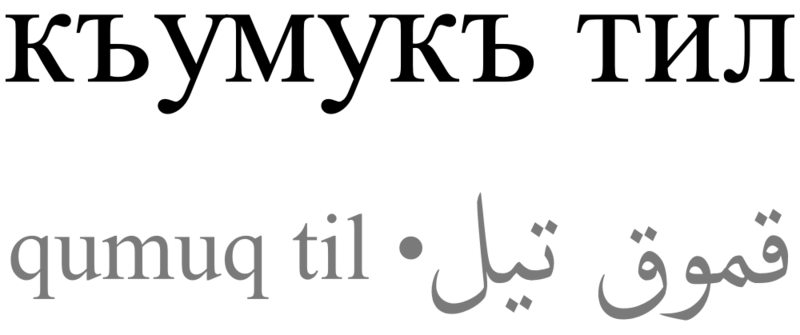
Kumyk
Turkic language

Sogdian
extinct Eastern Iranian language of Central Asia
Dioula
Mande language spoken in Burkina Faso, Côte d'Ivoire, and Mali
Sabir
lingua franca of the Mediterranean Basin between the 11th and 19th centuries

Ajem-Turkic
Ajem-Turkic or Ajami Turkic (; Türkī-yi ʿacemī, 'Persian Turkic' or 'Persian Turkish'), also known as Middle Azeri or Middle Azerbaijanian, is the Turkic vernacular spoken in Iran between the 15th and 18th centuries. The modern Azerbaijani language is descended from this language.
Kalau Lagau Ya
language

Mota
language
Suau
language
Mobilian Jargon
pidgin used as a lingua franca among Native American groups living along the Gulf of Mexico