Category
page 1Linguistics

language
Language is a structured system of communication that consists of grammar and vocabulary. It is the primary means by which humans convey meaning, both in spoken and signed forms, and may also be conveyed through writing. Human language is characterized by its cultural and historical diversity, with significant variations observed between cultures and across time. Human languages possess the properties of productivity and displacement, which enable the creation of an infinite number of sentences, and the ability to refer to objects, events, and ideas that are not immediately present in the disc

linguistics
Linguistics is the scientific study of language. The areas of linguistic analysis are syntax (rules governing the structure of sentences), semantics (meaning), morphology (structure of words), phonetics (speech sounds and equivalent gestures in sign languages), phonology (the abstract sound system of a particular language, and analogous systems of sign languages), and pragmatics (how the context of use contributes to meaning). Subdisciplines such as biolinguistics (the study of the biological variables and evolution of language) and psycholinguistics (the study of psychological factors in huma

constructed language
human language whose phonology, grammar, and vocabulary have been consciously devised for human or human-like communication

verse
single metrical line in a poetic composition
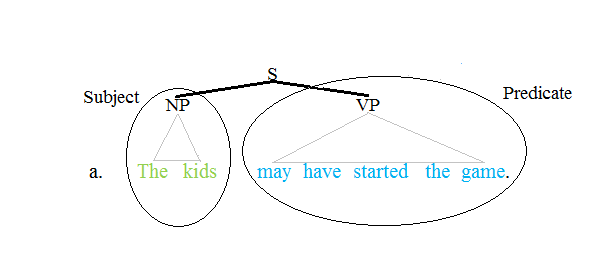
predicate
sentence constituent
lexicon
A lexicon (, rarely lexica) is the vocabulary of a language or branch of knowledge (such as nautical or medical). In linguistics, a lexicon is a language's inventory of lexemes. The word lexicon derives from Greek word (), neuter of () meaning 'of or for words'.
pleonasm
Pleonasm (; , ) is redundancy in linguistic expression, such as "black darkness", "burning fire", or "the man he said". It is a manifestation of tautology by traditional rhetorical criteria. Pleonasm may also be used for emphasis, or because the phrase has become established in a certain form. Tautology and pleonasm are not consistently differentiated in literature.
folk etymology
Process of reinterpretive word formation

prompt engineering
creation or optimization of a prompt to be given to an artificial intelligence model
tautology
statement which repeats the same idea, using near-synonymous morphemes, words, or phrases
metalanguage
In logic and linguistics, a metalanguage is a language used to describe another language, often called the object language. Expressions in a metalanguage are often distinguished from those in the object language by the use of italics, quotation marks, or writing on a separate line. The structure of sentences and phrases in a metalanguage can be described by a metasyntax. For example, to say that the word "noun" can be used as a noun in a sentence, one could write "noun" is a .
descriptive linguistics
work of objectively describing the state of a linguistic system; as opposed to prescribing perceived norms of usage
gloss
brief marginal notation of the meaning of a word or wording in a text

phonaesthetics
Phonaesthetics (also spelled phonesthetics in North America) is the study of the beauty and pleasantness associated with the sounds of certain words or parts of words. The term was first used in this sense, perhaps by during the mid-20th century and derives . Speech sounds have many aesthetic qualities, some of which are subjectively regarded as euphonious (pleasing) or cacophonous (displeasing). Phonaesthetics remains a budding and often subjective field of study, with no scientifically or otherwise formally established definition; today, it mostly exists as a marginal branch of psychology, p
theoretical linguistics
branch of linguistics which inquires into the nature of language
Portal:Linguistics
Wikimedia portal
topic–comment
terms describing sentence structure in linguistics
possible world
in philosophy, a complete and consistent way the world is or could have been
optimality theory
linguistic model proposing that the observed forms of language arise from the optimal satisfaction of conflicting constraints

kinesics
thumb|Charles Darwin's The Expression of the Emotions in Man and Animals
Kinesics is the interpretation of body communication such as facial expressions and gestures, nonverbal behavior related to movement of any part of the body or the body as a whole. The equivalent popular culture term is body language, a term Ray Birdwhistell, considered the founder of this area of study, neither used nor liked (on the grounds that what can be conveyed with the body does not meet the linguist's definition of language).
models of communication
conceptual model used to explain the human communication process
contrastive linguistics
practice-oriented linguistic approach
linguistic norm
collectively accepted linguistic practice, basis of the standard language
filler
words or sounds used without meaning, like "umm" or "Err.."
X-bar theory
in generative grammar, the theory of syntactic category formation that ① phrases may contain intermediate constituents projected from a head X; and that ② this system of projected constituency may be common to more than one category (e.g. N, V, A, P)
free indirect speech
style of third-person narration which uses some of the characteristics of third-person along with the essence of first-person direct speech

Epanalepsis
thumb|Zoopraxiscope by British photographer [[Eadweard Muybridge. Drawn Ruade of a Donkey (1879). The epanadiplosis suggests an effect of repetition.]]
Epanadiplosis (from Ancient Greek /, from /, "on", /, "again", and /, "double", "doubling in succession") is a figure of speech in which the same word is used at the end of a clause as at the beginning of a preceding clause. The opposite figure is anadiplosis. It allows for melodic and rhythmic interplay to suggest emphasis or humor. Epanadiplosis can also be used to emphasize a word, a group of words, or an idea.

pseudoword
thumb | right | Cover of the October 1905 issue of Jabberwock: a Monthly Magazine for Boys and Girls
A pseudoword is a unit of speech or text that appears to be an actual word in a certain language, while in fact it has no meaning. It is a specific type of nonce word, or even more narrowly a nonsense word, composed of a combination of phonemes which nevertheless conform to the language's phonotactic rules. It is thus a kind of vocable: utterable but meaningless.
type–token distinction
distinction that separates a concept from the objects which are particular instances of the concept
interlinear gloss
explanatory matter inserted between a line of original text and its translation; when grammatical in nature, has semistandard format
double articulation
fundamental language phenomenon in which combinations of a small number of meaningless phonemes are combined to produce a large number of meaningful morphemes
perlocutionary act
effect of an utterance on an interlocutor
LGBT linguistics
study of language used by LGBTQ

baltistics
Baltistics, also referred to as Baltic studies, is a multidisciplinary study of the language and culture (history, literature, folklore and mythology) of the Baltic nations. Baltistics by its subject splits into Lithuanistics, Latvistics, Prussistics, etc. Special attention is paid to the language studies, especially to the reconstruction of the Proto-Baltic language, which some linguists have argued is the same as the Proto-Balto-Slavic language, while others (V. Toporov, V. Ivanov, V. Mažiulis etc.) have believed that the Proto-Slavic language has formed out of from the Proto-Baltic peripher
language preservation
efforts to save languages spoken by tiny minorities from extinction
Geneva School
Swiss school of linguistics

language classification
grouping of languages into classes
conditional sentence
sentence expressing factual implications, or a hypothetical situation and its consequences

linguistic system
viewpoint of a language as an organized system regulated by a set of rules and conventions, in the theories of Ferdinand de Saussure, J.R. Firth, Benjamin Lee Whorf, Louis Hjelmslev, Michael Halliday, and others
youth language
linguistic patterns associated with young speakers
economics of language
Linguistic Linked Open Data
method or disciplinary lens for treating linked data
dialect levelling
the means by which dialect differences decrease
Epiphrase
thumb|"No, I swear, I'm not telling you this to flatter you, you have a true friend like no other. I will tell you that if you don't know it, you are the only one. Mme Verdurin was telling me this again on the last day ()", Marcel Proust, Du côté de chez Swann.
linguistic demography
statistical study of languages among all populations
metapolitics
Metapolitics (sometimes written meta-politics) describes political attempts to speak in a metalinguistic sense about politics; that is, to have a political dialogue about politics itself. Activists who use the phrase often view metapolitics as a form of "inquiry" in which the discourse of politics, and the political itself, is reimagined and reappropriated. The term was coined by Marxists and is almost always used in the context of ideological discourse among the far-left and far-right, unlike the wider academic field of political philosophy. Those citing the term often do so in an attempt to
orality
thumb|right|upright=1.2|An oral community in Takéo Province|Takéo, [[Cambodia, confronts writing. Modern scholarship has shown that orality is a complex and tenacious social phenomenon.]]
Orality is thought and verbal expression in societies, distinct from the technologies of literacy (especially writing and print). The study of orality is closely allied to the study of oral tradition.
political linguistics
The study of the relations between language and politics
open-ended question
type of question
Hypotyposis
displacement
in linguistics, capability of language to communicate about things that are not immediately present
metalinguistics
Metalinguistics is the branch of linguistics that studies language and its relationship to other cultural behaviors. It is the study of how different parts of speech and communication interact with each other and reflect the way people live and communicate together. Jacob L. Mey in his book, Trends in Linguistics, describes Mikhail Bakhtin's interpretation of metalinguistics as "encompassing the life history of a speech community, with an orientation toward a study of large events in the speech life of people and embody changes in various cultures and ages."
syntagmatic analysis
term
Wadi el-Hol
valley in Egypt
language level
quality level of a text, discourse or corpora
information structure
way in which information is formally packaged within a sentence
economy
functional explanation of linguistic form
mathematical linguistics
branch of applied mathematics
Explanandum and explanans
latin terms

context collapse
Academic concept used in communication