Category
page 1Lophophora

Lophophora williamsii
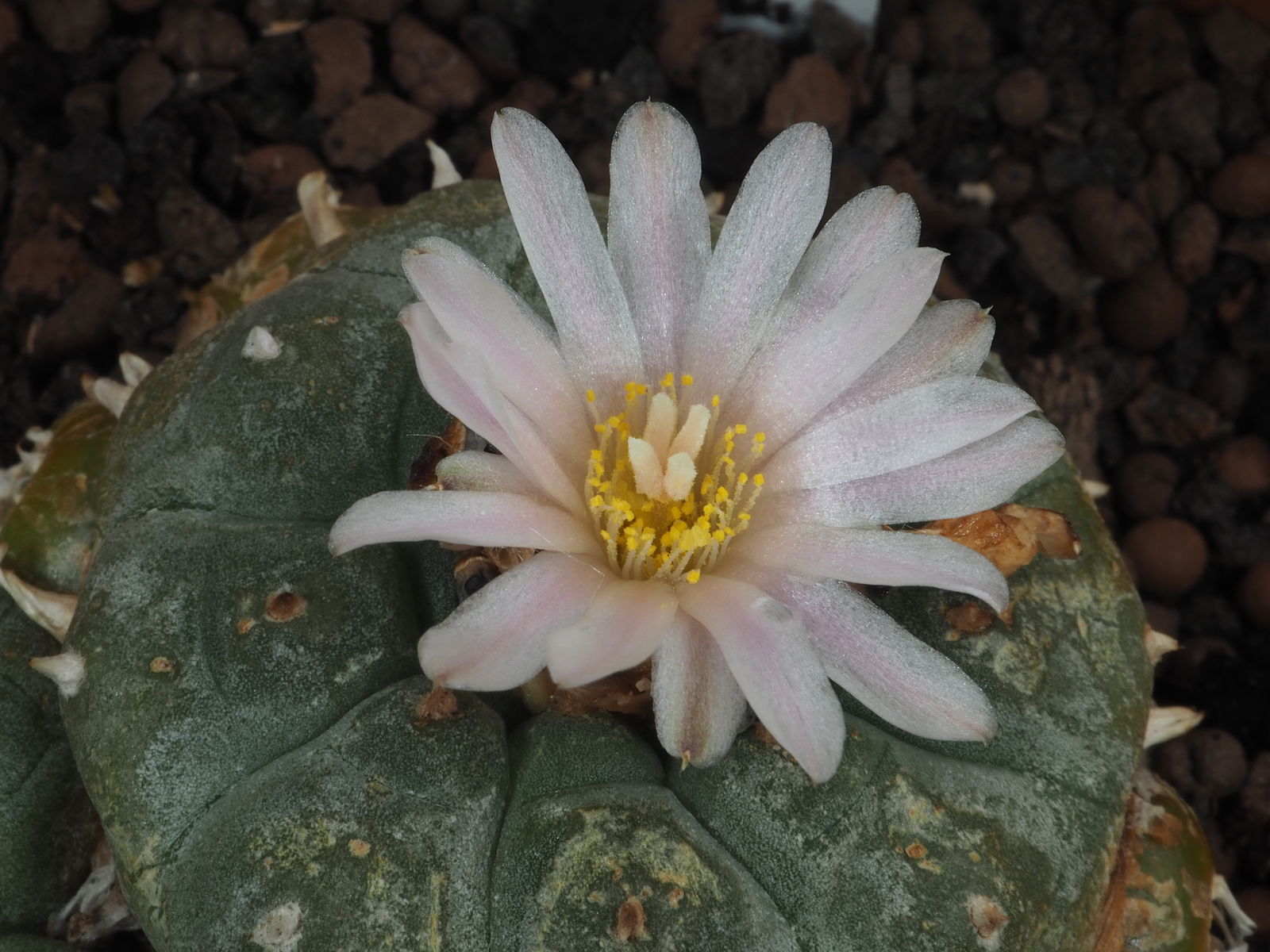
The peyote (Lophophora williamsii) is a small, spineless cactus which contains psychoactive alkaloids, particularly mescaline. is a Spanish word derived from the Nahuatl , meaning "caterpillar cocoon", from a root , "to glisten".
Lophophora
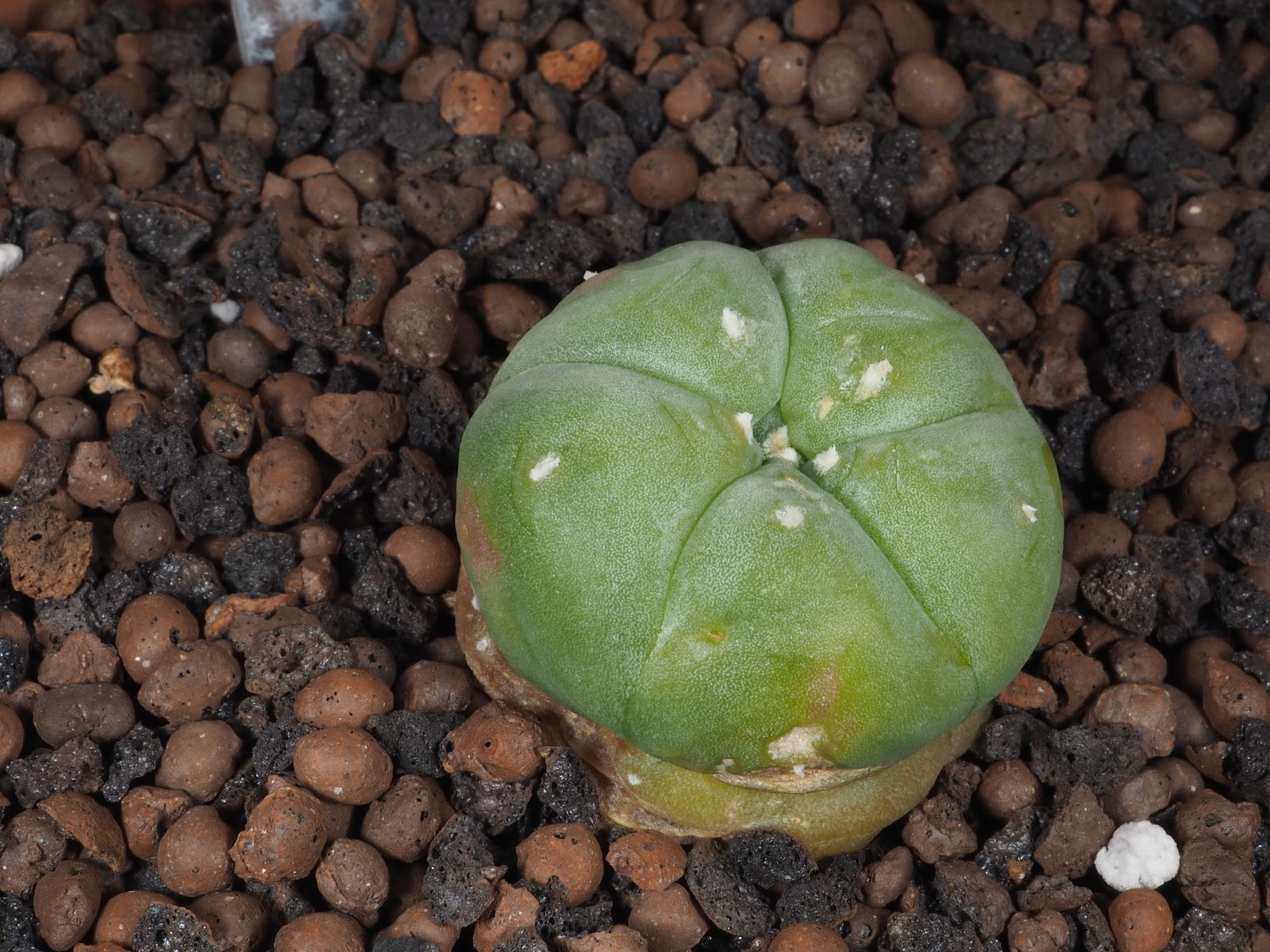
Lophophora () is a genus of spineless, button-like cacti. Its native range covers Texas through Mexico to southwestern Mexico. The species are extremely slow growing, sometimes taking up to thirty years to reach flowering age (at the size of about a golf ball, excluding the root) in the wild. Cultivated specimens grow considerably faster, usually taking between three and ten years to reach from seedling to mature flowering adult. The slow rate of reproduction and over-harvesting by collectors render the species under threat in the wild.
Lophophora diffusa
species of plant
Lophophora fricii
species of plant
lophophorine
Lophophorine, also known as '''N-methylanhalonine', is a tetrahydroisoquinoline alkaloid made by various cacti in the Lophophora'' family. It has been found to lack hallucinogenic effects in humans. Arthur Heffter tried lophophorine at a dose of 20mg resulted in vasodilation, an immediate headache, and a warm flushed feeling, effects which dissipated within an hour. It has also been said to produce nausea in humans. Lophophorine is described as highly toxic and produces strychnine-like convulsions in animals.
anhalonidine
Anhalonidine, also known as '''N-desmethylpellotine', a naturally occurring tetrahydroisoquinoline alkaloid which can be isolated from certain members of the cactus family, such as Lophophora''. It is structurally related to mescaline. Anhalonidine produced no hallucinogenic effects in humans at doses of up to 250mg. However, it has been reported to have a calming or sedative effect instead, with about one-fourth the potency of pellotine and with marked sedation occurring at doses of 100 to 250mg. Anhalonidine has been found to act as a potent inverse agonist of the serotonin 5-HT7 receptor.
anhalidine
Anhalidine is a naturally occurring tetrahydroisoquinoline based alkaloid which can be isolated from Lophophora williamsii; it has also been detected in other cactii and several species of Acacia. It is part of a family of compounds that are structurally related to mescaline. Anhalidine has been found to act as a potent inverse agonist of the serotonin 5-HT7 receptor.
Pellotine
Pellotine, also known as peyotline or '''N-methylanhalonidine', is a tetrahydroisoquinoline alkaloid found in Lophophora species, in particular L. diffusa. It is the second most common alkaloid found in Lophophora williamsii'' (peyote). Pellotine is slightly sedative, and has been used by Native Americans as a constituent of peyote for sacramental purposes. It was reportedly once marketed for use as a sedative. Pellotine has been sold online.