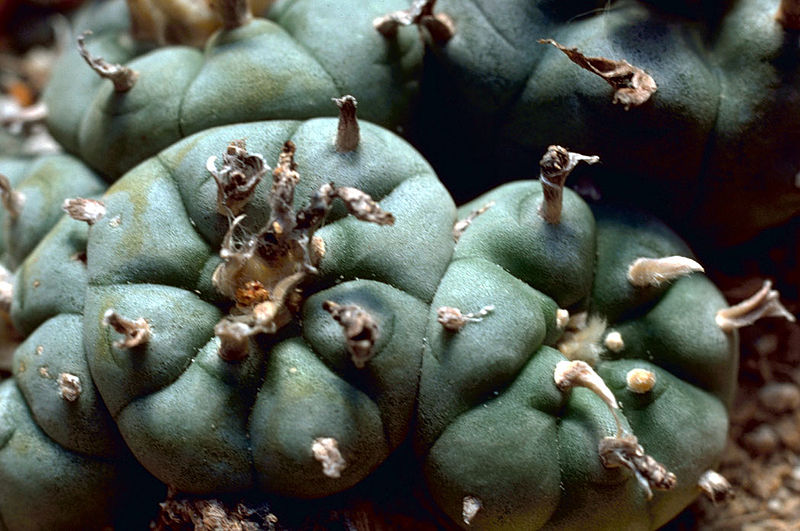
Lophophora williamsii
Also known as peyote, Peyote
The peyote (Lophophora williamsii) is a small, spineless cactus which contains psychoactive alkaloids, particularly mescaline. is a Spanish word derived from the Nahuatl , meaning "caterpillar cocoon", from a root , "to glisten".
AI overview
Peyote is a small, spineless cactus that contains psychoactive compounds, most notably mescaline, which can alter perception and consciousness. The plant has cultural and historical significance, with its name deriving from Nahuatl origins meaning something related to a caterpillar cocoon.
AI-generated from the Wikipedia summary — may contain errors.
Species
VulnerableLophophora williamsii
SPECIES
- KingdomPlantae
- PhylumTracheophyta
- ClassMagnoliopsida
- OrderCaryophyllales
- FamilyCactaceae
Native toMexico Northeast, Mexico Southwest, Texas
Lophophora williamsii Le peyotl, également dénommé peyote (Lophophora williamsii), est une espèce de petits cactus sans épines de la famille des Cactaceae, originaire du sud de l'Amérique du Nord. Ce cactus contient plusieurs alcaloïdes dont la mescaline, utilisée pour ses propriétés enthéogènes, psychotropes et hallucinogènes. Il est protégé par la CITES et son usage est interdit dans certains pays, notamment la Suisse et la France. L'usage du peyotl à des fins rituelles par les Amérindiens est ancienne et son utilisation cérémoniale remonte à 3 000 ans ou plus comme l'ont démontré des fouilles archéologiques dans des grottes du Texas. Cet usage rituel persiste de nos jours chez plusieurs populations amérindiennes d'Amérique du Nord.
via GBIF · IUCN · Kew POWO
Wikidata facts
Article
22 sectionsContents
- Description
- Taxonomy
- Distribution and habitat
- Constituents
- Cultivation
- Uses
- Psychoactivity and folk medicine
- History
- Adverse reactions
- Cultural significance
- Wixarika (Huichol) culture
- Religion
- Native American Church
- Legality
- United Nations
- Canada
- United States
- See also
- Notes
- References
- Further reading
- External links
The peyote (Lophophora williamsii) is a small, spineless cactus which contains psychoactive alkaloids, particularly mescaline. is a Spanish word derived from the Nahuatl , meaning "caterpillar cocoon", from a root , "to glisten".
It is native to southern North America, primarily found in desert scrub and limestone-rich areas of northern Mexico and south Texas, particularly in the Chihuahuan Desert at elevations of 100–1500 meters. It flowers from March to May, and sometimes as late as September. Its flowers are pink or white, with thigmotactic anthers (like Opuntia). It is a small, spineless cactus that grows in clusters, produces edible fruits, and contains psychoactive alkaloids—primarily mescaline—at concentrations of about 0.4% when fresh and up to 6% when dried.