(c) Aidan Campos, some rights reserved (CC BY-NC), uploaded by Aidan Campos · cc-by-nc
Lophophora
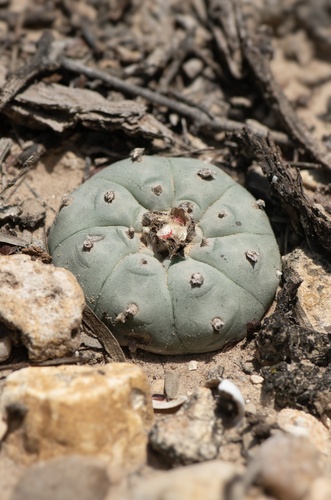
Sign in to saveLophophora () is a genus of spineless, button-like cacti. Its native range covers Texas through Mexico to southwestern Mexico. The species are extremely slow growing, sometimes taking up to thirty years to reach flowering age (at the size of about a golf ball, excluding the root) in the wild. Cultivated specimens grow considerably faster, usually taking between three and ten years to reach from seedling to mature flowering adult. The slow rate of reproduction and over-harvesting by collectors render the species under threat in the wild.
Species
Peyote
species
via · Kew POWO
Museum specimens
- Specimen records
- 9
- With media
- 3
- Family
- Cactaceae
- Collections
- IBUNAM, INECOL, RSA, ASU, US, MO
- Recorded in
- Mexico
Wikidata facts
Show 7 more facts
- taxon rank
- genus
- Commons category
- Lophophora
- taxon name
- Lophophora
- topic's main category
- Category:Lophophora
- taxon common name
- 乌羽玉属
- homonymous taxon
- Lophophora
Sources (2)
via Wikidata · CC0
~3 min read
Encyclopedic overview
5 sectionsContents
- Taxonomy
- Species
- Cultivation
- References
- External links
Lophophora () is a genus of spineless, button-like cacti. Its native range covers Texas through Mexico to southwestern Mexico. The species are extremely slow growing, sometimes taking up to thirty years to reach flowering age (at the size of about a golf ball, excluding the root) in the wild. Cultivated specimens grow considerably faster, usually taking between three and ten years to reach from seedling to mature flowering adult. The slow rate of reproduction and over-harvesting by collectors render the species under threat in the wild.
==Taxonomy== Lophophora means "crest-bearing", referring to the tufts of trichomes that adorn each tubercle. Lophophora has been reported to have two species, L. diffusa and L. williamsii. Another three species have been proposed: L. fricii, L. koehresii, and L. alberto-vojtechii. Recent DNA sequencing studies (Butterworth et al. 2002) have shown that L. diffusa and L. williamsii indeed are distinct species. DNA evidence from the alleged species L. fricii and L. koehresii would allow for more accurate classification.
Excerpted from Wikipedia’s “Lophophora” article, available under the CC BY-SA 4.0 licence.