Category
page 1Malacostraca

Malacostraca
Malacostraca is the second largest of the six classes of pancrustaceans behind insects, containing about 40,000 living species, divided among 16 orders. Its members, the malacostracans, display a great diversity of body forms and include crabs, lobsters, spiny lobsters, crayfish, shrimp, krill, prawns, isopods, amphipods, mantis shrimp, and many other less familiar animals. They are abundant in all marine environments and have colonised freshwater and terrestrial habitats. They are segmented animals, united by a common body plan comprising 20 body segments (rarely 21), and divided into a head,
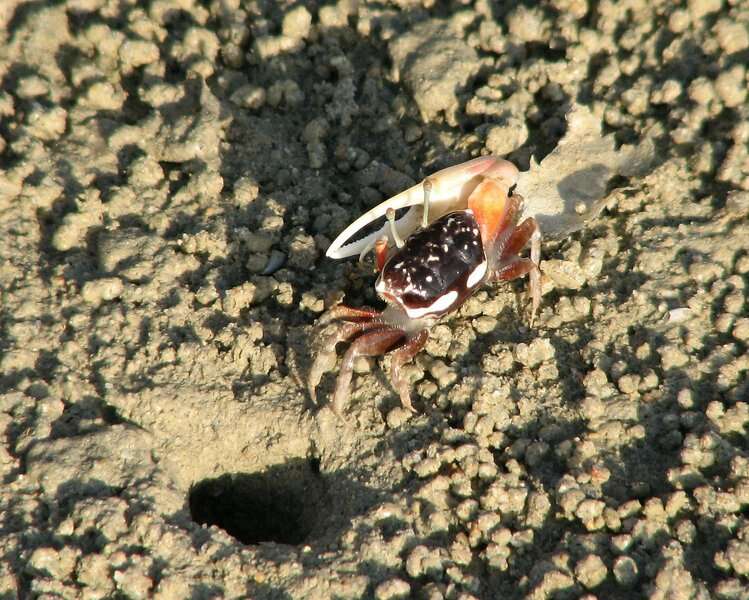
Eumalacostraca
Eumalacostraca is a subclass of crustaceans, containing almost all living malacostracans, or about 40,000 described species. The remaining subclasses of crustaceans that are not in Eumalacostraca are the Phyllocarida and possibly the Hoplocarida. Eumalacostracans have 19 segments (5 cephalic, 8 thoracic and 6 abdominal). This arrangement is known as the "caridoid facies", a term coined by William Thomas Calman in 1909. The thoracic limbs are jointed and used for swimming or walking. The common ancestor is thought to have had a carapace, and most living species possess one, but it has been lost

Peracarida
The superorder Peracarida is a large group of malacostracan crustaceans, having members in marine, freshwater, and terrestrial habitats. They are chiefly defined by the presence of a marsupium (the "brood pouch"), formed from thin flattened plates (oostegites) borne on the basalmost segments of the legs.
Eucarida
Eucarida is a superorder of the Malacostraca, a class of the crustacean subphylum, comprising the decapods, krill, and Angustidontida. They are characterised by having the carapace fused to all thoracic segments, and by the possession of stalked eyes.
Hoplocarida
Hoplocarida is a subclass of crustaceans. The only extant members are the mantis shrimp (Stomatopoda), but two other orders existed in the Palaeozoic: Aeschronectida and Palaeostomatopoda.
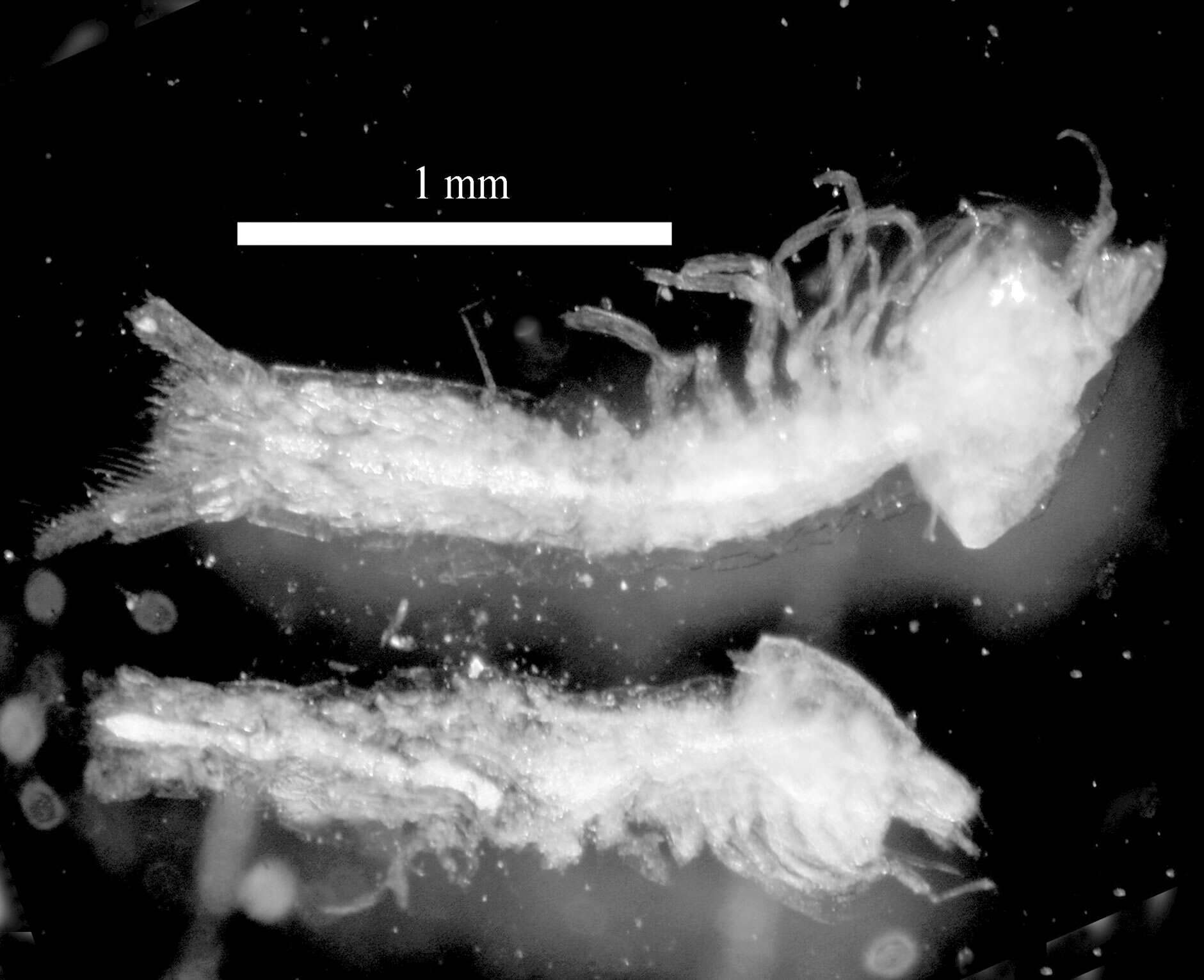
Thermosbaenacea
Thermosbaenacea is a group of crustaceans that live in thermal springs in fresh water, brackish water and anchialine habitats. They have occasionally been treated as a distinct superorder (Pancarida), but are generally considered to belong to the Peracarida. Due to their troglobitic lifestyle, thermosbaenaceans lack visual pigments and are therefore blind.

Phyllocarida
Phyllocarida is a subclass of crustaceans, comprising the extant order Leptostraca and the extinct orders Hymenostraca and Archaeostraca. This clade of marine crustaceans diversified extensively during the Ordovician.
left|thumb|Undescribed fossil of a very large phyllocarid from the Yukon ([[Devonian)]]
Spelaeogriphacea
Spelaeogriphacea is an order of crustaceans that grow to no more than . Little is known about the ecology of the order.
Mictacea
Mictacea is a monotypic order of crustaceans. It was originally erected for three species of small shrimp-like animals of the deep sea and anchialine caves. They were placed in two families, the Mictocarididae and Hirsutiidae, but Hirsutiidae is now placed in order Bochusacea, leaving Mictacea with a single species, Mictocaris halope.
Halosbaenidae
Halosbaenidae is a family of crustaceans belonging to the order Thermosbaenacea.