Encyclopedia of Life · EOL (see source)
Thermosbaenacea
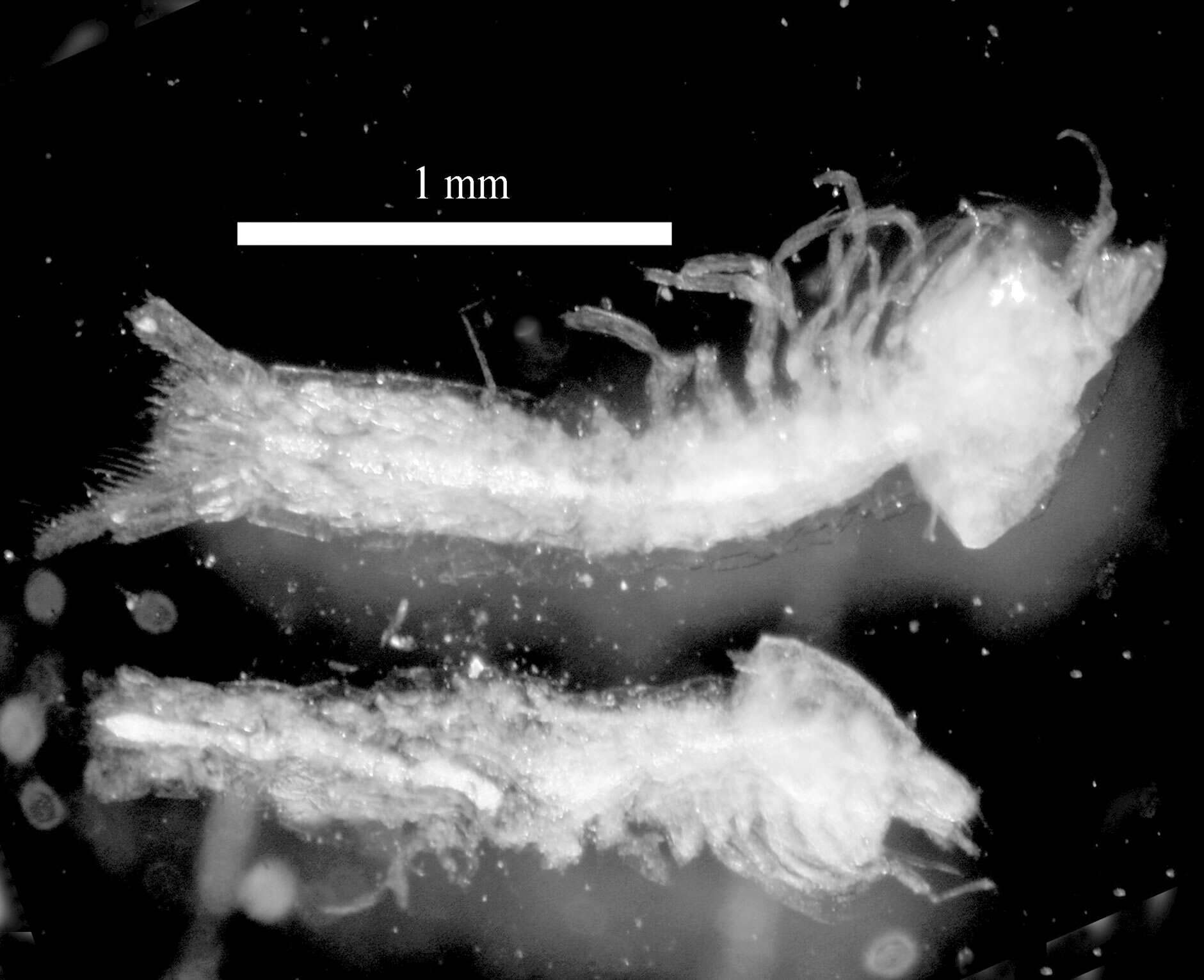
Sign in to saveThermosbaenacea is a group of crustaceans that live in thermal springs in fresh water, brackish water and anchialine habitats. They have occasionally been treated as a distinct superorder (Pancarida), but are generally considered to belong to the Peracarida. Due to their troglobitic lifestyle, thermosbaenaceans lack visual pigments and are therefore blind.
Species
hot-springs shrimps
ORDER
- KingdomAnimalia
- PhylumArthropoda
- ClassMalacostraca
- OrderThermosbaenacea
テルモスバエナ目(Thermosbaenacea)は、淡水、汽水の熱泉や潮だまりに生息する甲殻類の分類である。独立した上目として扱われることもあるが、通常はフクロエビ上目の中の目と考えられている。洞窟に生息するため、テルモスバエナ目は視覚色素を持たず、目が見えない。 テルモスバエナ目のある属の現在の分布は、中新世のテチス海の範囲と一致し、現在の分類群は開かれた海に生息していた祖先に由来すると考えられている。その他の場所での分布は、パンゲア大陸の分裂と一致している。 発達中の胚は、孵化するまで成体の背甲の下で運ばれる。
via GBIF
Wikidata facts
- Instance of
- taxon
- Parent taxon
- Peracarida
- Image
- Tethysbaena ophelicola, sub-adults.jpg
Show 4 more facts
- Commons category
- Thermosbaenacea
- taxon name
- Thermosbaenacea
- taxon rank
- order
- topic's main category
- Category:Thermosbaenacea
Sources (1)
via Wikidata · CC0
~3 min read
Encyclopedic overview
3 sectionsContents
- Classification
- References
- External links
Thermosbaenacea is a group of crustaceans that live in thermal springs in fresh water, brackish water and anchialine habitats. They have occasionally been treated as a distinct superorder (Pancarida), but are generally considered to belong to the Peracarida. Due to their troglobitic lifestyle, thermosbaenaceans lack visual pigments and are therefore blind.
The current distribution of some genera tallies well with the Miocene extent of the Tethys Sea, and it is assumed that the extant taxa are derived from ancestors that lived in open marine habitats. Elsewhere, the distribution is consistent with the break-up of Pangaea.
Excerpted from Wikipedia’s “Thermosbaenacea” article, available under the CC BY-SA 4.0 licence.