Category
page 1Manchuria

Vladivostok
Vladivostok ( ; , ) is the largest city and the administrative center of Primorsky Krai and the capital of the Far Eastern Federal District of Russia. It is located around the Golden Horn Bay on the Sea of Japan, covering an area of , with a population of 603,519 residents Vladivostok is the second-largest city in the Far Eastern Federal District, as well as the Russian Far East, after Khabarovsk. It is located approximately from the China–Russia border and from the North Korea–Russia border.

Amur Oblast
federal subject of Russia, oblast of Russia

Heilongjiang
Heilongjiang () is a province in northeast China. It is the northernmost and easternmost province of the country and contains China's northernmost point (in Mohe City along the Amur) and easternmost point (at the confluence of the Amur and Ussuri rivers).

Liaoning
Liaoning is a coastal province in Northeastern China that is the smallest, southernmost, and most populous province in the region. With its capital at Shenyang, it is located on the northern shore of the Yellow Sea, and is the northernmost coastal province of the People's Republic of China.

Primorsky Krai
federal subject of Russia, krai of Russia

Jewish Autonomous Oblast
federal subject of Russia

Jilin
Jilin is one of the three provinces of Northeast China. Its capital and largest city is Changchun. Jilin borders North Korea (Rasŏn, North Hamgyong, Ryanggang and Chagang) and Russia (Primorsky Krai) to the east, Heilongjiang to the north, Liaoning to the south, and Inner Mongolia to the west.

Manchuria
Manchuria is a historical region in Northeast Asia encompassing the entirety of present-day Northeast China and parts of the modern-day Russian Far East south of the Uda River and the Tukuringra-Dzhagdy ranges. The exact geographical extent varies depending on the definition: in the narrow sense, the area constituted by three Chinese provinces of Heilongjiang, Jilin, and Liaoning as well as the eastern Inner Mongolian prefectures of Hulunbuir, Hinggan, Tongliao, and Chifeng; in a broader sense, historical Manchuria includes those regions plus the Amur river basin, parts of which were ceded to

Manchu
Tungusic language originating from Northeast China

Manchu
East Asian ethnic group native to northeastern China (Manchuria)

Ussuriysk
Ussuriysk () is a city in Primorsky Krai, Russia, in the valley of the Razdolnaya River. The city is north of Vladivostok, the administrative center of the krai, and about from both the China–Russia border and the Pacific Ocean.

Khanka
freshwater lake located on the border between Primorsky Krai, Russia and Heilongjiang province, Northeast China

Nivkh
Palaeosiberian languages spoken in Eastern Siberia and Sakhaline

Northeast China
geographic region of China including Heilongjiang, Jilin, and Liaoning
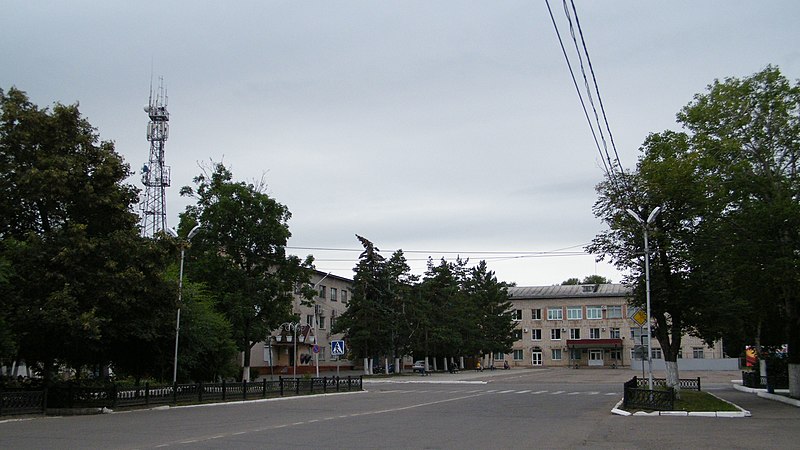
Dalnerechensk
Dalnerechensk () is a town in Primorsky Krai, Russia. Population:

kombucha

Nanai
ethnic group

Partizansk
Partizansk () is a town in Primorsky Krai, Russia, located on a spur of the Sikhote-Alin Mountains, about east of Vladivostok, the administrative center of the krai. As of the 2010 census, the population is population 38,659.

Dalnegorsk
Dalnegorsk (, lit. far in the mountains) is a town in Primorsky Krai, Russia. Population:

Changbai Mountains
mountain range in China and North Korea

Erinaceus amurensis
species of mammal
Northeast China Plain
plain in China
Russian Manchuria
region in Russia
queue
hairstyle characterized by shaving the front and top of the head and leaving a long braided hair on the crown and back of the head
Victor Bulwer-Lytton, 2nd Earl of Lytton
British politician and colonial administrator (1876-1947)
Liaopeh
Liaobei (Wade-Giles: Liaopei) also known as Liaopeh is a de jure province of the Republic of China under ROC law as the government of the Republic of China formally claims to be the sole legitimate government of China. Located in Manchuria, the major part of the area of Liaobei constitutes the parts of province which is now in Inner Mongolia, now under the de facto jurisdiction of the People's Republic of China. Its de jure capital is located in Liaoyuan City (present-day Shuangliao, Jilin), but the de facto capital is at Siping City since Liaoyuan was already occupited by the Communists.
Shiwei
pre-Genghis Khan term for Mongolic peoples
Sungkiang
former province of the Republic of China
Nunkiang
former province of the Republic of China
Yuwen
The Yuwen ( B-mun < Old Chinese *waʔ-mən) is a Chinese compound surname which originated from a pre-state clan of Xianbei ethnicity of Xiongnu origin during the era of Sixteen Kingdoms in China, until its destruction by Former Yan's prince Murong Huang in 345. Among the eastern Xianbei clans that ranged from the central part of the present day Liaoning province and eastward, Yuwen clan was the largest, and was awarded the position of the leader of eastern Xianbei (東部大人) by Chinese rulers. A descendant of the Yuwen tribe, Yuwen Tai, established the Northern Zhou dynasty in the 6th century.
.jpg)
Kyowa-go
thumb|1937 newspaper advertisement featuring Kyōwa-go
or Xieheyu () is either of two pidginized languages, one Japanese-based and one Mandarin-based, that were spoken in Manchukuo in the 1930s and 1940s. They are also known as , , and .
Wild Jurchens
exonymic term applied by Han Chinese to an ethnic group or groups
Hešeri
Hešeri (; Manchu: Hešeri), is a clan of Manchu nobility with Jianzhou Jurchens roots, originally hailing from the area which is now the modern Chinese provinces of Jilin and Liaoning. It was once one of the most important and powerful noble families in the early Qing dynasty in China, second only to the royal House of Aisin Gioro, to whom they were closely related by marriage.
Nomonhan
human settlement
Dalieba
thumb|right|200px|Dalieba bread sold at Dashang Group's gourmet corner in [[Dalian (2018)]]
Dalieba (; ; ) or Lieba is a Chinese bread similar to Russian rye bread available in Northeast China.
Inner Manchuria
Northeastern Chinese cuisine
style of Chinese cuisine in Northeast China