Category
page 1Middle Eastern mythology

Egyptian mythology
myths of the Ancient Egyptians
Moloch
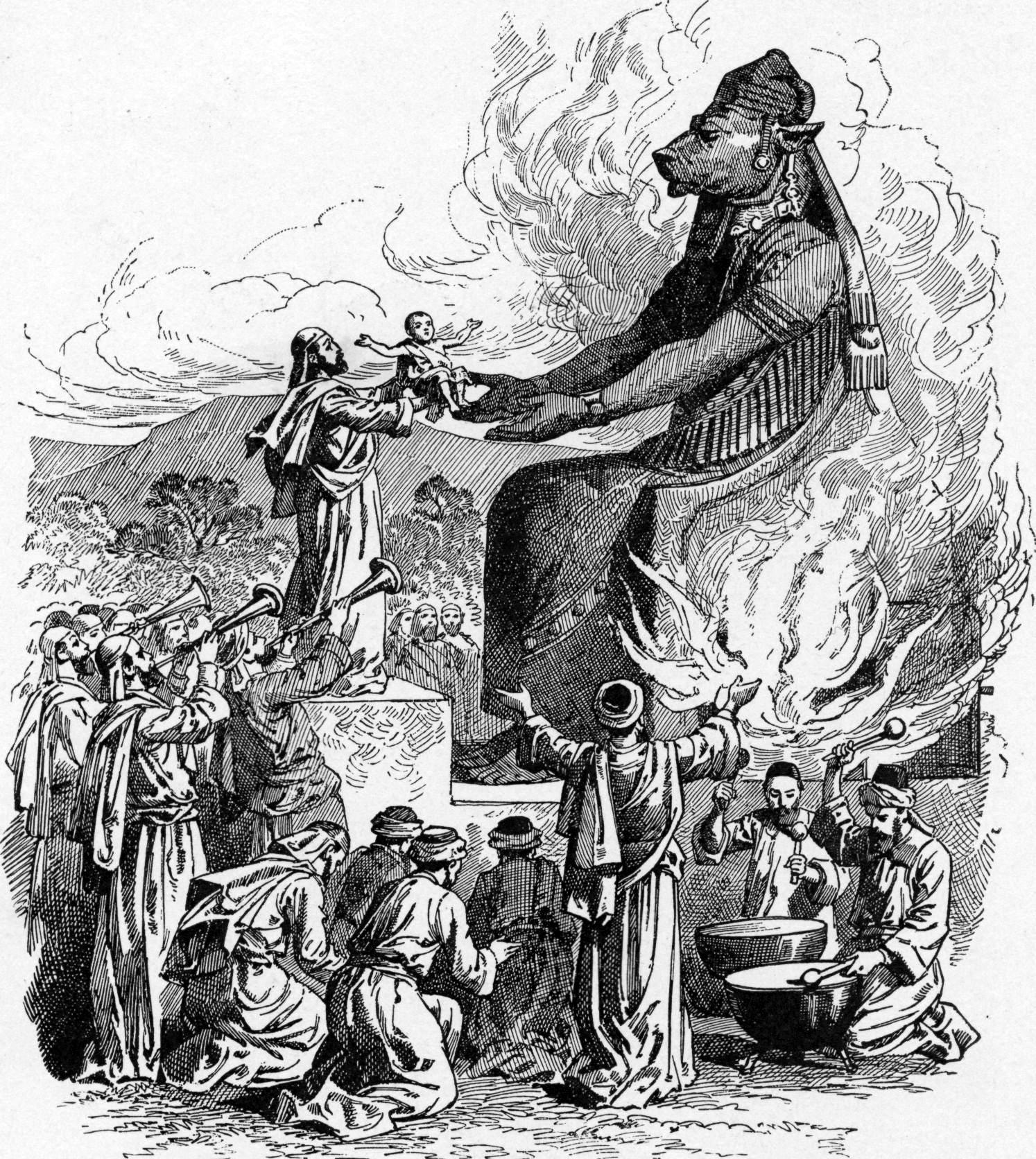
thumb|Offering to Molech in Bible Pictures and What They Teach Us, by Charles Foster, 1897. The drawing is typical of Moloch depictions in nineteenth-century illustrations.
Moloch, Molech, or Molek is a word which appears in the Hebrew Bible several times, primarily in the Book of Leviticus. The Greek Septuagint translates many of these instances as "their king", but maintains the word or name Moloch in others, including one additional time in the Book of Amos where the Hebrew text does not attest the name. The Bible strongly condemns practices that are associated with Moloch, which are heavil

haruspex
thumb|upright=1.2|The Liver of Piacenza, a bronze diagram of the sheep's liver found near [[Piacenza with Etruscan inscriptions]]
Melek Taus
the Yazidi name for the central figure of their faith
Jewish mythology
body of myths associated with Judaism

bull-leaping
thumb|upright=1.2|The Bull-Leaping Fresco from the Great Palace at [[Knossos, Crete]]
thumb|upright=1.2|The bull-leaper, an ivory [[figurine from the palace of Knossos, Crete. The only complete surviving figure of a larger arrangement of figures. This is the earliest three dimensional representation of the bull leap. It is assumed that thin gold pins were used to suspend the figure over a bull.]]
Qisas Al-Anbiya
Genre of Islamic literature, describing the history and stories of the prophets in Islam
.jpg)
Baetylus
thumb|right|The Emesa temple to the sun god Elagabalus (deity)|Elagabalus with baetyl at centre. Roman coin of 3rd century AD.
Babylonian mythology
ancient mythology
mythological bull
mythical creature
Baal-berith
God(s) worshipped in ancient Canaan
winged sun
deity
Template:Middle Eastern deities
Wikimedia template
Shadhavar
thumb|This folio from Walters manuscript W659 depicts the Aras, an animal with one horn.
'''Shâd'havâr' (Arabic: شادهافار (Šādhāfār)) or Âras (آرس) is a legendary creature from medieval Muslim bestiaries resembling a unicorn. Al-Qazwini said that it lives in the country of Rūm'' (Byzantium) and that it has one horn with 42 hollow branches which, when the wind passes through them, produces a pleasant sound that makes the animals sit around and listen. Horns of those creatures, sometimes gifted to kings, can be played like flutes. When played on one side, they produce a cheerful sound, and when
Ghosts in Mesopotamian religions