Category
page 1Missile defense
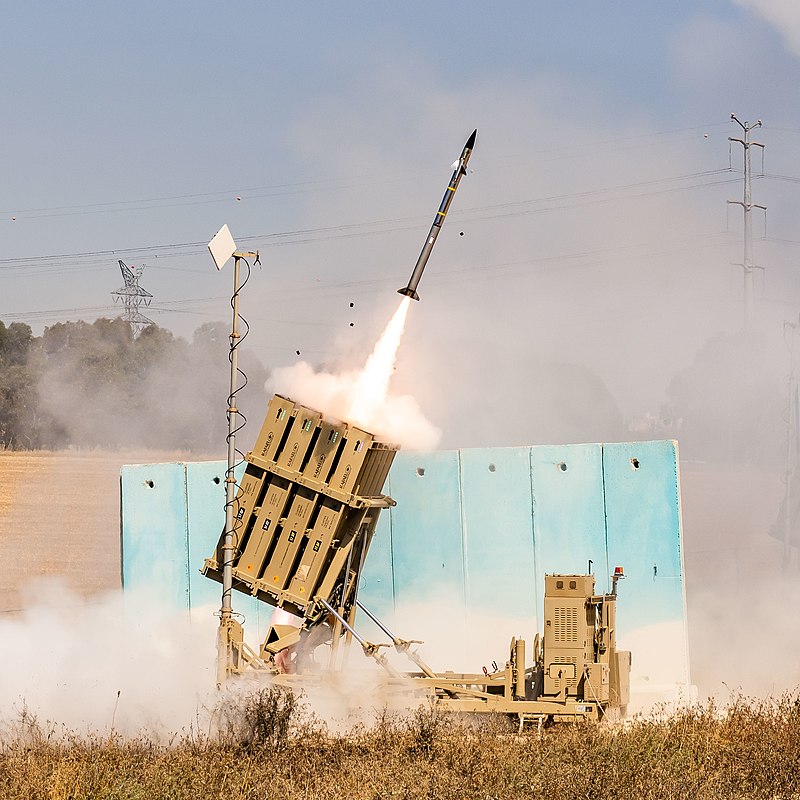
Iron Dome
Israeli air defense system to intercept and destroy short-range rockets, aircraft and other missiles with a range of 4 to 70 km
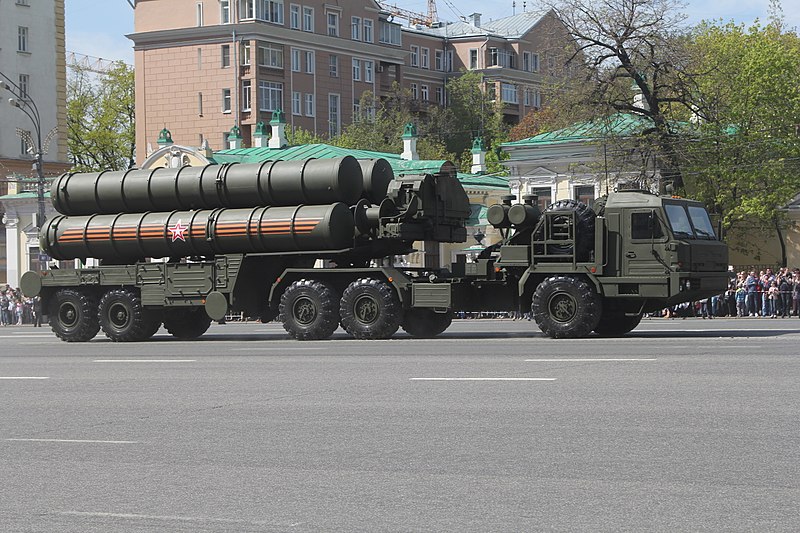
S-400 Triumf
Russian developed surface-to-air missile system

MIM-104 Patriot
surface-to-air missile system

S-300
surface-to-air missile system
Strategic Defense Initiative
defunct American missile defense system (1984-1993)
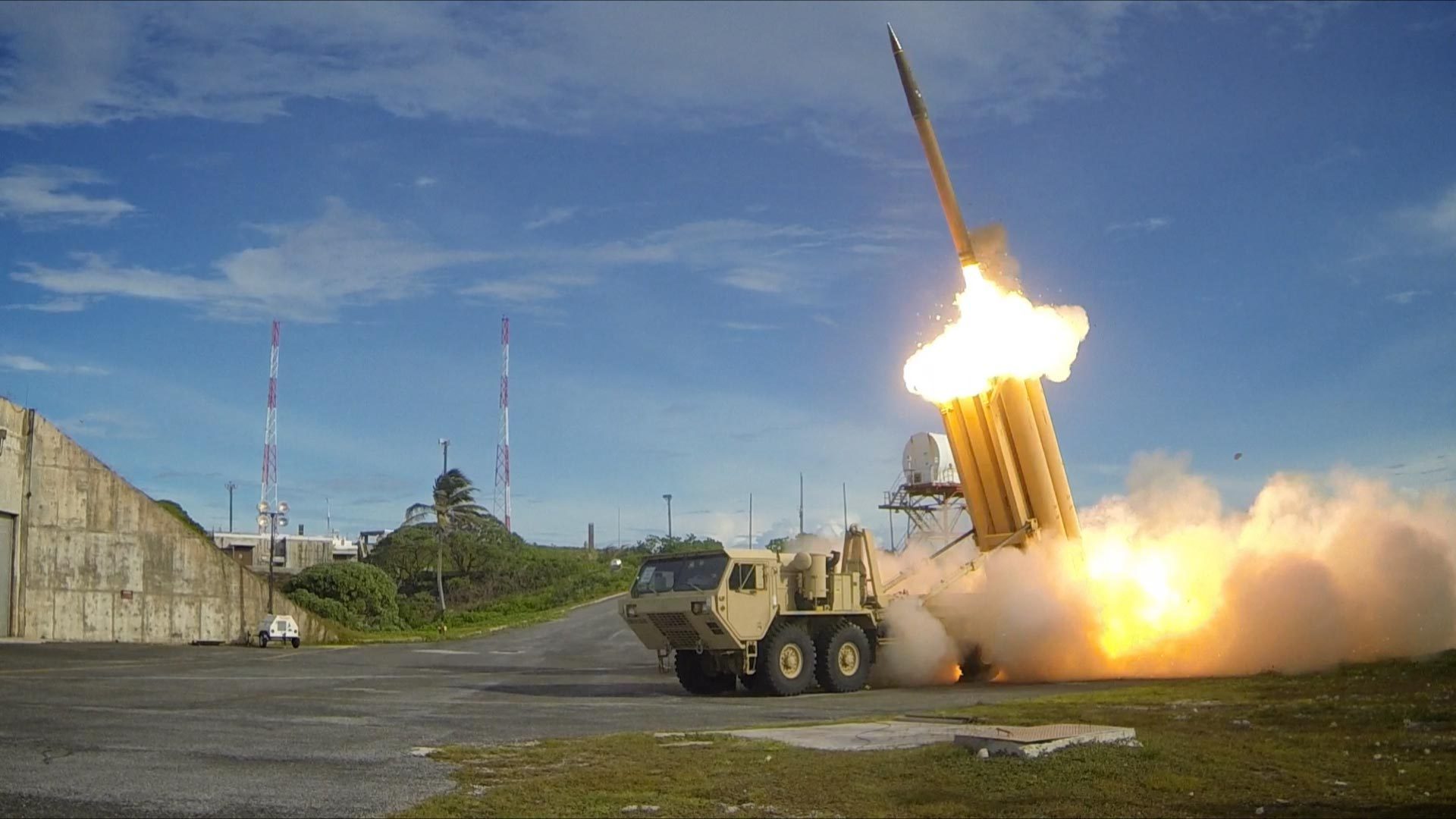
Terminal High Altitude Area Defense
Terminal High Altitude Area Defense (THAAD), formerly Theater High Altitude Area Defense, is an American anti-ballistic missile defense system, deployed since 2008, designed to intercept and destroy short-, medium-, and intermediate-range ballistic missiles in their terminal phase. The THAAD interceptor carries no warhead, instead relying on its kinetic energy of impact to destroy the incoming missile. THAAD was developed after the experience of Iraq's Scud missile attacks during the Gulf War in 1991.
missile defense
defense concept involving the destruction of attacking missiles
anti-ballistic missile
surface-to-air missile designed to target ballistic missiles in flight

NASAMS
NASAMS (National Advanced Surface-to-Air Missile System, also known as Norwegian Advanced Surface-to-Air Missile System) is a short- to medium-range ground-based air defense system developed by Kongsberg Defence & Aerospace (KDA) and RTX Corporation. The system defends against unmanned aerial vehicles (UAVs), helicopters, cruise missiles, unmanned combat aerial vehicles (UCAVs), and fixed wing aircraft, firing any of a wide range of existing missiles.
Anti-Ballistic Missile Treaty
arms control treaty between the US and the USSR
S-500 Prometheus
Russian surface-to-air missile/anti-ballistic missile system
David's Sling
surface-to-air missile
Iron Beam
Israeli air defense system employing high-energy laser beam that is designed to destroy short-range rockets, artillery, and mortars
Aegis Combat System
defense system used on 20th and 21st century ships
YAL-1
airborne laser demonstrator aircraft by Boeing
Arrow missile
Israeli anti-ballistic missiles
AN/TWQ-1 Avenger
Military self-propelled surface-to-air missile system

HQ-9
The HQ-9 (; NATO reporting name: CH-SA-9.) is a long-range semi-active radar homing (SARH) surface-to-air missile (SAM) developed by the People's Republic of China. The naval variant is the HHQ-9 (). The HQ-9 and its export variants are developed by China Aerospace Science and Industry Corporation (CASIC).
Arrow 3
missile
Sea-based X-band Radar
part of US ballistic missile defence system
Golden Dome
missile defense system
Defense Support Program
program of the United States Space Force
LIM-49A Spartan
1975 anti-ballistic missile by Western Electric
S-350E Vityaz 50R6
Russian medium-range surface-to-air missile system
United States national missile defense
nationwide missile defense program of the United States
A–135 anti-ballistic missile system
Russian anti-ballistic missile system
Space-Based Infrared System
American early warning system
European Sky Shield Initiative
planned project to build a better European air defense system
Tactical High Energy Laser
laser for military use
MANTIS Air Defence System
very short-range protection system of the German Army intended for base-protection

AN/SPY-6
The AN/SPY-6 is an active electronically scanned array (AESA) 3D radar system developed and built by RTX Corporation, and in service with the United States Navy (USN). It provides integrated air and missile defense for Flight III s. Variants are under development for retrofitting Flight IIA Arleigh Burkes and for installation aboard s, s, s (LHA-8 and future), and s. The first delivery of the AN/SPY-6 to the USN took place on 20 July 2020.

M-SAM
The M-SAM (Medium-range Surface-to-Air Missile; Skybolt; ), or KM-SAM, is a South Korean medium range surface-to-air missile (SAM) system that was developed by the Agency for Defense Development (ADD) with technical support from Almaz-Antey and Fakel, based on technology from the 9M96 missile used on S-350E and S-400 missile systems. Originally designated as Cheolmae-2 (Iron Hawk; ) during its development phase, the system was officially renamed Cheongung upon completion. M-SAM serves as a key system in South Korea's Korean Air and Missile Defense (KAMD).
Sprint
terminal anti-ballistic missile system
Ground-Based Midcourse Defense
United States anti-ballistic missile defense for intercepting warheads in space
S-300VM
type of mobile surface-to-air missile/anti-ballistic missile system
Pacific Missile Range Facility
United States naval facility and airport in Hawaii

FN-6
FN-6 (; NATO reporting name: CH-SA-10) is a third-generation passive infrared homing (IR) man portable air defence system (MANPADS) built by Shanghai Academy of Spaceflight Technology (SAST) of China Aerospace Science and Technology Corporation (CASC). Developed from the HN-5 missile, the FN-6 missile is an export-oriented product and one of China's most advanced shoulder-fired surface-to-air missile offered on the international market. Specially designed to engage low-flying targets, it has a range of and a maximum altitude of .

HQ-12
The KS-1 or Kaishan-1 (), military designation HQ-12 (; NATO reporting name: CH-SA-12) is the first Chinese surface-to-air missile to adopt a phased array radar.
SAMP/T
SAMP/T (Sol-Air Moyenne-Portée/Terrestre, French for "Surface-to-Air Medium-Range/Land-based") is a mobile surface-to-air missile (SAM) system developed as a joint French-Italian project. It is capable of defending against aircraft, cruise missiles, and tactical ballistic missiles. In September 2025, Denmark announced that it would be purchasing two SAMP/T systems as the long-range component of its integrated ground-based air defence systems.
Medium Extended Air Defense System
MEADS
AN/SPY-3
The AN/SPY-3 is an active electronically scanned array radar manufactured by Raytheon and designed for both blue-water and littoral operations.

Counter Rocket, Artillery, and Mortar
thumb|2010 test-fire of a C-RAM. Balad, Iraq

Oko
Oko (Old ) is a Russian (previously Soviet) missile defence early warning programme consisting of satellites in Molniya and geosynchronous orbits. Oko satellites are used to identify launches of ballistic missiles by detection of their engines' exhaust plume in infrared light, and complement other early warning facilities such as Voronezh, Daryal and Dnepr radars. The information provided by these sensors can be used for the A-135 anti-ballistic missile system which defends Moscow. The satellites are run by the Russian Aerospace Forces, and previously the Russian Aerospace Defence Forces and R
A-235 anti-ballistic missile system
Soviet/Russian anti-ballistic missile system in development
XLIM-49 Nike-Zeus
anti-ballistic missile system developed by the US Army in the 1950s and 1960s
Indian Ballistic Missile Defence Programme
type of exo-atmospheric anti-ballistic missile
NATO missile defence system
Missile Defense Alarm System
Satellite early warning system
Sky Bow
surface-to-air anti-ballistic missile
Khordad 15
Iranian of SAM system
Integrated Guided Missile Development Program
Indian Ministry of Defence programme
Skyshield
thumb|upright=1.35|A pair of Indonesian Air Force BAE Hawk 209 flying over a Skyshield revolver gun Mark 2, with a Fire Control Unit in the background, at Supadio AFB
thumb|upright=1.35|Ammunition used by the Skyshield: AHEAD, Training, and Dummy roundsSkyshield is a modular, light weight, short range air defense (SHORAD) system developed by the Swiss corporation Oerlikon Contraves, now a subsidiary of Rheinmetall of Germany. The successor to the Skyguard official system, Skyshield is intended to rapidly acquire and destroy threatening aircraft and missiles, and to fulfill a C-RAM role.
Safeguard Program
1970s ballistic missile defense program of the United States Army
A-35 anti-ballistic missile system
Soviet missile defence system
United States missile defense complex in Poland
American missile defense base
AN/SPY-7 Long Range Discrimination Radar
early warning radar
A-350
1972 anti-ballistic missile family by Vympel
Terra-3
Terra-3 (Russian: терра–3) was a Soviet laser testing centre, located on the Sary Shagan anti-ballistic missile (ABM) testing range in the Karaganda Region of Kazakhstan. It was originally built to test missile defence concepts, but these attempts were dropped after the Anti-Ballistic Missile Treaty was signed. The site later hosted two modest devices used primarily for experiments in space tracking. Several other laser test sites were also active during this period. During the 1980s, officials within the United States Department of Defense (DoD) suggested it was the site of a prototypical ant
Space Tracking and Surveillance System
American military satellite program to research the detection and tracking of ballistic missiles
EL/M-2080 Green Pine
Israeli ground-based missile-defense radar by Elta