Category
page 1Mite genera
.jpg)
Ixodes
thumb|Ixodes hexagonus
thumb|Ixodes pacificus
thumb|Ixodes ricinus
thumb|Ixodes scapularis
thumb|Ixodes uriae

Amblyomma
Amblyomma, also known as the Bont Ticks, are a genus of hard ticks. Some are disease vectors, such as of Rocky Mountain spotted fever in United States or ehrlichiosis in Brazil.
Dermatophagoides
Dermatophagoides is a genus of mites in the family Pyroglyphidae.

Varroa
Varroa is a genus of parasitic mesostigmatan mites associated with honey bees, originally placed into its own family, Varroidae, but later revised as a subfamily. The genus was named for Marcus Terentius Varro, a Roman scholar and beekeeper. The condition of a honeybee colony being infested with Varroa mites is called varroosis (also, incorrectly, varroatosis).

Ornithodoros
Ornithodoros is a genus in the soft-bodied tick family, Argasidae. It is distinguished from other genera in the family by the absence of a lateral 'suture' line. Ornithodoros ticks are parasitic associates of shelter-seeking vertebrates, such as mammals, birds and reptiles.

Hyalomma
Hyalomma is a genus of hard-bodied ticks common in Asia, Europe, and North Africa. They are also found in Southern Africa. The name is derived from Greek: Hyalos (ὕαλος) crystal, glass; and omma (oμμα) eye. The genus is believed to have originated in Iran or Central Asia, and then spread further into Asia, including the Middle East, and to southern Europe and Africa.

Dermacentor
Dermacentor is a genus of ticks in the family Ixodidae, the hard ticks. The genus has a cosmopolitan distribution, with native species on all continents except Australia.
Ornithonyssus
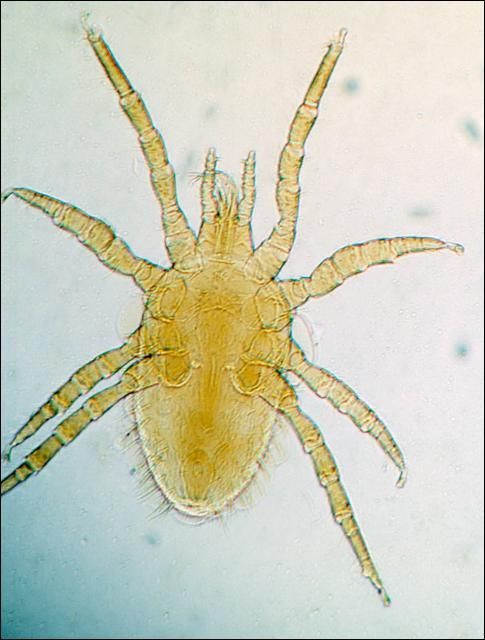
Ornithonyssus is a mite genus of the family Macronyssidae.
Opilioacarus
Opilioacarus is a genus of opilioacarid mites native to the Mediterranean region. The following species are recognised:
Opilioacarus baeticus Moraza et al. 2022, Iberian Peninsula
Opilioacarus brignolii Araújo & di Palma, 2018, Southern Italy, Sardinia
Opilioacarus italicus (With, 1904) Sicily
Opilioacarus segmentatus With, 1902 Greece, Algeria, Uzbekistan? (possibly in need of splitting)
Opilioacarus aenigmus Dunlop et al. 2004 Baltic amber, Eocene
?Opilioacarus groehni Dunlop & Bernardi, 2014 Burmese amber, Myanmar, Late Cretaceous (Cenomanian) (tentatively placed in this genus)
The followin
Ptilonyssus
Ptilonyssus is a genus of mites in the family Rhinonyssidae. There are at least 230 described species in Ptilonyssus.
Phauloppia
Phauloppia is a genus of mites belonging to the family Oribatulidae.
Rhipicentor
Rhipicentor is an African genus of hard ticks. The genus parasitises a range of domestic and sylvatic Carnivora and Mammalia hosts. The genus forms part of the Rhipicephalinae subfamily, along with Dermacentor, Margaropus, Rhipicephalus, Hyalomma and Nosomma. There are no records of Rhipicentor human parasitism, but R. nuttalli can cause tick paralysis in dogs.
Neoseiulus
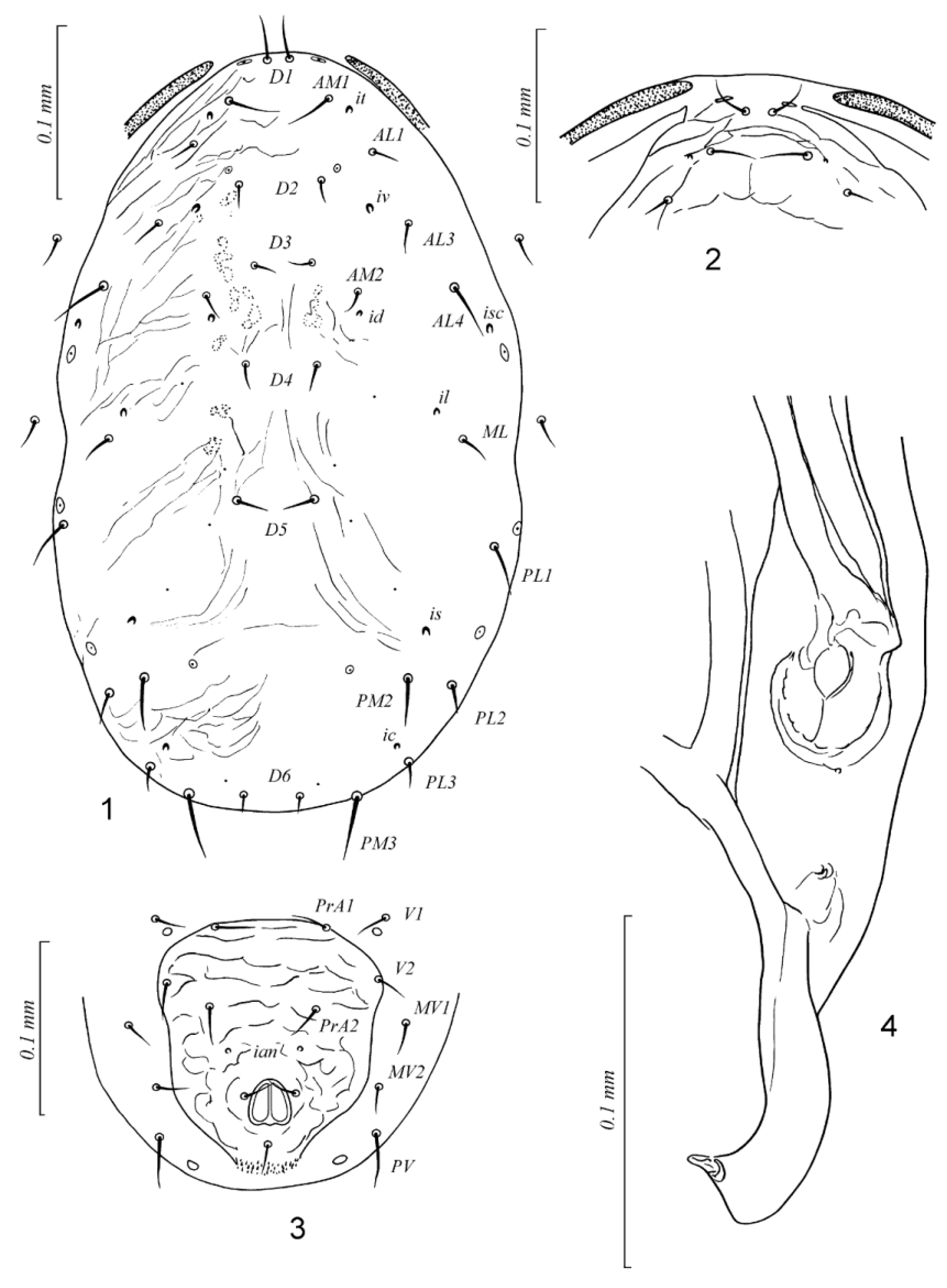
Neoseiulus is a genus of mites in the Phytoseiidae family.
Anomalohimalaya
Anomalohimalaya is a genus of hard ticks in the family Ixodidae. It contains three known species.
Phytoseiulus
Phytoseiulus is a genus of mites in the Phytoseiidae family.
Paraphytoseius
Paraphytoseius is a genus of mites in the Phytoseiidae family.
Blattisocius
Blattisocius is a genus of mites in the family Blattisociidae.
Oribotritia
Oribotritia is a genus of mites in the family Oribotritiidae.
Hoplophthiracarus
Hoplophthiracarus is a genus of mites in the family Steganacaridae.
Leptotrombidium
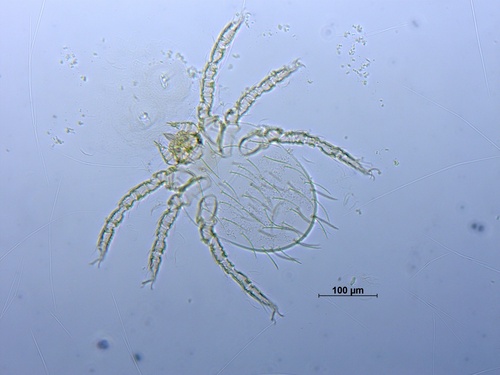
Leptotrombidium () is a genus of mites in the family Trombiculidae, that are able to infect humans with scrub typhus (Orientia tsutsugamushi infection) through their bite. The larval form (called chiggers) feeds on rodents, but also occasionally humans and other large mammals. They are related to the harvest mites of the North America and Europe.
Microtritia
Microtritia is a genus of mites in the family Euphthiracaridae.
Bothriocroton
Bothriocroton is a genus of hard ticks. There are seven extant member species, native to Australia and New Guinea. Bothriocroton species typically parasitise monotremes, marsupials, and reptiles.
Amblyseiella
Amblyseiella is a genus of mites in the Phytoseiidae family.
Sphaerozetes
Sphaerozetes is a genus of mites belonging to the family Ceratozetidae.
Belba
Belba is a genus of mites belonging to family Damaeidae. The genus was established by Carl von Heyden in 1826. Notaspis corynopus (Hermann, 1804) was the type species. Species that are part of the genus can be found in Eurasia and North America.
Oribella
Oribella is a genus of mites belonging to the family Oribellidae.
Panonychus
Panonychus is a genus of spider mites in the family Tetranychidae. There are about 16 described species in Panonychus.
Maudheimia
Maudheimia is a genus of oribatid mite, the only one in the family Maudheimiidae. All species within this genus are native to continental Antarctica. Adults generally measure around 0.6–0.7 mm in length with a lightly hardened exoskeleton compared to many other oribatid mites. They occupy ice-free areas, called nunataks, in continental Antarctica, typically found under stones, in thin soils, and among moss or lichen patches.
Nuttalliella
Nuttalliella is genus of tick. It contains a single living species, Nuttalliella namaqua found in southern Africa, having been reported from Tanzania, Namibia and South Africa, with fossil species of the genus having been reported from the mid-Cretaceous (~100 million years ago) Burmese amber of Myanmar.' It is the only living member of the family Nuttalliellidae''', and the most primitive living lineage of tick. It can be distinguished from ixodid ticks and argasid ticks by a combination of characteristics including the position of the stigmata, lack of setae, strongly corrugated integument,
Pergamasus
thumb | right | alt=An illustration of a specimen of Pergamasus | Specimen of Pergamasus
Pergamasus is a genus of mites in the family Parasitidae.
Unionicola
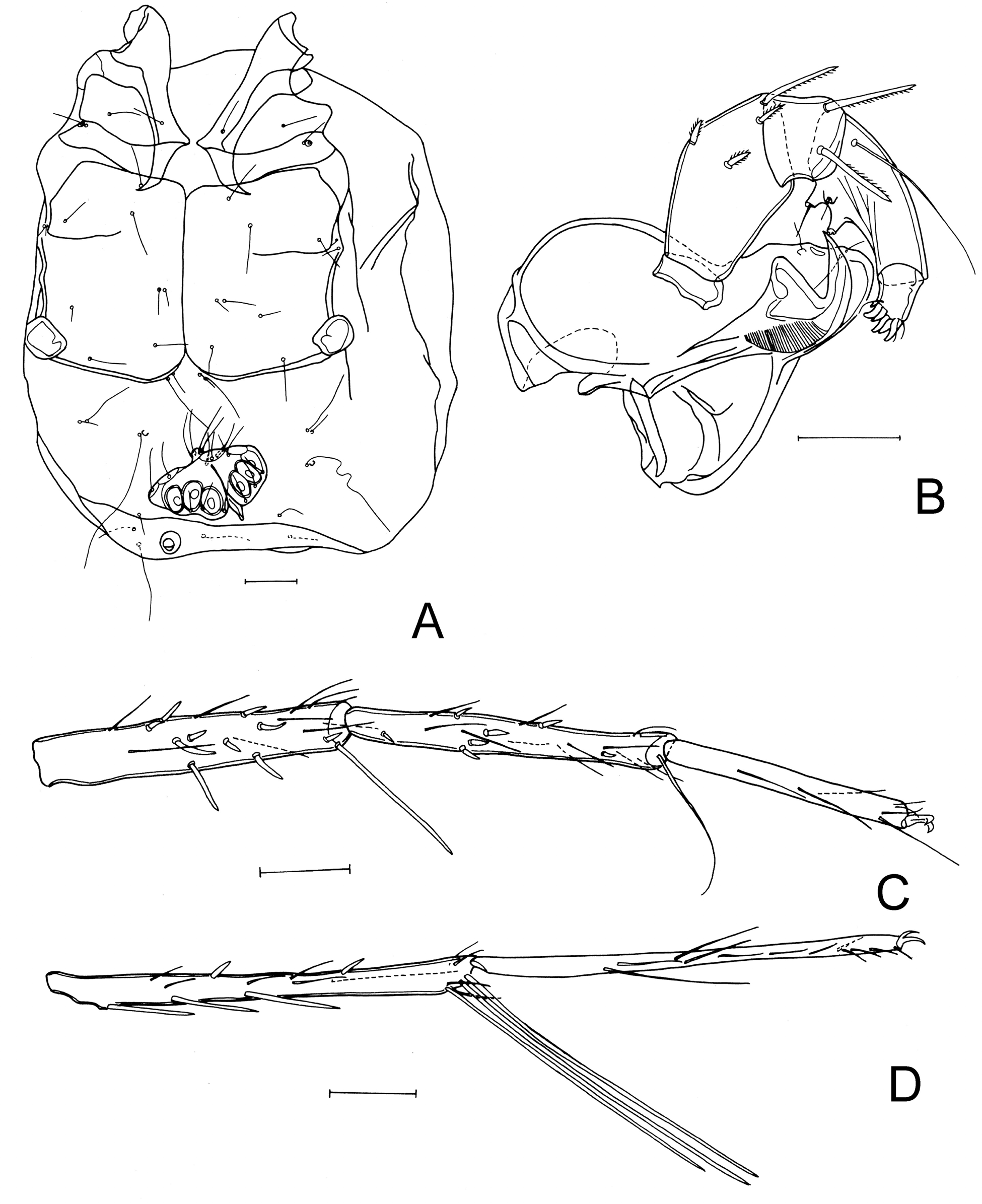
Unionicola is a genus of freshwater arachnids, specifically water mites, belonging to the family Unionicolidae. The genus was described in 1842 by Samuel Stehman Haldeman. The genus has cosmopolitan distribution.
Holothyrus
Holothyrus is a genus of mites in the order Holothyrida. It includes two species, Holothyrus coccinella and Holothyrus legendrei.

Hermannia
genus of arachnids
Amblyseiulella
Amblyseiulella is a genus of mites in the Phytoseiidae family.

Baloghia
genus of arachnids
Mononychellus
Mononychellus is a genus of mites belonging to the family Tetranychidae.
Kiwilichus
Kiwilichus is a genus of feather mites in Kiwilichidae, a monotypic family of mites that is endemic to New Zealand. Kiwi (Apteryx) are the host birds of the two species. Kiwilichus cryptosikyus is known to be hosted by southern brown kiwi (Apteryx australis) and great spotted kiwi (Apteryx haastii), and Kiwilichus delosikyus by southern brown kiwi.
Fortuynia
genus of mite
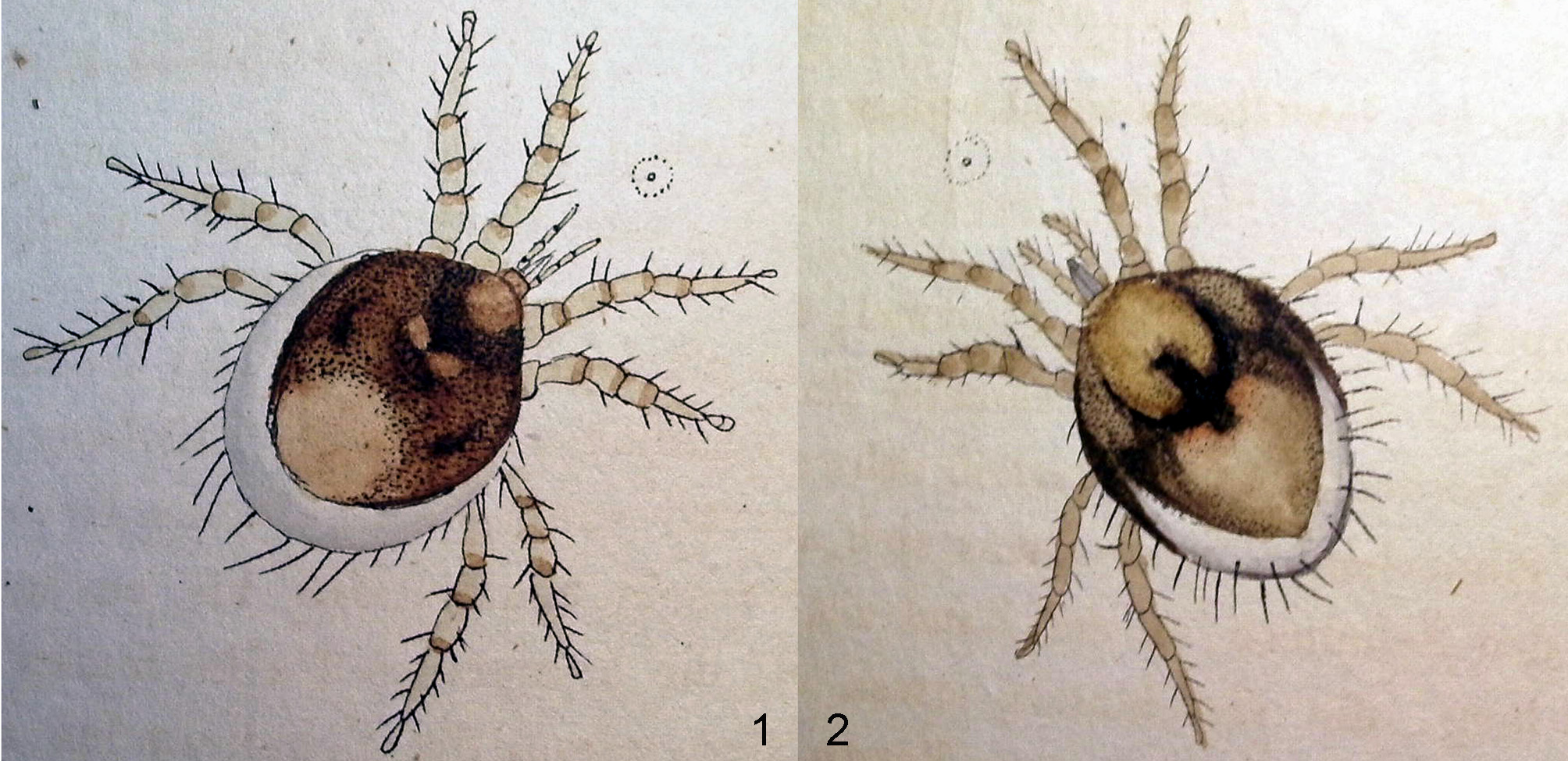
Laelaps
genus of arachnids
Oligonychus
Oligonychus is a genus of mites in the family Tetranychidae, the spider mites. Many members of this genus are familiar pests of plants. There are about 200 described species.
Zercon
Zercon is a genus of mites in the family Zerconidae. There are more than 130 described species in Zercon.
Baloghiella
genus of arachnids

Poecilochirus
Poecilochirus is a Holarctic genus of mites in the family Parasitidae. They are relatively large (ca. 0.5-1mm) and often found on rotting corpses, where they are transported by beetles. Deuteronymphs are characterized by two orange dorsal shields and in many species a transverse band on the sternal shield. The juvenile development consists of a larval stage (three pairs of legs), protonymph, and deuteronymph, but no tritonymph. Females are smaller than males. Males guard female deuteronymphs shortly before these mate, and pairs mate venter-to-venter.
Laminosioptes
Laminosioptes is a genus of mites belonging to the family Laminosioptidae.
Eutetranychus
Eutetranychus is a genus of mites belonging to the family Tetranychidae.
Synchthonius
Synchthonius is a genus of mites.
Liponyssoides
Liponyssoides is a genus of mites in the order Mesostigmata.

Nosomma
thumb|Nosomma monstrosum is known best from the Water buffalo|Asian water buffalo.
Nosomma monstrosum is a species of hard-bodied tick found in Asia. The species is found primarily on water buffalo. It is the only member of the monotypic genus Nosomma.
==Ecology and parasitism==
Nosomma monstrosum is an obligate ectoparasite of mammals, particularly Asian water buffaloes. Adults are also known from cattle, pigs, dogs, bears and horses. Instars - larvae and nymphs - are mostly known to parasitise rodents and shrews. The species is distributed across south and south-eastern Asia, being found in
Macrodinychidae
Macrodinychus (from Ancient Greek μακρός (makrós), meaning "tail", δι- (di-), meaning "two", and ὄνυξ (ónux), meaning "claw") is the sole genus in the monotypic Macrodinychidae, a family of mites in the order Mesostigmata.
Chelaseius
Chelaseius is a genus of mites in the Phytoseiidae family.
Euvarroa
Euvarroa is a genus of parasitic mesostigmatan mites associated with bees, originally placed into its own family, Varroidae, but later revised as a subfamily.
Forelia
Forelia is a genus of arachnids belonging to the family Pionidae.