Category
page 1Monotypic Fabaceae genera

Spartium junceum
Spartium junceum, known as Spanish broom, rush broom, or '''weaver's broom, it is a species of flowering plant in the family Fabaceae and the sole species in the genus Spartium'. It is closely related to the other brooms (in the genera Cytisus and Genista'').

Paubrasilia echinata
Paubrasilia echinata is a species of flowering plant in the legume family, Fabaceae, that is endemic to the Atlantic Forest of Brazil. It is a Brazilian timber tree commonly known as brazilwood (; Tupi: ) and is the national tree of Brazil. This plant has a dense, orange-red heartwood that takes a high shine, and it is the premier wood used for making bows for stringed instruments. The wood also yields a historically important red dye called brazilin, which oxidizes to brazilein.
%20Sweet%2C%201804.jpg)
Lablab purpureus
thumb|Lablab purpureus, illustration from the Japanese agricultural encyclopedia Seikei Zusetsu (1804)Lablab purpureus is a species of bean in the family Fabaceae. It is native to sub-Saharan Africa and it is cultivated throughout the tropics for food. English language common names include hyacinth bean, lablab-bean bonavist bean/pea, dolichos bean, seim or sem bean, lablab bean, Egyptian kidney bean, Indian bean, bataw and Australian pea. Lablab is a monotypic genus.

Colophospermum mopane
Colophospermum mopane, commonly called mopane, mopani, butterfly tree, turpentine tree, or balsam tree, is a tree in the legume family (Fabaceae), that grows in hot, dry, low-lying areas, in elevation, in parts of Southern Africa. The tree only occurs in Africa and is the only species in genus Colophospermum. Its distinctive butterfly-shaped (bifoliate) leaf and thin kidney-shaped/nearly semi-circular seed pod make it easy to identify.

Amherstia nobilis
Amherstia nobilis ( ; the Pride of Burma) is a tropical tree growing to about in height with large, showy flowers. It is the only member of the genus Amherstia. It is widely cultivated for ornament in the humid tropics, but is extinct in the wild, only being known from a single wild specimen which was recorded in 1865. It is thus potentially endemic in Burma (Myanmar), hence the common name, though Plants of the World Online also cites it as native in adjoining Thailand. The scientific name commemorates Lady Amherst, (as does Lady Amherst's pheasant) and also her daughter Sarah. Another common
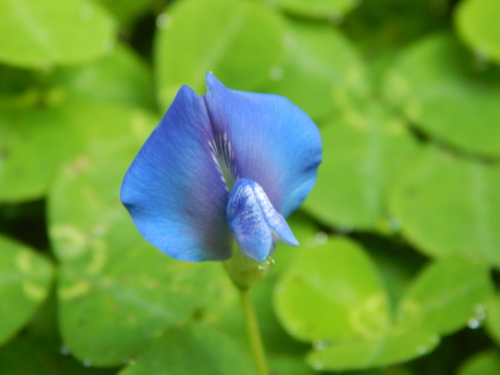
Parochetus
Parochetus communis, known in English as shamrock pea or blue oxalis, is a species of legume, and the only species in the genus Parochetus and in the subtribe Parochetinae. It is a low-growing plant with blue papilionaceous flowers and clover-like leaves. It is found in the mountains of Asia and tropical Africa, and has been introduced to New Zealand.

Duparquetia orchidacea
Duparquetia orchidacea is a liana which is native to tropical west Africa. It is the only species in the subfamily Duparquetioideae. It is found in humid tropical forests in West and Central Africa. It is a basal member of the Fabaceae, as evidenced by the distinctive structure of its flowers and wood, and phylogenetic studies.

Burkea africana
African tree species

Cordeauxia edulis
Cordeauxia edulis is a plant in the family Fabaceae and the sole species in the genus Cordeauxia. Known by the common name yeheb bush, it is one of the economically most important wild plants of the Horn of Africa, but it is little known outside of its distribution area. It is a multipurpose plant, which allows the survival of nomads by providing them with seeds. Further, the bush serves forage for livestock, firewood and dye. Its wild population is currently declining. Because it is potentially valuable for other hot, dry regions as a resource for food and fodder, it is recommended to take me

Paraserianthes
Paraserianthes lophantha (syn. Albizia lophantha), the Cape Leeuwin wattle, Bicol wattle, Cape wattle, Crested wattle, Brush wattle or plume albizia, is a fast-growing tree with creamy-yellow, bottlebrush like flowers. It is the sole species in genus Paraserianthes.
Streblorrhiza speciosa
Streblorrhiza was a monotypic genus of legumes in the family Fabaceae. Its only species was Streblorrhiza speciosa, a perennial shrub endemic to Phillip Island. It is now presumed extinct.
.jpg)
Faidherbia
Faidherbia is a genus of fabaceous plants containing one species, Faidherbia albida, which was formerly widely included in the genus Acacia as Acacia albida. The species is native to Africa and the Middle East and has also been introduced to Pakistan and India. Common names include apple-ring acacia (their circular, indehiscent seed pods resemble apple rings), white acacia, and winter thorn. The South African name is ana tree.

Podocytisus
Podocytisus caramanicus is a species of flowering plant in the family Fabaceae. It is a shrub native to the western Balkan Peninsula and southern Turkey. It is the only member of the genus Podocytisus. It belongs to the subfamily Faboideae.

Tipuana
Tipuana tipu, also known as tipa, rosewood and pride of Bolivia, is a South American tree.
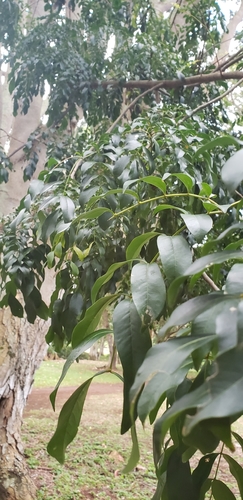
Wallaceodendron celebicum
Wallaceodendron celebicum is species of flowering plant in the legume family, Fabaceae. It is a tree native to the Philippines and Sulawesi. Typical habitat is tropical coastal and inland rain forest from sea level to 850 meters elevation. It is the sole species in genus Wallaceodendron. The genus belongs to the mimosoid clade of the subfamily Caesalpinioideae.

Schizolobium
thumb|

Fillaeopsis discophora
thumb|Fillaeopsis discophora - MHNT

Balsamocarpon brevifolium
Balsamocarpon brevifolium, or algarrobilla, is a species of flowering plants in the legume family, Fabaceae. It is the sole species in genus Balsamocarpon. Balsamocarpon belongs to the subfamily Caesalpinioideae and tribe Caesalpinieae. It is endemic to northern and north-central Chile (Atacama and Coquimbo).
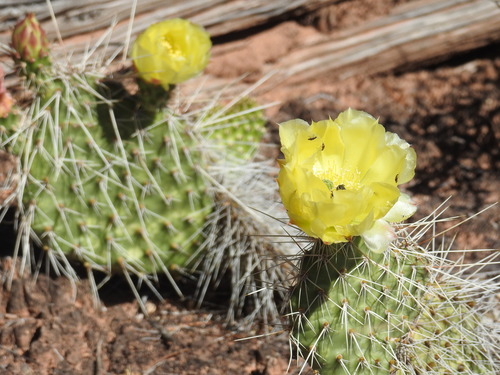
Erinacea
Erinacea anthyllis, the blue broom, hedgehog plant, or rushy kidney vetch, is a species of flowering plant in the family Fabaceae. The sole species in genus Erinacea, it is native to stony mountainous places in the western Mediterranean, including the Pyrenees of France and Spain and Morocco, Algeria, and Tunisia. It is a dwarf, spiny, evergreen shrub growing to a dome shape tall and wide. It has dense foliage, and lilac coloured pea-like flowers in late spring and early summer.

Geissaspis
Geissaspis is a genus of flowering plants in the family Fabaceae. It contains one accepted species, Geissaspis cristata. It is a scrambling annual or perennial that ranges from the Indian Subcontinent through Indochina to southern China and Peninsular Malaysia. It has three varieties:
Geissaspis cristata var. cristata
Geissaspis cristata var. malabarica
Geissaspis cristata var. tenella

Ptychosema
Ptychosema is a genus of flowering plants in the legume family, Fabaceae. It includes a single species, Ptychosema pusillum, an herbaceous perennial native to desert and dry shrubland in central and western Western Australia. It belongs to the subfamily Faboideae.
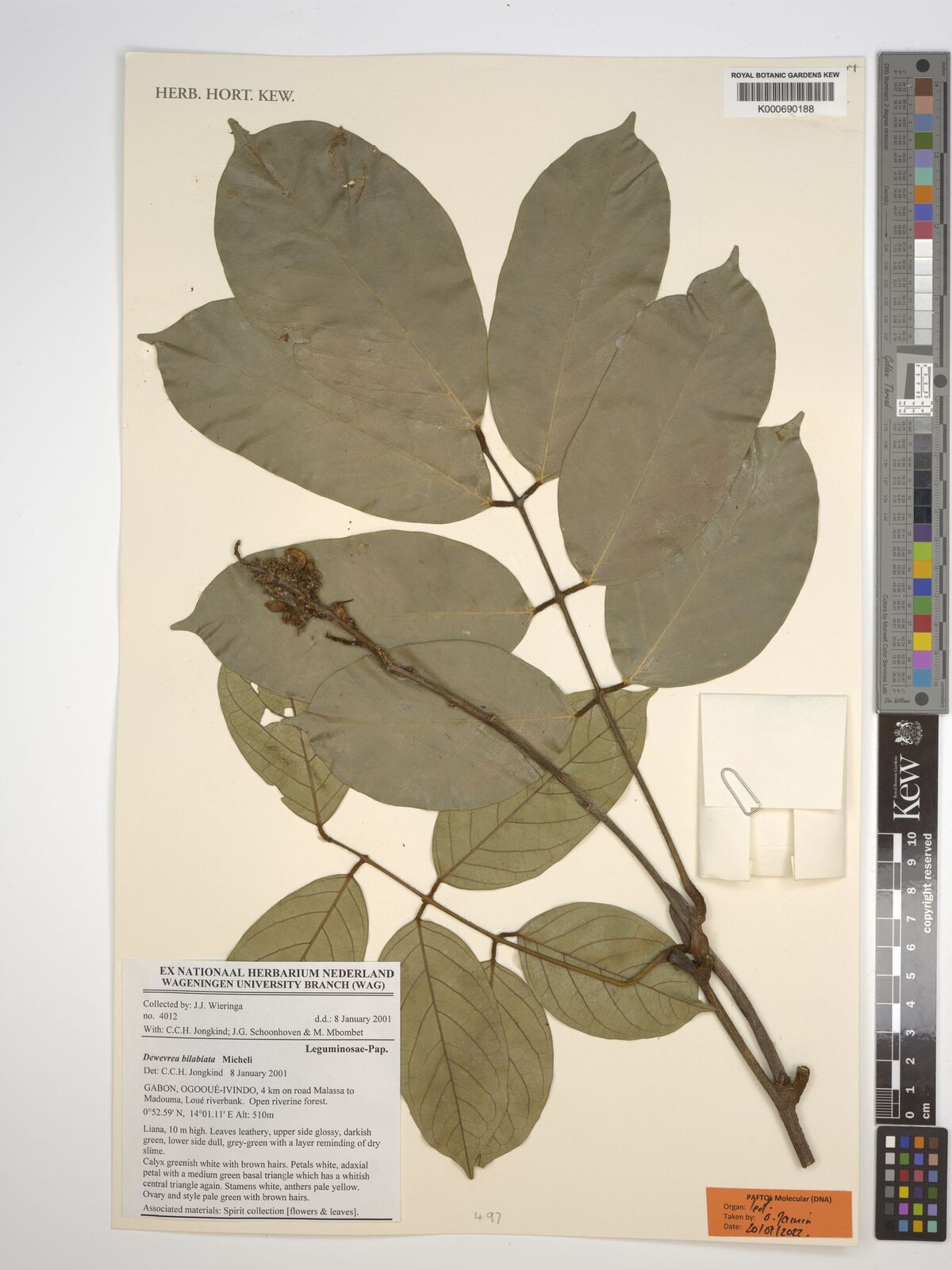
Dewevrea
Dewevrea is a genus of flowering plants in the legume family, Fabaceae. It belongs to the subfamily Faboideae and tribe Millettieae. It contains a single species, Dewevrea bilabiata, a climber native to west-central Tropical Africa, ranging from Cameroon to Central African Republic, Gabon, Republic of the Congo, Cabinda, and DR Congo.
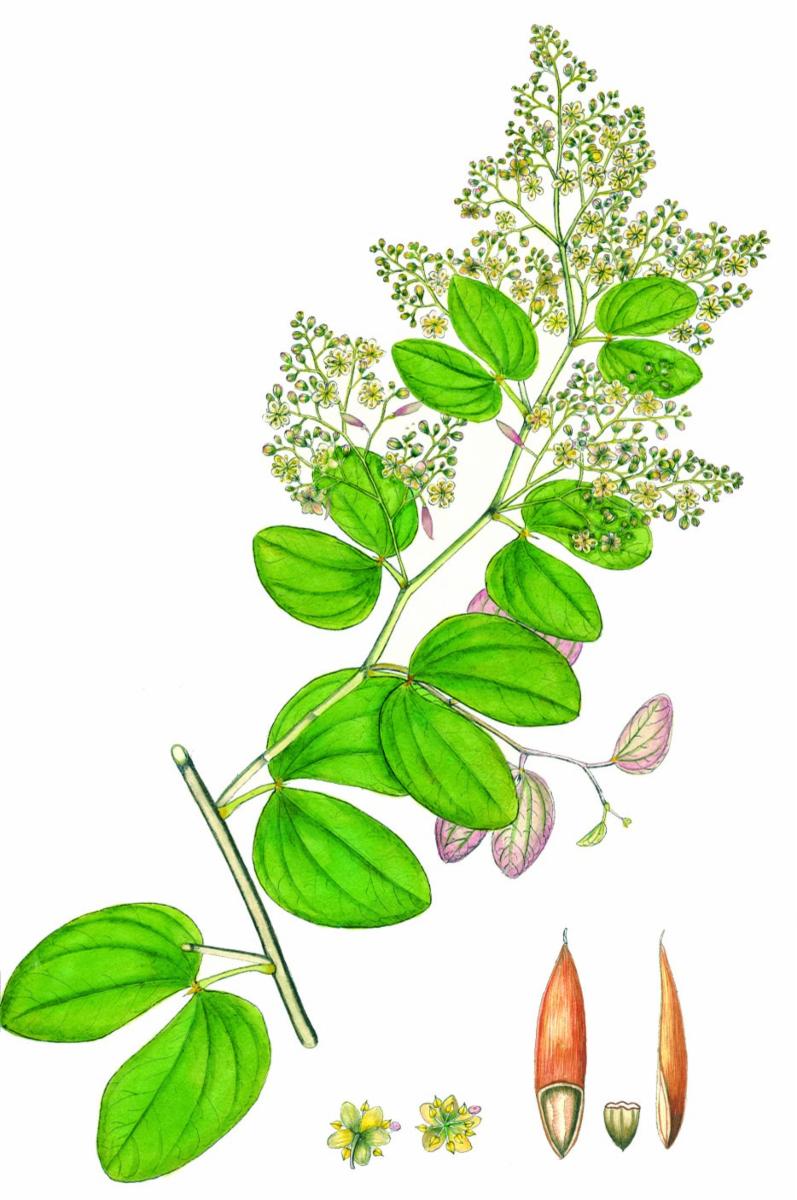
Hardwickia
Hardwickia is a monotypic genus of flowering plant in the subfamily Detarioideae of the legume family, Fabaceae. The only species is the anjan, Hardwickia binata, a tree which is native to India and Bangladesh, and which grows to height of 25-30 meters. This plant genus was named after Thomas Hardwicke by William Roxburgh.
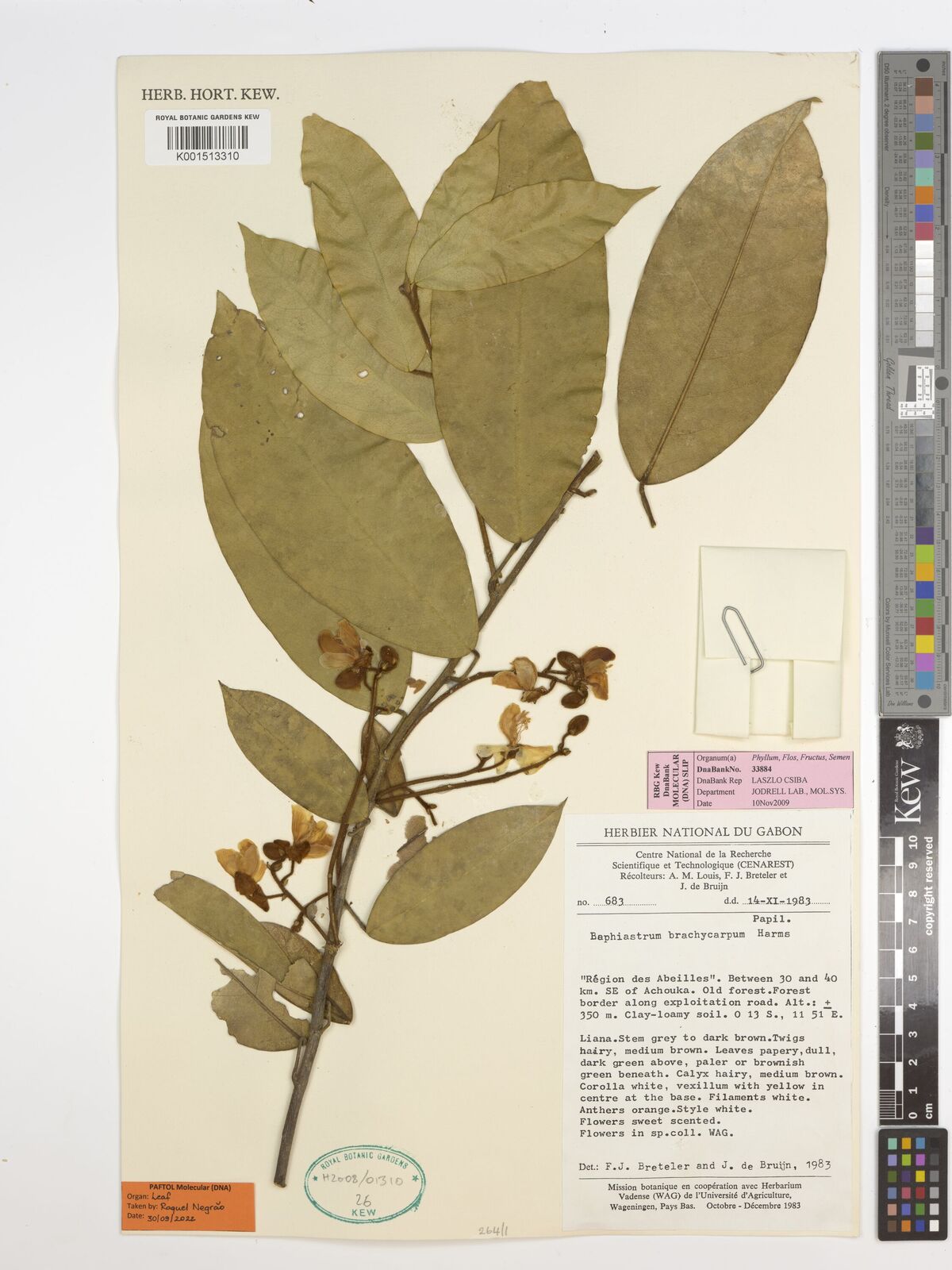
Baphiastrum
Baphiastrum is a genus of flowering plants in the legume family (Fabaceae). It includes a single species, Baphiastrum brachycarpum, a liana native to west-central Africa. It grows in Guineo-Congolian forest in Cameroon, Gabon, Republic of the Congo, Central African Republic, and Democratic Republic of the Congo.
Desmodium oojeinense
Ougeinia oojeinense, the Ujjain desmodium tree or sandan (also known as Desmodium oojeinense), is a flowering tree native to India and Nepal, and the only species in the genus Ougeinia. It usually grows 6–12 meters tall. Its leaves are quite large and trifoliate, with rigid, leathery leaflets. It can be identified by the dark brown, deeply cracked bark and the crooked trunk. The pink flowers bloom between February and May. The fruit is a linear, flat pod, light brown in colour. It is an introduced species in Pakistan.
Melanoxylum
Melanoxylum is genus of plants in the legume family, Fabaceae. It includes a single species, Melanoxylum brauna, the yellow-flowered brauna tree. It is native to eastern Brazil. The genus is part of subfamily Caesalpinioideae.

Leucomphalos
Leucomphalos is a genus of flowering plants in the legume family, Fabaceae. It contains a single species, Leucomphalos capparideus, a climbing perennial shrub native to the Guineo-Congolian forest of Nigeria, Cameroon, Equatorial Guinea, Gabon, and the Gulf of Guinea Islands. It belongs to the subfamily Faboideae. Leucomphalos was traditionally assigned to the tribe Sophoreae; however, recent molecular phylogenetic analyses reassigned Leucomphalos to the Baphieae tribe.

Acrocarpus
Acrocarpus is a genus of trees in the legume family, Fabaceae. It comprises one species, Acrocarpus fraxinifolius, the pink cedar, a large deciduous emergent tree native to Bangladesh, Bhutan, China, India, Indonesia, Laos, Myanmar, Nepal and Thailand. Its also known as Balangi or Kurungatti in India.
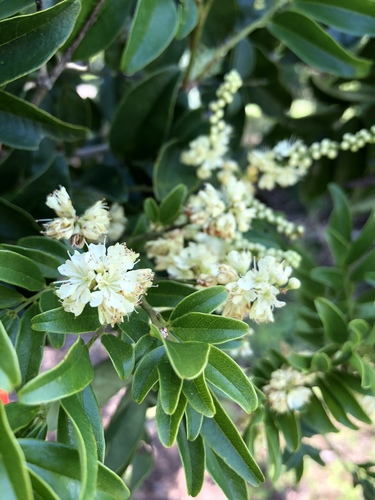
Sweetia
Sweetia fruticosa is a species of flowering plants in the legume family, Fabaceae. It is a tree native to eastern, southern, and west-central Brazil, Bolivia, Paraguay, and northeastern Argentina. It is the only member of the genus Sweetia (though some sources also include Sweetia atrata Mohlenbr.). It belongs to the subfamily Faboideae. It was traditionally assigned to the tribe Sophoreae, mainly on the basis of flower morphology; recent molecular phylogenetic analyses assigned Sweetia fruticosa into an informal, monophyletic clade called the "vataireoids".
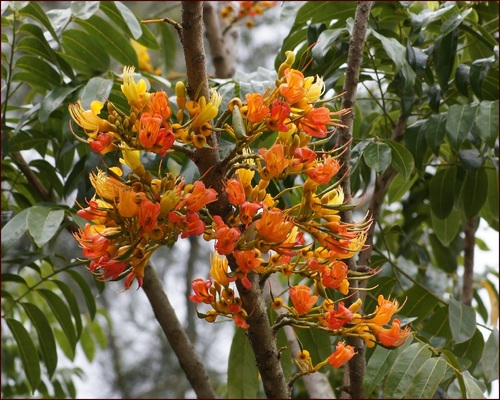
Castanospermum
Castanospermum is a monotypic genus (i.e. a genus that contains only one species) in the legume family Fabaceae. The sole species is Castanospermum australe, commonly known as Moreton Bay chestnut or black bean. It is native to rainforests on the east coast of Australia (Queensland and northeastern New South Wales), and to nearby islands of the southwest Pacific Ocean. It was first described in 1829, and has been cultivated around the world.
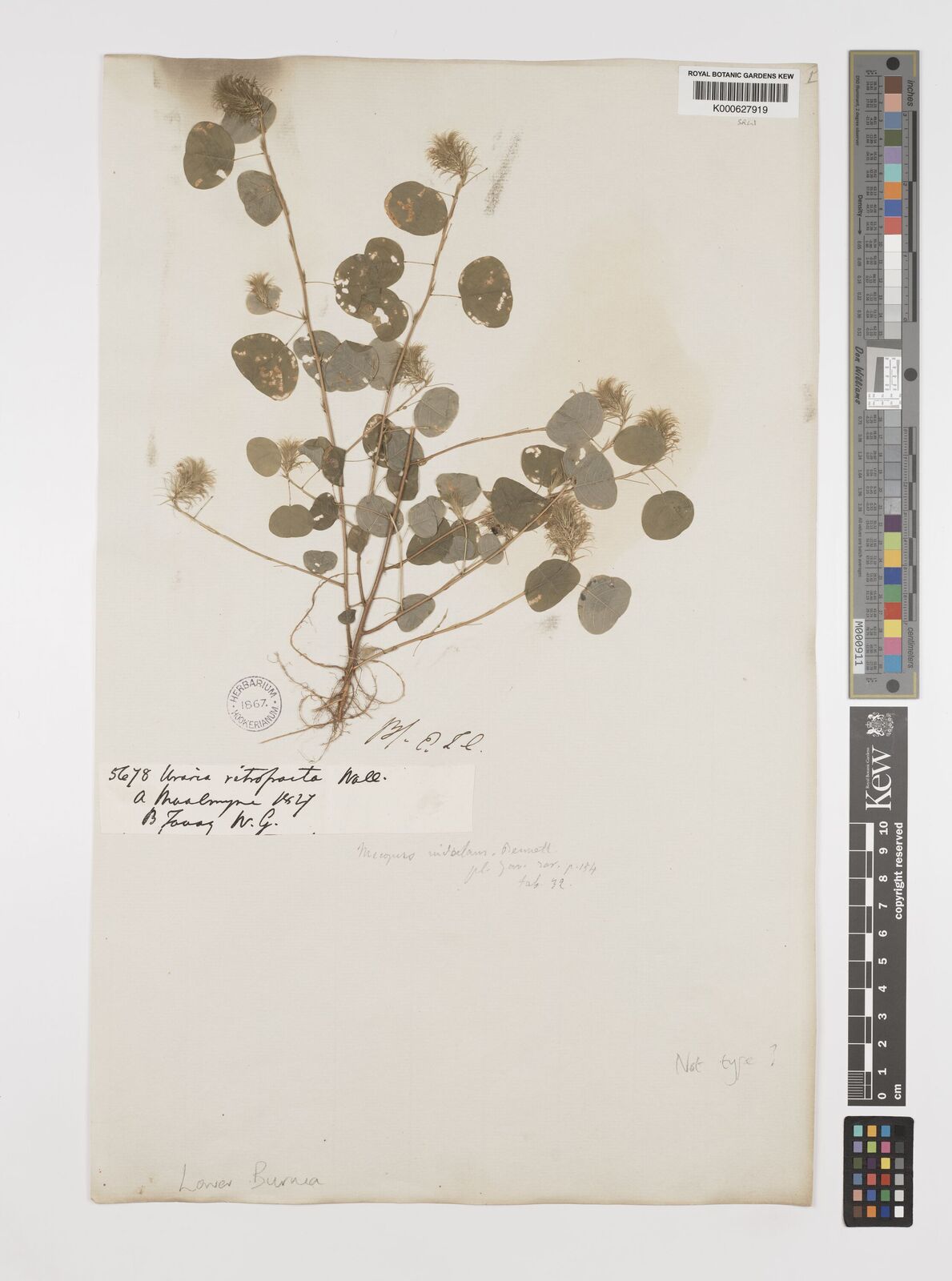
Mecopus
genus of plants

Cyclolobium
Cyclolobium brasiliense (Brazil: louveira, cabruitinga, mucitaíba; Paraguay: ysypó copi) is a species of flowering plants in the legume family, Fabaceae. It belongs to the subfamily Faboideae. It is native to Bolivia, Brazil, and Paraguay and is the only member of the genus Cyclolobium.
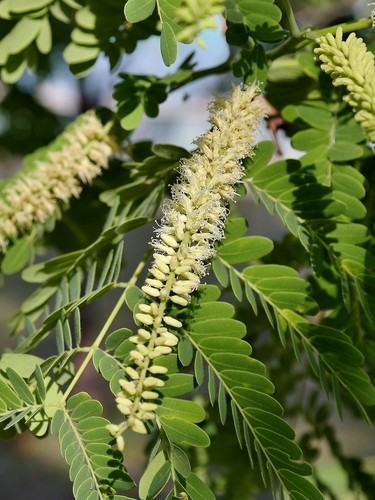
Plathymenia
Plathymenia reticulata () is a species of legume native to much of eastern South America. It is placed in its own genus, Platyhymenia, although other species have previously been recognised in that genus. It grows up to tall, and has distinctive flattened seed pods. Its wood is rot-resistant, and is widely used as a structural timber.

Craspedolobium
Craspedolobium is a genus of flowering plants in the family Fabaceae. It belongs to the subfamily Faboideae. It contains a single species, Craspedolobium unijugum, a scrambling perennial or subshrub native to Indochina and southern China. Craspedolobium schochii was formerly accepted, but has since been synonymized with C. unijugum.

Bolusafra
Bolusafra is a genus of flowering plants in the legume family, Fabaceae. It is monotypic, being represented by the single species Bolusafra bituminosa or tar pea. It is a subshrub native to the Cape Provinces of South Africa.
Piptadeniastrum
Piptadeniastrum africanum is a tall deciduous tree within the legume family, Fabaceae. It is native to the humid tropics of sub-Saharan Africa, ranging from Senegal to Sudan and Angola. It is the sole species in genus Piptadeniastrum. It is also called Piptadenia africana, and its timber is traded under the names Dabema or Dahoma. It commonly occurs in freshwater swamp forests but can also be found further north.
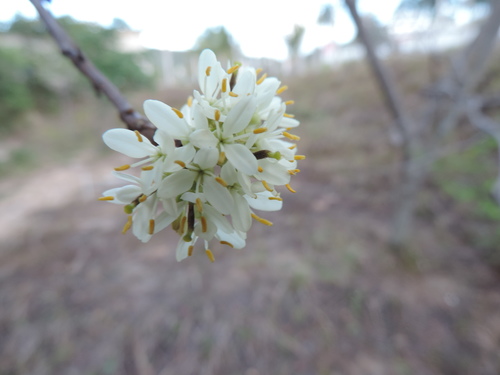
Apuleia
Apuleia is a genus of flowering plants in the family Fabaceae. It belongs to the subfamily Dialioideae. The only species in the genus is Apuleia leiocarpa. It is a tree native to northern South America, from Colombia and Venezuela to Ecuador, Peru, Bolivia, Brazil, Paraguay, Uruguay, and northeastern Argentina.
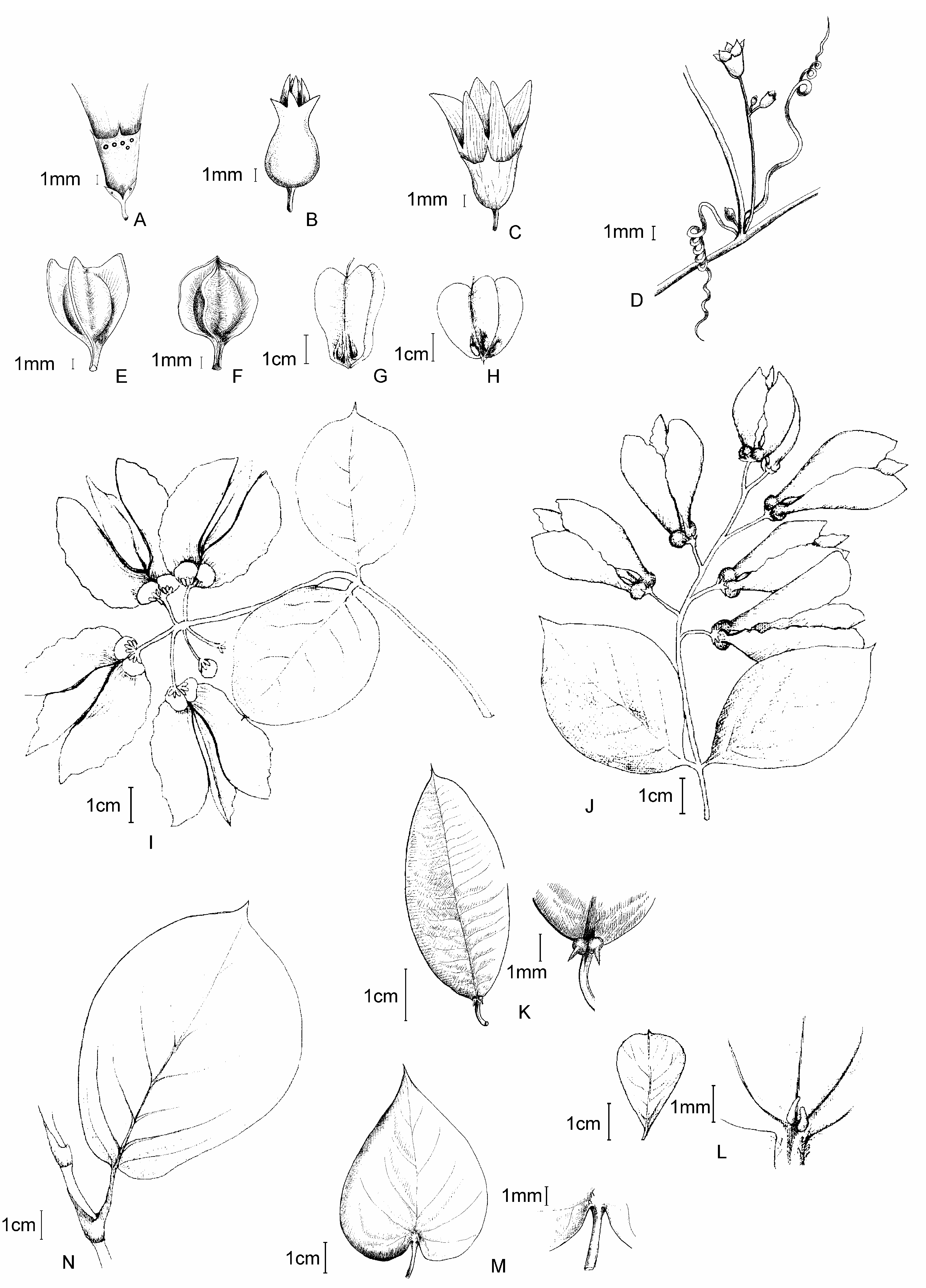
Callistachys
thumb|Habit
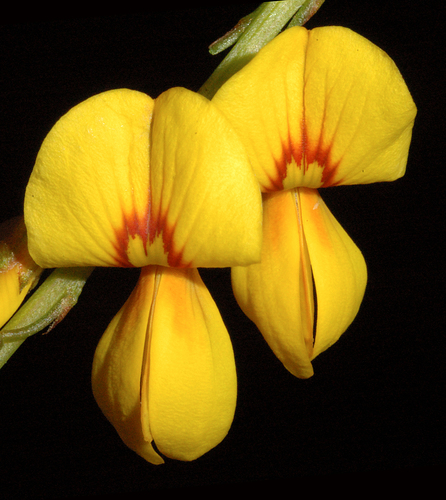
Callistachys lanceolata, commonly known as the wonnich, native willow, or greenbush is the sole species in the genus Callistachys. It is a species of erect shrub or small tree that is native to the south-west of Western Australia and is naturalised in some other Australian states.
Viminaria
Viminaria juncea is the single species in the genus Viminaria endemic to Australia. The genus is in the pea family Fabaceae. It is colloquially known as native broom after its resemblance to the related European broom plants. The Noongar peoples know the plant as koweda.
Cylicodiscus
Cylicodiscus is a genus of flowering plants in the family Fabaceae. It includes a single species, Cylicodiscus gabunensis, a tree native to the rain forests of western and west-central Africa, ranging from Côte d'Ivoire to Central African Republic and Republic of the Congo.

Tripodion
Tripodion tetraphyllum is a species of flowering plant in the legume family, Fabaceae. It is an annual herb, commonly known as annual kidney vetch, native to the Mediterranean Basin of southern Europe, North Africa, and western Asia. It grows in the Mediterranean–Sahara transition zone of North Africa, and in anthropic landscapes. It is the sole species in genus Tripodion, which belongs to subfamily Faboideae.
Normandiodendron
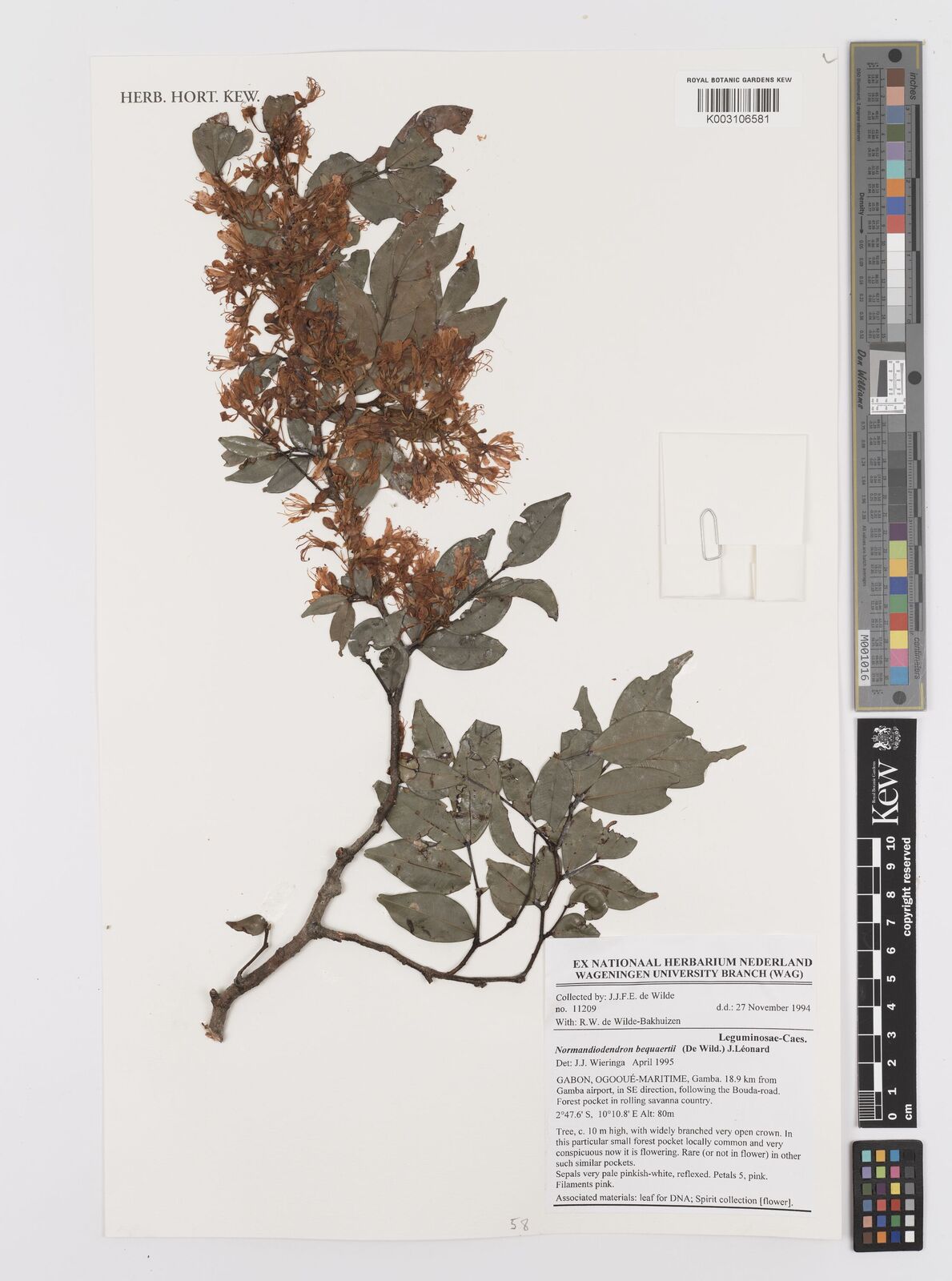
Normandiodendron is a monotypic genus of flowering plants belonging to the family Fabaceae. It only contains one known species, Normandiodendron bequaertii (De Wild.) J.Léonard
Parryella
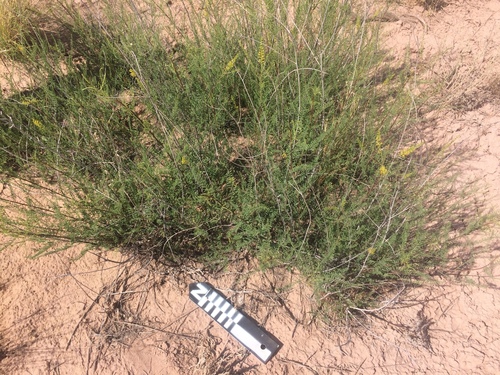
Parryella filifolia, the common dunebroom, is a species of flowering plants in the family Fabaceae. It belongs to the subfamily Faboideae. It is the only member of the genus Parryella.
It is native to Arizona, Colorado and New Mexico.

Petteria
Petteria ramentacea, commonly known as Dalmatian laburnum, is a species of flowering plant in the family Fabaceae. It is a deciduous shrub native to the western Balkan Peninsula, including Greece, Albania, Bosnia and Herzegovina, and Montenegro. It grows up to 3 meters tall, and flowers in May. It grow in shrubland and scrub from 10 to 700 meters elevation, in both sub-Mediterranean and Mediterranean habitats. It belongs to the subfamily Faboideae. It is the only member of the genus Petteria.

Thinicola incana
Thinicola incana is a species of flowering plant in the legume family, Fabaceae. It is a shrub endemic to central Western Australia. It is the sole species in genus Thinicola, which is in subfamily Faboideae.

Fissicalyx
Fissicalyx fendleri is a species of flowering plant in the legume family, Fabaceae. It is a tree native to the tropical Americas, ranging from Panama through Colombia, Venezuela, and Guyana to northern Brazil. It grows in humid lowland forest.
Ramorinoa
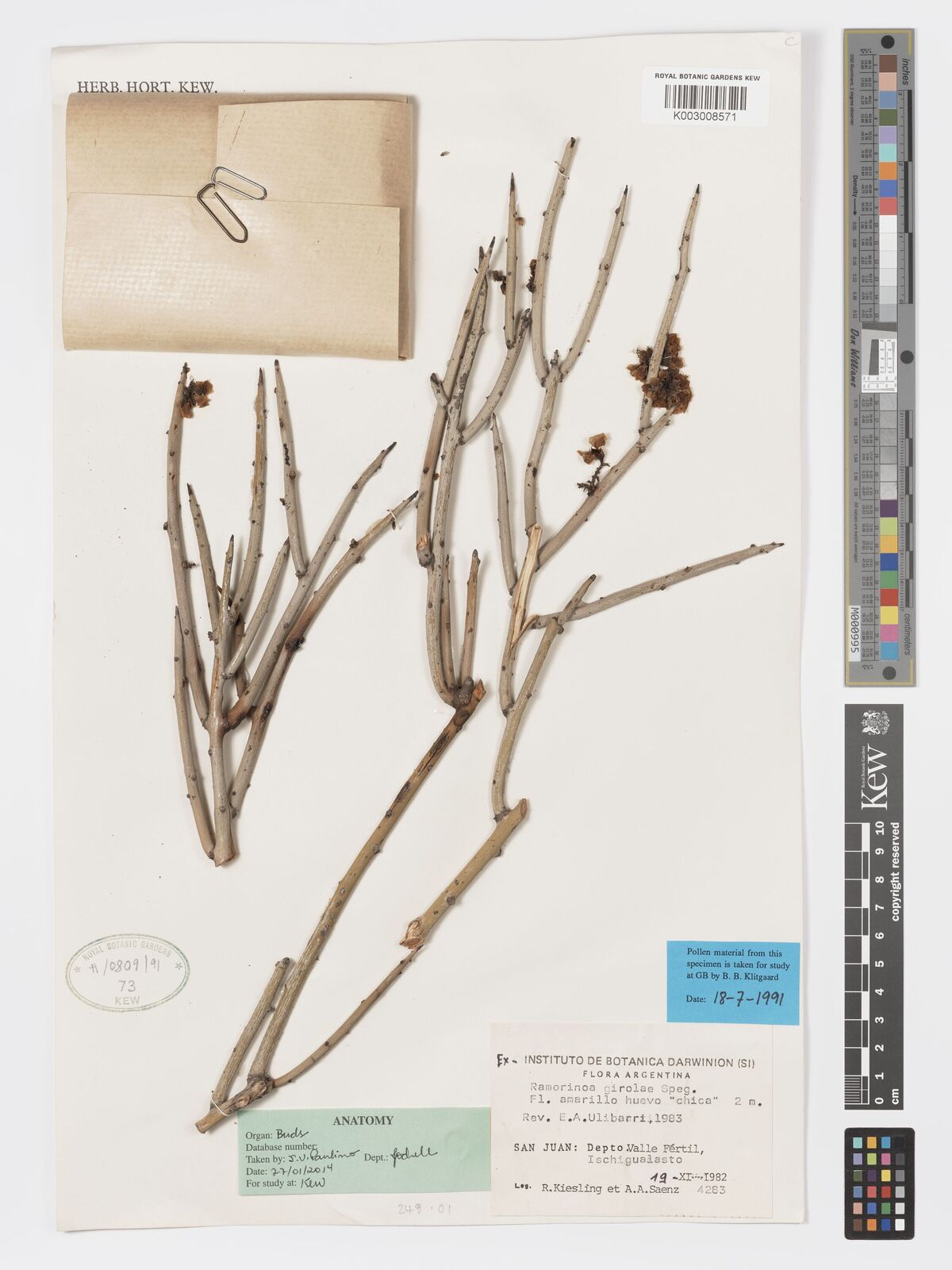
Ramorinoa girolae is a species of flowering plant in the legume family, Fabaceae. It is the sole species in genus Ramorinoa. It is a xerophytic tree or shrub native to La Rioja, San Juan, and San Luis Provinces of western Argentina. Unlike most legumes, Ramorinoa girolae does not produce any leaves. It grows in subtropical lowland and lower montane dry forest or shrubland in rocky and sandy areas. It is locally known as chica, and stands of R. girolae are known as chicales. It belongs to the subfamily Faboideae, and was recently assigned to the informal monophyletic Pterocarpus clade within th
Harleyodendron
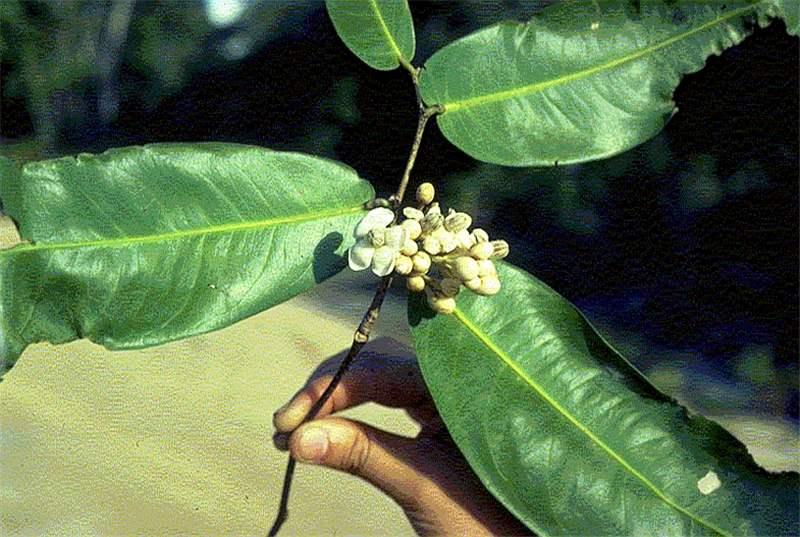
thumb | right | alt=F. Harleyodendron unifoliolatum (Fabaceae) | F. Harleyodendron unifoliolatum (Fabaceae)
Harleyodendron unifoliolatum is a species of flowering plant in the legume family, Fabaceae. It belongs to the subfamily Faboideae. It is the only member of the genus Harleyodendron. It is a tree endemic to northeastern Brazil.

Fiebrigiella
Fiebrigiella gracilis is a species of flowering plants in the legume family, Fabaceae. It is the only member of the genus Fiebrigiella. It belongs to the subfamily Faboideae, and was recently assigned to the informal monophyletic Pterocarpus clade of the Dalbergieae. It is a subshrub native to Ecuador, Peru, and Bolivia.
Sphinctospermum
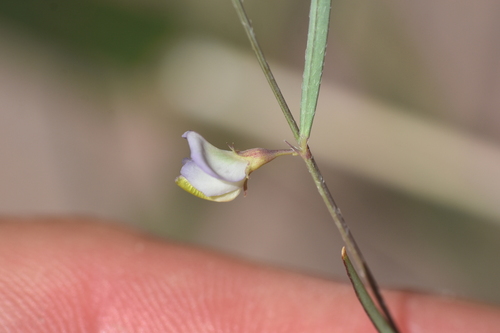
Sphinctospermum is a genus of flowering plants in the legume family, Fabaceae. It belongs to the subfamily Faboideae. It is a monotypic genus, containing the single species Sphinctospermum constrictum. It is native to North America, where it occurs in western and central Mexico and in Arizona in the southwestern United States. The plant is known by the common name hourglass peaseed.
Trifidacanthus
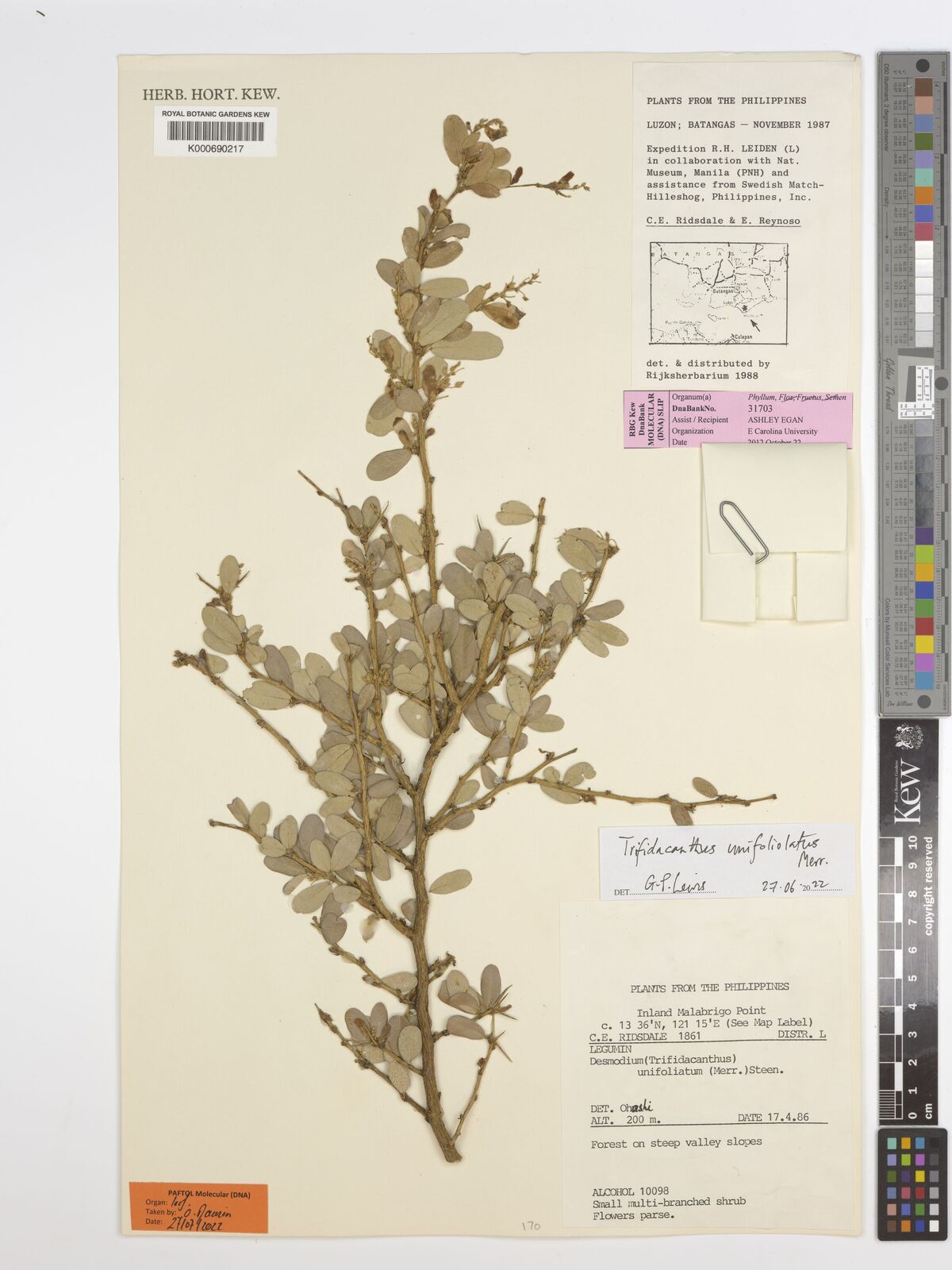
Trifidacanthus unifoliolatus is a species of flowering plant in the legume family, Fabaceae. It is a shrub native to Vietnam, Hainan, the Philippines, and the Lesser Sunda Islands. It is the sole species in genus Trifidacanthus. It belongs to subfamily Faboideae.
Piptadeniopsis
Piptadeniopsis lomentifera is a species of flowering plant in the legume family, Fabaceae. It is a tree native to southwestern Bolivia and Paraguay. It is the sole species in genus Piptadeniopsis. It belongs to the mimosoid clade of the subfamily Caesalpinioideae.
Barbieria
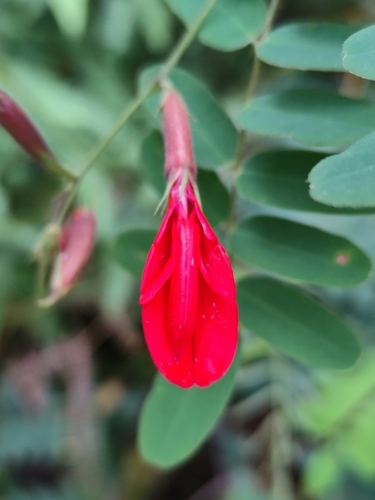
Barbieria is a genus of flowering plants in the legume family, Fabaceae. It contains a single species, Barbieria pinnata, a climber native to the tropical Americas, from southern Mexico through Central America and the Caribbean to northern South America.
Zuccagnia
Zuccagnia punctata is a species of flowering plant in the family Fabaceae. It is the sole species in genus Zuccagnia. It belongs to tribe Caesalpinieae of subfamily Caesalpinioideae.

Antopetitia
Antopetitia is a genus of flowering plants in the legume family, Fabaceae. It contains a single species, Antopetitia abyssinica, an herbaceous annual native to sub-Saharan Africa, ranging from Nigeria to Eritrea and Mozambique. It belongs to the subfamily Faboideae.

Erichsenia
Erichsenia uncinata is a species of flowering plants in the family Fabaceae. It belongs to the subfamily Faboideae. It is the only member of the genus Erichsenia. It is a subshrub native to Southwest Australia.
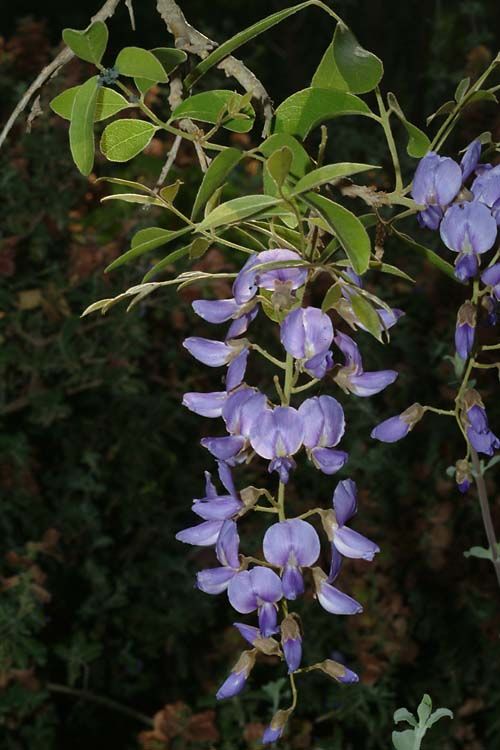
Bolusanthus
Bolusanthus speciosus (tree wisteria) is a species of flowering plants in the family Fabaceae. It belongs to the subfamily Faboideae. It is the only member of the genus Bolusanthus .
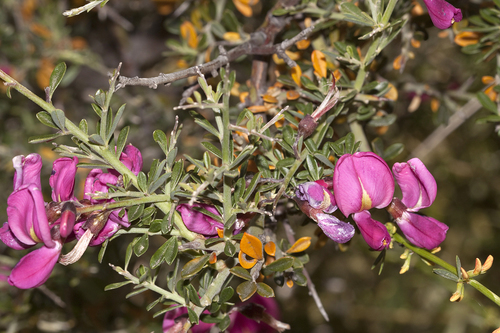
Pickeringia
Pickeringia is a monotypic genus of flowering plants in the legume family, Fabaceae. It was recently assigned to the unranked, monophyletic Cladrastis clade. It was named after the naturalist Charles Pickering. Its only species is Pickeringia montana, which is known by the common name chaparral pea. It is native to California, where its distribution extends along the Coast Ranges and the Sierra Nevada foothills, as well as the Peninsular Ranges of Southern California and northern Baja California. It is also known from Santa Cruz Island.
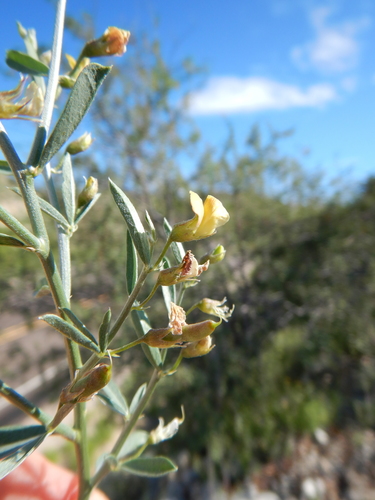
Genistidium
Genistidium is a monotypic genus of flowering plants in the legume family, Fabaceae. It belongs to the subfamily Faboideae. It contains the single species Genistidium dumosum, the brushpea. It is native to Texas and adjacent Mexico.
Pseudolotus
Pseudolotus is a monotypic genus of flowering plants belonging to the legume family, Fabaceae. The only species is Pseudolotus villosus.