Hardwickia · Kew POWO · Kew Plants of the World Online
Hardwickia
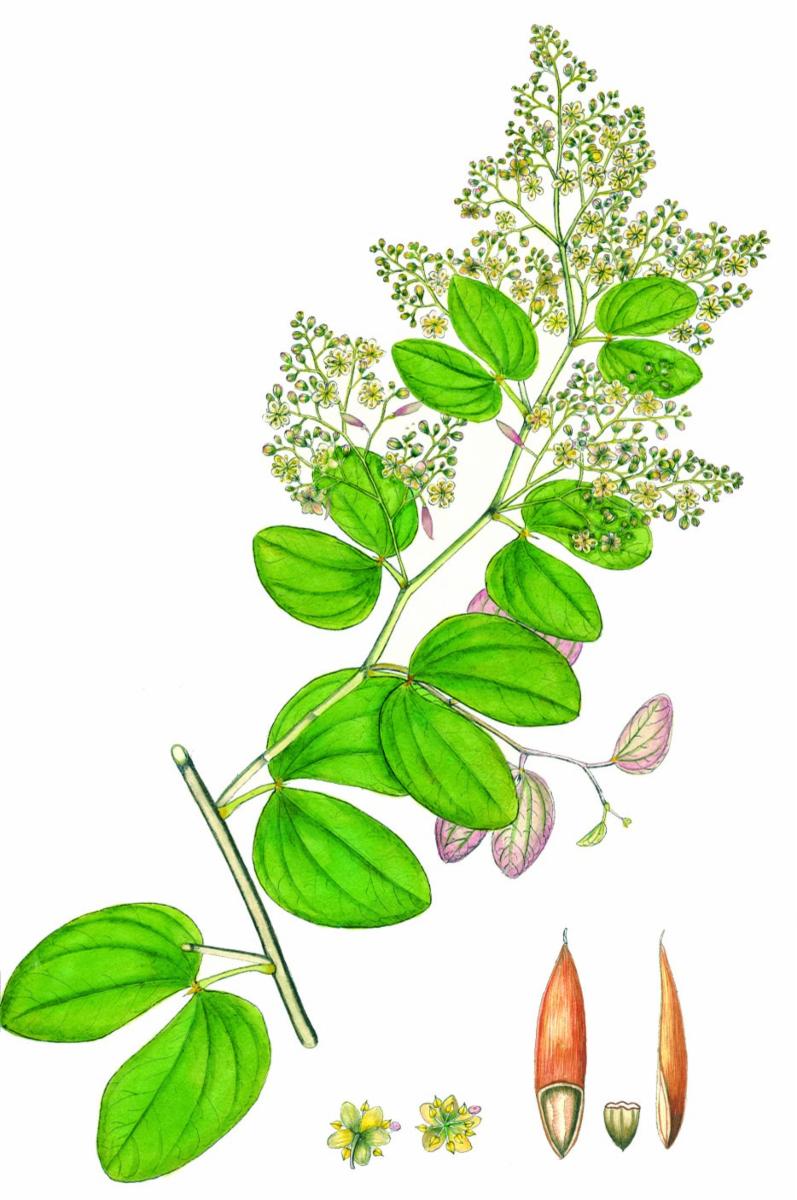
Sign in to saveHardwickia is a monotypic genus of flowering plant in the subfamily Detarioideae of the legume family, Fabaceae. The only species is the anjan, Hardwickia binata, a tree which is native to India and Bangladesh, and which grows to height of 25-30 meters. This plant genus was named after Thomas Hardwicke by William Roxburgh.
Species
GENUS
- KingdomPlantae
- PhylumTracheophyta
- ClassMagnoliopsida
- OrderFabales
- FamilyFabaceae
Use: Hardwickia binata Roxb. (anjan) is used for timber
via GBIF · Kew POWO
Wikidata facts
Show 6 more facts
- taxon name
- Hardwickia
- taxon rank
- genus
- topic's main category
- Category:Hardwickia
- Commons category
- Hardwickia
- taxon author citation
- Roxb.
Sources (2)
via Wikidata · CC0
~4 min read
Encyclopedic overview
6 sectionsContents
- Description
- Distribution and habitat
- Uses
- Cultural and religious significance
- Taxonomy
- References
Hardwickia is a monotypic genus of flowering plant in the subfamily Detarioideae of the legume family, Fabaceae. The only species is the anjan, Hardwickia binata, a tree which is native to India and Bangladesh, and which grows to height of 25-30 meters. This plant genus was named after Thomas Hardwicke by William Roxburgh.
==Description== Hardwickia binata is a moderate-sized to large tree with drooping branches. The bark of the tree is greyish-brown in colour, rough with deep cracks and it darkens with age. The compound leaves have only two leaflets which are joined at the base. The tiny, white/greenish-yellow coloured flowers are inconspicuous and are easily overlooked. The fruits are short, flat pods about 6 cm long with a single seed attached at the end. The timber obtained from the tree is durable and termite resistant, and is the hardest and heaviest among timbers from the trees found in India. The leaves are shed in April and the new leaves emerge in early May. The flowering season is during August–September, the fruits appear after the flowering season and continue to remain till May.
Excerpted from Wikipedia’s “Hardwickia” article, available under the CC BY-SA 4.0 licence.