Category
page 1Mughlai cuisine

sherbet
sweet drink
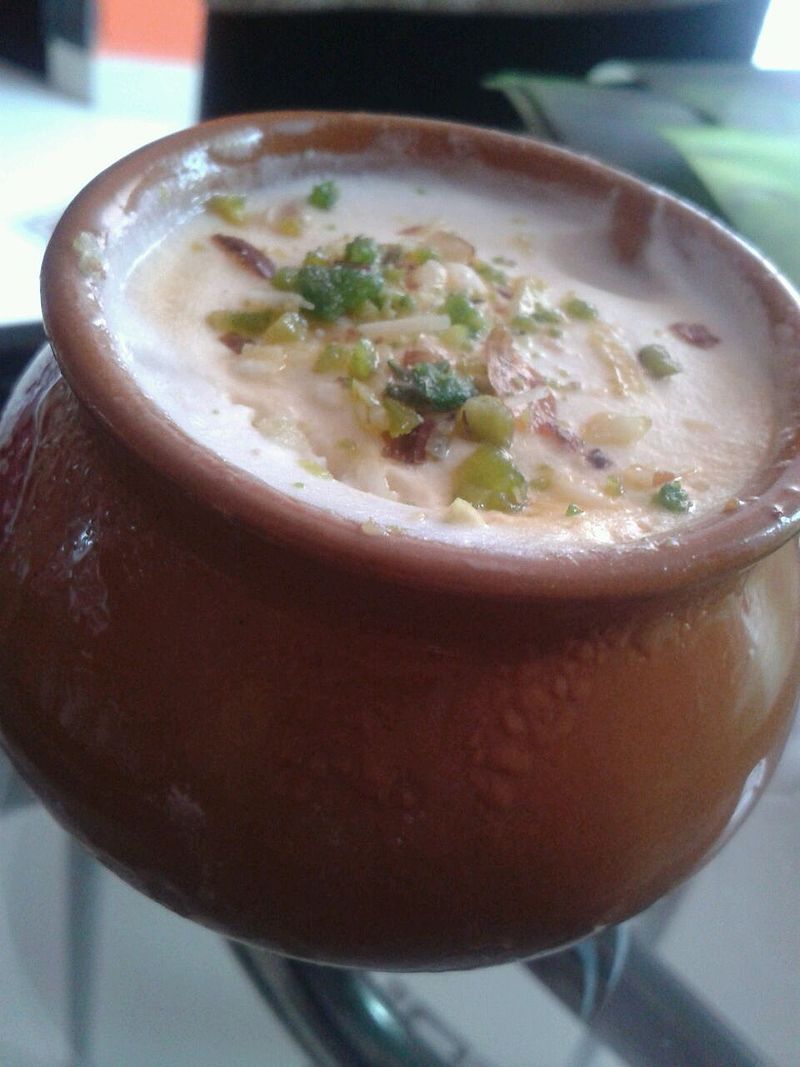
Kulfi
Kulfi () is a frozen dairy dessert from the Indian subcontinent. It is often described as "traditional Indian ice cream". Kulfi originated in 16th-century Delhi during the Mughal era.

raita
Raita is a side dish and condiment in Indian cuisine made of dahi (yogurt or "curd") together with raw or cooked vegetables, fruit, or pulses. The yogurt may be seasoned with herbs and spices such as coriander, roasted cumin seeds, mint, and cayenne pepper.

korma
Korma, kurma, qorma or qurma (; ; ; ; ) is a curry dish originating in the Indian subcontinent influenced by Mughlai cuisine, versions of which later were modified to Anglo-Indian and then to British tastes. It consists of meat or vegetables braised with yogurt, water or stock, and spices to produce a thick sauce or gravy. The flavours of kormas are less intense than those of meat-containing dishes, and the fragrances more aromatic.
butter chicken
Indian curry dish
falooda
A falooda or faluda () is a Mughlai cold dessert made with vermicelli. It has origins in the Persian dish faloodeh, variants of which are found across West, Central, South and Southeast Asia. Traditionally, it is prepared by mixing rose syrup, vermicelli, and sweet basil seeds with milk, often served with kulfi. The vermicelli used for preparing falooda is made from wheat, arrowroot, cornstarch, or sago.

nihari
Nihari (Hindi: , Urdu: ) is a stew of the Indian subcontinent, which consists of slow-cooked meat, mainly a shank cut of beef, lamb and mutton, or goat meat, as well as chicken and bone marrow. The two most common theories of origin postulate that nihari originated either in the Indian cities of Lucknow or Delhi. It is flavoured with long pepper (pippali), a relative of black pepper and is often served with naan, roti or rice.
Rogan josh
Aromatic curried meat
Shami kebab
variety of kebab, originating from the Indian subcontinent; consists of a small patty of minced meat (often lamb or mutton, occasionally chicken), with ground chickpeas, egg to hold it together, and spices

Sheermal
Sheermal (Persian/Urdu: , ,:, also spelled shirmal, is a saffron-flavored traditional flatbread eaten in Iran and the Indian subcontinent. The word sheermal is derived from the Persian words شیر (translit. sheer, Sanskrit kshir) meaning milk, and مالیدن (translit. malidan), meaning to rub or to knead. In a literal translation, sheermal means milk-rubbed. It was introduced to North India by the Mughal emperors during the medieval period. It became part of Lucknow, Hyderabad and Aurangabad. It is also part of Awadhi cuisine and is eaten in Bhopal and brought to Pakistan post partition.
Mughlai cuisine
"Mughal" style of cooking
Rumali Roti
Types of flatbreads

Pasanda
Pasanda (, ), also called parche (, ), is a popular curry from the Indian subcontinent. It is derived from a style of food served in the court of the Mughal emperors. In a pasanda, the meat is marinated in yoghurt and spices. After cooking, cream is added to the sauce. It has become a standard type of curry served in British Indian restaurants.
Mughlai paratha
popular street food originated in Bengal
Murgh Musallam
dish from the Indian subcontinent
paya
South Asian spicy meat soup or curry

Hyderabadi haleem
type of haleem popular in the Indian city Hyderabad
Dum pukht
Cooking technique
Awadhi cuisine
culinary traditions of Awadh

Hyderabadi cuisine
native cooking style of the Hyderabadi Muslims
Tunde ke kabab
Buffalo meat galouti kebab, is a popular dish in Lucknow, India
Shahi Tukra
mughlai cuisine bread pudding
Naan qalia
Shab Deg
kashmiri dish