Category
page 1Mythological substances
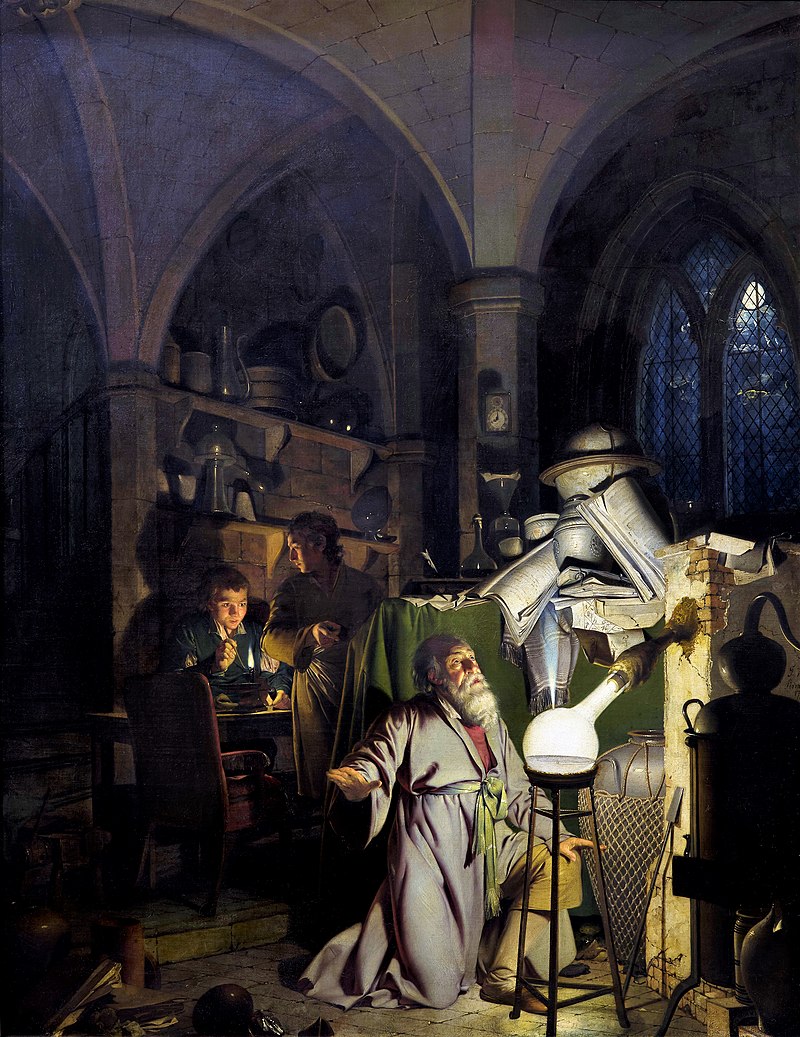
philosopher's stone
legendary alchemical substance

four temperaments
thumb|16th-century German illustration of the four humors: Flegmat (phlegm), Sanguin (blood), Coleric (yellow bile) and Melanc (black bile), divided between the male and female sexes
Humorism, the humoral theory, or humoralism, was a system of medicine detailing a supposed makeup and workings of the human body, adopted by Ancient Greek and Roman physicians and philosophers.
aether
classical element in philosophy and cosmology symbolising universe

Cintāmaṇi
thumb|572x572px|Japanese depiction of Lakshmi (Kichijōten), bearing the Cintāmani
Cintāmaṇi (Sanskrit; Devanagari: ; ; ; Korean: 여의보주/Yeouiboju; Japanese Romaji: ), also spelled as Chintamani (or the Chintamani Stone), is a wish-fulfilling jewel resembling a pearl described in Hindu and Mahayana Buddhist traditions. It is one of several Mani Jewel images found in Buddhist scripture.

orichalcum
Orichalcum (or aurichalcum) or orichalc is a metal mentioned in several ancient writings, including the story of Atlantis in the Critias of Plato. Within the dialogue, Critias (460–403 BC) says that orichalcum had been considered second only to gold in value and had been found and mined in many parts of Atlantis in ancient times, but that by Critias's own time, orichalcum was known only by name.
-Griechische%20Bilderchroniken-pl%20II-Sarti%20tabuli%20iIliaca-detail.jpg)
ichor
In Greek mythology, ichor () is the ethereal fluid making up the blood of the gods and/or immortals. The Ancient Greek word () is of uncertain etymology, and has been suggested to be a foreign word, possibly the pre-Greek substrate.
Adamant
Adamant in classical mythology is an archaic form of diamond. In fact, the English word diamond is ultimately derived from adamas, via Late Latin and Old French . In ancient Greek (), genitive (), literally 'unconquerable, untameable'. In those days, the qualities of hard metal (probably steel) were attributed to it, and adamant became an independent concept as a result.

alkahest
thumb|Image of Alchimia, the embodiment of alchemy. Woodcut published by Leonhard Thurneysser in 1574. Thurneysser was a student of Paracelsus.

toadstone
thumb|Collection of a Toadstone, illustrated in Hortus Sanitatis, published in [[Mainz in 1491.]]
thumb|Lower jaw fragment of Scheenstia, showing the teeth in situ
The toadstone, also known as bufonite (from Latin , "toad") and crapaud-stone, is a mythical stone or gem that was thought to be found in the head of a toad. It was supposed to be an antidote to poison and in this it is like batrachite, supposedly formed in the heads of frogs. Toadstones were actually the button-like fossilised teeth of Scheenstia (previously Lepidotes), an extinct genus of ray-finned fish from the Jurassic and Cret
prima materia
ubiquitous starting material required for the alchemical magnum opus and the creation of the philosopher's stone
Solomon's shamir
mythical worm or substance
Xirang
Xirang () was a magical soil in Chinese mythology with the ability to self-expand and grow continuously. Its properties made it particularly effective for use by Gun and Yu the Great in fighting the rising waters of the Great Flood.