Category
page 1Natural disasters

earthquake
thumb|upright=1.35|Earthquake epicenters occur mostly along tectonic plate boundaries, especially on the Pacific [[Ring of Fire.]]

flood
thumb|Urban flooding in a street in Morpeth, England, 2008

tornado
A tornado, also known as a twister, is a rapidly rotating column of air that extends vertically from the surface of the Earth to the base of a cumulonimbus or cumulus cloud. Tornadoes are often (but not always) visible in the form of a condensation funnel originating from the cloud base, with a cloud of rotating debris and dust close to the ground. Most tornadoes have wind speeds less than , are about across, and travel several kilometers (a few miles) before dissipating. The most extreme tornadoes can attain wind speeds of more than , can be more than in diameter, and can stay on the ground f

natural disaster
major adverse event resulting from natural processes of the Earth, which may cause loss of life or property
.jpg)
storm
thumb|A storm seen at the Baltic Sea near the island of [[Öland, Sweden.]]

avalanche
thumb|upright=1.25|A powder snow avalanche in the Himalayas near [[Mount Everest]]
An avalanche is a rapid flow of snow down a slope, such as a hill or mountain. Avalanches can be triggered spontaneously, by factors such as increased precipitation or snowpack weakening, or by external means such as humans, other animals, and earthquakes. Primarily composed of flowing snow and air, large avalanches have the capability to capture and move ice, rocks, and trees.

thunder
Thunder is the sound caused by lightning. Depending upon the distance from and nature of the lightning, it can range from a long, low rumble to a sudden, loud crack. The sudden increase in temperature and hence pressure caused by the lightning produces rapid expansion of the air in the path of a lightning bolt. In turn, this expansion of air creates a sonic shock wave, often referred to as a "thunderclap" or "peal of thunder". The scientific study of thunder is known as brontology and the irrational fear (phobia) of thunder is called brontophobia.

drought
A drought is a period of drier-than-normal conditions. A drought can last for days, months or years. Drought often has large impacts on the ecosystems and agriculture of affected regions, and causes harm to the local economy. Annual dry seasons in the tropics significantly increase the chances of a drought developing, with subsequent increased wildfire risks. Heat waves can significantly worsen drought conditions by increasing evapotranspiration. This dries out forests and other vegetation, and increases the amount of fuel for wildfires.

landslide
thumb|right|A landslide near Cusco, Peru, in 2018
thumb|A NASA model has been developed to look at how potential landslide activity is changing around the world.
thumb|Animation of a landslide in San Mateo County, California in the United States
thumb|Landslips
thumb|Noire River (Sainte-Anne River tributary)|Noire River (Rivière Noire), Saint-Alban landslide 1894, [[Quebec, Canada]]
Landslides, also known as landslips, rockslips or rockslides, are several forms of mass wasting that may include a wide range of ground movements, such as rockfalls, mudflows, shallow or deep-seated slope failures

heat wave
prolonged period of excessively hot weather

wildfire
thumb|upright=1.35|Wildfire burning in the Kaibab National Forest, [[Arizona, United States, in 2020. The Mangum Fire burned more than of forest.]]
A wildfire, forest fire, or a bushfire is an unplanned and uncontrolled fire in an area of combustible vegetation. Some natural forest ecosystems depend on wildfire. Modern forest management often engages in prescribed burns to mitigate fire risk and promote natural forest cycles. However, controlled burns can turn into wildfires by mistake.

extinction event
widespread and rapid decrease in the amount of life on earth
.jpg)
doline
thumb|The Red Lake (Croatia)|Red Lake sinkhole in [[Croatia]]
A sinkhole is a depression or hole in the ground caused by some form of collapse of the surface layer. The term is sometimes used to refer to doline, enclosed depressions that are also known as shakeholes, and to openings where surface water enters into underground passages known as ponor, swallow hole or swallet. A cenote is a type of sinkhole that exposes groundwater underneath. Sink and stream sink are more general terms for sites which drain surface water, possibly by infiltration into sediment or crumbled rock.
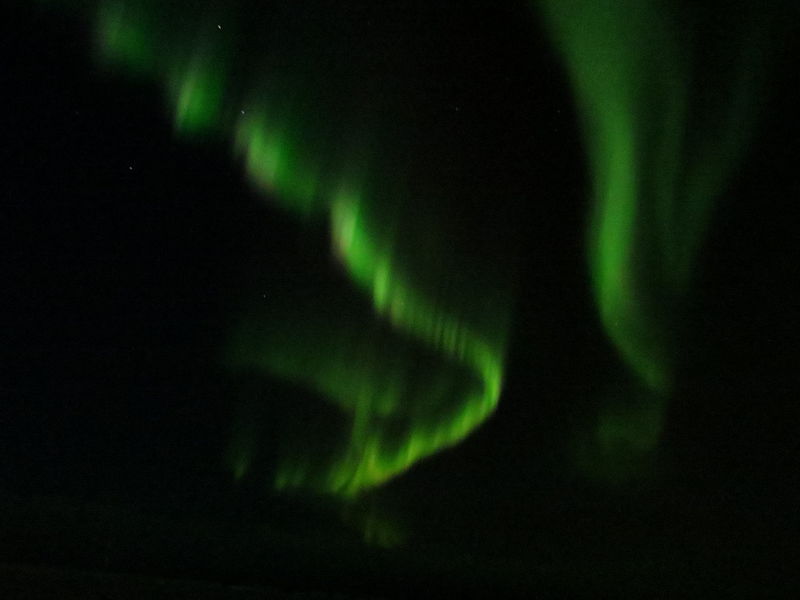
geomagnetic storm
temporary disturbance of the Earth's magnetosphere caused by a disturbance in the interplanetary medium

mudflow
thumb|Mailboxes caught in a mudflow following the May 1980 Mount St. Helens volcanic eruption.

impact event
collision of two astronomical objects with measurable effects
soil liquefaction
geological phenomenon when soil material that is ordinarily a solid behaves like a liquid
limnic eruption
very rare type of natural disaster in which dissolved carbon dioxide (CO2) suddenly erupts from deep lake waters, forming a gas cloud capable of suffocating wildlife, livestock, and humans
cold wave
weather phenomenon
Mediterranean tropical cyclone
meteorological phenomenon observed over the Mediterranean Sea
debris flow
geological phenomena in which water-laden masses of soil and fragmented rock rush down mountainsides
disaster risk reduction
systematic approach to identifying, assessing and reducing the risks of disaster
act of God
usually-natural disaster outside human control, for which no person is at fault
tornado outbreak
occurrence of multiple tornadoes spawned by the same synoptic-scale weather system
Skyquake
A skyquake is a phenomenon where a loud sound is reported to originate from the sky. It often manifests as a banging, or a horn-like noise. The sound may cause noticeable effects on buildings, including vibration in ceilings or across the walls of a particular room. Those who experience skyquakes typically do not have a clear explanation for what caused them and they are perceived as mysterious. They have been heard in several locations around the world, typically in areas close to lakes and other bodies of water. Reports of skyquakes have come from the North Sea, the Ganges, Canada, Colombia,
list of countries by natural disaster risk
Wikimedia list article
climate risk management
a generic term referring to a large and growing body of work, bridging the climate change adaptation, disaster management and development sectors
Humanitarian principles
Ideas regarded as central to humanitarianism
mass mortality event
incident that kills a vast number of a single species in a short period of time