Category
page 1Near-Earth-sized exoplanets in the habitable zone
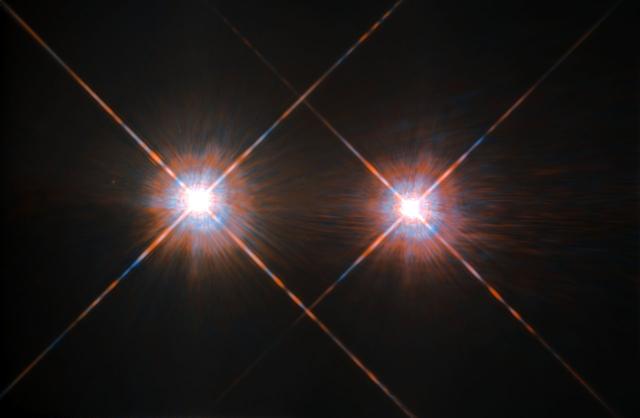
Proxima Centauri b
extrasolar planet

Kepler-186 f

TRAPPIST-1e
TRAPPIST-1e is a rocky, close-to-Earth-sized exoplanet orbiting within the habitable zone around the ultracool dwarf star TRAPPIST-1, located away from Earth in the constellation of Aquarius. Astronomers used the transit method to find the exoplanet, a method that measures the dimming of a star when a planet crosses in front of it.
Ross 128 b
exoplanet

Kepler-442b
Kepler-442b (also known by its Kepler object of interest designation KOI-4742.01) is a confirmed near-Earth-sized exoplanet, likely rocky, orbiting within the habitable zone of the K-type main-sequence star Kepler-442, about from Earth in the constellation of Lyra.
Q17057997

TRAPPIST-1 d
TRAPPIST-1d is a small exoplanet (about 40 percent the mass of the Earth), which orbits on the inner edge of the habitable zone of the ultracool dwarf star TRAPPIST-1, located away from Earth in the constellation of Aquarius. The exoplanet was found by using the transit method. The first signs of the planet were announced in 2016, but it was not until the following years that more information concerning the probable nature of the planet was obtained. TRAPPIST-1d is the second-least massive planet of the system. It receives just 4.3% more sunlight than Earth, placing it on the inner edge of the
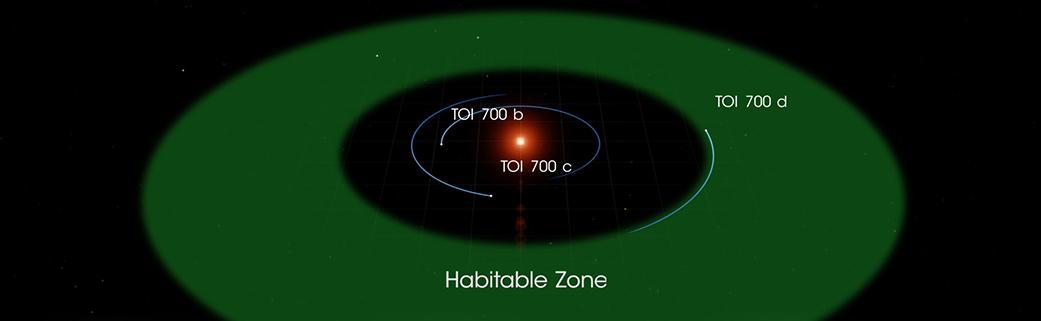
TOI-700 d
exoplanet around TOI-700

TRAPPIST-1 g
TRAPPIST-1g is an exoplanet orbiting around the ultra-cool dwarf star TRAPPIST-1, located away from Earth in the constellation Aquarius. It was one of four new exoplanets to be discovered orbiting the star in 2017 using observations from the Spitzer Space Telescope. The exoplanet is within the optimistic habitable zone of its host star. It was found by using the transit method, in which the dimming effect that a planet causes as it crosses in front of its star is measured.

TRAPPIST-1 f
TRAPPIST-1f is an exoplanet, likely rocky, orbiting within the habitable zone around the ultracool dwarf star TRAPPIST-1, located away from Earth in the constellation of Aquarius. The exoplanet was found by using the transit method, in which the dimming effect that a planet causes as it crosses in front of its star is measured.

Kepler-1649c
Kepler-1649c is an Earth-sized exoplanet, likely rocky, orbiting within the habitable zone of the red dwarf star Kepler-1649, the outermost planet of the planetary system discovered by Kepler’s space telescope. It is located about away from Earth, in the constellation of Cygnus.
Teegarden’s star b
extrasolar planet
TOI-1452 b
exoplanet

K2-72e
K2-72e (also known by its EPIC designation EPIC 206209135.04), is a confirmed exoplanet, likely rocky, orbiting within the habitable zone of the red dwarf star K2-72, the outermost of four such planets discovered in the system by NASA's Kepler spacecraft on its "Second Light" mission. It is located about 217.1 light-years (66.56 parsecs, or nearly km) away from Earth in the constellation of Aquarius. The exoplanet was found by using the transit method, in which the dimming effect that a planet causes as it crosses in front of its star is measured.
Teegarden c
exoplanet
TOI-700 e
confirmed exoplanet
Wolf 1069 b
exoplanet