Category
page 1Neuroptera families

Chrysopidae
Green lacewings are insects in the large family Chrysopidae of the order Neuroptera. There are about 85 genera and (differing between sources) 1,300–2,000 species in this widespread group. Members of the genera Chrysopa and Chrysoperla are very common in North America and Europe; they are very similar and many of their species have been moved from one genus to the other time and again, and in the nonscientific literature assignment to Chrysopa and Chrysoperla can rarely be relied upon. Since they are the most familiar neuropterans to many people, they are often simply called "lacewings". Since

Mantispidae
Mantispidae (), commonly known as mantidflies, mantispids, mantid lacewings, mantisflies or mantis-flies, is a family of small to moderate-sized insects in the order Neuroptera. There are many genera with around 400 species worldwide, especially in the tropics and subtropics. Only five species of Mantispa occur in Europe. They are named after their raptorial forelimbs similar to those of mantises, a case of convergent evolution.

Ascalaphinae
Ascalaphidae is a family of insects in the order Neuroptera, commonly called owlflies; there are some 450 extant species. They are fast-flying crepuscular or diurnal predators of other flying insects, and have large bulging eyes and strongly knobbed antennae. The larvae are ambush predators; some of them make use of self-decoration camouflage.
.jpg)
Hemerobiidae
thumb|Campodeiform larva of Micromus

Coniopterygidae
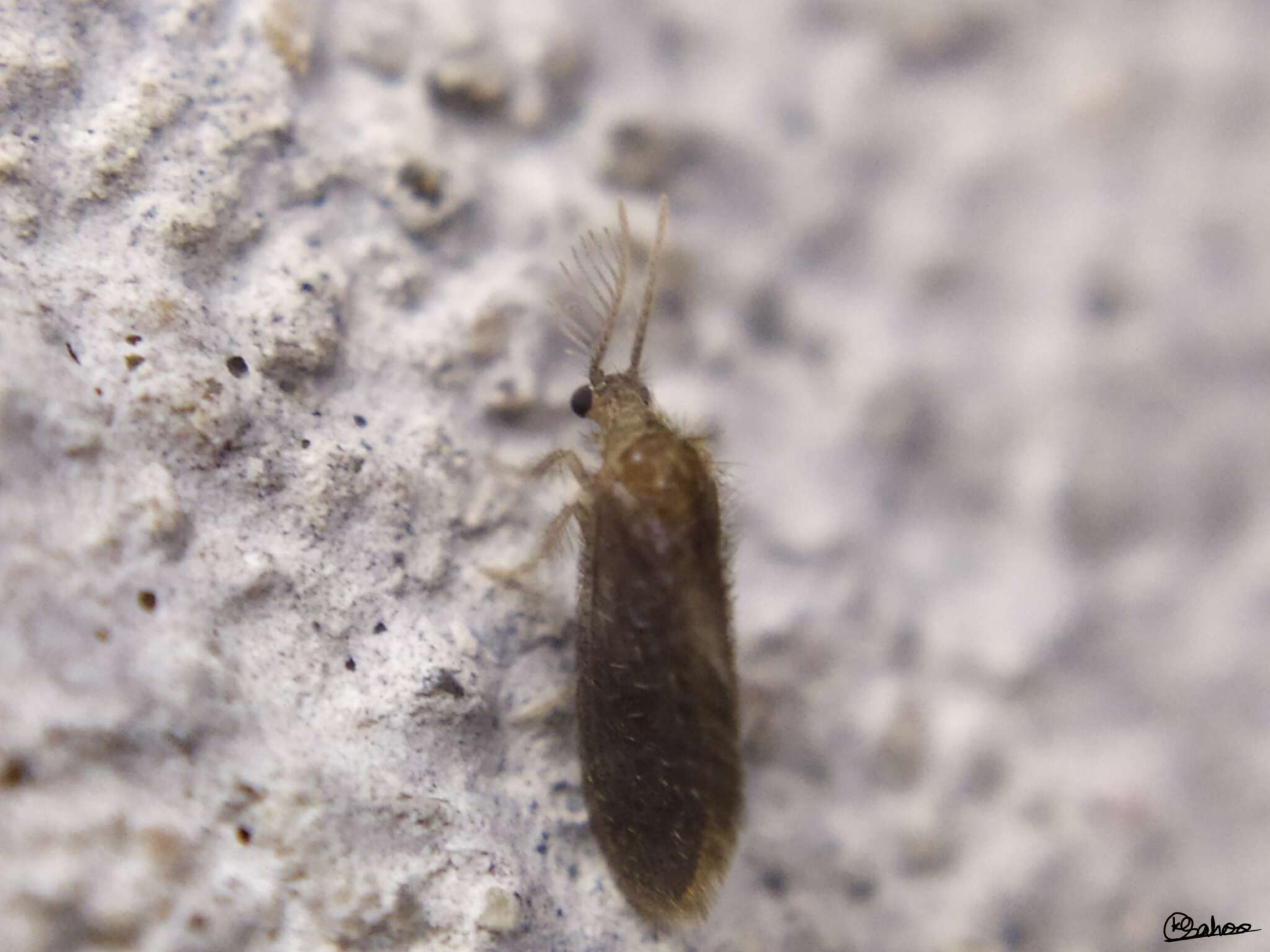
The dustywings, Coniopterygidae, are a family of Pterygota (winged insects) of the net-winged insect order (Neuroptera). About 460 living species are known. These tiny insects can usually be determined to genus with a hand lens according to their wing venation, but to distinguish species, examination of the genitals by microscope is usually necessary.
.jpg)
Nemopteridae
Nemopteridae, the spoonwings, are a family of neuropteran insects. They are also called thread-winged antlions. They are found in the Ethiopian, Palearctic, Australasian and Neotropical realms but absent in North America (though a fossil has been found in Colorado).

Sisyridae
Sisyridae, commonly known as spongeflies or spongillaflies, are a family of winged insects in the order Neuroptera. There are approximately 60 living species described, and several extinct species identified from the fossil record.

Osmylidae
Osmylidae are a small family of winged insects of the net-winged insect order Neuroptera. The osmylids, also called lance lacewings, stream lacewings or giant lacewings, are found all over the world except North and Central America. There are around 225 extant species.
Dilaridae
Dilaridae is a family of Euneuropteran insects in the order Neuroptera, known as "pleasing lacewings". They were formerly placed in the paraphyletic superfamily Hemerobioidea, though the group is currently placed in the monophyletic superfamily Dilaroidea as a sister group to Mantispoidea and Osmyloidea.

Ithonidae
Ithonidae, commonly called moth lacewings and giant lacewings, is a small family of winged insects of the insect order Neuroptera. The family contains a total of ten living genera, and over a dozen extinct genera described from fossils. The modern Ithonids have a notably disjunct distribution, while the extinct genera had a more global range. The family is considered one of the most primitive living neuropteran families. The family has been expanded twice, first to include the genus Rapisma, formerly placed in the monotypic family Rapismatidae, and then in 2010 to include the genera that had b

Berothidae
The Berothidae are a family of winged insects of the order Neuroptera. They are known commonly as the beaded lacewings. The family was first named by Anton Handlirsch in 1906. The family consists of 24 genera and 110 living species distributed discontinuously worldwide, mostly in tropical and subtropical regions. Numerous extinct species have also been described. Their ecology is poorly known, but in the species where larval stages have been documented, the larvae are predators of termites.
Nymphidae
Nymphidae, sometimes called split-footed lacewings, are a family of winged insects of the order Neuroptera. There are 35 extant species native to Australia and New Guinea.
Psychopsidae
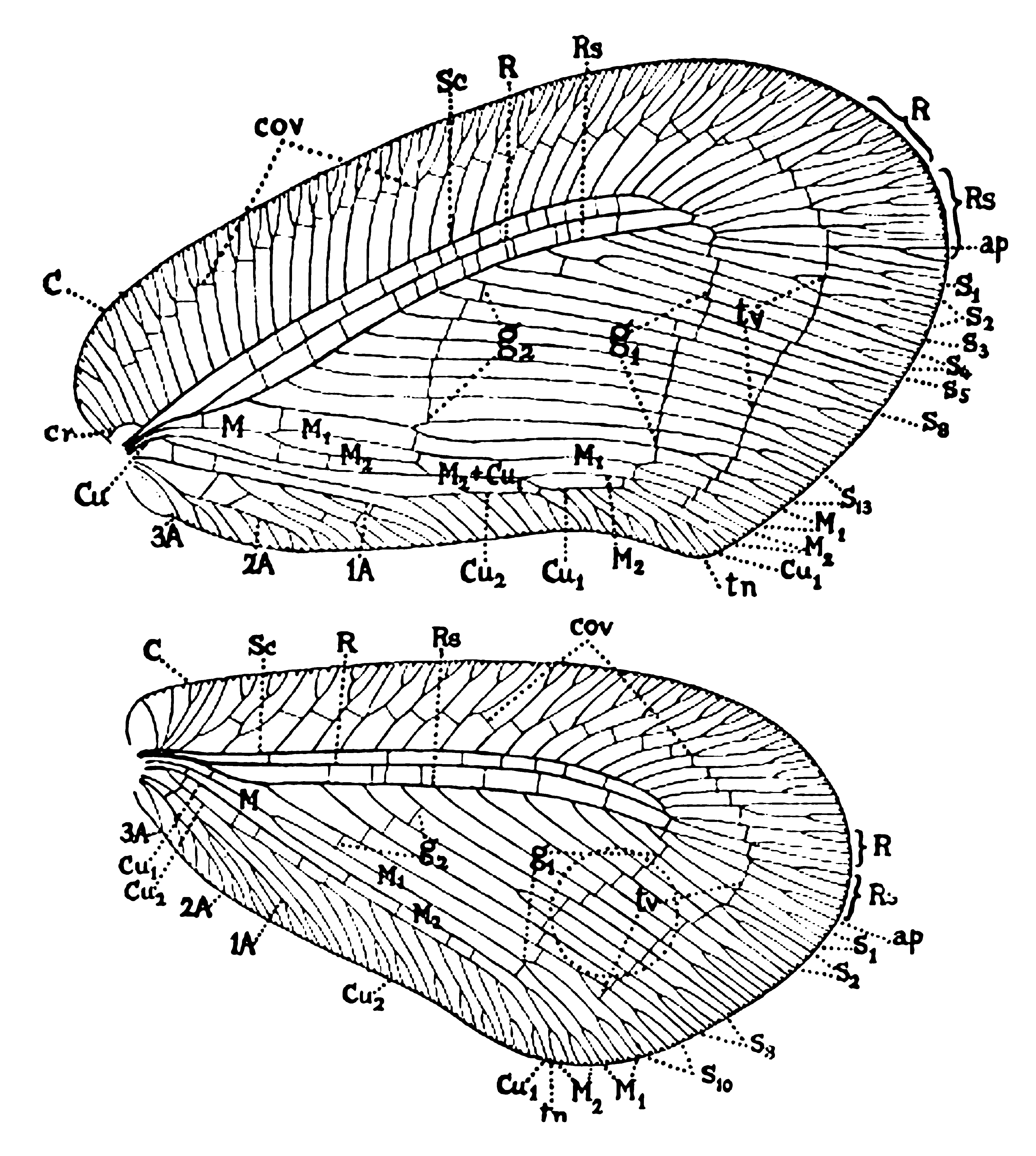
Psychopsidae is a family of winged insects of the order Neuroptera. They are commonly called silky lacewings.
Nevrorthidae
The Nevrorthidae (often incorrectly spelled "Neurorthidae") are a small family of lacewings in the order Neuroptera. There are 19 extant species in four genera, with a geographically disjunct distribution: Nevrorthus, comprising 5 species with scattered distributions around the Mediterranean; Austroneurorthus, with two species known from southeastern Australia; Nipponeurorthus, comprising 11 species known from China and Japan; and Sinoneurorthus, known from a single species described from Yunnan Province, China. They are traditionally placed in the Osmyloidea, alongside Osmylidae and the spong
Dipteromantispidae
Dipteromantispidae is an extinct family of neuropterans known from the Cretaceous period. Unlike other neuropterans, the family possesses only a single set of fully developed forewings, with the hindwings reduced to haltere-like structures. They are generally small in size (forewing length 2.6-7.9 mm) and possess raptorial forelegs. They are considered to belong to Mantispoidea, with an uncertain position within the clade. Some authors have suggested that they represent a subgroup of Mantispidae, and should instead be referred to as the subfamily Dipteromantispinae within that family.
Rhachiberothidae
Rhachiberothidae, sometimes called thorny lacewings, are a family of winged insects in the order Neuroptera. The family has only 14 extant species in four genera found in Sub-Saharan Africa, but has a diverse fossil record extending back to the Early Cretaceous in Lebanon (then part of North Gondwana), Eurasia and North America. Like the closely related Mantispidae members of the group possess raptorial forelegs, which probably only evolved once in the common ancestor of the groups.