Category
page 1Non-coding RNA

Emmanuelle Charpentier
French microbiologist and biochemist (born 1968)
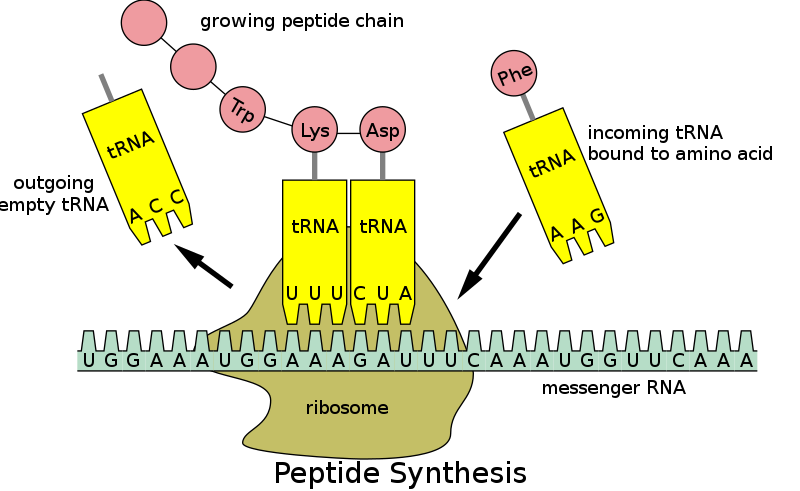
transfer RNA
adaptor molecule composed of RNA, typically 76–90 nucleotides, that carries amino acids to the ribosome as directed by codons in mRNA

ribosomal RNA
RNA component of the ribosome, essential for protein synthesis in all living organisms

CRISPR
thumb|262px|Diagram of the CRISPR prokaryotic antiviral defense mechanism
CRISPR (; acronym for clustered regularly interspaced short palindromic repeats) is a family of DNA sequences found in the genomes of prokaryotic organisms such as bacteria and archaea. Each sequence within an individual prokaryotic CRISPR is derived from a DNA fragment of a bacteriophage that had previously infected the prokaryote or one of its ancestors. These sequences are used to detect and destroy DNA from similar bacteriophages during subsequent infections. Hence these sequences play a key role in the antiviral (i.

microRNA
thumb|400px|Pre-miRNA instead of Pri-miRNA in the first point of mechanism. Diagram of microRNA (miRNA) action with mRNA
thumb|400px|Examples of miRNA hairpins (stem-loops), with the mature miRNAs shown in red
small interfering RNA
biomolecule
non-coding RNA
class of RNA that is not translated into proteins
small nuclear RNA
class of RNA molecules, found in splicing speckles and Cajal bodies, about 150 nucleotides long
antisense RNA
RNA molecules hybridizing to complementary sequences in either RNA or DNA, altering the function of the latter
Piwi-interacting RNA
largest class of small non-coding RNA molecules in animals
long non-coding RNA
non-protein coding transcripts longer than 200 nucleotides
small nucleolar RNA
class of small RNA molecules that guide chemical modifications of other RNAs
cis-regulatory element
type of regulatory sequence
zinc finger nuclease
class of artificial enzymes
transcription activator-like effector nucleases
artificial nucleases that cleave DNA at a defined distance from specific sequences
Bacterial small RNA
RNA thermometer
temperature-dependent RNA structure
XIST
Xist (X-inactive specific transcript) is a non-coding RNA transcribed from the X chromosome of the placental mammals that acts as a major effector of the X-inactivation process. It is a component of the Xic – X-chromosome inactivation centre – along with two other RNA genes (Jpx and Ftx) and two protein genes (Tsx and Cnbp2).
enhancer RNAs
type of RNA
toxin-antitoxin system
biological process
TERC
non-coding RNA in the species Homo sapiens
Trans-activating crRNA
Biological molecule
Y RNA
type of RNA
Vault RNA
untranslated RNA
Hairpin ribozyme
Enzymatic section of RNA
RN7SK
small nuclear RNA in the species Homo sapiens
H19
non-coding RNA in the species Homo sapiens
small RNA
small, usually non-coding RNA molecule
retron msr RNA
A retron is a distinct DNA sequence found in the genome of many bacteria species that codes for reverse transcriptase and a unique single-stranded DNA/RNA hybrid called multicopy single-stranded DNA (msDNA). Retron msr RNA is the non-coding RNA produced by retron elements and is the immediate precursor to the synthesis of msDNA. The retron msr RNA folds into a characteristic secondary structure that contains a conserved guanosine residue at the end of a stem loop. Synthesis of DNA by the retron-encoded reverse transcriptase (RT) results in a DNA/RNA chimera which is composed of small single-st