Category
page 1Obsolete scientific instruments

astrolabe
alt=Planispheric Astrolabe made of brass, cast, with fretwork rete and surface engraving|thumb|upright=1.2|North African, planispheric astrolabe. Khalili Collections|Khalili Collection.
thumb|upright|A modern astrolabe made in 2013, in Tabriz, Iran.

galvanometer
thumb|320px|An early D'Arsonval galvanometer showing magnet and rotating coil
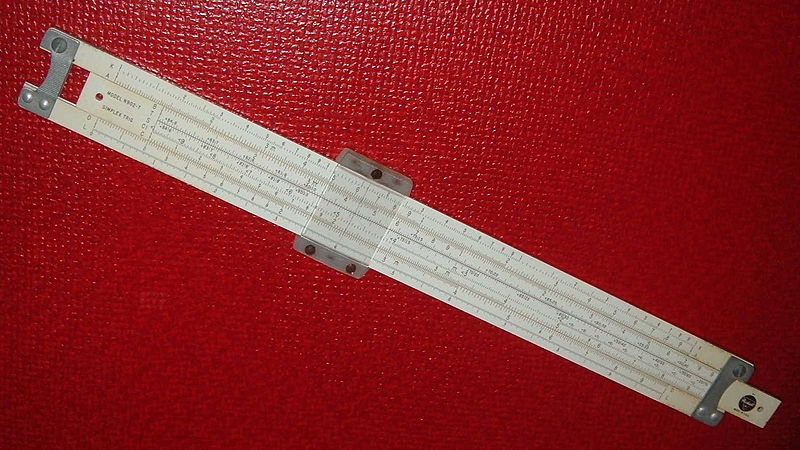
slide rule
mechanical analog computer

Leyden jar
antique electrical device which stores a high-voltage electric charge
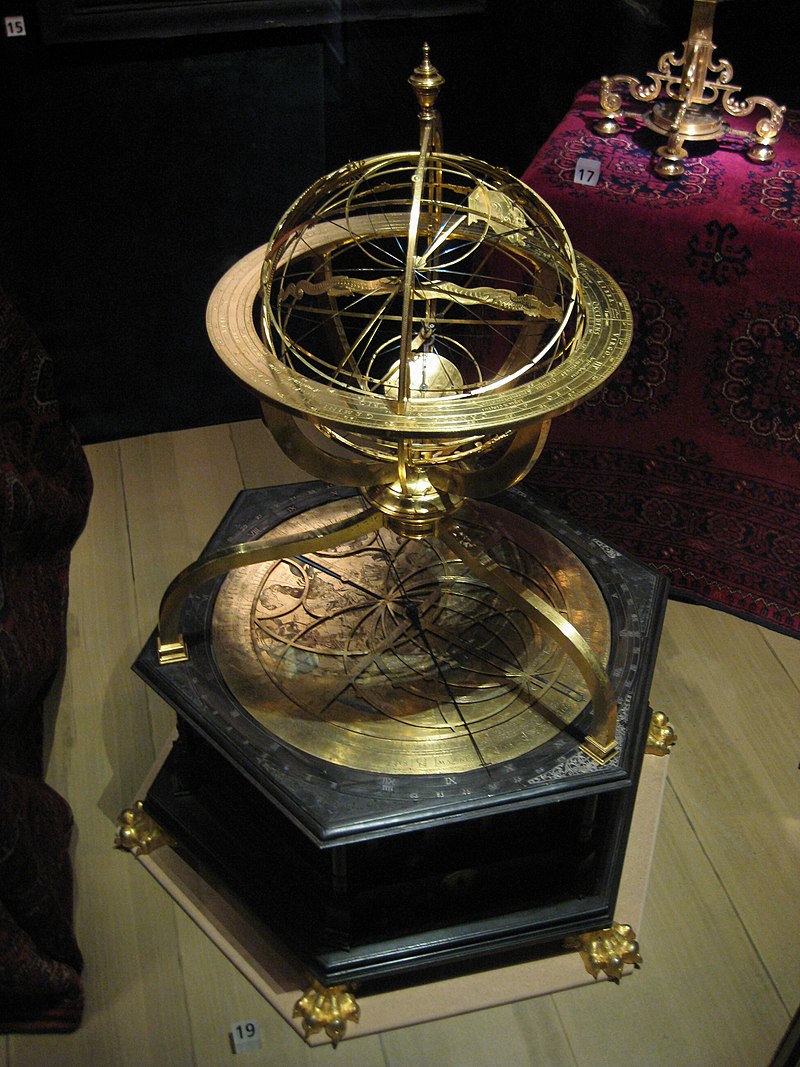
armillary sphere
model of objects in the sky

electroscope
thumb|Gilbert's versorium
The electroscope is an early scientific instrument used to detect the presence of electric charge on a body. It detects this by the movement of a test charge due to the Coulomb electrostatic force on it. The amount of charge on an object is proportional to its voltage. The accumulation of enough charge to detect with an electroscope requires hundreds or thousands of volts, so electroscopes are used with high voltage sources such as static electricity and electrostatic machines. An electroscope can only give a rough indication of the quantity of charge; an instrument t

astronomical clock
clock with special mechanisms and dials to display astronomical information
Magdeburg hemispheres
pair of large copper hemispheres designed by Otto von Guericke
cabinet of curiosities
collection of notable objects

alidade
right|thumb|A simple alidade for use with a ceiling projector
An alidade () (archaic forms include alhidade, alhidad, alidad) or a turning board is a device that allows one to sight a distant object and use the line of sight to perform a task. This task can be, for example, to triangulate a scale map on site using a plane table drawing of intersecting lines in the direction of the object from two or more points or to measure the angle and horizontal distance to the object from some reference point's polar measurement. Angles measured can be horizontal, vertical or in any chosen plane.
quadrant
navigation instrument
A Journalist Lecturing on the Orrery
1766 painting by Joseph Wright of Derby
Eise Eisinga Planetarium
museum in Franeker
Jacob's staff
calibrated wooden rod with sliding crosspiece used for measuring the altitude of celestial bodies or the height of distant objects
Crookes tube
early type of cathode ray tube
electrostatic generator
Device that generates electrical charge on a high voltage electrode
.svg)
Almucantar
right|thumb|250px|The celestial sphere with the [[zenith and almucantar marked in red, the horizon in green, and the path of a star or the Sun in blue.]]An almucantar (also spelled almucantarat or almacantara) is a circle on the celestial sphere parallel to the horizon. Two stars that lie on the same almucantar have the same altitude.
The term was introduced into European astronomy by monastic astronomer Hermann Contractus of Reichenau, Latinized from the Arabic word ' ("the almucantar, sundial", plural: '), derived from '''' ("arch, bridge")
Wimshurst machine
electrostatic generator

electrophorus
thumb|Electrophorus from the 1800s.

orrery
thumb|upright=1.2|A small orrery showing Earth and the inner planets
An orrery () is a mechanical model of the Solar System that illustrates or predicts the relative positions and motions of the planets and moons, usually according to the heliocentric model. It may also represent the relative sizes of these bodies; however, since accurate scaling is often not practical due to the actual large ratio differences, it may use a scaled-down approximation. Mechanical planetary models are known to have existed since the Ancient Greeks, and are known by various names, but the term orrery is derived fr
An Experiment on a Bird in the Air Pump
1768 painting by Joseph Wright of Derby

Dioptra
thumb|Graphic reconstruction of the dioptra, by Venturi, in 1814. (An incorrect interpretation of Heron's description)
Groma surveying
principal Roman surveying instrument

torquetum
thumb|right|Torquetum (1568), made by Johannes Praetorius in Nuremberg
thumb|right|Engraving of a Torquetum
nonius
measuring tool used in navigation and astronomy
triquetrum
medieval name for an ancient astronomical instrument

astrarium
thumb|The astrarium made by Giovanni Dondi dell'Orologio showed hour, year calendar, movement of the planets, Sun and Moon. Reconstruction, [[Museo Nazionale Scienza e Tecnologia Leonardo da Vinci, Milan.]]
nocturnal
instrument used to determine the local time based on the relative positions of two or more stars in the night sky
plane table
device used in surveying and related disciplines to provide a solid and level surface on which to make field drawings, charts and maps

cyanometer
thumb|right|A cyanometer by Horace-Bénédict de Saussure (from the collection of ''Musée d'histoire des sciences de la Ville de Genève)
thumb|right|An artwork in Ljubljana, Slovenia, inspired by a cyanometer
A cyanometer (from cyan and -meter'') is an instrument for measuring "blueness", specifically the colour intensity of blue sky. It is attributed to Horace-Bénédict de Saussure and Alexander von Humboldt. It consists of squares of paper dyed in graduated shades of blue and arranged in a color circle or square that can be held up and compared to the color of the sky.

equatorium
thumb|Equatorium from Johannes Schöner
ballistic galvanometer
filar micrometer
specialized eyepiece
surveyor's wheel
distance-measuring device
Mariner's astrolabe
Nautical navigational instrument
sextant
astronomical device
mural instrument
angle-measuring device used for astronomical purposes
Westphal balance
scientific instrument for measuring the density of liquids
string galvanometer
instrument that provided the first practical electrocardiogram
Backstaff
The backstaff is a navigational instrument that was used to measure the altitude of a celestial body, in particular the Sun or Moon. When observing the Sun, users kept the Sun to their back (hence the name) and observed the shadow cast by the upper vane on a horizon vane. It was invented by the English navigator John Davis, who described it in his book ''Seaman's Secrets'' in 1594.
optical square
Franklin bells
scientific instrument demonstrating electric charge
astronomical rings
early astronomical instrument
Passemant astronomical clock
electric bath
19th-century medical treatment
Equatorial ring
instrument to determine the moment of the equinoxes
Barcelona astrolabe
dividing engine
device to mark graduations on measuring instruments
list of astronomical instruments
Wikimedia list article