Category
page 1Pastoralists

Kazakhs
The Kazakhs are a Turkic ethnic group native to Central Asia and Eastern Europe. They share a common culture, language and history that is closely related to those of other Turkic peoples. The majority of ethnic Kazakhs live in their transcontinental nation state of Kazakhstan.

Sámi people
Finno-Ugric peoples

Pashtuns
Pashtuns are an Iranian ethnic group primarily residing in southern and eastern Afghanistan and northwestern Pakistan. They were historically referred to as Afghans even into the 1970s, although the constitution of 1923 began the use of 'Afghans' as a demonym for all citizens of the Kingdom, regardless of their ethnic group, to create an Afghan national identity.

Kyrgyz people
Turkic ethnic group native to Central Asia, primarily Kyrgyzstan

Baloch
ethnic group native to South and Central Asia

Bedoui
thumb|alt=Bedouins in Sinai, 1967|Bedouins in the Sinai Peninsula|Sinai Region, 1967

cowboy
thumb|upright=1.5|Cowboys portrayed in Western art. The Herd Quitter by Charles Marion Russell|C. M. Russell
A cowboy is an animal herder who tends cattle on ranches in North America, traditionally on horseback, and often performs a multitude of other ranch-related tasks. The historic American cowboy of the late 19th century arose from the vaquero traditions of northern Mexico and became a figure of special significance and legend. A subtype, called a wrangler, specifically tends the horses used to work cattle. In addition to ranch work, some cowboys work for or participate in rodeos. Cowgirls

Pechenegs
The Pechenegs () or Patzinaks, also known as Pecheneg Turks,'''''' were a semi-nomadic Turkic people from Central Asia who spoke the Pecheneg language. In the 9th and 10th centuries, the Pechenegs controlled much of the steppes of southeast Europe and the Crimean Peninsula. In the 9th century, the Pechenegs began a period of wars against Rus', and for more than two centuries launched raids into the lands of Rus', which sometimes escalated into full-scale wars.

Somalis
thumb|A Somali man in a traditional Kofia (hat)|Koofiyad|231x231px
The Somalis (, ) (, Wadaad: , Arabic: ) are a Cushitic ethnic group and nation native to the Somali Peninsula.
thumb|230px|XIX century map showing the Somali territories prior to the Scramble for Africa as fully integrated with the Adal region
The Somali language is the shared mother tongue of ethnic Somalis, which is part of the Cushitic branch of the Afroasiatic language family. They are predominantly Sunni Muslim. Forming one of the largest ethnic groups on the continent, they cover one of the most expansive landmasses by a

shepherd
thumb|Shepherds travelling in Chambal, India
thumb|Spanish shepherd on horseback herding sheep in Murcia (1880).
thumb|Shepherd with grazing sheep in Făgăraș Mountains, Romania
A shepherd is a person who tends, herds, feeds, or guards flocks of sheep. Shepherding is one of the world's oldest occupations; it exists in many parts of the globe, and it is an important part of pastoralist animal husbandry.

Afar people
Horner ethnic group who are descendants of Puntites

gaucho
thumb|upright|200px|Gaucho from Argentina, photographed in Peru, 1868
A gaucho () or gaúcho () is a skilled horseman, reputed to be brave and unruly. The figure of the gaucho is a folk symbol mainly in Argentina and Uruguay but also in Paraguay, Rio Grande do Sul in Brazil, southern Bolivia, and southern Chile. Gauchos became greatly admired and renowned in legend, folklore, and literature and became an important part of their regional cultural tradition. Beginning late in the 19th century, after the heyday of the gauchos, they were celebrated by South American writers.

Qashqai people
ethnic group
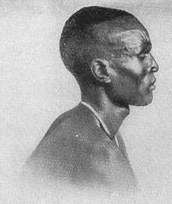
Dinka people
Nilotic ethnic group native to South Sudan
Himba people
Ethnic group of people in Namibia

Yörüks
thumb|A Yörük village settled in 15th century, traditional Turkish houses
The Yörüks, also Yuruks or Yorouks (; , Youroúkoi; ; , Juruci), are a Turkish ethnic subgroup of Oghuz descent, some of whom are nomadic, primarily inhabiting the mountains of Anatolia, and partly in the Balkan peninsula. On the Balkans Yörüks are distributed over a wide area from the eastern parts of North Macedonia, parts of Bulgaria, north to Larissa in Thessaly and southern Thrace in Greece. Their name derives from the Old Turkish verb "yörü", meaning "to walk", and they are also called Yörük or Yürük. The contractio
Bakhtiari people
Iranian tribe
Beja people
ethnic group of Red Sea Hills

Gurjar
The Gurjar (or Gujjar, Gujar, Gurjara) are an agricultural ethnic community, residing mainly in India, Pakistan, and Afghanistan, divided internally into various clan groups. They were traditionally involved in agriculture, pastoral and nomadic activities and formed a large heterogeneous group. The historical role of Gurjars has been quite diverse in society: at one end they have been found related to several kingdoms and, at the other end, some are still nomads with no land of their own.
Ovambo people
Southern African ethnic group

pastoralism
thumb|Pastoral site at Tangnu village, Rohru in Himachal Pradesh, India
adoration of the shepherds
part of the nativity story and a common subject in Christian art
Turkana people
ethnic group of Eastern Africa
Saho people
Horner ethnic group who are descendants of ancient Puntites
nomadic pastoralism
form of pastoralism where livestock are herded in order to find fresh pastures on which to graze
Eurasian nomads
nomadic peoples of the Eurasian Steppe
Karamojong people
ethnic group in Kenya and Uganda

Huaso
thumb|Huaso in a Chilean [[wheat field, 1940]]
thumb|"The Huaso and the Washerwoman" by Mauricio Rugendas (1835).
thumb|Espuelas, or silvered steel spurs, of a Chilean huaso
A huaso () is a Chilean countryman and skilled horseman, similar to the American cowboy, the Mexican charro (and its northern equivalent, the vaquero), the gaucho of Argentina, Uruguay and Rio Grande Do Sul, and the Australian stockman. A female huaso is called a huasa, although the term china is far more commonly used for his wife or sweetheart, whose dress can be seen in cueca dancing. Huasos are found all over Central a

Changpa
thumbnail|right|Changpa nomad
thumbnail|right|Changpa shepherd girl
thumb|Changpa nomadic family, Tibet
Vlach law
Lechitic common law
Mandari people
ethnic group
Luo peoples
Several related groups in central Africa
Hungarian prehistory
Magyar history (c. 800 BC–c. 895 AD)
Origin of the Romanians
Appearance of Romanians

charro
thumb|A charro on his horse
thumb|Female and male charro regalia, including sombreros de charro
thumbnail|right|Mexican Charro (1828). Originally, the term "Charro" was a derogatory name for the Mexican Rancheros, the inhabitants of the countryside. The term is synonymous with the English terms "yokel", "hick", "country bumpkin", or "rube".

Trekboer
thumb|upright=1.35|An aquatint by [[Samuel Daniell of Trekboers making camp. Depicted around 1804.]]
Gadariya
Indian Community
buttero
thumb|I Butteri, Giovanni Fattori (1893)
thumb|"Driving wild cattle in the Maremma", illustration from The Penny Magazine, 1832
A buttero (, plural butteri) or cavalcante is a mounted herder, usually of horses, of cattle, or of buffaloes, in Italy, predominantly in the Maremma region, in the Roman Marshes or in the Pontine Marshes.
Uxii
The Uxii () were a tribal confederation of non-Iranian semi-nomadic people who lived somewhere in the Zagros Mountains. They were classified by Nearchus as among the four predatory peoples of the southwest along with the Mardi, Sousii, and Elymaei. They raided the settled people of Iran and raised sheep. The Uxii also tolled passing armies until they were defeated by Alexander the Great at the Battle of the Uxian Defile. After some time, the Uxians regained independence. Some think that the tolling was a gift tradition from the Persian kings to local tribes, and wasn't forced (especially as th
Vaqueiros de alzada
northern Spanish nomadic people in the mountains of Asturias and León
Athronges
thumb|Emmaus 1886
Zilan (tribal confederation)
kurdish tribal confederation
Miyetti Allah
Fulani Herders Association