Category
page 1Plant morphology
.jpg)
tree

flower
Flowers, also known as blossoms and blooms, are the reproductive structures of flowering plants. Typically, they are structured in four circular levels around the end of a stalk. These include: sepals, which are modified leaves that support the flower; petals, often designed to attract pollinators; male stamens, where pollen is presented; and female gynoecia, where pollen is received and its movement is facilitated to the egg. When flowers are arranged in a group, they are known collectively as an inflorescence.
.png)
leaf
thumb|The diversity of leaves, including Bismarckia, [[Araucaria, Euphorbia, Nymphaea, Colocasia, Hildegardia, Picea, Melocactus, Cycas, Acer, Yucca, Ferocactus, and Ocimum.|401x401px]]
thumb|Leaf of Tilia tomentosa (silver linden tree)
thumb|Diagram of a simple leaf.
thumb|Top and right: staghorn sumac, Rhus typhina (compound leaf) Bottom: skunk cabbage, [[Symplocarpus foetidus (simple leaf) ]]

shrub
thumb|250px|A Cytisus scoparius|broom shrub in flower
thumb|250px|A rhododendron shrubbery in [[Sheringham Park]]

herbaceous plant
plant which has no persistent woody stem above ground

bark
plant tissue outside the vascular cambium or the xylem; in older trees may be divided into dead outer bark and living inner bark, which consists of secondary phloem. external parenchymal tissue, located just below the epidermis of the stem

pollen
thumb|Colorized scanning electron microscope image of pollen grains from a variety of common plants: sunflower (Helianthus annuus), morning glory ([[Ipomoea purpurea), prairie hollyhock (Sidalcea malviflora), oriental lily (Lilium auratum), evening primrose (Oenothera fruticosa), and castor bean (Ricinus communis).]]
thumb|Pollen tube diagram
.jpg)
tuber
thumb|upright=1.2|Ulluku (Ullucus tuberosus) tubers
.jpg)
branch
thumb|Tree and plants branches of several sizes
thumb|The branches of this dead Vachellia erioloba|camel thorn tree within [[Sossusvlei are clearly visible]]
thumb|The branches and leaves of a tree
thumb|Looking up into the branch structure of a Pinus sylvestris tree
thumb|Leafless tree branches during winter
A branch, also called a ramus in botany, is a stem that grows off from another stem, or when structures like veins in leaves are divided into smaller veins.

petal
thumb|upright=1.4|In a mature flower, the perianth consists of a calyx ([[sepals) and the corolla (petals) it supports.]]

spinose structure
modified shoots, leaves, roots, or extensions of cortice and epidermis

stamen
thumb|right|250px|Stamens of a Hippeastrum with white filaments and prominent anthers carrying [[pollen]]

trunk
main wooden axis of a tree

inflorescence
thumb|Aloe hereroensis, showing inflorescence with branched pedunclethumb|Amorphophallus titanum has the world's largest unbranched inflorescence. Photo of the plant in bloom in 2000 at [[Fairchild Tropical Botanic Garden in Miami, Florida, US]]

liana
thumb|Mixed-species tangle of lianas in tropical Australia
thumb|Lianas in Udawattakele, Sri Lanka
thumb|A canopy of Entada gigas that has formed over a monkey ladder vine ([[Bauhinia glabra) on Kauai, Hawaii]]
thumb|Liana tangle across a forest in the Western Ghats
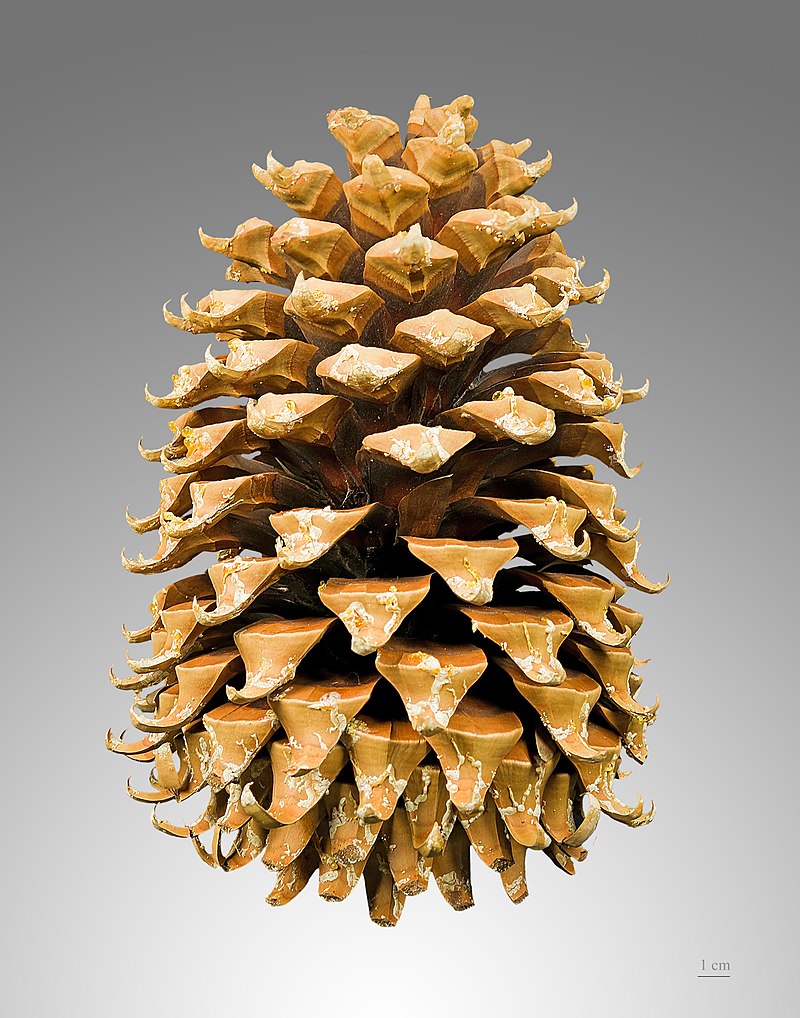
cone
seed-bearing organ on gymnosperm plants

bud
thumb|upright=1.35|European beech (Fagus sylvatica) bud
In botany, a bud is an undeveloped or embryonic shoot and normally occurs in the axil of a leaf or at the tip of a stem. Once formed, a bud may remain for some time in a dormant condition, or it may form a shoot immediately. Buds may be specialized to develop flowers or short shoots or may have the potential for general shoot development. The term bud is also used in zoology, where it refers to an outgrowth from the body which can develop into a new individual.

shoot
young stem or branch

vine
thumb|Momordica charantia (bitter melon), a climbing plant
thumb|A tendril
sepal
thumb|upright=1.4|In a mature flower, the perianth consists of a calyx (sepals) and the corolla ([[petals) it supports.]]

epiphyte
thumb|right|Tillandsia bourgaei growing on an oak tree in Mexico
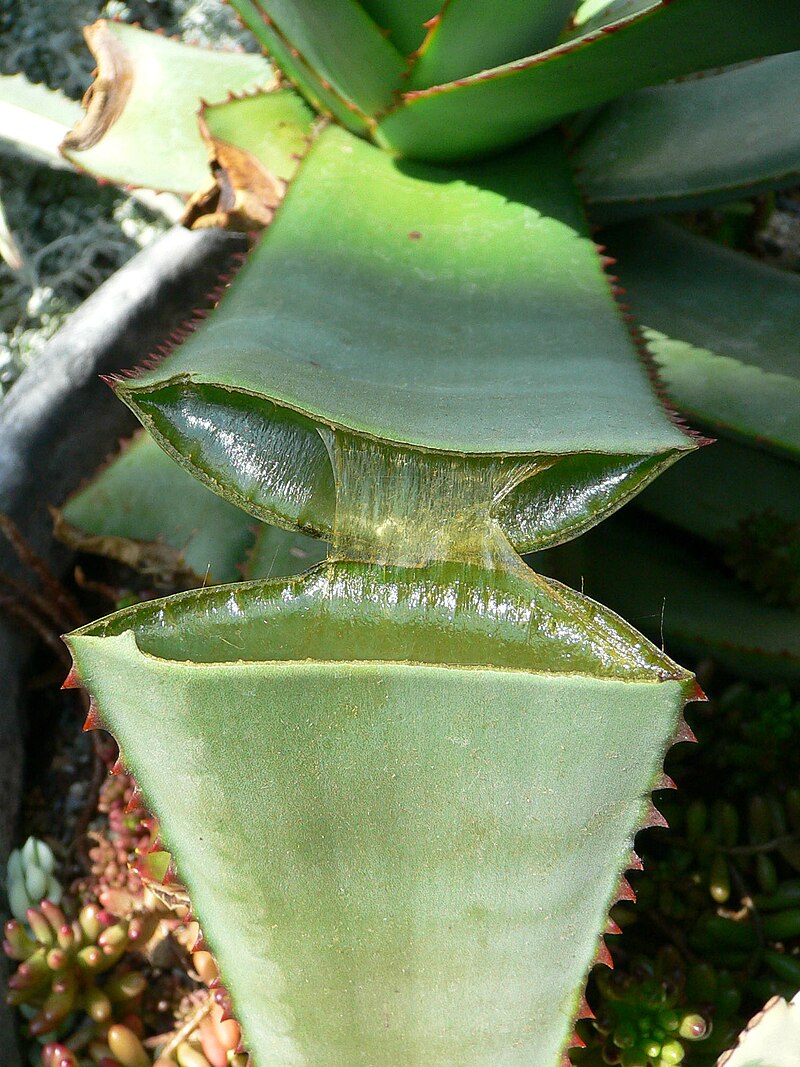
succulent plant
Plants having some parts that are more than normally thickened and fleshy

bulb
thumb|right|250px|Shallot bulbs
thumb|right|250px|Hippeastrum (amaryllis) bulb

cotyledon
thumb|Cotyledon from a Judas-tree (Cercis siliquastrum, a dicot) seedling
thumb|Comparison of a monocot and dicot sprouting. The visible part of the monocot plant (left) is actually the first true leaf produced from the meristem; the cotyledon itself remains within the seed.

gametophyte
thumb|360px|Diagram showing the alternation of generations between a diploid sporophyte (bottom) and a haploid gametophyte (top)
sporophyte
thumb|360px|Diagram showing the alternation of generations between a diploid sporophyte (bottom) and a haploid gametophyte (top)
A sporophyte () is one of the two alternating multicellular phases in the life cycles of plants and algae. It is a diploid multicellular organism which produces asexual spores. This stage alternates with a multicellular haploid gametophyte phase.

ovule
thumb|Location of ovules inside a Helleborus foetidus flower

catkin
thumb|Detail of a male flowering catkin on a willow ([[Salix sp.)]]
A catkin or ament is a slim, cylindrical flower cluster (a spike), with inconspicuous or no petals, usually wind-pollinated (anemophilous) but sometimes insect-pollinated (as in Salix). It contains many, usually unisexual flowers, arranged closely along a central stem that is often drooping. Catkins are found in many plant families, including Betulaceae, Fagaceae, Moraceae, and Salicaceae.

xerophyte
A xerophyte () is a species of plant that has adaptations to survive in an environment with little liquid water. Examples of xerophytes include cacti, pineapple and some gymnosperm plants. The morphology and physiology of xerophytes are adapted to conserve water during dry periods. Some species called resurrection plants can survive long periods of extreme dryness or desiccation of their tissues, during which their metabolic activity may effectively shut down. Plants with such morphological and physiological adaptations are said to be . Xerophytes such as cacti are capable of withstanding exte
hygroscopy
Hygroscopy is the phenomenon of attracting and holding water molecules via either absorption or adsorption from the surrounding environment, which is usually at normal or room temperature. If water molecules become suspended among the substance's molecules, adsorbing substances can become physically changed, e.g. changing in volume, boiling point, viscosity or some other physical characteristic or property of the substance. For example, a finely dispersed hygroscopic powder, such as a salt, may become clumpy over time due to collection of moisture from the surrounding environment.

raceme
thumb|right|The inflorescence of a [[Phalaenopsis orchid is a typical raceme.]]

seedling
thumb|Monocot (left) and dicot (right)
thumb|right|Seedling of a Scots pine
thumb|Grass seedlings (150-minute time lapse)

cuticle
A cuticle (), or cuticula, is any of a variety of tough but flexible, non-mineral outer coverings of an organism, or parts of an organism, that provide protection. Various types of "cuticle" are non-homologous, differing in their origin, structure, function, and chemical composition.

ovary
part of the female reproductive organ of flowers

bract
thumb|Papery (upper) and leafy bracts on Rhinanthus minor (hay rattle). All the "leaves" in this image are bracts.

endosperm
200px|thumb|Wheat seed
The endosperm is a tissue produced inside the seeds of most of the flowering plants following double fertilization. It is triploid (meaning three chromosome sets per nucleus) in most species, which may be auxin-driven. It surrounds the embryo and provides nutrition in the form of starch, though it can also contain oils and protein. This can make endosperm a source of nutrition in animal diet. For example, wheat endosperm is ground into flour for bread (the rest of the grain is included as well in whole wheat flour), while barley endosperm is the main source of sugars fo

gynoecium
thumb|Flower of Magnolia × wieseneri|Magnolia × wieseneri showing the many pistils making up the gynoecium in the middle of the flower
thumb|Hippeastrum flowers showing stamens, style and stigma
thumb|right|Hippeastrum stigmas and style
thumb|right|Moss plants with gynoecia, clusters of archegonia at the apex of each shoot.

thallus
thumb|300x300px|Thallus of Pellia epiphylla
Thallus (: thalli), from Latinized Greek (), meaning "a green shoot" or "twig", is the vegetative tissue of some organisms in diverse groups such as algae, fungi, some liverworts, lichens, and the Myxogastria. A thallus usually names the entire body of a multicellular non-moving organism in which there is no organization of the tissues into organs. Many of these organisms were previously known as the thallophytes, a polyphyletic group of distantly related organisms. An organism or structure resembling a thallus is called thalloid, thalloidal, thallif

broad-leaved tree
any tree that has wide leaves

plant morphology
subdiscipline of botany

panicle
thumb|right|Diagram of a panicle

stigma
part of a flower. The pollen-receptive surface of a carpel or group of fused carpels, usually sticky; usually a point or small head at the summit of the style where deposited pollen germinates
rosette
circular arrangement of leaves or of structures resembling leaves
woody plant
plant that produces wood as its structural tissue
umbel
In botany, an umbel is an inflorescence that consists of a number of short flower stalks (called pedicels) that spread from a common point, somewhat like umbrella ribs. The word was coined in botanical usage in the 1590s, from Latin umbella "parasol, sunshade". The arrangement can vary from being flat-topped to almost spherical. Umbels can be simple or compound. The secondary umbels of compound umbels are known as umbellules or umbellets. A small umbel is called an umbellule. The arrangement of the inflorescence in umbels is referred to as umbellate, or occasionally subumbellate (almost umbell

subshrub
thumb|right|250px|Lavandula stoechas
thumb|right|250px|Linnaea borealis

aril
thumb|right|An aril that surrounds the nutmeg seed is used as a [[spice called mace]]
thumb|right|The edible white aril of Litchi chinensis is sometimes called an arillode or false aril. It grows partly from the funiculus and partly from the [[integument of the seed.]]

chaff
300px|thumb|Rice chaff
Chaff (; ) is dry, scale-like plant material such as the protective seed casings of cereal grains, the scale-like parts of flowers, or finely chopped straw. Chaff cannot be digested by humans, but it may be fed to livestock, ploughed into soil, or burned.
monoicous

lithophyte
thumb|Nepenthes misoolensis|Nepenthes misoolensis growing as a lithophyte in [[Raja Ampat, New Guinea]]
receptacle
cardinal organ part of lower plants that is the region at the distal end of either a peduncle or a pedicel where the floral appendages (e.g.: sepals, petals, stamens and pistils) are attached
spadix
a racemose inflorescence having many small sessile flowers borne on a fleshy stem, the whole usually being surrounded by a spathe: typical of aroid plants
tumbleweed
thumb|Lechenaultia divaricata

abscission
thumb|300px|Leaf litter on the forest floor. Annual autumn leaf drop in [[temperate zones is caused by the abscission of the mature leaves from the growth season in response to the approach of cold winter weather.]]

trichomes
right|thumb|Flower bud of a Capsicum pubescens plant, with many trichomes
thumb|Fossil stellate hair (trichome) probably of an oak, in [[Baltic amber; image is about wide.]]

anemophily
Anemophily or wind pollination is a form of pollination whereby pollen is distributed by wind. Almost all gymnosperms are anemophilous, as are many plants in the order Poales, including grasses, sedges, and rushes. Other common anemophilous plants are oaks, pecans, pistachios, sweet chestnuts, alders, hops, and members of the family Juglandaceae (hickory or walnut family). Approximately 12% of plants across the globe are pollinated by anemophily, including cereal crops like rice and corn and other prominent crop plants like wheat, rye, barley, and oats. In addition, many pines, spruces, and fi

phyllotaxis
thumb |275px |Crisscrossing spirals of Aloe polyphylla

parthenocarpy
right|thumb|Seedless watermelon due to Stenospermocarpy
In botany and horticulture, parthenocarpy is the natural or artificially induced production of fruit without fertilisation of ovules, which makes the fruit seedless. The phenomenon has been observed since ancient times but was first scientifically described by German botanist Fritz Noll in 1902.
tree crown
part of tree, above the trunk
floral formula
notation representing flowers' structure