Category
page 1Plastics

plastic
thumb|upright=1.35|Household items made of various types of plastics
Plastics are a wide range of synthetic or semisynthetic materials composed primarily of polymers. Their defining characteristic, plasticity, allows them to be molded, extruded, or pressed into a diverse range of solid forms. This adaptability, combined with a wide range of other properties such as low weight, durability, flexibility, chemical resistance, low toxicity, and low-cost production, has led to their widespread use around the world. While most plastics are produced from natural gas and petroleum, a growing minority a
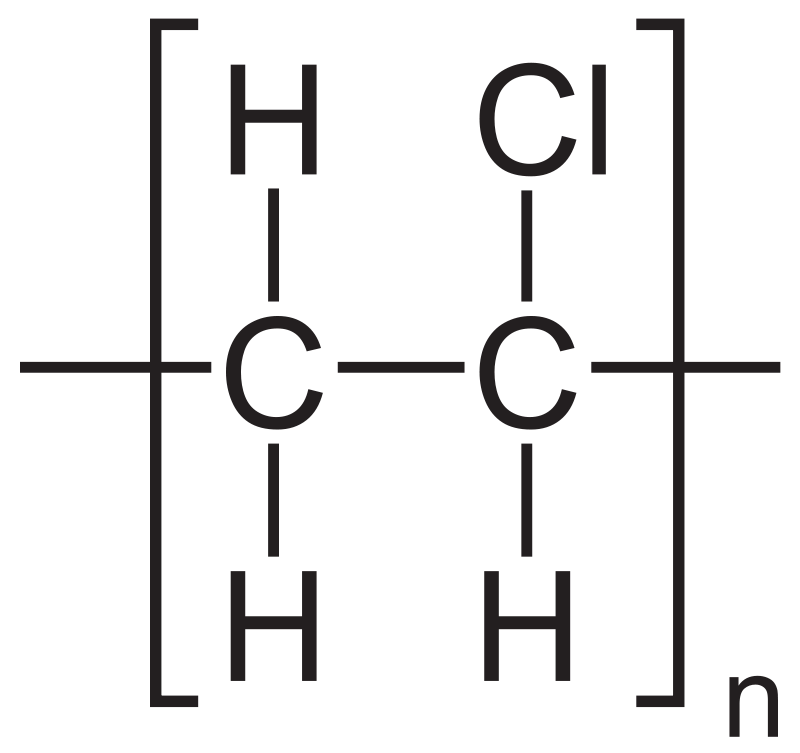
polyvinyl chloride
synthetic plastic polymer - A thermoplastic resin produced by the polymerization of vinyl chloride gas.

nylon
{|style="border: 1px solid; float: right; width: 250px;"
!colspan="2" style="text-align: center;"| Nylon 6 class=skin-invert|320px|Nylon Nylon 6,6
|-
|Density
|1.15 g/cm3
|- style="background:#eee;"
|Electrical conductivity (σ)
|10−12 S/m
|-
|Thermal conductivity
|0.25 W/(m·K)
|- style="background:#eee;"
|Melting point
|463–624 K 190–350 °C 374–663 °F
|}

polypropylene
Polypropylene (PP), also known as polypropene, is a thermoplastic polymer used in a wide variety of applications. It is produced via chain-growth polymerization from the monomer propylene.

polyethylene terephthalate
type of polyester commonly used for bottles and clothing
Bakelite
Bakelite ( ), formally '''''', is a thermosetting phenol formaldehyde resin, formed from a condensation reaction of phenol with formaldehyde. The first plastic made from synthetic components, it was developed by Belgian chemist Leo Baekeland in Yonkers, New York, in 1907, and patented on December 7, 1909.

polyurethane
class=skin-invert-image|thumb|right|Polyurethane synthesis: the urethane groups −NH−(C=O)−O− link the molecular units, resulting in a polymer consisting of an alternating chain of two monomers.
thumb|A kitchen sponge made of polyurethane foam

poly(methyl methacrylate)
transparent thermoplastic, commonly called acrylic

celluloid
Celluloids are a class of materials produced by mixing nitrocellulose and camphor, often with added dyes and other agents. Once much more common for its use as photographic film before the advent of safer methods, celluloid's common present-day uses are for manufacturing table tennis balls, musical instruments, combs, office equipment, fountain pen bodies, and guitar picks.
1,2-dichloroethane
The chemical compound 1,2-dichloroethane, commonly known as ethylene dichloride (EDC), is a chlorinated hydrocarbon. It is a colourless liquid with a chloroform-like odour. The most common use of 1,2-dichloroethane is in the production of vinyl chloride, which is used to make polyvinyl chloride (PVC) pipes, furniture and automobile upholstery, wall coverings, housewares, and automobile parts. 1,2-Dichloroethane is also used generally as an intermediate for other organic chemical compounds, and as a solvent. It forms azeotropes with many other solvents, including water (at a boiling point of&nb

polycarbonate
acrylonitrile butadiene styrene
organic polymer

polyoxymethylene
thumb|Ground glass joint#Joint clips|Keck clips made of polyoxymethylene

calender
thumb|Calender process
thumb|Calender at end of paper machine
thumb|Old calender machine
thumb|Threading paper through calender rolls, 1941
thumb|Calender machine for electrode pressing in lithium-ion battery manufacturing
wood-plastic composite
composite materials made of wood fiber and thermoplastics
nylon 6
nylon polymer and synthetic fibre
ethylene-vinyl acetate
copolymer
Citroën Méhari
lightweight recreational and utility vehicle
fibre-reinforced plastic
composite material made of a polymer matrix reinforced with fibres

polyolefin
A polyolefin is a type of polymer with the general formula (CH2CHR)n where R is an alkyl group. They are usually derived from a small set of simple olefins (alkenes). The most commonly manufactured are polyethylene and polypropylene. More specialized polyolefins include polyisobutylene and polymethylpentene. They are all colorless or white oils or solids. Many copolymers are known, such as polybutene, which derives from a mixture of different butene isomers.
bin bag
disposable bag used to contain trash
acrylic fiber
synthetic polymer fiber

urea-formaldehyde
Urea-formaldehyde (UF), also known as urea-methanal, so named for its common synthesis pathway and overall structure, is a nontransparent thermosetting polymer. It is produced from urea and formaldehyde. These resins are used in adhesives, plywood, particle board, medium-density fibreboard (MDF), and molded objects. In agriculture, urea-formaldehyde compounds are one of the most commonly used types of slow-release fertilizer.
polybutylene terephthalate
polymer
high-density polyethylene
class of polyethylenes
low-density polyethylene
polymer

ETFE
Ethylene tetrafluoroethylene (ETFE) is a fluorine-based plastic. It was designed to have high corrosion resistance and strength over a wide temperature range. ETFE is a polymer, and its source-based name is poly (ethene-co-tetrafluoroethene). It is also known under the DuPont brand name Tefzel and is sometimes referred to as "Teflon Film". ETFE has a relatively high melting temperature and excellent chemical, electrical, and high-energy-radiation resistance properties.
==Properties==
Useful comparison tables of PTFE against FEP, PFA, and ETFE can be found on Chemours' website, listing the mech

galalith
thumb|upright=1.4|White galalith Royal Australian Air Force|RAAF pre-1953 [[buttons. (Top left button shows crazing resulting from button having been heated during washing.)]]
thumb|300px|Chemical reaction of two proteins (top) with formaldehyde (H2CO) – schematic presentation.
thumb|upright=1.4|Comb made from Galalith resembling ivory
Galalith (Erinoid in the United Kingdom) is a synthetic plastic material manufactured by the interaction of casein and formaldehyde. The commercial name is derived from the Ancient Greek words (, "milk") and (, "stone"). It is odourless, hard, resists humidity t
acrylate polymer
group of polymers prepared from (possibly substituted) acrylate monomers
polystyrene sulfonate
polymer
synthetic resin
mixture of prepolymers, synthetic materials with properties similar to natural plant resins
Polymethylpentene
Polymethylpentene (PMP), also known as poly(4-methyl-1-pentene). It is used for gas-permeable packaging, autoclavable medical and laboratory equipment, microwave components, and cookware. It is commonly called TPX, which is a trademark of Mitsui Chemicals.
polybutylene
Polybutylene (polybutene-1, poly(1-butene), PB-1) is a polyolefin or saturated polymer with the chemical formula (CH2CH(Et))n. PB-1 is mainly used in piping.

Polythiophene
thumb|The monomer repeat unit of unsubstituted polythiophene.
thumb|Polythiophenes demonstrate interesting optical properties resulting from their conjugated backbone, as demonstrated by the fluorescence of a substituted polythiophene solution under UV irradiation.
thumb|Space-filling model of poly(3-butylthiophene) from the crystal structure.
thumb|Atomic force microscopy|AFM image of poly(3-decylthiophene-2,5-diyl) on hexagonal [[boron nitride (top-right inset).]]

polysulfone
thumb|class=skin-invert-image|Polysulfone (PSU) repeating unit.
thumb|class=skin-invert-image|Polyethersulfone (PES) repeating unit.
cross-linked polyethylene
strong polymeric material

ionomer
thumb|right|120px|An example of an ionomer, with carboxylate groups bound to a zinc cation
An ionomer () (iono- + -mer) is a polymer composed of repeat units of both electrically neutral repeating units and ionized units covalently bonded to the polymer backbone as pendant group moieties. Usually no more than 15 mole percent are ionized. The ionized units are often carboxylic acid groups.

polyurea
thumb|300px
acrylic resin
synthetic resin containing acrylic acid or its derivatives which can cure into a thermoplastic or thermoset
nylon 66
nylon polymer and synthetic fibre
.jpg)
polyetherimide
thumb|PEI powder coating|powder-coated build plate on a [[Bambu Lab A1 mini FFF 3D printer]]
Polyetherimide (PEI; branded as Ultem) is an amorphous, amber-to-transparent thermoplastic with characteristics similar to the related plastic PEEK. When comparing PEI to PEEK, the former is cheaper but has lower impact strength and a tighter temperature range.
ultra-high-molecular-weight polyethylene
chemical compound

3D printing filament
thermoplastic feedstock for fused deposition modeling 3D printers

polyisocyanurate
thumb|The generalised chemical structure of polyisocyanurate showing the isocyanurate group. The polyols are abbreviated as Substituent|R-groups.

Nafion
Nafion is a brand name for a sulfonated tetrafluoroethylene based fluoropolymer-copolymer synthesized in 1962 by Dr. Donald J. Connolly at the DuPont Experimental Station in Wilmington Delaware . Additional work on the polymer family was performed in the late 1960s by Dr. Walther Grot of DuPont. Nafion is a brand of the Chemours company. It is the first of a class of synthetic polymers with ionic properties that are called ionomers. Nafion's unique ionic properties are a result of incorporating perfluorovinyl ether groups terminated with sulfonate groups onto a tetrafluoroethylene (PTFE) backb
engineering plastic
plastics often used for making mechanical parts
Styrene-acrylonitrile resin
polymer

plastic shopping bag
type of shopping bag
linear low-density polyethylene
polymer
plastic optical fiber
optical fiber that is made out of polymer
polytrimethylene terephthalate
chemical compound
corrugated plastic
wide range of extruded twinwall plastic-sheet products produced from high-impact polypropylene resin
polyhydroxyethylmethacrylate
Poly(2-hydroxyethyl methacrylate) (pHEMA) is a polymer that forms a hydrogel in water. It was invented by Drahoslav Lim and Otto Wichterle for biological use. Together they succeeded in preparing a cross-linking gel which absorbed up to 40% of water, exhibited suitable mechanical properties and was transparent. They patented this material in 1953.
BoPET
thumb|right|Metallised film|Metallized boPET film, 32 layers of ~14 μm thickness each
prepolymer
In polymer chemistry, the term prepolymer or pre-polymer, refers to a monomer or system of monomers that have been reacted to an intermediate-molecular mass state. This material is capable of further polymerization by reactive groups to a fully cured, high-molecular-mass state. As such, mixtures of reactive polymers with un-reacted monomers may also be referred to as pre-polymers. The term "pre-polymer" and "polymer precursor" may be interchanged.
masterbatch
A masterbatch is a concentrated mixture of pigments and / or additives blended and extruded together in a carrier matrix, such as resin or wax, that is used to add these mixed additives to a final plastic product. The additives may be used for colouring (a "colour masterbatch") or for imparting other properties (an "additive masterbatch"). The typical alternative to using a masterbatch is to compound the plastic from raw undiluted additives.
Retr0bright
thumb|A TRS-80 Color Computer showing significant yellowing
thumb|The same computer after treatment, showing yellowing largely reversed
FOGBANK
Fogbank (stylized as FOGBANK) is a code name given to a secret material used in the W76, W78 and W88 nuclear warheads that are part of the United States nuclear arsenal. The process to create Fogbank was lost by 2000, when it was needed for the refurbishment of old warheads. Fogbank was then reverse engineered by the National Nuclear Security Administration (NNSA), over a span of five years, and at the cost of tens of millions of dollars.
chlorinated polyvinyl chloride
chemical compound
polybutadiene acrylonitrile
rocket propellant chemical used in solid rocket boosters