Category
page 1Political geography

state
organised community living under a system of government; either a sovereign state, constituent state, or federated state
nation
A nation is a type of social organization where a collective identity—a national identity—has emerged from a combination of shared features across a given population, such as language, history, ethnicity, culture, territory, or society. Some nations are constructed around ethnicity (see ethnic nationalism) while others are bound by political constitutions (see civic nationalism).

island country
state whose primary territory consists of one or more islands or parts of islands

city-state
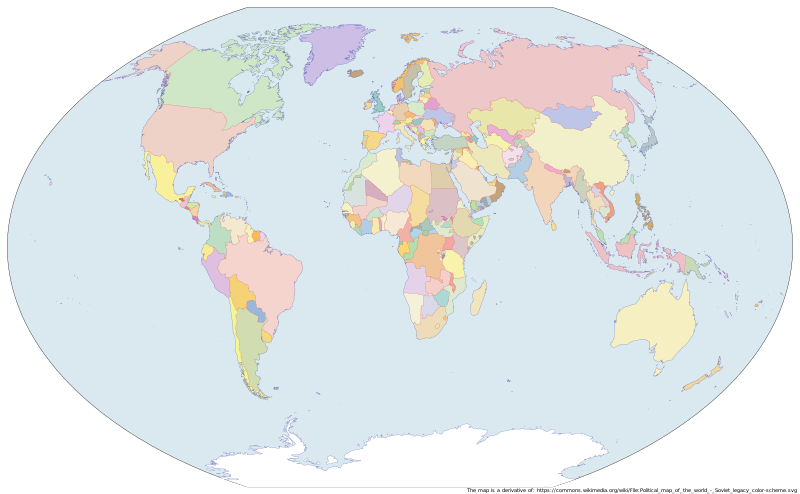
thumb|Monaco is a city state located on the Mediterranean and the second smallest country in the world
sovereign state
state that has the highest authority over a territory

geopolitics
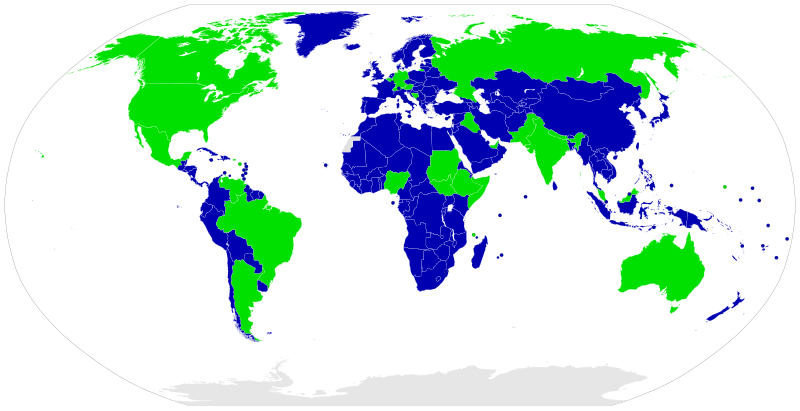
Geopolitics () is the study of the effects of Earth's geography on politics and international relations. Geopolitics usually refers to countries and relations between them. According to multiple researchers, the term is currently being used to describe a broad spectrum of concepts, in a general sense used as "a synonym for international political relations", but more specifically "to imply the global structure of such relations"; this usage builds on an "early-twentieth-century term for a pseudoscience of political geography" and other pseudoscientific theories of historical and geographic det
unitary state
state governed as a single unit with a supreme central government

Scramble for Africa
1880s–1900s Western European colonisation of Africa

annexation
Annexation, in international law, is the forcible acquisition and assertion of legal title over one state's territory by another state, usually following military occupation of the territory. In current international law, it is generally held to be an illegal act. It is distinct from the concepts of conquest, which describes the gaining of physical control, and cession, in which territory is given or sold through treaty.

political geography
study of the spatial outcomes of political processes

continental Europe
continent of Europe, excluding European islands

deep state
clandestine form of government of a state, operated through networks of covert power groups
enclave or exclave
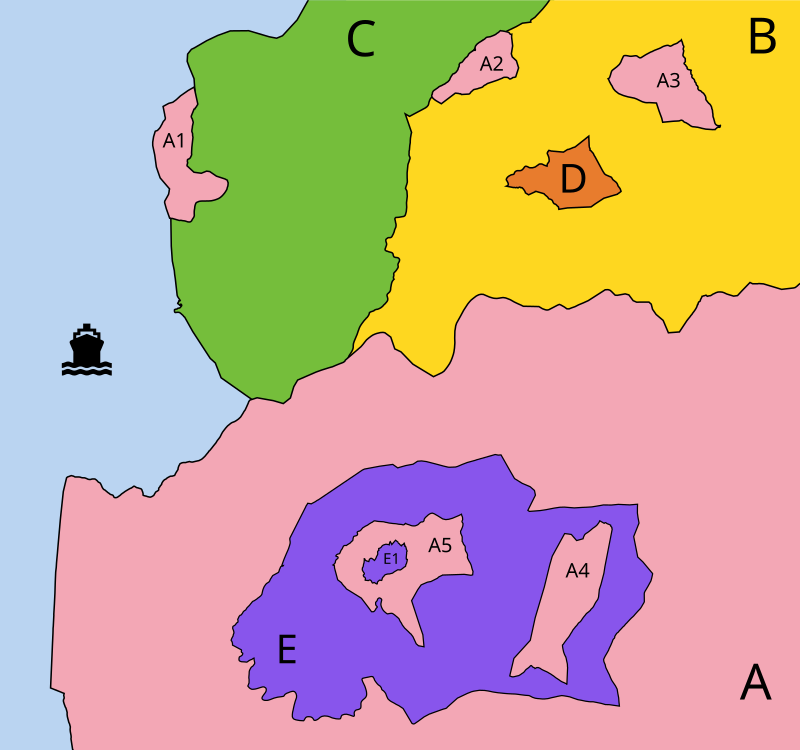
geographic descriptions of territories
salient
elongated protrusion of a geopolitical entity
military geography
geography from a military point of view
political ecology
study of political, economic and social factors about environmental issues
.jpg)
quasi-state
A quasi-state (sometimes referred to as a state-like entity or formatively a proto-state) is a political entity, that does not represent a fully autonomous sovereign state, with its own institutions.
central government
type of government found in unitary states
Carinthian Plebiscite
1920 plebiscite in the southern portion of Carinthia
Mandala
Southeast Asian pseudo-feudalistic political model between 5th to 15th century
seat of government
building, complex of buildings or city from which a government exercises its authority
border barrier
wall or barrier at national boundaries
humanitarian corridor
type of temporary demilitarized zone
ancient Chinese state
historical states prior to unification by Qin Dynasty in 221 BCE
cession
The act of cession is the assignment of property to another entity. In international law it commonly refers to land transferred by treaty. Ballentine's Law Dictionary defines cession as "a surrender; a giving up; a relinquishment of jurisdiction by a board in favor of another agency." In contrast with annexation, where property is forcibly seized, cession is voluntary or at least apparently so.
Zomia
REDIRECT Southeast Asian Massif#Zomia
Sweden proper
historical period of Sweden
territorial state
State with sovereignty based on land or territory
deep state in the United States
conspiracy theory about a clandestine network in the United States
state formation
development of a centralized government structure
macroregion
A macroregion is a geopolitical subdivision that encompasses several traditionally or politically defined regions or countries. The meaning may vary, with the common denominator being cultural, economical, historical or social similarity within a macroregion. The term is often used in the context of globalization.
merger
combination of two or more political or administrative entities
separation barrier
type of wall separating peoples, administrative units or cultures
temporary capital
municipality serving as a temporary seat of government

sectionalism
Sectionalism is loyalty to one's own region or section of the country, rather than to the country as a whole.
political geography of Nineteen Eighty-Four
one of the three fictional states (Oceania, Eurasia, Eastasia) in the novel 1984 by George Orwell, perpetually vying for the control of the world
landwehr
border demarcations or border defences and enclosures in Central Europe
metropolitan municipality
type of municipality established in some countries to serve a metropolitan area
phantom border
concept in border studies
Urban-rural political divide
phenomenon in political science
sacerdotal state
state whose head of state is also a religious leader
critical geopolitics
geopolitical theory that intellectuals of statecraft construct ideas about places, which influence and reinforce political behaviors and policy choices and affect how people process notions of places and politics