Category
page 1Political terminology

government

monarchy
A monarchy is a hereditary form of government in which political power is legally passed on to the family members of the monarch, a head of state who rules for life. While monarchs gain their power depending on specific succession laws, they can also gain their authority via election.

ideology
An ideology is a set of beliefs or values attributed to a person or group of persons, especially those held for reasons that are not purely about belief in certain knowledge, in which "practical elements are as prominent as theoretical ones". Formerly applied primarily to economic, political, or religious theories and policies, in a tradition going back to Karl Marx and Friedrich Engels, more recent use treats the term as mainly condemnatory.
%2001.jpg)
patriotism
thumb|Allegory of patriotism in the Monument to the Fallen for Spain in [[Madrid (1840), by sculptor Francisco Pérez del Valle]]

referendum
A referendum, plebiscite, or ballot measure is a direct vote by the electorate (rather than their representatives) on a proposal, law, or political issue. A referendum may be either binding, resulting in the adoption of a new policy, or consultive (or advisory), functioning like a large opinion poll.

right-wing
political alignment favoring social hierarchy

left-wing
political ideologies supporting social equality and egalitarianism
.jpg)
populism
Populism is a contested concept for a variety of political stances that emphasise the idea of the "common people", often in opposition to a perceived elite. It is frequently associated with anti-establishment and anti-political sentiment. The term developed in the late 19th century and has been applied to various politicians, parties, and movements since that time, often assuming a pejorative tone. Within political science and other social sciences, different definitions of populism have been employed.

Reconquista
thumb|250px|Detail of the Cantigas de Santa Maria|Cantiga #63 (13th century), which deals with a late 10th-century battle in San Esteban de Gormaz involving the troops of Count García and [[Almanzor]]
The Reconquista (Spanish and Portuguese for ) or the fall of al-Andalus was a series of military campaigns by northern Iberian Christian polities against Muslim-ruled al-Andalus, which had previously been part of the Visigothic Kingdom before the Muslim Conquest of 711. The Reconquista concluded in 1492 with the capture of Granada by the Catholic Monarchs of Spain, thereby ending the presence of

parliamentary system
form of government
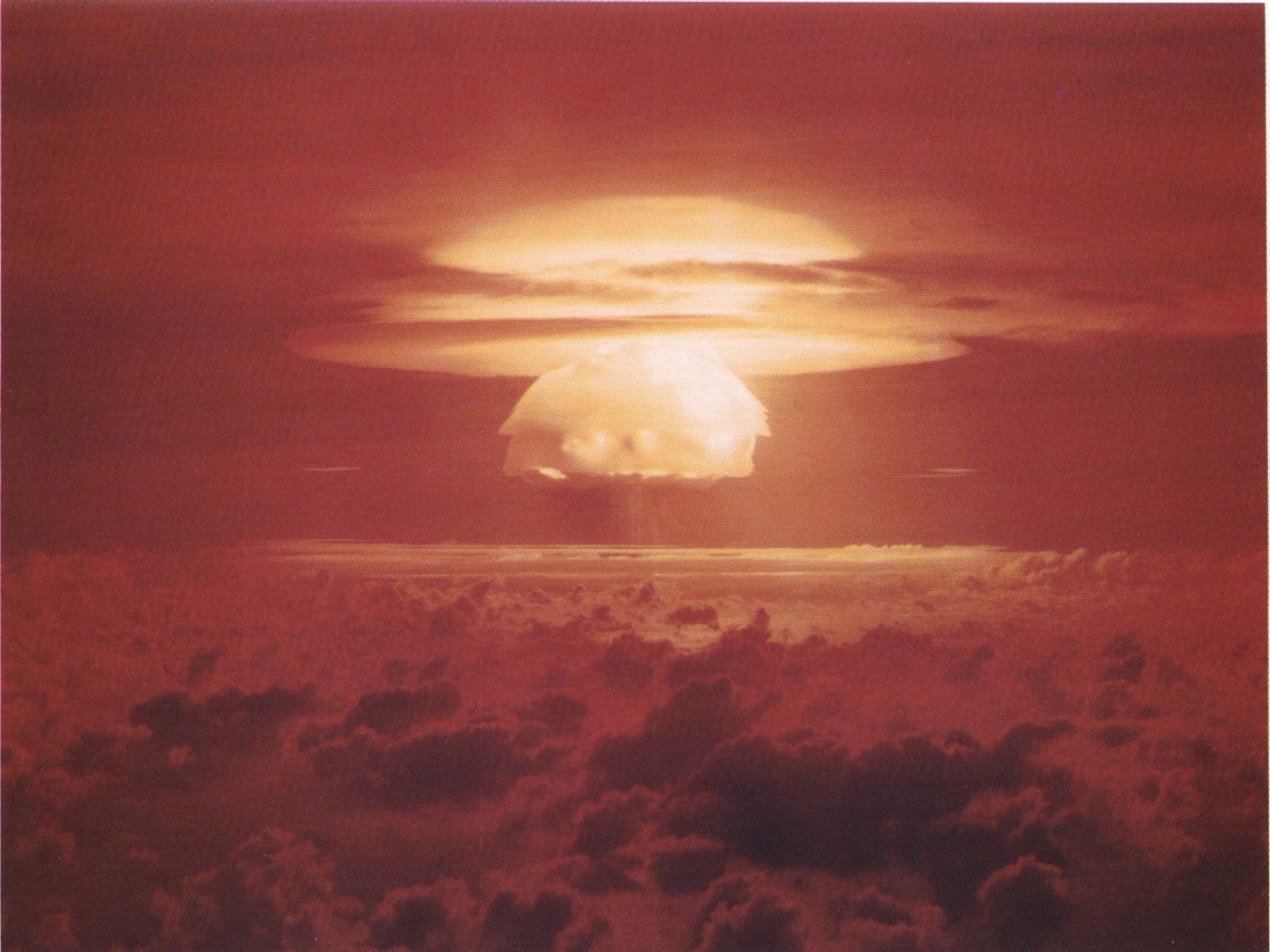
World War III
World War III, also known as the Third World War, is a hypothetical future global conflict subsequent to World War I (1914–1918) and World War II (1939–1945). It is widely predicted that such a war would involve all of the great powers, like its two predecessors, and the use of nuclear weapons or other weapons of mass destruction, thereby surpassing all prior conflicts in scale, devastation, and loss of life.

neoliberalism

independent politician
individual not affiliated to any political party

far-right politics
political alignment on the extreme end of right-wing politics
parliamentary republic
form of government
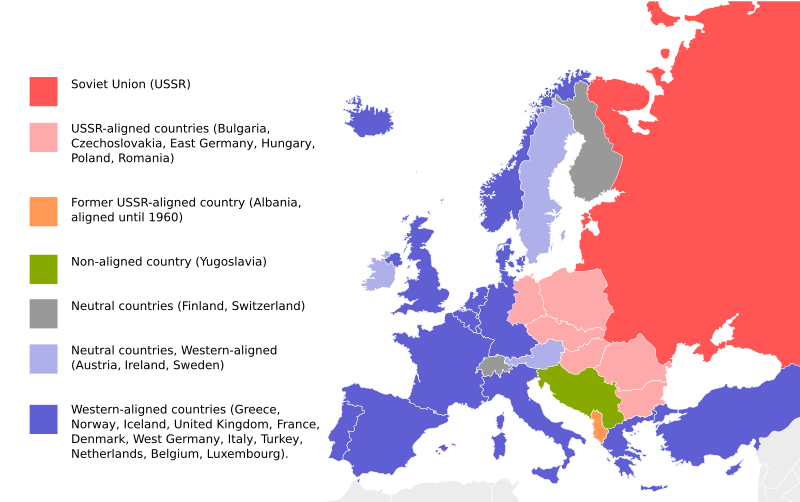
Third World
category of countries on socio economic base

superpower
Superpower describes a sovereign state or supranational union that holds a dominant position characterized by the ability to exert influence and project power on a global scale. This is done through the combined means of economic, military, technological, political, and cultural strength as well as diplomatic and soft power influence. Traditionally, superpowers are preeminent among the great powers. While a great power state is capable of exerting its influence globally, superpowers are states so influential that no significant action can be taken by the global community without first consider

great power
nation that has great political, military and economic influence

political opposition
political force organized against the incumbent party/coalition
political correctness
avoidance of language and action seen as excluding, marginalizing, or insulting

cult of personality
use of techniques of mass media, propaganda, the arts, patriotism, and government-organized demonstrations to create an idealized, heroic, and worshipful image of a leader or person

tyrant
thumb|King Jie of Xia holding a Ji polearm and sitting on two ladies.
thumb|Killing No Murder, cover page, 18th century reprint of 17th century English pamphlet written to inspire and Tyrannicide|make righteous the act of assassinating Oliver Cromwell
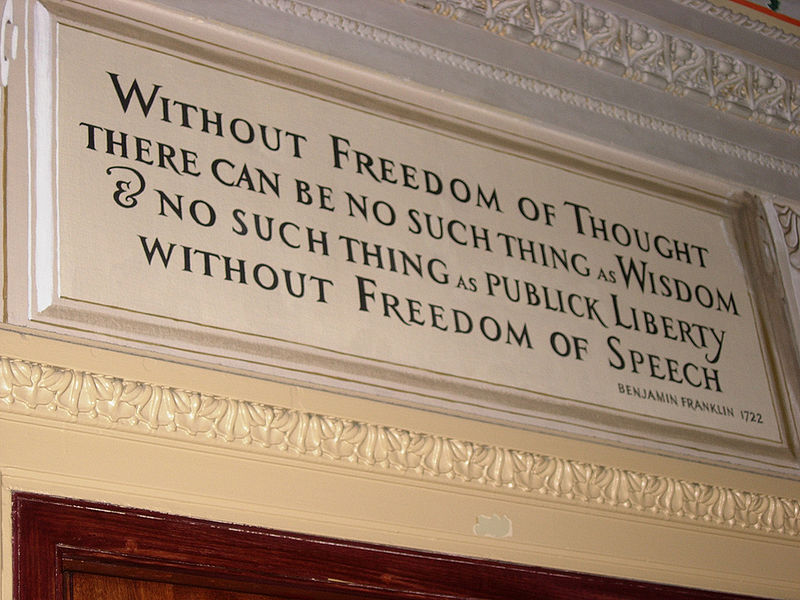
freedom of thought
freedom of an individual to hold or consider a fact, viewpoint, or thought, independent of others' viewpoints

lobbying
Government relations (also known as government affairs or legislative affairs), is a form of advocacy that legally attempts to influence and/or understand policy decisions made by legislators, members of regulatory agencies in the executive branch, or in some cases judges. Lobbying, a major and most well known component of government relations on the other hand, consists of "directly advocating for or against particular legislation or regulations."
hate speech
speech that expresses hatred towards individuals or groups

political system
system of politics and government

far-left politics
political alignment on the extreme end of left-wing politics

divide and rule
strategy in politics and sociology for stabilizing anti-democratic, illegitimate rule over people

yellow journalism
sensationalistic news

denazification
Denazification () was an Allied initiative to rid German and Austrian society, culture, press, economy, judiciary, and politics of the Nazi ideology following the Second World War. It was carried out by removing those who had been Nazi Party or SS members from positions of power and influence, by disbanding or rendering impotent the organizations associated with Nazism, and by trying prominent Nazis for war crimes in the Nuremberg trials of 1946. The program of denazification was launched after the end of the war and was solidified by the Potsdam Agreement in August 1945. The term, in the hyph
national security
defense and maintenance of a state through use of all powers at the state's disposal

centre-left
position within the political spectrum

comrade
thumb|World War I [[American Red Cross poster by Harrison Fisher, 1918]]
In political contexts, comrade means a fellow party member. The political use was inspired by the French Revolution, after which it grew into a form of address between socialists and workers. Since the Russian Revolution, popular culture in the West has often associated it with communism. As such, it can also be used as a reference to leftists, akin to "". In particular, the Russian word () may be used as a reference to communists.

opportunism
thumb|right|300px|Opportunity Seized, Opportunity Missed, engraving by Theodoor Galle, 1605

appeasement
thumb|right| Adolf Hitler greets [[British Prime Minister Neville Chamberlain at the beginning of the Bad Godesberg meeting on 24 September 1938 in which Hitler demanded annexation of Czech border areas without delay, leading to the Godesberg Memorandum.]]
advocacy group
groups using advocacy in order to influence public opinion and policy

politburo
thumb|274px|The Soviet Politburo passes a resolution to execute 346 "enemies of the Communist Party of the Soviet Union|CPSU and the Soviet Government" who led "counter-revolutionary, pro-Trotskyist, plotting and spying activities", signed by secretary Stalin, 17 January 1940.
A politburo () or political bureau is the highest organ of the central committee in communist parties. The term is also sometimes used to refer to similar organs in socialist and Islamist parties, such as the Political Bureau of Hamas. Politburos are part of the governing structure in most former and existing communist s

democratization
thumb|upright=1.3|Since 1900, the number of countries democratizing (yellow) has been higher than those autocratizing (blue), except in the late 1920s through 1940s and since 2010.

balkanization
thumb|right|300px|Territorial history of the Balkans from 1796 to 2008
identity politics
political position based on the interests and perspectives of social groups with which people identify
incumbent
The incumbent is the current holder of an office or position. In an election, the incumbent is the person holding or acting in the position that is up for election, regardless of whether they are seeking re-election.
parliamentary group
grouping of members of a parliament by their partisan affiliation
centre-right
position within the political spectrum
big tent
political party with a balanced program (or one containing elements of ideologies from across the political spectrum) intended to be competitive among all sections of society
buffer zone
intermediate region, typically between belligerent entities
minority government
cabinet whose political party or coalition of parties does not have a majority in the parliament

Finlandization
thumb|right|Urho Kekkonen and [[Leonid Brezhnev in 1960 during Kekkonen's state visit to the Soviet Union.]]
political corruption
use of power by government officials for illegitimate private gain
The Establishment
visible dominant group that holds power or authority in a nation or organization

quorum
thumb|right|Vote cast against Themistocles. A quorum of 6,000 was required for [[ostracism under the Athenian democracy, according to Plutarch; a similar quorum was necessary in the following century for grants of citizenship.]]
A quorum is the minimum number of members of a group necessary to constitute the group at a meeting. In a deliberative assembly (a body that uses parliamentary procedure, such as a legislature), a quorum is necessary to conduct the business of that group. In contrast, a plenum is a meeting of the full (or rarely nearly full) body. A body, or a meeting or vote of it, is
right-wing populism
political ideology and movement that combines right-wing political positions with populist rhetoric, emphasizing opposition to elites, nationalism, and the defense of national identity, culture, or sovereignty
state capitalism
capitalist economy where the government acts as a corporation
cabotage
Cabotage () is the transport of goods or passengers between two places in the same country by a carrier registered in a different country. The term originally applied to shipping along coastal routes, port to port, but now applies to aviation, railways, and road transport as well. Most countries do not permit cabotage, and there are strict sanctions against it, for reasons of economic protectionism, national security, or public safety. One notable exception is the European Union, whose member states all grant cabotage rights to each other.
caretaker government
type of temporary government
popular front
Political coalition proposed by the international communist movement following a shift away from the social fascism theory, involving liberal and social democratic forces
order of succession
ordered list of individuals in line to take on a given position should the office become vacant
left–right politics
system of classifying political positions, ideologies and parties
White émigré
Russians who do not support the Soviet Union
crony capitalism
capitalism featuring undue alliances between business interests and politicians

subversion
Subversion () refers to a process by which the values and principles of a system in place are contradicted or reversed in an attempt to sabotage the established social order and its structures of power, authority, tradition, hierarchy, and social norms. Foreign subversion refers to "hostile meddling in a rival’s domestic politics, against the wishes of the existing regime, in order to weaken it or change its foreign policy." Foreign subversion tends to be covert rather than overt. Foreign subversion is generally perceived to be a hostile attack.