Category
page 1Political theories

conservatism
Conservatism is a cultural, social, and political philosophy and ideology that seeks to promote and preserve traditional institutions, customs, and values. The central tenets of conservatism may vary in relation to the culture and civilization in which it appears. In Western culture, depending on the particular nation and the particular time period, conservatives seek to promote and preserve a range of institutions, such as the nuclear family, organized religion, the military, the nation-state, property rights, rule of law, aristocracy, and monarchy.

imperialism
thumb|The Rhodes Colossus|Political cartoon satirising the [[Cape to Cairo Railway, a symbol of British imperialism during the Scramble for Africa]]
%2C%20by%20John%20Trumbull.jpg)
independence
thumb|upright=1.0|The Thirteen Colonies|Thirteen British Colonies on the east coast of North America issued a Declaration of Independence in 1776
thumb|upright=1.0| Chile, one of several Spanish Empire|Spanish territories in South America, issued a Declaration of independence in 1818 thumb|upright=1.0|Pedro I of Brazil|Prince Pedro surrounded by a crowd in [[São Paulo after breaking the news of Brazil's independence on 7 September 1822.]]
thumb|upright=1.0|The Senate of Finland|Finnish Senate of 1917, Prime Minister [[P. E. Svinhufvud in the head of table. The Senate declared Finland independe

totalitarianism
thumb|350px|Two versions of the World War II U.S. propaganda poster "Your Lot in a Totalitarian State" depicting a process of compulsory sham election which took place in totalitarian states, the flags of which – [[Nazi Germany, Fascist Italy and the Soviet Union – are presented below. In the version on the right, produced after Operation Barbarossa, the flag of the Soviet Union (Allied member) is replaced with that of the Empire of Japan (Axis member), which is not always regarded as totalitarian by Western scholars. In regards to the USSR, the label has also received some criticism.]]
.svg)
pacifism
thumb|upright|A peace sign, which is widely associated with pacifism.
right|upright=1.5|thumb|alt=Large outdoor gathering|World Day of Prayer for Peace in Assisi, 2011
.svg)
authoritarianism
Authoritarianism is a political system characterized by the rejection of political plurality, the use of strong central power to preserve the political status quo, and reductions in democracy, separation of powers, civil liberties, and the rule of law. Authoritarian regimes may be either autocratic or oligarchic and may be based upon the rule of a party, the military, or the concentration of power in a single person. States that have a blurred boundary between democracy and authoritarianism have sometimes been characterized as "hybrid democracies", "hybrid regimes" or "competitive authoritaria
.jpg)
populism
Populism is a contested concept for a variety of political stances that emphasise the idea of the "common people", often in opposition to a perceived elite. It is frequently associated with anti-establishment and anti-political sentiment. The term developed in the late 19th century and has been applied to various politicians, parties, and movements since that time, often assuming a pejorative tone. Within political science and other social sciences, different definitions of populism have been employed.

federalism
[[File:Map of unitary and federal states.svg|thumb|upright=1.5|

chauvinism
Chauvinism ( ) is the unreasonable belief in the superiority or dominance of one's own group or people, who are seen as strong and virtuous, while others are considered weak, unworthy, or inferior. The Encyclopaedia Britannica describes it as a form of "excessive and unreasonable" patriotism and nationalism, a fervent faith in national excellence and glory.

absolute monarchy
form of government in which the monarch has absolute power

neoliberalism

self-determination
Self-determination refers to a people's right to form its own political entity, and internal self-determination is the right to representative government with full suffrage.

neo-Nazism
thumb|The Nordic Resistance Movement's 2018 "[[612 march" on Finnish independence day ]]

Juche
Juche, officially the '''Juche idea''', is a name of the official ideology of North Korea and its ruling Workers Party of Korea. It is also described as the philosophical principle of Kimilsungism-Kimjongilism.
.jpg)
separatism
Separatism is the advocacy of cultural, ethnic, tribal, religious, racial, regional, governmental, or gender separation from the larger group. As with secession, separatism conventionally refers to full political separation. Groups simply seeking greater autonomy are usually not considered separatists. Some discourse settings equate separatism with religious segregation, racial segregation, or sex segregation, while other discourse settings take the broader view that separation by choice may serve useful purposes and is not the same as government-enforced segregation. There is some academic de

conscription
alt=Conscription map of the world|thumb|upright=2.2|Conscription map of the world:

cosmopolitanism
Cosmopolitanism is the idea that all human beings are members of a single community. Its adherents are known as cosmopolitan or cosmopolite. Cosmopolitanism is both prescriptive and aspirational, believing humans can and should be "world citizens" in a "universal community". The idea encompasses different dimensions and avenues of community, such as promoting universal moral standards, establishing global political structures, or developing a platform for mutual cultural expression and tolerance.

militarism
thumb|upright=1.35|Prussian (and later German) Chancellor [[Otto von Bismarck, right, with General Helmuth von Moltke the Elder, left, and General Albrecht von Roon, centre. Although Bismarck was a civilian politician and not a military officer, he wore a military uniform as part of the Prussian militarist culture of the time. From a painting by Carl Steffeck.]]

laissez faire
Laissez-faire ( , from , ) implies that nothing restricts what happens, irrespective of the potential consequences.
extremism
Extremism is "the quality or state of being extreme" or "the advocacy of extreme measures or views". The term is primarily used in a political or religious sense to refer to an ideology that is considered (by the speaker or by some implied shared social consensus) to be far outside the mainstream attitudes of society. It can also be used in an economic context. The term may be used pejoratively by opposing groups, but is also used in academic and journalistic circles in a purely descriptive and non-condemning sense.
.jpg)
centrism
Centrism is the range of political ideologies that exist between left-wing politics and right-wing politics on the left–right political spectrum. It is associated with moderate politics, including people who strongly support moderate policies and people who are not strongly aligned with left-wing or right-wing policies. Centrism is commonly associated with liberalism, radical centrism, and agrarianism. Those who identify as centrist support gradual political change, often through a welfare state with moderate redistributive policies. Though its placement is widely accepted in political science

racial segregation
separation of humans based on race

pan-slavism
alt=|thumb|Contemporary map of the Slavic people|Slavic-speaking countries of [[Europe. South Slavs appear in dark green, East Slavs in green, and West Slavs in light green.]]
Pan-Slavism is a political ideology that originated in the mid-19th century, emphasizing integrity and unity among the Slavic peoples. Its main impact occurred in the Balkans, where non-Slavic empires had ruled the South Slavs for centuries. These were mainly the Byzantine Empire, Austria-Hungary, the Ottoman Empire, and Venice.

universal basic income
sociopolitical financial transfer proposal

white supremacy
racist belief that white people are superior to people of other racial backgrounds
statism
In political science, statism or etatism (from French, état 'state') is the doctrine that the political authority of the state is legitimate to some degree. This may include economic and social policy, especially in regard to taxation and the means of production.
pluralism
acknowledgment of political diversity

reaction
In politics, a reactionary is a person who favors a return to a previous state of society which they believe possessed positive characteristics absent from contemporary society. As a descriptor term, reactionary derives from the ideological context of the left–right political spectrum. As an adjective, the word reactionary describes points of view and policies meant to restore a status quo ante. As an ideology, reactionism is a tradition in right-wing politics; the reactionary stance opposes policies for the social transformation of society, whereas conservatives seek to preserve the socio-eco

Clash of Civilizations
book
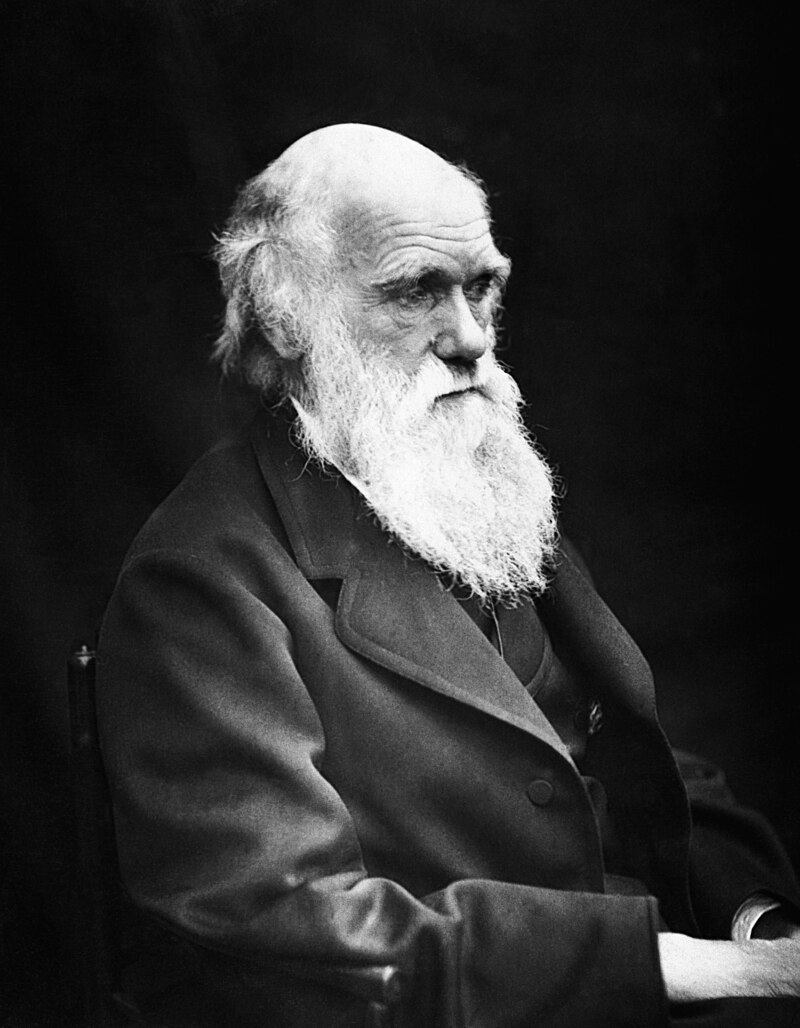
social Darwinism
biological concepts of natural selection & survival fitness re-imagined socio-politically

anarcho-capitalism
thumb|alt=A two-colored flag, split diagonally, with yellow at the top and black at the bottom|The black and gold flag, a symbol of anarchism (black) and capitalism (gold) which, according to Murray Rothbard, was first flown in 1963 in [[Colorado and is also used by the Swedish Anarkokapitalistisk Front.|261x261px]]

Jacobitism
Jacobitism was a political ideology advocating the restoration of the senior line of the House of Stuart to the British throne. When James II of England chose exile after the November 1688 Glorious Revolution, the Parliament of England ruled he had "abandoned" the English throne, which was given to his Protestant daughter Mary II of England, and his nephew, her husband William III. In April 1689, on the same basis, the Scottish Convention awarded Mary and William the throne of Scotland.
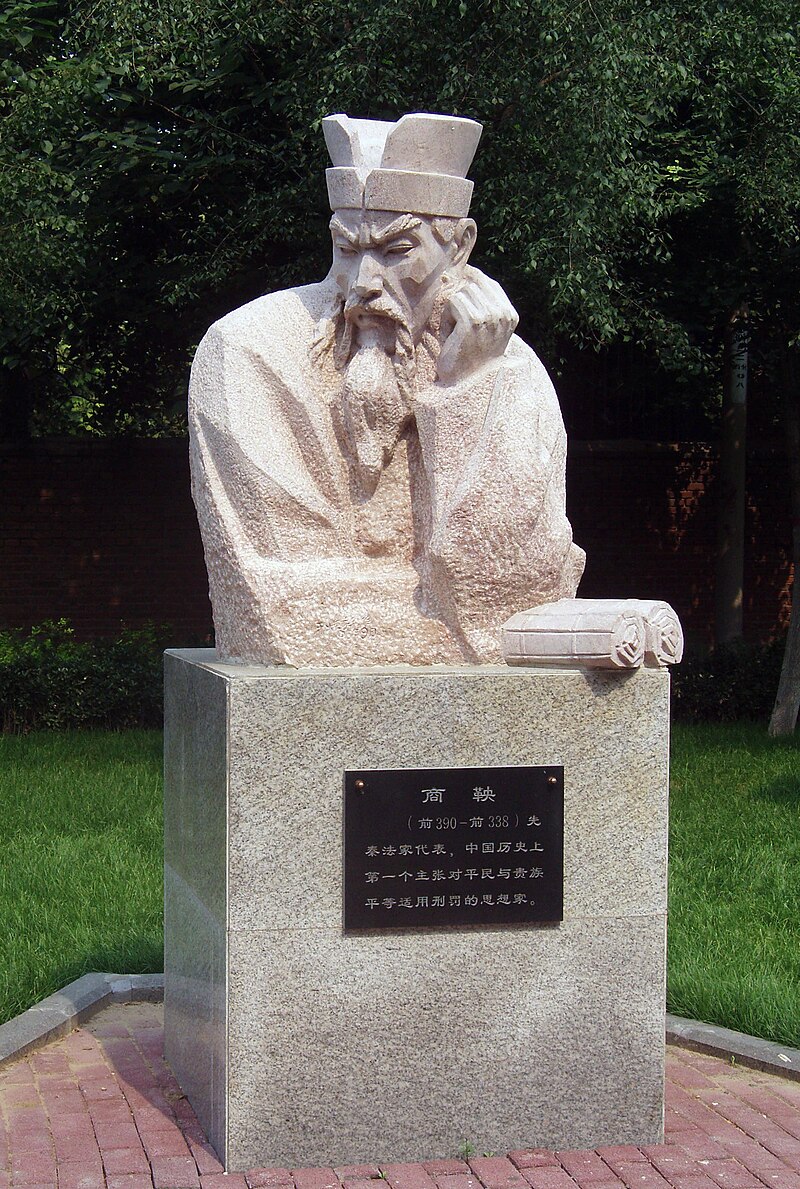
Legalism
one of the six classical schools of thought in Chinese philosophy
.jpg)
objectivism
Objectivism is a philosophical system named and developed by Russian-American writer and philosopher Ayn Rand. She described it as "the concept of man as a heroic being, with his own happiness as the moral purpose of his life, with productive achievement as his noblest activity, and reason as his only absolute".

paternalism
thumb|Child wearing a child harness
Paternalism is action that limits a person's or group's liberty or autonomy against their will and is intended to promote their own good. It has been defended in a variety of contexts as a means of protecting individuals from significant harm, supporting long-term autonomy, or promoting moral or psychological well-being. Such justifications are commonly found in public health policy, legal theory, medical ethics, and behavioral economics, where limited intervention is viewed as compatible with or even supportive of personal agency.

domino theory
theory concerning the influence of Communism

neo-fascism
thumb|upright=1.1|Members of the Greek neo-fascist organisation Golden Dawn (Greece)|Golden Dawn in 2015

ethnic nationalism
form of nationalism wherein the "nation" is defined in terms of ethnicity

equality before the law
principle that each individual must be treated equally by the law without discrimination or privileges by the government
liberal conservatism
political ideology within conservatism
scientism
Scientism is the belief that science and the scientific method are the best or only way to render truth about the world and reality.

decadence
thumb|An orgy in Imperial Rome, by Henryk Siemiradzki
thumb|Romans during the Decadence, by [[Thomas Couture]]
Third Way
political position akin to centrism
Three Principles of the People
political philosophy developed by Sun Yat-sen

caesaropapism
thumb|A small
cross of Sheet metal|gold sheet, with rubbings of coins of [[Justin II (emperor in 565–574) and holes for nails or thread, Italian, 6th century]]

communitarianism
Communitarianism is a philosophy that emphasizes the connection between the individual and the community. Its overriding philosophy is based on the belief that a person's social identity and personality are largely moulded by community relationships, with a smaller degree of development being placed on individualism.

anti-Zionism
Anti-Zionism is opposition to Zionism. Although anti-Zionism is a heterogeneous phenomenon, all its proponents agree that the creation of the State of Israel in 1948, and the movement to create a sovereign Jewish state in the region of Palestine—a region partly coinciding with the biblical Land of Israel���was flawed or unjust in some way.
enlightened absolutism
form of absolute monarchy or despotism inspired by the Enlightenment

Peronism
thumb|Argentine president Juan Perón and first lady [[Eva Perón have been the central figures in the Justicialist Party.]]
thumb|(Clockwise from the top left) Symbols associated with Peronism: Peronist Party emblem, the federal star, the "Perón vuelve" (Perón returns) sign, and the "V" hand sign.

devolution
thumb|The Parliament of Åland
Devolution is the statutory delegation of powers from the central government of a sovereign state to govern at a subnational level, such as a regional or local level. It is a form of administrative decentralization. Devolved territories have the power to make legislation relevant to the area, thus granting them a higher level of autonomy.
%20(51052073462).jpg)
eco-socialism
thumb|300px|Socialist Alternative (Australia)|Socialist Alternative banner at the Global Climate Strike 2021 in [[Melbourne, Australia]]

Scandinavism
thumb|A 19th-century poster image of (from left to right) Norwegian, Danish and Swedish soldiers joining hands. The Norwegian and Swedish flags have the Union mark of Norway and Sweden|union mark.
thumb|An 1856 Nordic student meeting|meeting of Scandinavian students in [[Uppsala, Sweden, with a parade marching next to Svandammen]]
Scandinavism (; ; ), also called Scandinavianism or pan-Scandinavianism, is an ideology that supports various degrees of cooperation among the Scandinavian countries. Scandinavism comprises the literary, linguistic and cultural movement that focuses on promoting a sh
gross national happiness
philosophy that guides the government of Bhutan
individualist anarchism
several traditions of thought within the anarchist movement

antimilitarism
alt=|thumb|It Shoots Further Than He Dreams. Antimilitarist cartoon by John F. Knott. First published in March 1918.
Antimilitarism (also spelt anti-militarism) is a doctrine that opposes war, relying heavily on a critical theory of imperialism and was an explicit goal of the First and Second International. Whereas pacifism is the doctrine that disputes (especially between countries) should be settled without recourse to violence, Paul B. Miller defines anti-militarism as "ideology and activities...aimed at reducing the civil power of the military and ultimately, preventing international war".
American exceptionalism
ideology holding the United States as unique among nations; facet of nationalism in the United States

revanchism
thumb|upright=1.35|In Albert Bettannier's La Tache Noire (The Black Stain, 1887) French students are taught about the provinces of [[Alsace-Lorraine, taken by Germany in 1871.]]
slavophilia
Slavophilia () was a movement originating from the 19th century that wanted the Russian Empire to be developed on the basis of values and institutions derived from Russia's early history. Slavophiles opposed the influences of Western Europe in Russia. Depending on the historical context, the opposite of Slavophilia could be seen as Slavophobia (a fear of Slavic culture) or also what some Russian intellectuals (such as Ivan Aksakov) called zapadnichestvo (westernism).
For example:
.webp)
Carlism
thumb|Carlist flag from the Third Carlist War (c. 1875), with the Carlist motto [[Dios, patria y rey ("God, Fatherland and King")]]
Carlism (; ; ; ) is a traditionalist and legitimist political movement in Spain aimed at establishing an alternative branch of the Bourbon dynasty, one descended from Don Carlos, Count of Molina (1788–1855), on the Spanish throne.
green anarchism
form of anarchism which puts a particular emphasis on environmental issues