Category
page 1Polyporaceae

Fomes fomentarius
species of fungus

Trametes versicolor
type of mushroom
%2C%20Zoelen%2C%20the%20Netherlands.jpg)
Polyporaceae
The Polyporaceae () are a family of poroid fungi belonging to the Basidiomycota. The flesh of their fruit bodies varies from soft (as in the case of the dryad's saddle illustrated) to very tough. Most members of this family have their hymenium (fertile layer) in vertical pores on the underside of the caps, but some of them have gills (e.g. Panus) or gill-like structures (such as Daedaleopsis, whose elongated pores form a corky labyrinth). Many species are brackets, but others have a definite stipe – for example, Polyporus badius.

Pycnoporus cinnabarinus
species of fungus

Trametes hirsuta
species of fungus

Lentinus brumalis
species of fungi
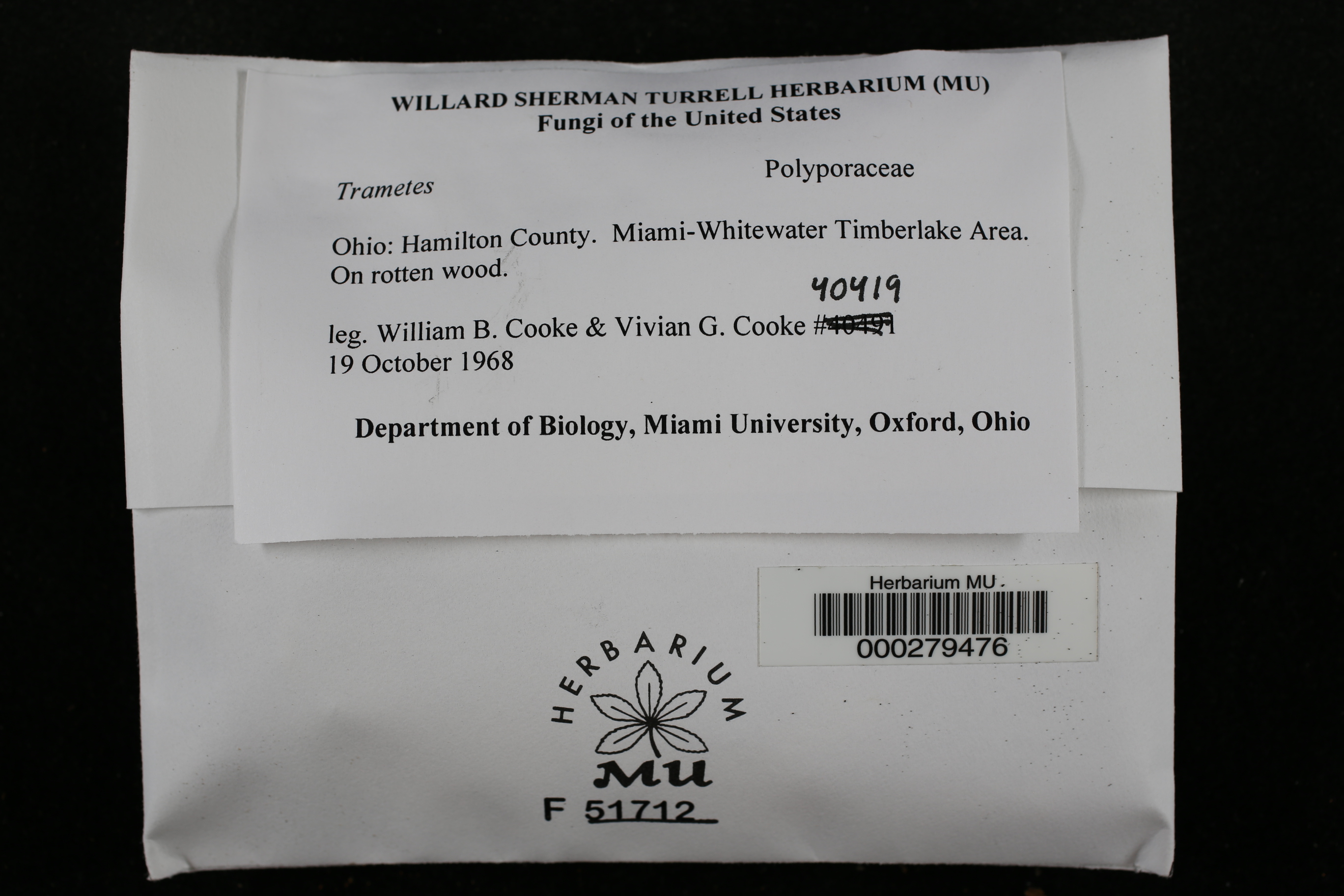
Trametes
Trametes is a genus of fungi that is distinguished by a pileate basidiocarp, di- to trimitic hyphal systems, smooth non-dextrinoid spores, and a hymenium usually without true hymenial cystidia. The genus has a widespread distribution and contains about 195 species. The genus was circumscribed by Elias Magnus Fries in 1836.
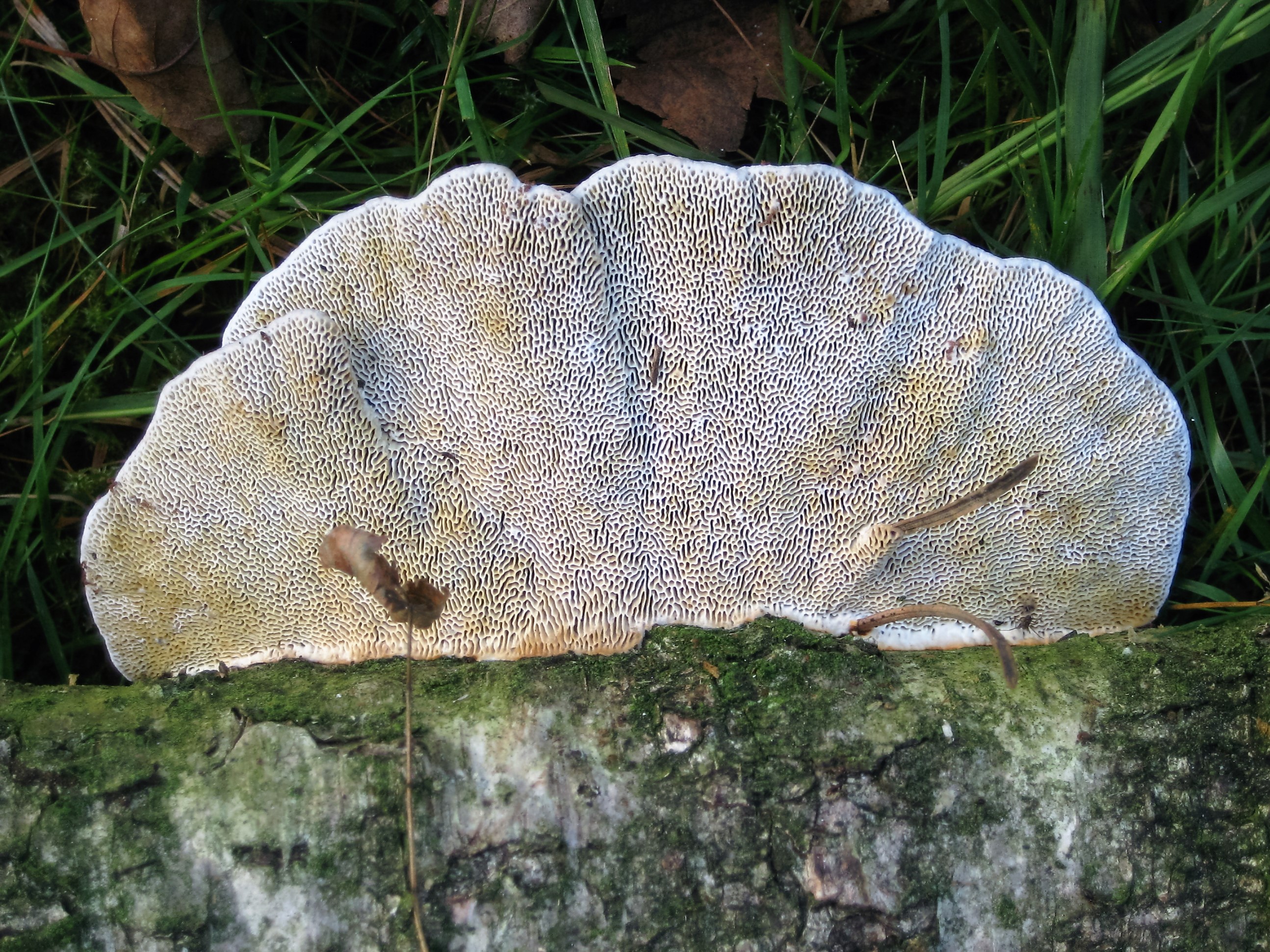
Daedaleopsis confragosa
species of fungus

Trametes suaveolens
species of fungus

Fomes
Fomes is a genus of perennial woody fungi in the family Polyporaceae. Species are typically hoof-shaped (ungulate). New growth each season is added to the margin, resulting in a downward extension of the hymenium. This often results in a zonate appearance of the upper surface, that is, marked by concentric bands of color.

Trametes gibbosa
species of polypore mushroom

black-footed polypore
species of fungus

Lentinus tigrinus
species of fungus
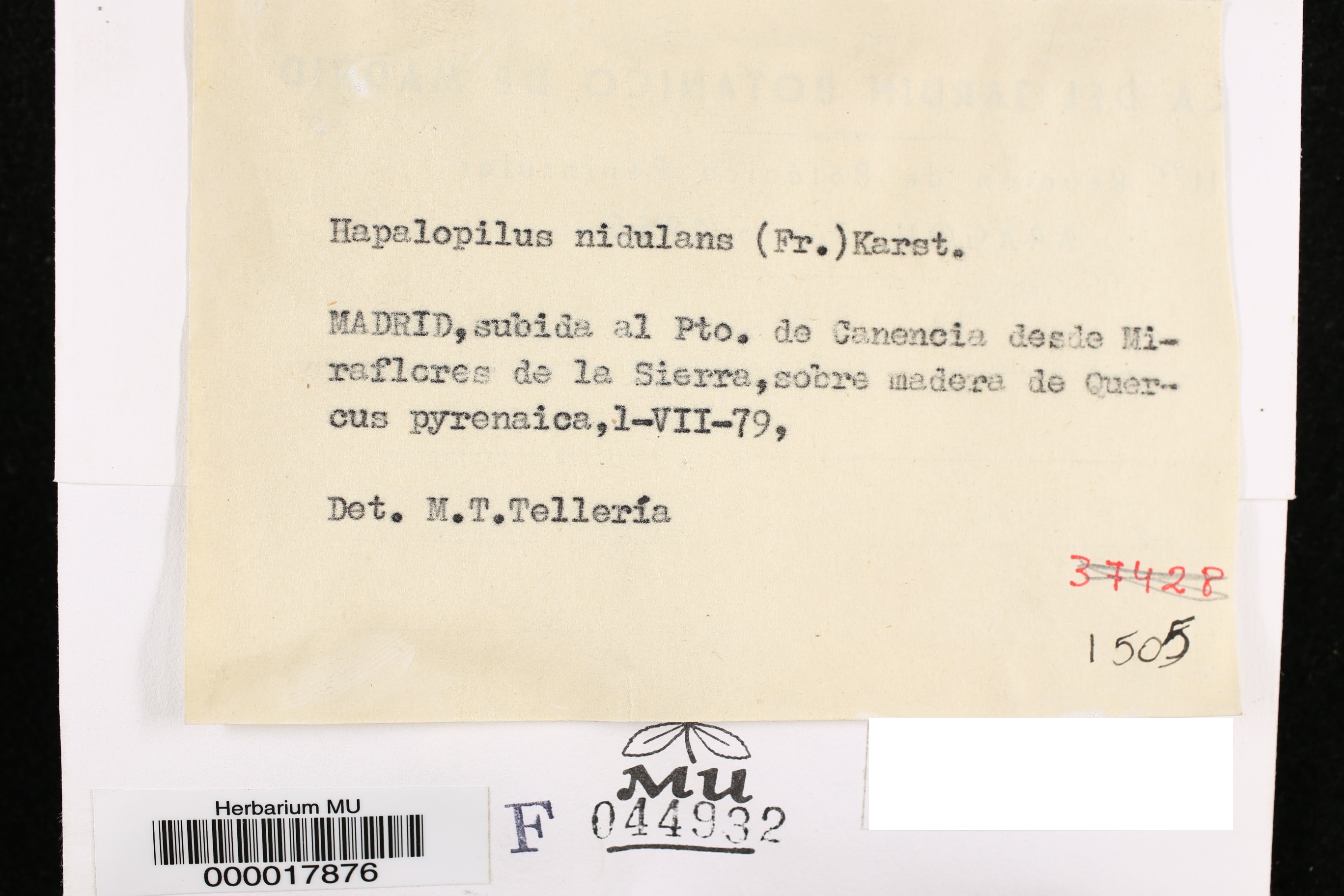
Hapalopilus nidulans
species of fungus
%20Fr%20630853.jpg)
Lentinus
Lentinus is a genus of fungi in the family Polyporaceae. The genus is widely distributed, with many species found in subtropical regions.

Neofavolus alveolaris
species of fungus

Trametes pubescens
species of fungus
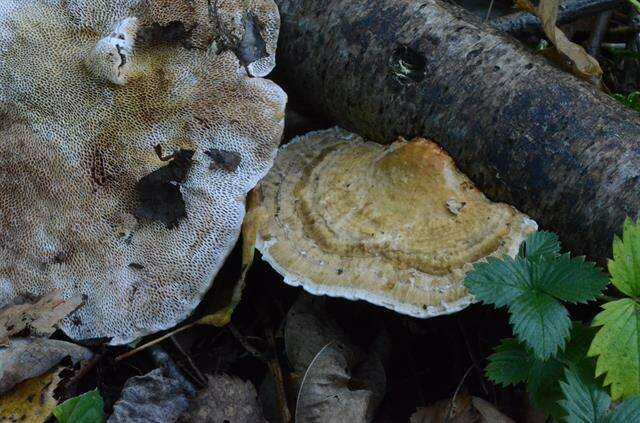
Daedaleopsis
Daedaleopsis is a genus of fungi in the family Polyporaceae. The name Daedaleopsis is a reference to Daedalus, the labyrinth-maker of myth. Similarly, the maze-like pattern of pores is taxonomically described as being daedaloid. DNA was recovered and sequenced from fragments of a nearly 7000-year-old fruit body of D. tricolor found in an early Neolithic village in Rome.

Lenzites betulina
species of fungus

Wolfiporia extensa
species of fungus

Panus
Panus is a genus of fungi in the family Polyporaceae.

Panus conchatus
species of fungus
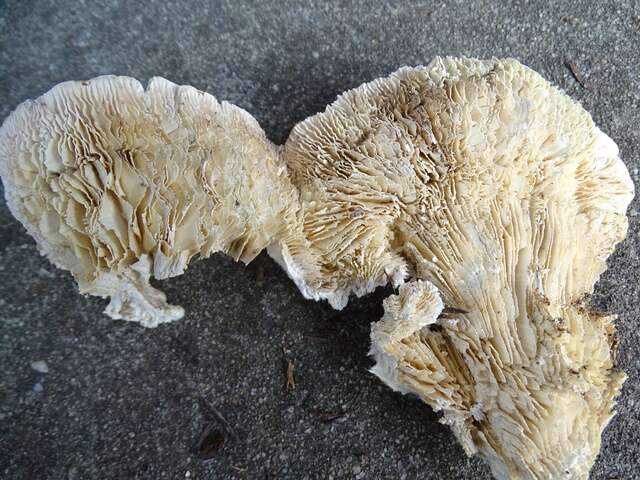
Lenzites
Lenzites is a widespread genus of wood-decay fungi in the family Polyporaceae. It was circumscribed by Elias Magnus Fries in 1835. The generic name honours German naturalist Harald Othmar Lenz (1798–1870).

Hapalopilus croceus
species of fungus

Aurantiporus fissilis
species of fungus

Cerrena
Cerrena is a genus of poroid fungi in the family Polyporaceae. The genus was circumscribed by Samuel Frederick Gray in 1821. Gray's type species, Cerrena cinerea, is now known as C. unicolor.
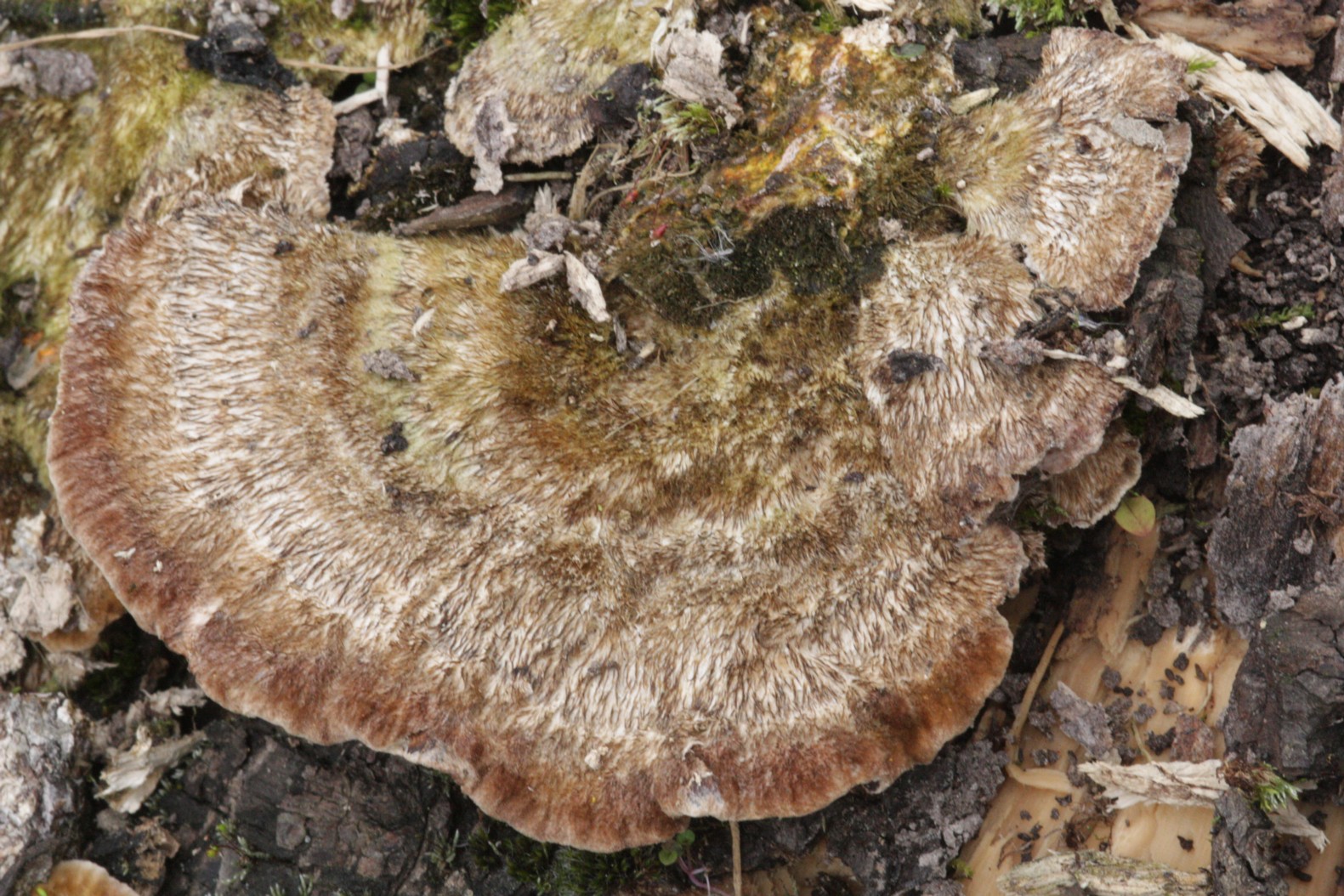
Coriolopsis trogii
species of fungi in the genus Coriolopsis

Trametes ochracea
species of fungus
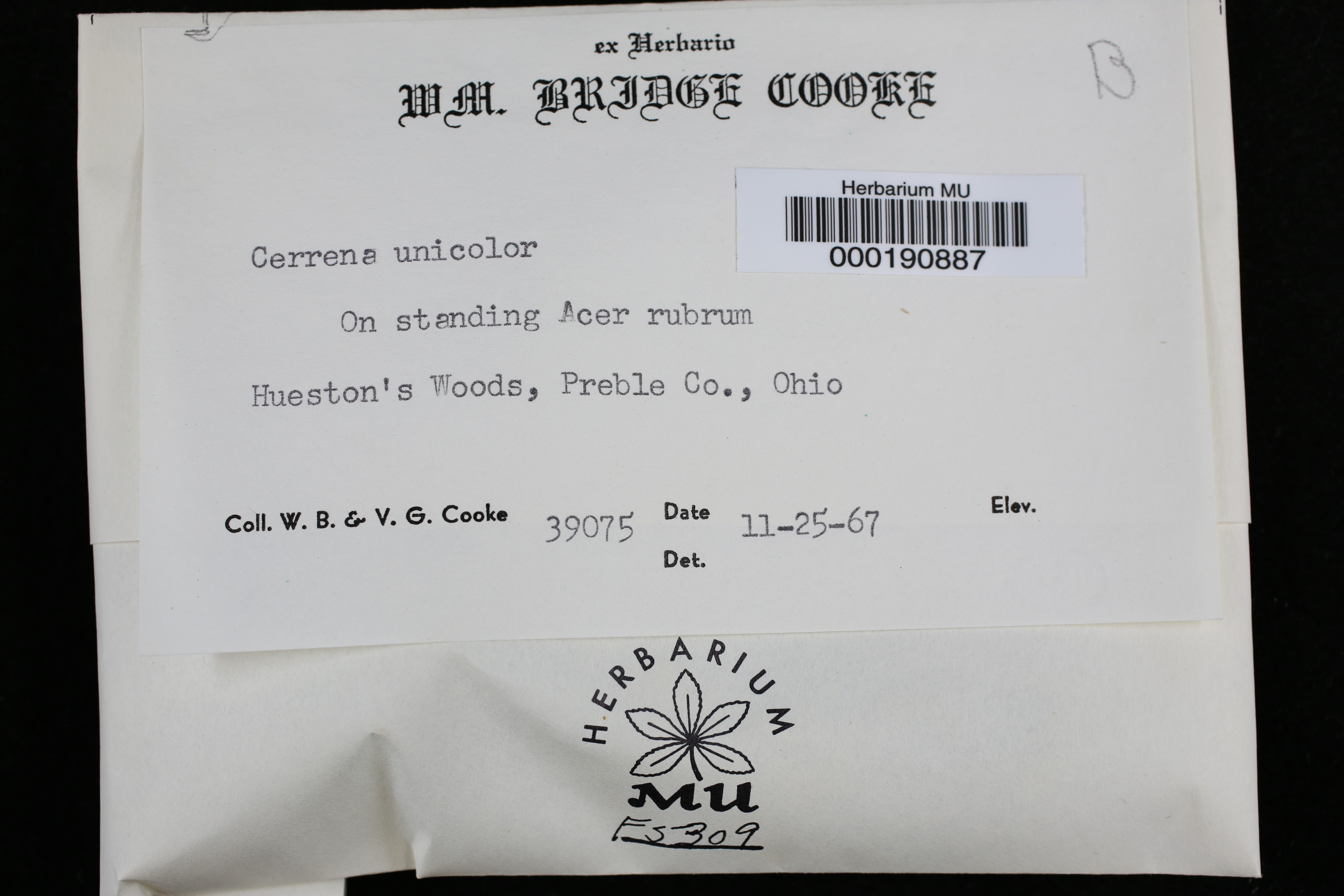
Cerrena unicolor
species of fungus

Coriolopsis gallica
species of fungus

Lentinus strigosus
species of fungus
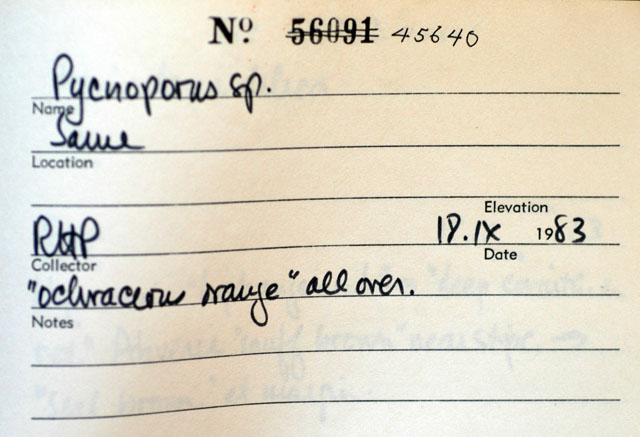
Pycnoporus
Pycnoporus is a genus of fungi in the family Polyporaceae. This genus is distinguished from most other polypores because of its brilliant red-orange color. Modern mycology recognizes five distinct species of Pycnoporus: the type P. cinnabarinus, P. coccineus, P. palibini, P. puniceus, and P. sanguineus. These species are divided somewhat by morphology, biogeography, and DNA sequence.
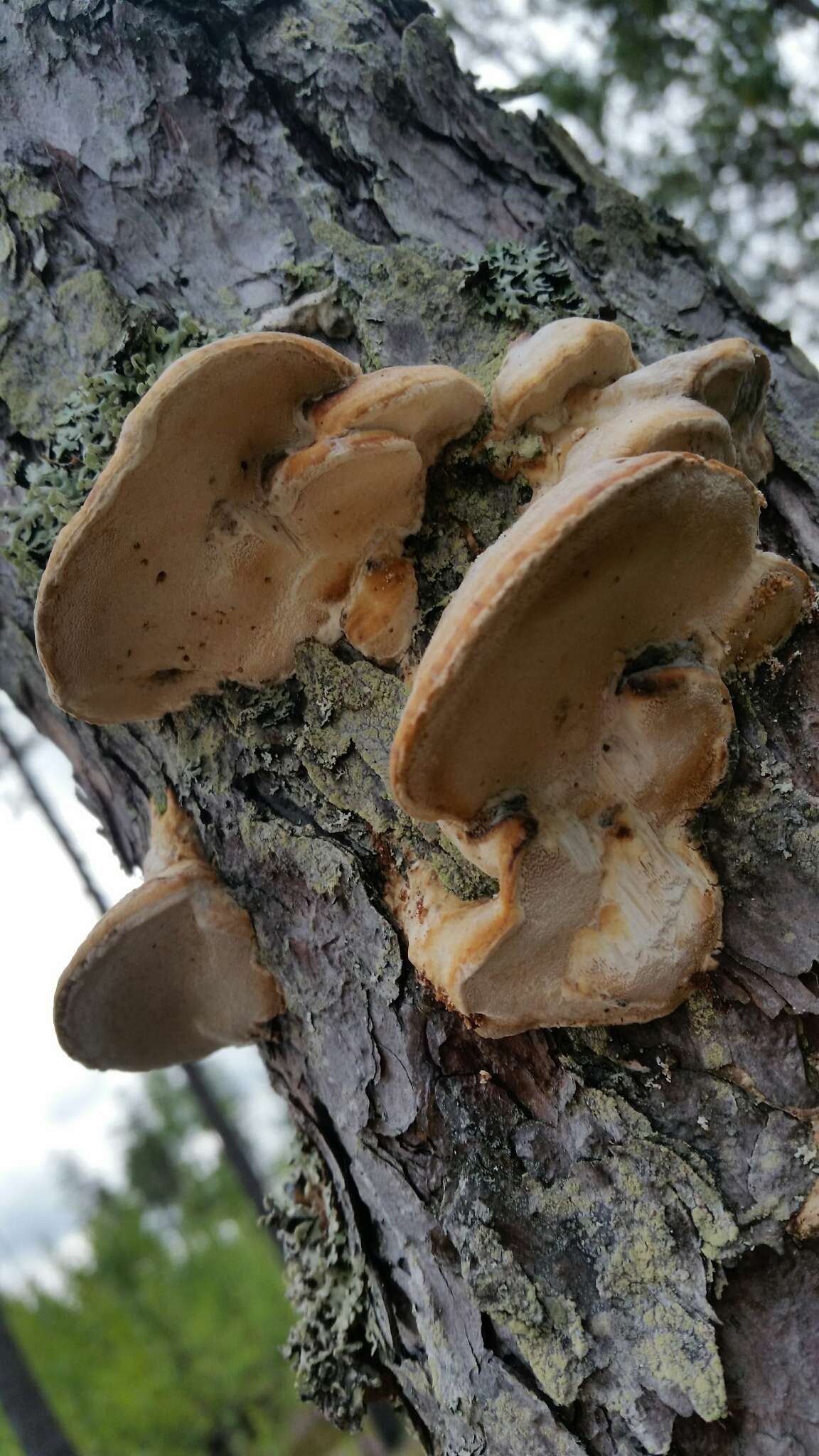
Diplomitoporus
Diplomitoporus is a genus of fungi in the family Polyporaceae. The Dictionary of the Fungi (10th edition, 2008) estimated the widespread genus to contain 11 species; since then, the genus has grown with the additional of several newly described species, and some transfers from other genera. Diplomitoporus has been described as a wastebasket taxon, containing "species that share common macroscopic and microscopic characteristics, but are not necessarily related."
.jpg)
Dichomitus
Dichomitus is a genus of poroid crust fungi in the family Polyporaceae. It was circumscribed by English mycologist Derek Reid in 1965.

Diplomitoporus flavescens
species of fungus
Datronia
Datronia is a genus of poroid crust fungi in the family Polyporaceae. The genus was circumscribed by Marinus Anton Donk in 1966, with Datronia mollis as the type species. Datronia fungi cause a white rot in hardwoods. Datronia contains six species found in northern temperate areas. The most recent addition, Datronia ustulatiligna, was described in 2015 from Himachal Pradesh in India.
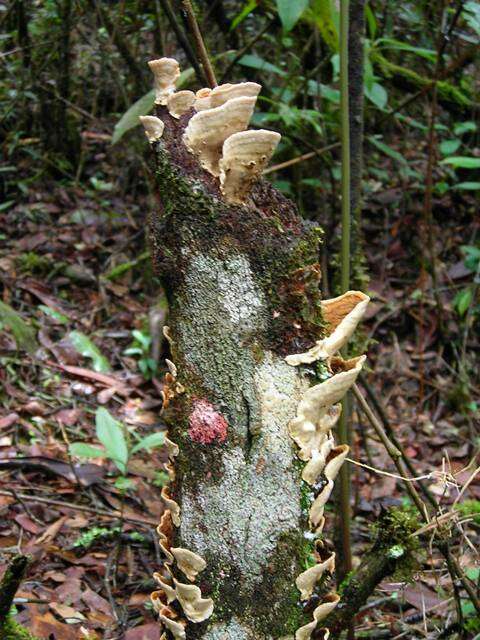
Coriolopsis
Coriolopsis is a genus of fungi in the family Polyporaceae. It was circumscribed by American mycologist William Alphonso Murrill in 1905. The genus is cosmopolitan, with most species in tropical areas. The generic name combines the name Coriolus with the Ancient Greek word ("appearance").

Pycnoporus sanguineus
species of fungus
Royoporus
Royoporus is a genus of fungi in the family Polyporaceae. It was circumscribed by mycologist Asit Baran De in 1996. The genus name honours Indian botanist Anjali Roy, (1930–2017), who worked at Visva-Bharati University in West Bengal. The genus is monotypic, being represented by the single species Royoporus spatulatus.
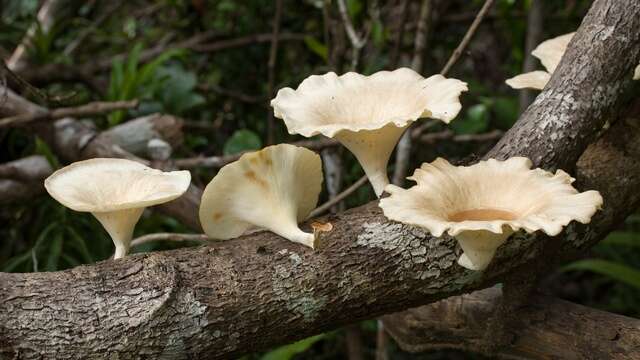
Lentinus sajor-caju
species of fungus
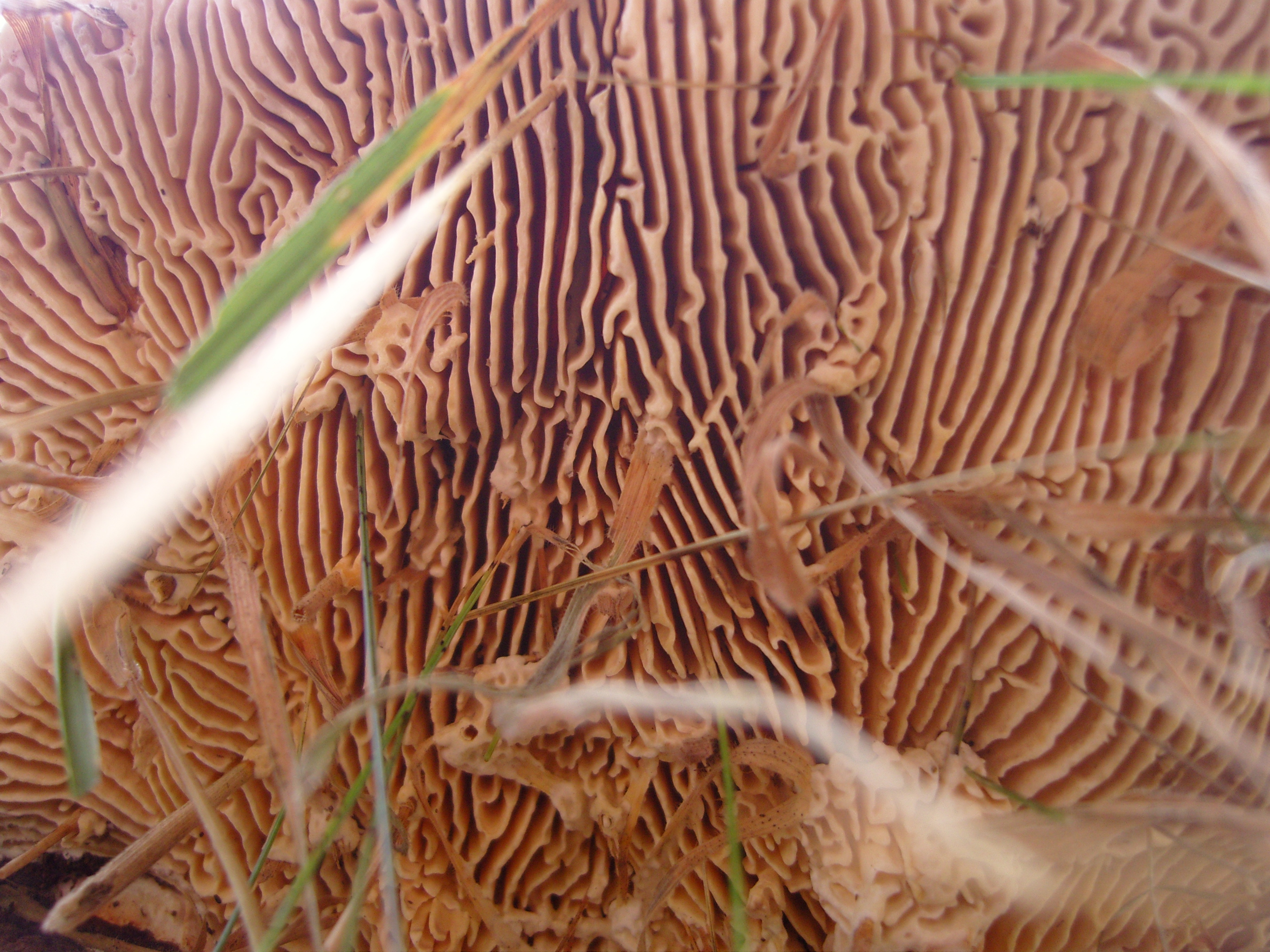
Lenzites warnieri
species of fungus

Hapalopilus
Hapalopilus is a genus of poroid fungi in the family Polyporaceae. The genus is widely distributed. The generic name combines the Ancient Greek words ("tender") and ("cap"). Hapalopilus was circumscribed by Finnish mycologist Petter Adolf Karsten in 1881.
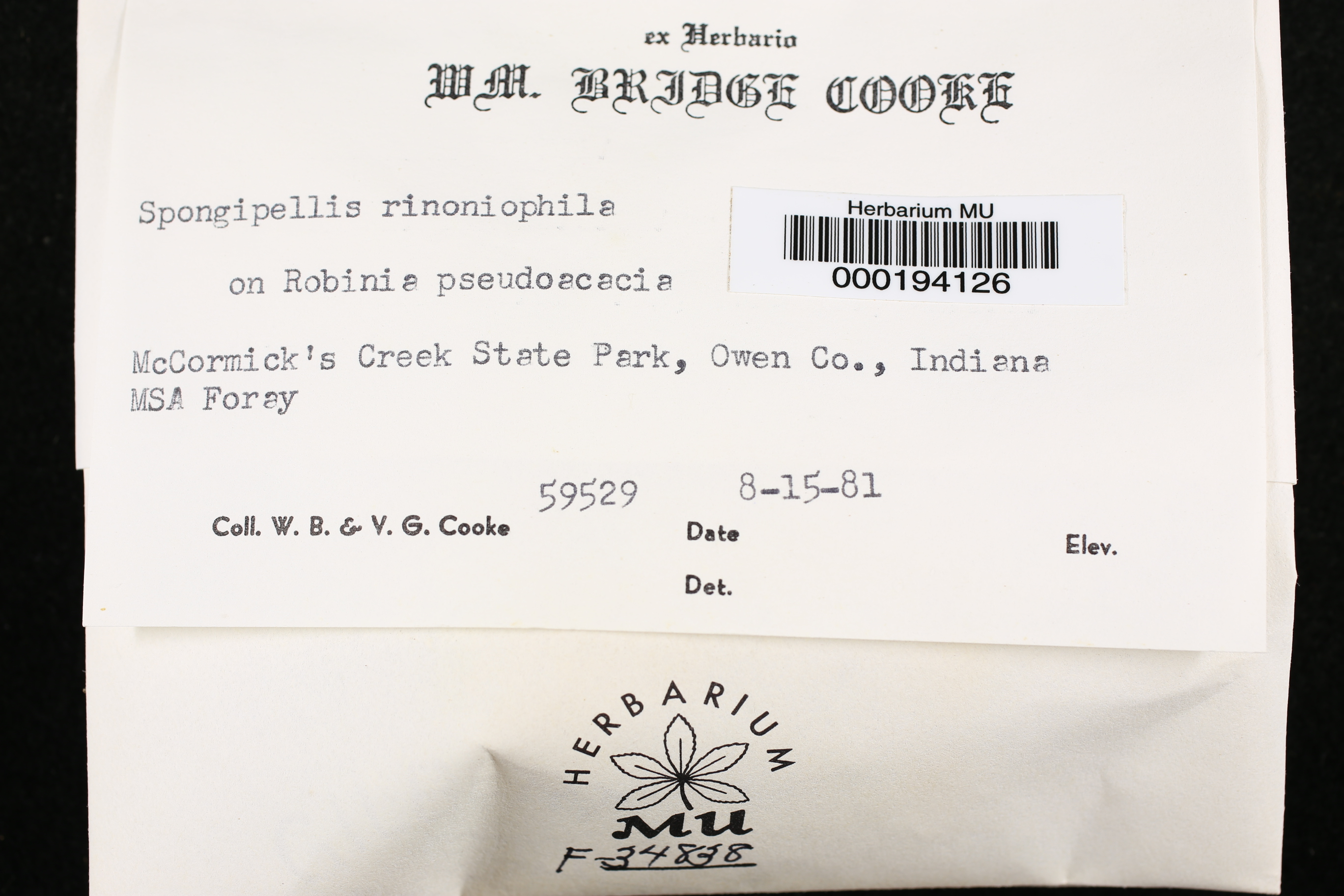
Spongipellis
Spongipellis is a genus of fungus in the family Polyporaceae. The genus is widely distributed and contains ten species. The genus was circumscribed by French mycologist Narcisse Théophile Patouillard in 1887. The genus name combines the Latin words spongia ("sponge") and pellis ("skin").

Cryptoporus volvatus
species of fungus
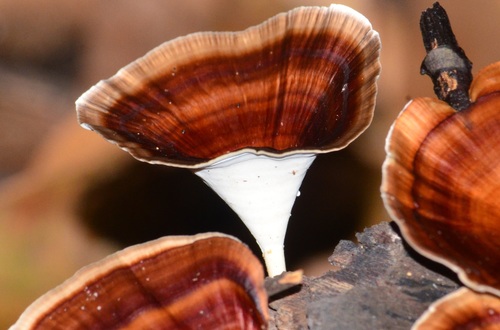
Microporus
Microporus is a genus of fungi in the family Polyporaceae. The genus has a widespread distribution and, according to a 2008 estimate, contains 11 species. The genus name combines the Ancient Greek words ("small") and ("pore").

Wolfiporia
Wolfiporia is a genus of fungi in the family Polyporaceae. The genus was circumscribed by Leif Ryvarden and Robert Lee Gilbertson in 1984 to contain the type species Wolfiporia cocos (now known as Wolfiporia extensa) and W. dilatohypha. The genus is named in honor of mycologist Frederick Adolph Wolf, who was the first to officially describe the type species.
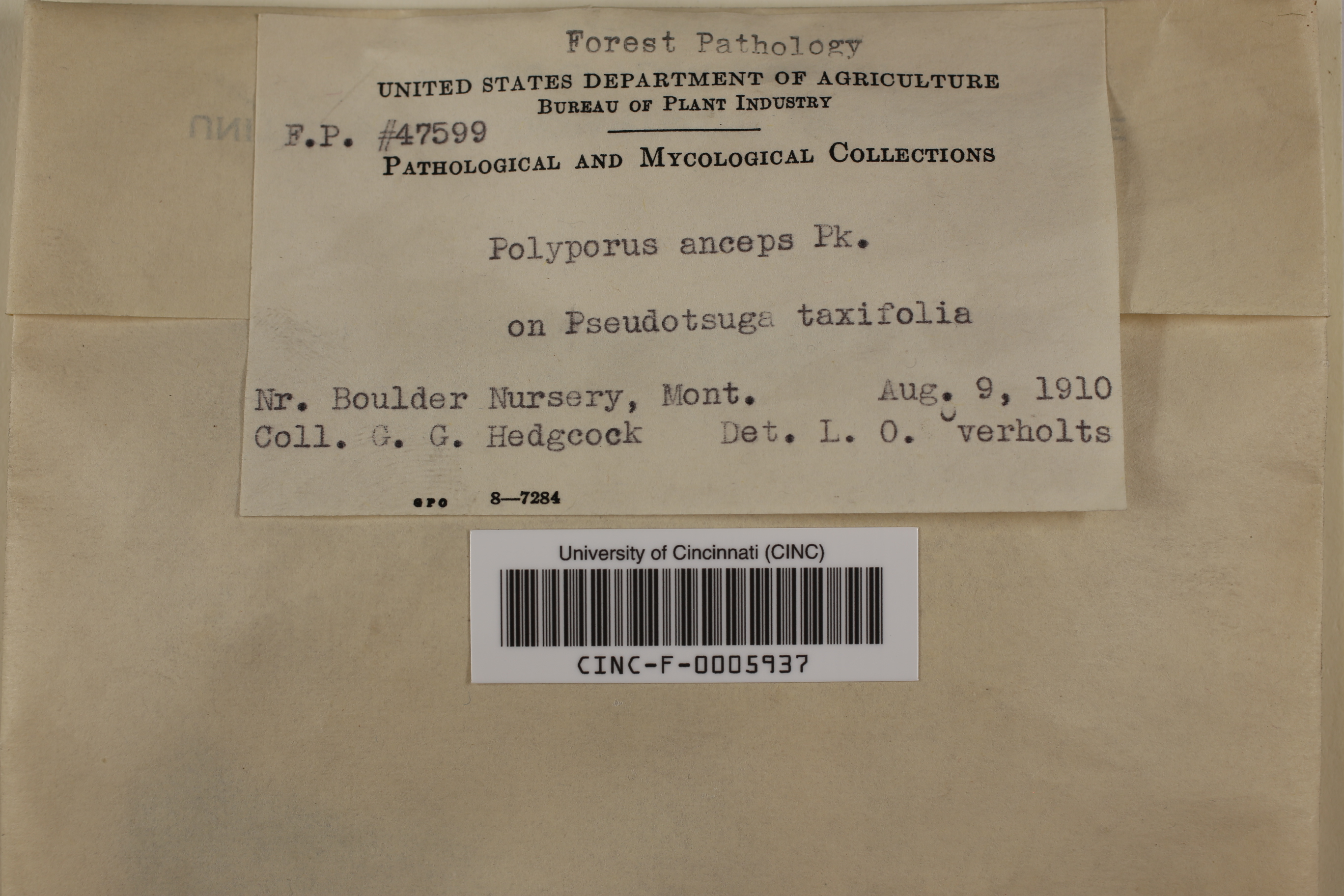
Dichomitus squalens
species of fungus

Bridgeoporus nobilissimus
Bridgeoporus is a fungal genus in the family Polyporaceae. A monotypic genus, it contains the single polypore species Bridgeoporus nobilissimus, first described to science in 1949. Commonly known both as the noble polypore and the fuzzy Sandozi, this fungus produces large fruit bodies (or conks) that have been found to weigh up to . The upper surface of the fruit body has a fuzzy or fibrous texture that often supports the growth of algae, bryophytes, or vascular plants.
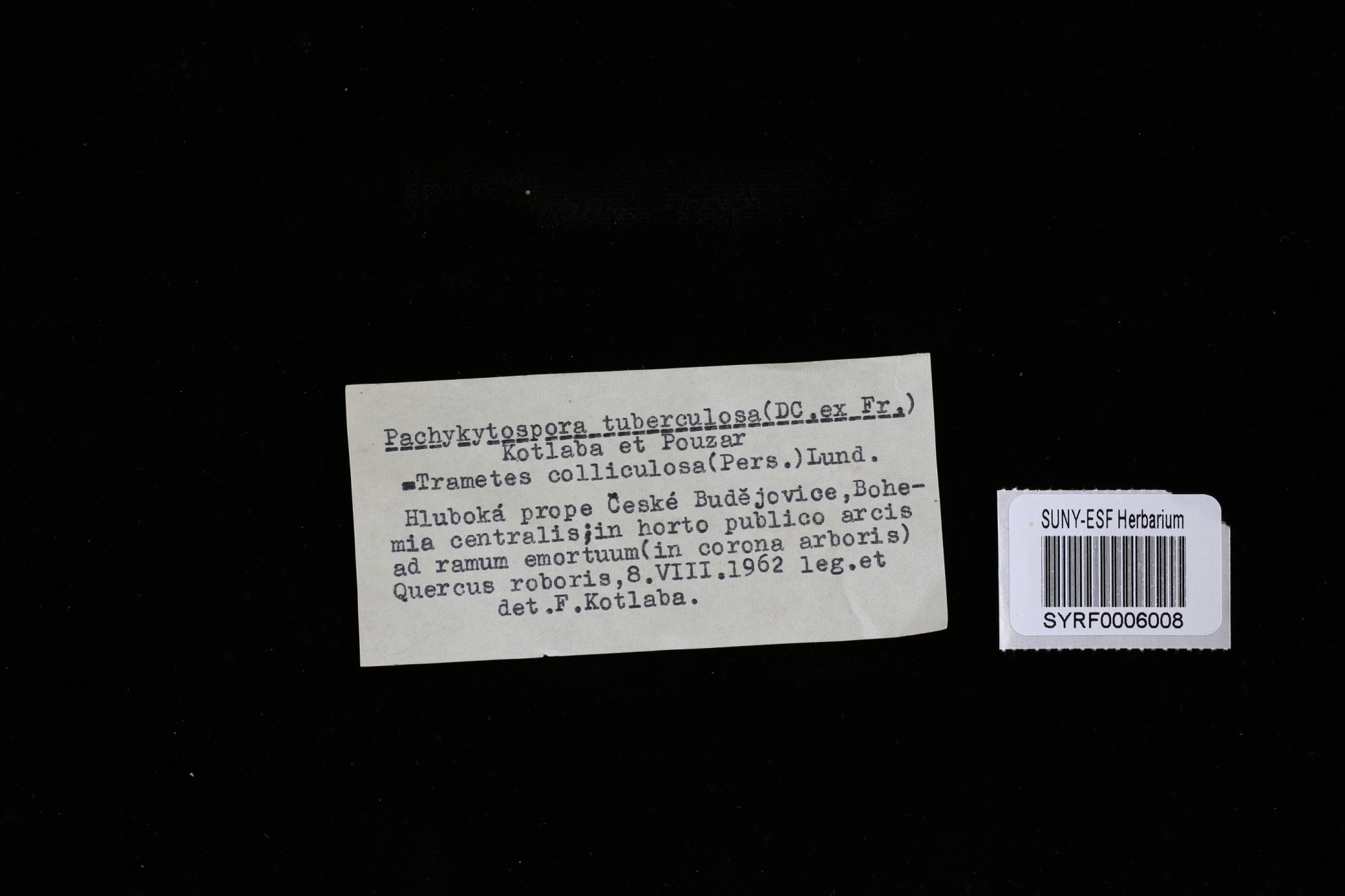
Pachykytospora tuberculosa
species of fungus

Neofavolus
Neofavolus is a genus of four species of polypore fungi in the family Polyporaceae. All four known species of Neofavolus are known from temperate regions and unknown from the tropics. Neofavolus alveolaris, the type species, is widely distributed in the temperate areas of the Northern Hemisphere, while N. cremeoalbidus and N. mikawai are known only from limited areas of eastern Asia. The most recent addition to the genus (transferred from Lentinus), N. suavissimus, is found in North America, Europe, and Japan.
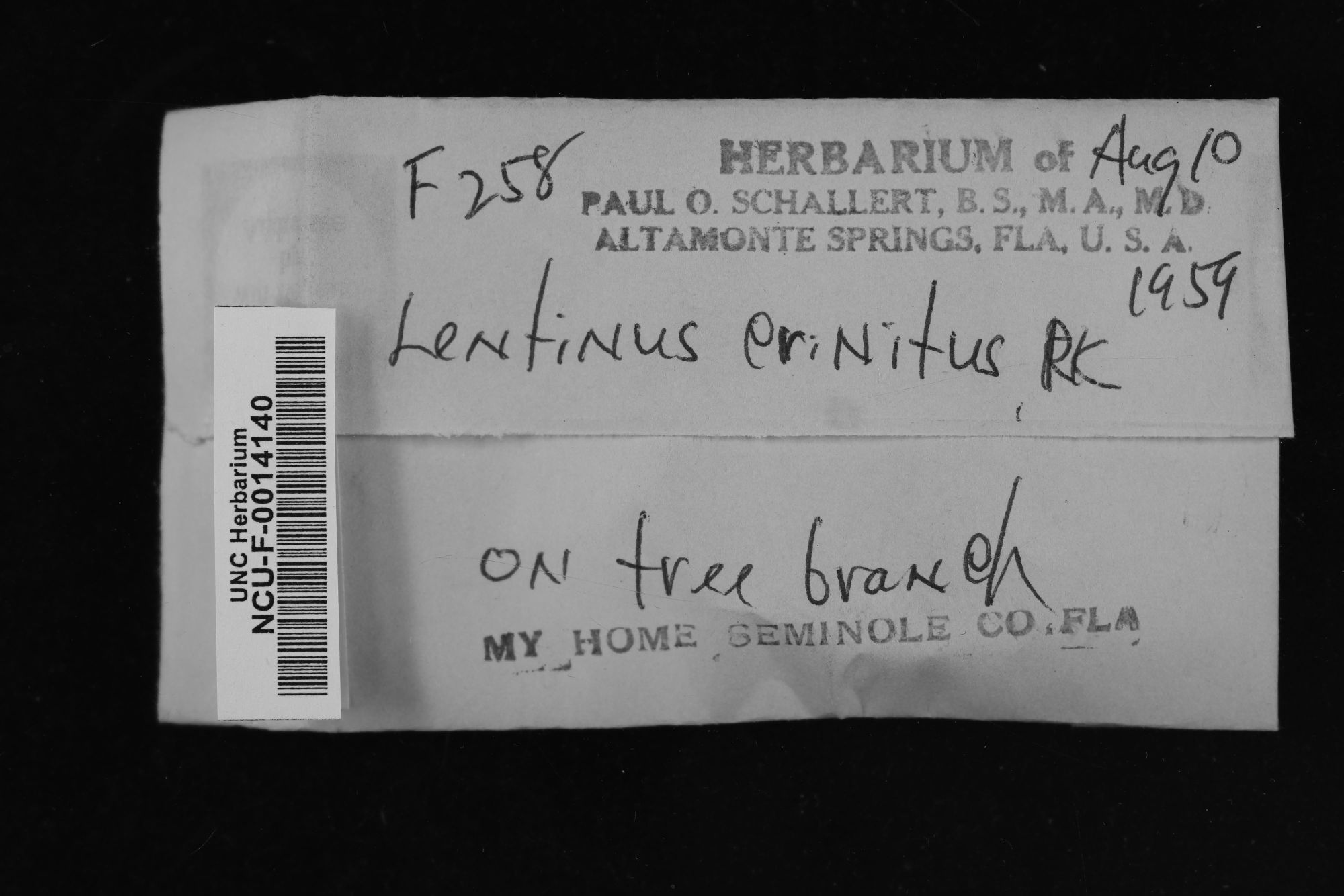
Lentinus crinitus
species of fungus
Vanderbylia
Vanderbylia is a genus of fungi in the family Polyporaceae. It was circumscribed by British mycologist Derek Reid in 1973.

Neofavolus suavissimus
species of fungus

Pycnoporus coccineus
species of fungus
Pachykytospora
Pachykytospora is a small genus of poroid fungi in the family Polyporaceae. Species in the cosmopolitan genus cause white rot. There are about 10 species in the genus, with newest member described from European Russia in 2007. Pachykytospora species have fruit bodies that are resupinate (growing flat on the substrate surface), with light brown tubes. They are characterized by their uneven, ellipsoid spores, and the Polyporus-like skeletal-binding hyphae.
Epithele
Epithele is a genus of crust fungi in the family Polyporaceae.
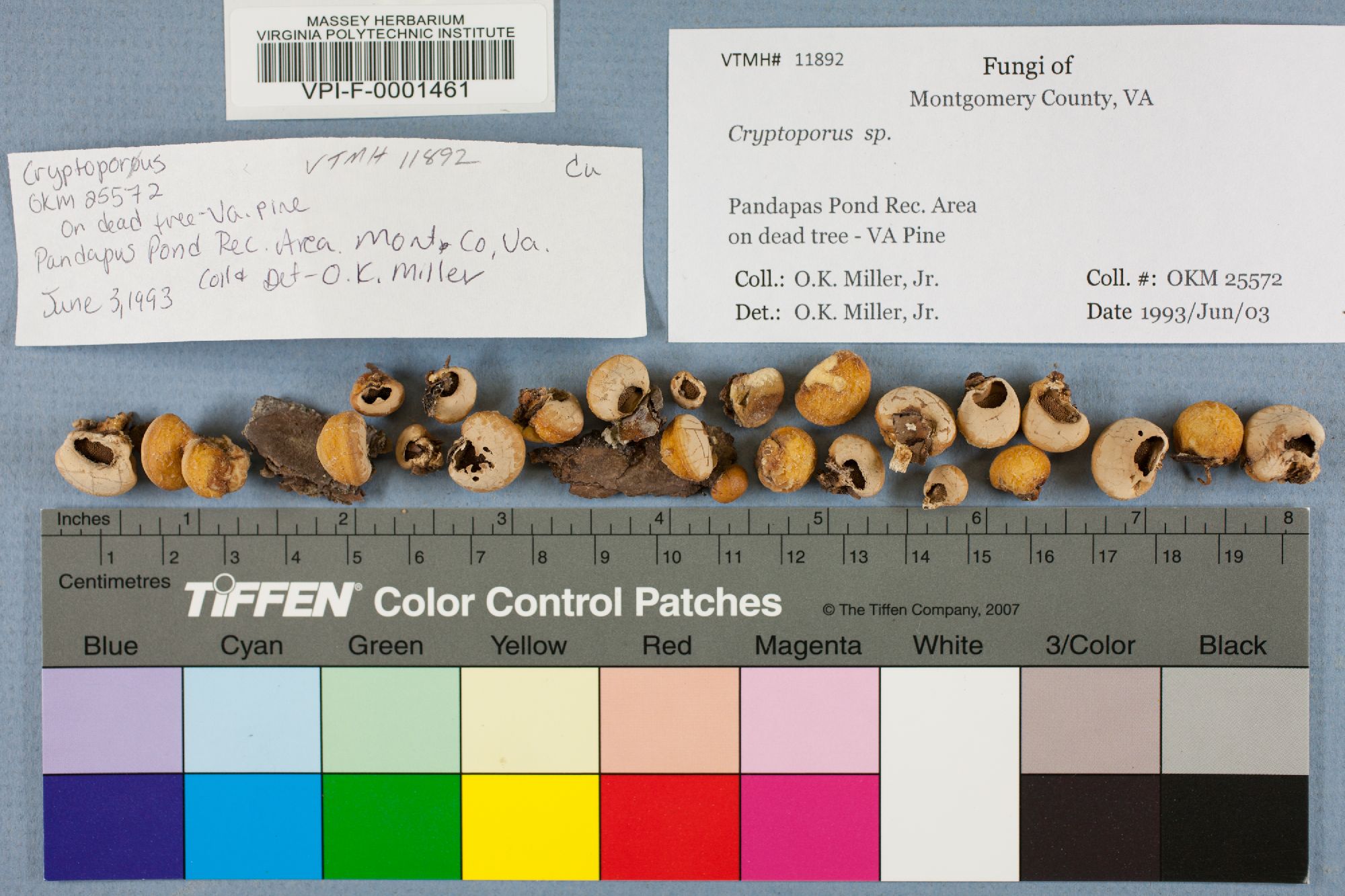
Cryptoporus
Cryptoporus is a genus of fungi in the family Polyporaceae. Originally described as a section of Polyporus by Charles Horton Peck in 1880, Cornelius Lott Shear made it a distinct genus in 1902. Cryptoporus contains two species, C. sinensis and the type C. volvatus, found in southeast Asia and North America, respectively. C. sinensis is morphologically indistinguishable from C. volvatus except for its smaller spores (7.5–10 by 4–5 μm compared to 10–12.5 by 5–6 μm. The generic name combines the Ancient Greek words ("hidden") and ("pore").
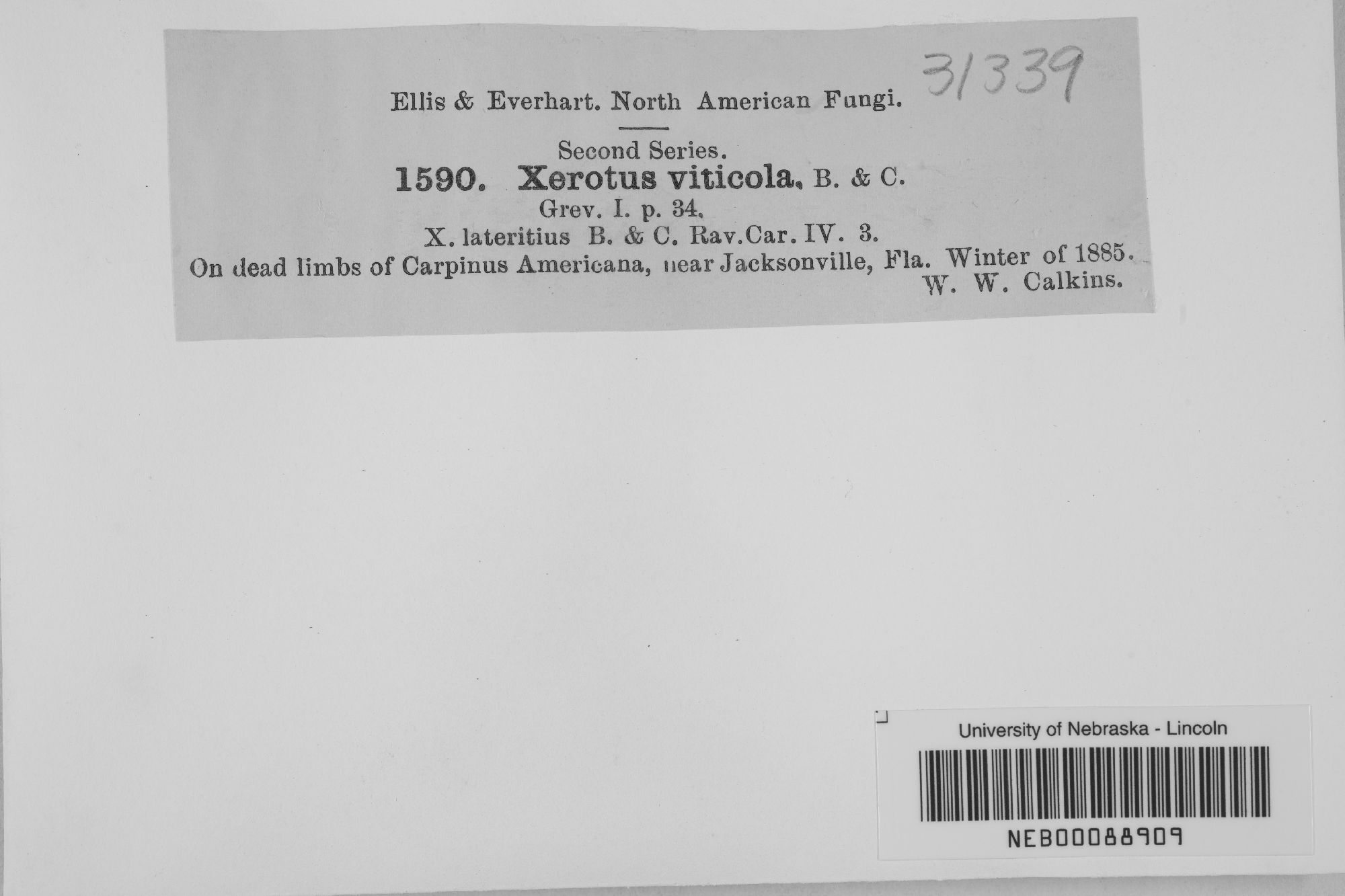
Xerotus
Xerotus is a genus of fungi in the family Polyporaceae.
Lignosus
Lignosus is a genus of polypore fungi in the family Polyporaceae. The genus was circumscribed in 1920 by mycologists Curtis Gates Lloyd and Camille Torrend, with L. sacer as the type species.
Polyporus meridionalis
species of fungus