Category
page 2Polyporaceae
Microporus xanthopus
species of fungus
Abundisporus
Abundisporus is a small genus of poroid fungi currently with seven recognized species. They differ from other polypores in having coloured rather than hyaline spores.

Irpiciporus pachyodon
species of fungus
Amyloporia
Amyloporia is a genus of five species of crust fungi in the family Polyporaceae. Its main distinguishing characteristic is the amyloid reaction of the skeletal hyphae, although some authors do not consider this to be sufficient to distinguish Amyloporia from the related genus Antrodia.
Laccocephalum
Laccocephalum is a genus of fungi in the family Polyporaceae. The genus was discovered in 1895 by Daniel McAlpine and Otto Tepper. The genus name combines the Ancient Greek words ("cistern") and ("head").
Lopharia cinerascens
species of fungus
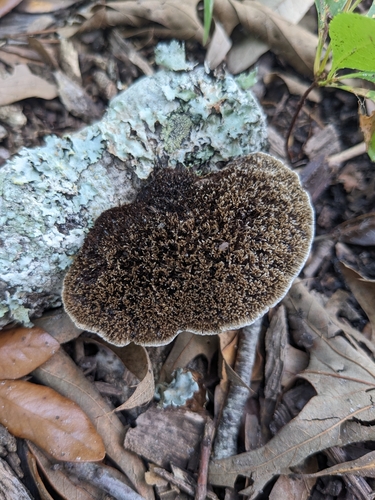
Hexagonia
genus of fungi
Piloporia
Piloporia is a genus of two species of poroid fungi in the family Polyporaceae. The genus was circumscribed by Finnish mycologist Tuomo Niemelä in 1982, with P. sajanensis as the type species. The Indian species P. indica was added to the genus in 1988. P. sajanensis is found in Asia and Europe. In Asia, it is usually recorded on spruce, fir, and larch, while in Europe it is commonly found on spruce, but also on pine. Piloporia species cause a white rot in conifers and hardwoods.
Tinctoporellus
Tinctoporellus is a genus of fungi in the family Polyporaceae. Species in the genus produce crust-like fruit bodies with pore-containing surfaces. The type species, T. epimiltinus, grows on the wood of angiosperms and is widespread in distribution. Tinctoporellus was circumscribed by Norwegian mycologist Leif Ryvarden in 1979. He suggested that Antrodia was closely related based on morphological similarities.
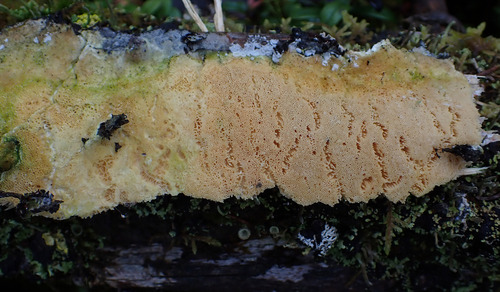
Diplomitoporus crustulinus
species of fungus
Lenzites elegans
species of fungus
Cerrena hydnoides
species of fungus
Coriolopsis floccosa
species of fungus
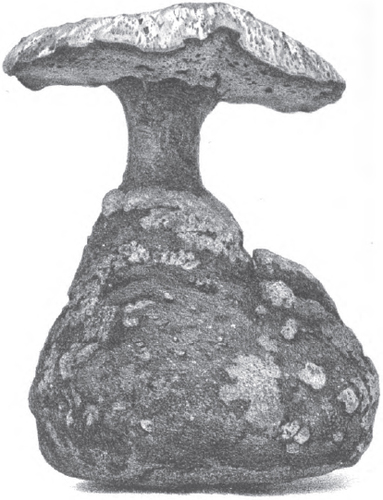
Laccocephalum basilapidoides
species of fungus
Grammothelopsis
Grammothelopsis is a fungal genus in the family Polyporaceae. It was circumscribed in 1982 by Swiss mycologist Walter Jülich, with Grammothelopsis macrospora as the type species.
Dentocorticium
Dentocorticium is a genus of six species of poroid fungi in the family Polyporaceae. The genus was revised in 2018, with several new species added and some older species transferred to other genera, based on phylogenetic analyses.
Loweporus
Loweporus is a genus of fungi in the family Polyporaceae. The genus was circumscribed by Argentinian mycologist Jorge Eduardo Wright in 1976. The genus is named in honour of American mycologist and polypore specialist Josiah Lincoln Lowe.
Laccocephalum mylittae
species of fungus
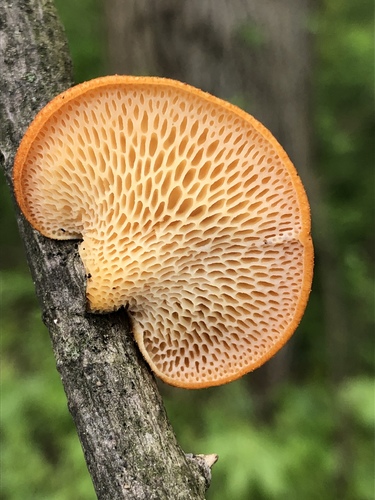
Favolus
Favolus, or honeycomb fungus, is a genus of fungi in the family Polyporaceae. The fruit bodies of Favolus species are fleshy with radially arranged pores on the underside of the cap that are angular and deeply pitted, somewhat resembling a honeycomb.
Porogramme
Porogramme is a genus of fungi in the family Polyporaceae. Originally described as a subgenus of Poria by French mycologist Narcisse Théophile Patouillard in 1899, he promoted it to generic status in 1900. The genus name combines the Ancient Greek words ("pore") and ("line" or "written character").
Haploporus
genus of fungi
Erastia
Erastia is a fungal genus in the family Polyporaceae. It is a monotypic genus, containing the single European species Erastia salmonicolor, or the salmon bracket. Erastia was circumscribed by Finnish mycologists Tuomo Niemelä and Juha Kinnunen in 2005. It is named in honour of the Estonian mycologist Erast Parmasto, "the eminent researcher of fungal taxonomy and cladistics".
Lopharia
Lopharia is a genus of fungi in the family Polyporaceae. The genus was circumscribed by Károly Kalchbrenner and Peter MacOwan in 1881.
Pseudofavolus
Pseudofavolus is a genus of fungi in the family Polyporaceae. The genus was circumscribed by French mycologist Narcisse Théophile Patouillard in 1900. The generic name combines the Ancient Greek word ("false") with the genus name Favolus.
Lignosus dimiticus
species of fungus
Rubroporus
Rubroporus is a small genus of neotropical fungi in the family Polyporaceae. The type species, R. carneoporis, is found in Brazil where it causes a white rot on Alchornea triplinervia. Rubroporus aurantiaca, found in Belize, was added to the genus in 2007.
Hexagonia vesparia
species of fungus
Megasporoporia
Megasporoporia is a genus of four species of crust fungi in the family Polyporaceae. The genus is characterized by its large spores (after which it is named), and dextrinoid skeletal hyphae.
Fomes hemitephrus
species of fungus
Pseudopiptoporus
Pseudopiptoporus is a genus of fungi in the family Polyporaceae. It was circumscribed by Norwegian mycologist Leif Ryvarden in 1980 with the type species Pseudopiptoporus devians. This fungus was originally published as Polyporus devians by Giacomo Bresadola in 1920. Pseudopiptoporus chocolatus was added to the genus in 2003.
Podofomes
Podofomes is a genus of polypore fungi in the family Polyporaceae. The genus, which was circumscribed in Zdeněk Pouzar in 1966, contains three species.
Earliella
Earliella is a fungal genus in the family Polyporaceae. It is a monotypic genus, containing the single species Earliella scabrosa. It is found in Hainan.
Echinochaete
Echinochaete is a genus of fungi in the family Polyporaceae. Circumscribed by English mycologist Derek Reid in 1963, the genus is widespread in tropical regions and contains five species.
Ryvardenia
Ryvardenia is a genus of fungi in the family Polyporaceae. It contains two species, Ryvardenia campyla and the type, Ryvardenia cretacea , formerly placed in the genus Polyporus. Ryvardenia was circumscribed by Argentinian botanist Mario Rachenberg in 1994.
Pyrofomes
Pyrofomes is a genus of fungi in the family Polyporaceae. The genus was circumscribed by Czech mycologists František Kotlaba and Zdenek Pouzar in 1964. The type species, Pyrofomes demidoffii, was once considered a widespread species with a distribution that included East Africa, Middle Asia, Europe, and North America. DNA evidence demonstrated that North American collections represented a lineage that was different than European collections. The North American sibling was reinstated as P. juniperinus in 2017.
Fomes fasciatus
species of fungus
Funalia
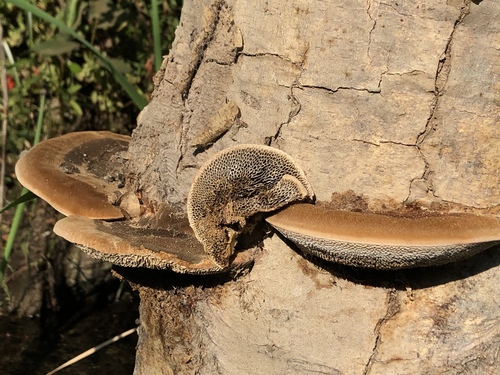
Funalia is a fungal genus in the family Polyporaceae. The genus was circumscribed by French mycologist Narcisse Théophile Patouillard in 1900. He made Funalia mons-veneris the type species; this fungus was originally described as Polyporus mons-veneris by Franz Wilhelm Junghuhn in 1838. The generic name is derived from the Latin funalis ("made of rope").
Macrohyporia
Macrohyporia is a genus of fungi in the family Polyporaceae. The genus was circumscribed by mycologists I. Johansen and Leif Ryvarden in 1979.
Lentinus levis
species of fungus
Abundisporus quercicola
species of fungus
Microporus affinis
species of fungus
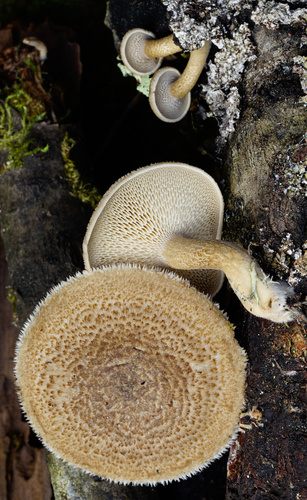
Lentinus arcularius
species of fungi in the genus Lentinus
Trametes cubensis
species of fungus
Diplomitoporus microsporus
species of fungus
Truncospora
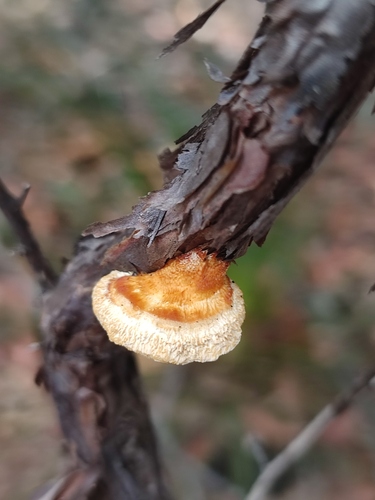
Truncospora is a genus of fungi in the family Polyporaceae.
Faerberia
Faerberia is a fungal genus in the family Polyporaceae. It is a monotypic genus, containing the single species Faerberia carbonaria, which is commonly known as the firesite funnel due to its habitat of burned soil.
Fomes meliae
species of fungus
Dichomitus eucalypti
species of fungus
Lignosus rhinocerus
species of fungus
Sparsitubus
Sparsitubus is a fungal genus in the family Polyporaceae. It is a monotypic genus, containing the single species Sparsitubus nelumbiformis, found in Hainan and Yunnan, China. Molecular analysis suggests that Sparsitubus is in a clade of white rot polypores and may be closely related to the Ganodermataceae.
Cerrena cystidiata
species of fungus
Wolfiporia curvispora
species of fungus
Poronidulus
Poronidulus is a fungal genus in the family Polyporaceae. It is a monotypic genus, and contains the single polypore species Poronidulus conchifer, found in North America. The genus was circumscribed by American mycologist William Alphonso Murrill in 1904. The generic name, which combines the Ancient Greek word ("pore") with the Latin word nidulus ("small nest"), refers to the superficial similarity of the cup-shaped Poronidulus fruit bodies with those of the genus Nidularia. A second species, Poronidulus bivalvis, found in Bogor, was placed in the genus by Franz Xaver Rudolf von Höhnel in 1914
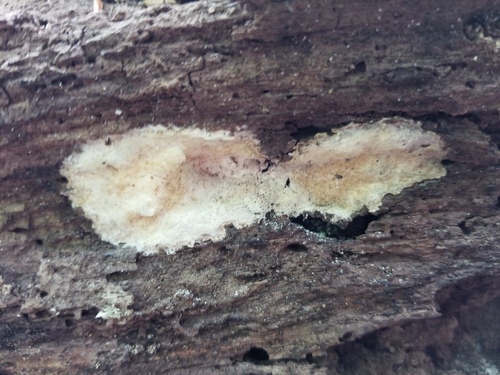
Wolfiporia dilatohypha
species of fungus
Dentocorticium irregulare
species of fungus
Vanderbylia vicina
species of fungus
Wolfiporia sulphurea
species of fungus
Trametes africana
species of fungus
Dentocorticium sulphurellum
species of fungus
Hapalopilus albocitrinus
species of fungus