Category
page 1Pottery

pottery
thumb|300x300px|Hand building a jar
Pottery is the process and the products of forming vessels and other objects with clay and other raw materials, which are fired at high temperatures to give them a hard and durable form. The place where a potter makes such wares is also called a pottery (plural potteries). The definition of pottery, used by the ASTM International, is "all fired ceramic wares that contain clay when formed, except technical, structural, and refractory products". End applications include tableware, decorative ware, sanitary ware, and in technology and industry such as electrica

porcelain
thumb|Chinese Ru ware celadon-glazed bottle vase, [[Northern Song, 11th–12th century]]
.jpg)
terracotta
thumb|International Gothic Bohemian bust of the [[Virgin Mary; –1395; terracotta with polychromy; 32.5× 22.4× 13.8cm]]
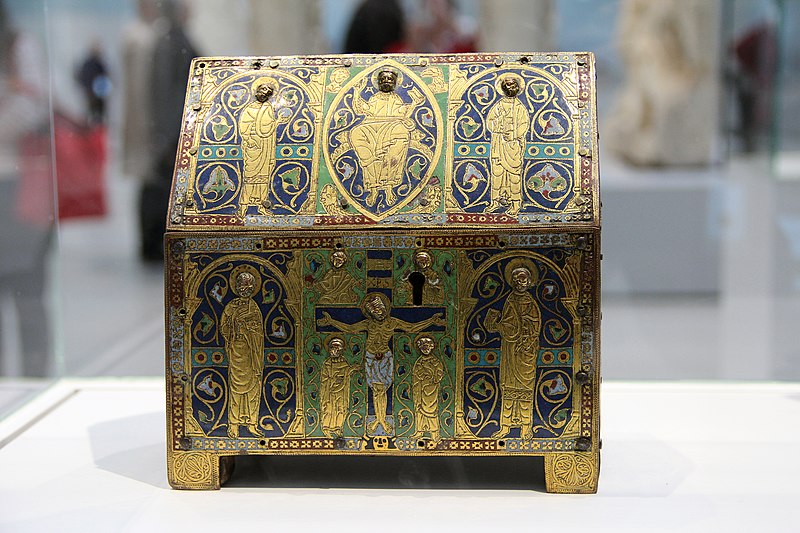
vitreous enamel
material made by fusing powdered glass to a substrate by firing

tableware
thumb|upright=1.3|Formal dining table laid for a large private dinner party at Chatsworth House
thumb|upright=1.3|Table laid for six at the Royal Castle, Warsaw, (18th–19th century fashion)

faience
thumb|right|Modern bowl in a traditional pattern, made in Faenza, Italy, which gave its name to the type
thumb|Sophisticated Rococo [[Niderviller faience, by a French factory that also made porcelain, 1760–65]]

ceramic glaze
layer or coating of vitreous substance fused to a ceramic object

ostracon
[[Image:AGMA Ostrakon Cimon.jpg|right|thumb|Ostrakon inscribed with "Kimon [son] of Miltiades", for Cimon, an Athenian statesman.]]
thumb|Ostrakon of Megacles, son of Hippocrates (inscription: ΜΕΓΑΚΛΕΣ ΗΙΠΠΟΚΡΑΤΟΣ), 487 BC. On display in the Ancient Agora Museum in Athens, housed in the [[Stoa of Attalus]]
right|thumb|Ancient Greek ostraca voting for the ostracism|ostracization of [[Themistocles in 472/471 BC.]]

potter's wheel
machine used in the shaping of round ceramic ware

stoneware
thumb|Jian ware tea bowl with "hare's fur" glaze, southern [[Song dynasty, 12th century, Metropolitan Museum of Art (see below)]]

earthenware
Earthenware is glazed or unglazed nonvitreous pottery that has normally been fired below . Basic earthenware, often called terracotta, absorbs liquids such as water. However, earthenware can be made impervious to liquids by coating it with a ceramic glaze, and such a process is used for the great majority of modern domestic earthenware. The main other important types of pottery are porcelain, bone china, and stoneware, all fired at high enough temperatures to vitrify. End applications include tableware and decorative ware such as figurines.

craquelure
300px|thumb|upright=1.4|Craquelure in the Mona Lisa, with a typical "Italian" pattern of small rectangular blocks
thumb|Age craquelure in pottery
İznik pottery
type of decorated ceramic
muffle furnace
furnace in which the subject material is isolated from the fuel and products of combustion
ceramic art
art objects made from clay and other raw materials by the process of pottery

decalcomania
thumb|Fire & Ice H. Grobe (1975) – Example of a painting made with the decalcomania technique
Decalcomania (from ) is a decorative technique by which engravings and prints may be transferred to pottery or other materials.
bone china
porcelain composed of bone ash, feldspathic material, and kaolin
Horezu ceramics
Egyptian faience
type of Ancient Egyptian sintered-quartz ceramic
slip
liquid mixture or slurry of clay and/or other materials suspended in water
Islamic pottery
pottery of Islamic lands

fritware
thumb|400px|Chinese porcelain dish (left), 9th century, excavated in [[Iran, and a fritware dish made in Iran (right), 12th century (British Museum)]]
thumb|Blue and white bowl with radial design, 13th century, Iran (Brooklyn Museum)
thumb|right|Dish with cypress tree decoration, 1570–1575, İznik pottery|İznik ([[Calouste Gulbenkian Museum)]]
Fritware, also known as stone-paste, is a type of pottery in which ground glass (frit) is added to clay to reduce its fusion temperature. The mixture may include quartz or other siliceous material. An organic compound such as gum or glue may be added for

pyrometric cone
pyramidal ceramic specimen whose softening deformation is proportional to the temperature reached in the kiln
soft-paste porcelain
Porcelain material consisting of clay and other materials
slipcasting
forming technique in pottery
coiling
method of making pottery
Latvian pottery
traditional Latvian pottery
ball clay
kaolinitic sedimentary clay
cavetto
thumb|Cavetto moulding
thumb| Illustrations of various examples of ancient Egyptian cornices, all of them having cavettos
saggar
thumbnail|250px|Saggars in use in the Manufacture nationale de Sèvres
thumb|250px|upright|Bungs of saggars inside a bottle kiln
Toby Jug
type of jug
clay chemistry
applied subdiscipline of chemistry
Ceramics of indigenous peoples of the Americas
Pottery produced by the indigenous people of the Americas
Dalma culture
prehistoric archaeological culture of north-western Iran