Horezu ceramics
Sign in to saveDescribed at
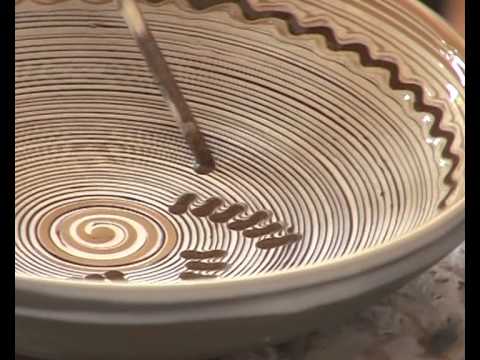
Craftsmanship of Horezu ceramics - UNESCO Intangible Cultural Heritage
ich.unesco.org →Horezu ceramics are a unique traditional craft. Handmade in the northern part of Vâlcea County, Romania, they reflect generations of knowledge and craftsmanship. Men and women generally divide the fabrication processes. Men select and extract the earth, which is then cleaned, cut, watered, kneaded, trampled and mixed – transforming it into a clay body from which the potters of Horezu produce a red pottery. The potters then shape each object with a special finger technique requiring concentration, strength and agility. Each person has his own method of shaping, but everyone respects the sequence of operations. The women decorate the objects using specific techniques and tools to draw traditional motifs. Their skill in combining decoration and colour defines the personality and uniqueness of these ceramics. The colours are vivid shades of dark brown, red, green, blue and ‘Horezu ivory’. The object is then fired. The potters use traditional tools: a mixer for cleaning the earth, a potter’s wheel and comb for shaping, a hollowed-out bull’s horn and a fine wire-tipped stick for decoration, and a wood-burning stove for firing. The craft is transmitted through families, in workshops from master to apprentice, and at fairs and exhibitions. The element gives the community a sense of identity, while maintaining a social function in everyday existence.
Excerpt from a page describing this subject · 7,738 chars · not written by Vinony
Wikidata facts
- Instance of
- craft
- Subclass of
- ceramic art
- Country
- Romania
- Country of origin
- Romania
- Image
- Ceramică Horezu unu.jpg
Show 4 more facts
- described at URL
- ich.unesco.org/es/RL/00610
- intangible cultural heritage status
- Representative List of the Intangible Cultural Heritage of Humanity
- Commons category
- Horezu ceramics
- indigenous to
- Vâlcea County
Sources (1)
via Wikidata · CC0